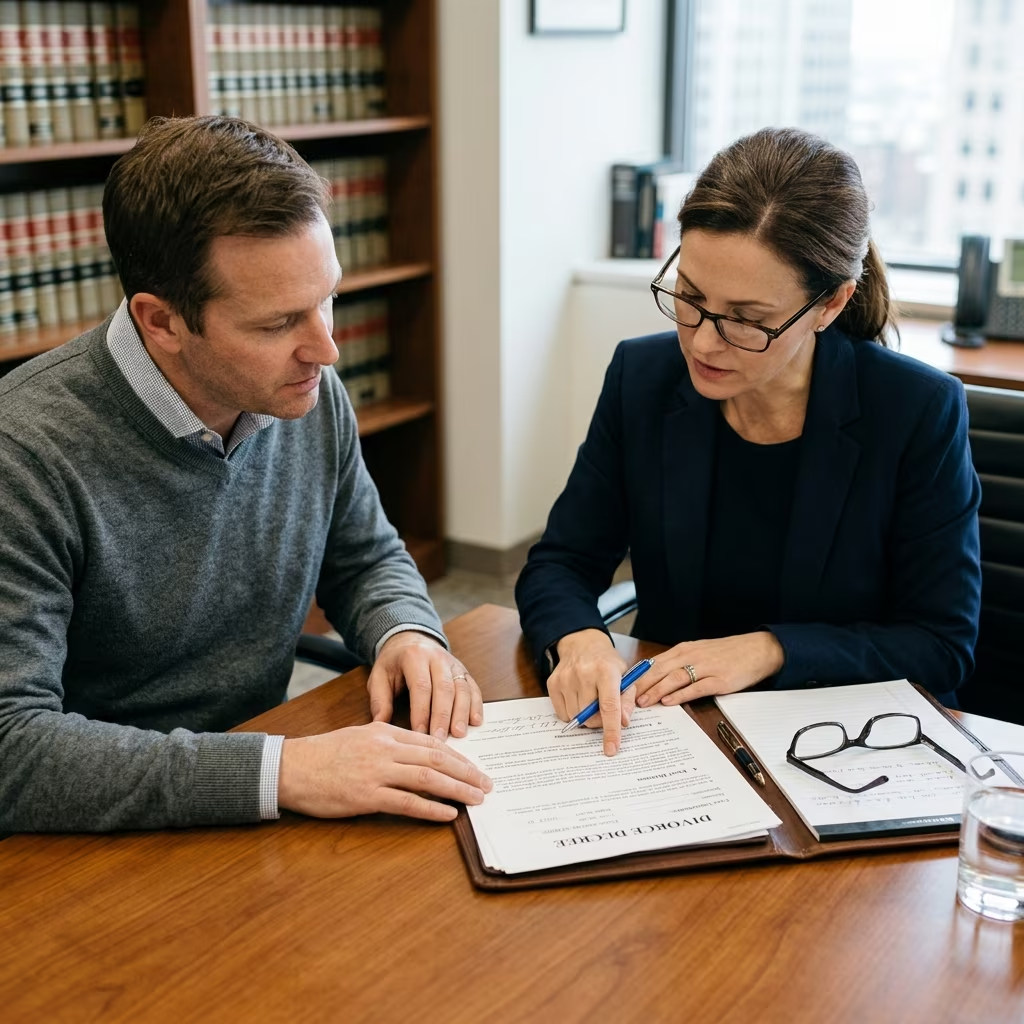
A divorce decree is more than just paperwork that closes a chapter of your life. It is a legally binding court order that defines your rights, responsibilities, and financial obligations after the marriage ends. Knowing what your decree says and how it works is essential to avoiding costly mistakes and future disputes.
What Is a Divorce Decree?
A divorce decree is the final order issued by a court that legally dissolves a marriage and sets out the terms of that dissolution. Once a judge signs it and the clerk files it, the decree becomes the official record that your marriage has ended and establishes the rules both spouses must follow.
Courts and agencies may use slightly different names for this document, including:
- Final decree of divorce
- Final judgment of divorce
- Judgment of absolute divorce
Regardless of terminology, the function is the same: the decree is the court’s last word on the issues in your divorce case.
Divorce Decree vs. Divorce Certificate
Many people confuse a divorce decree with a divorce certificate, but they serve different purposes.
| Feature | Divorce Decree | Divorce Certificate |
|---|---|---|
| Issuer | Court (usually a trial or family court) | State or local vital records office |
| Content | Detailed terms of the divorce: property division, support, custody, debts, and other orders | Basic facts: names of spouses, date and place of divorce |
| Legal Function | Binding court order that must be followed by both parties | Proof that a divorce occurred; generally not a detailed order |
| Where to Obtain | Clerk of the court that handled the divorce | State vital records office or similar agency |
| Typical Uses | Enforcing obligations, clarifying rights, modifying orders | Changing name on identity documents, proving marital status |
In many situations—especially those involving money or children—you will need the decree, not just the certificate, because only the decree spells out the specific terms of your divorce.
Key Elements Commonly Included in a Divorce Decree
Every decree is tailored to the specific case, but most will address several core areas. Understanding these sections helps you read your decree with confidence.
1. Confirmation That the Marriage Is Dissolved
The decree formally states that the marriage is terminated as of a particular date. This statement is the legal basis for your new marital status and is often required when you remarry or update official records.
2. Division of Property and Debts
One of the central functions of a decree is to allocate assets and liabilities between the spouses. This section might cover:
- Real estate (home, rental properties, land)
- Bank accounts, investment accounts, and retirement funds
- Vehicles and valuable personal property
- Credit card balances, personal loans, and other debts
The decree sets out who owns which assets, who pays which debts, and whether transfers (like refinancing a mortgage or changing titles) must occur within a specified time. Failing to follow these directives can lead to enforcement actions by the court.
3. Spousal Support (Alimony)
If spousal support is awarded, the decree specifies:
- Whether support is temporary or long-term
- The amount and payment schedule
- Conditions that may change or end support, such as remarriage or a significant change in income
Support obligations are enforceable like other court orders. Nonpayment can lead to wage garnishment or other remedies.
4. Child Custody and Parenting Time
When there are minor children, the decree usually includes detailed custody and visitation provisions, often aligned with a separate parenting plan or custody order.
Typical topics include:
- Legal custody (decision-making authority for major issues)
- Physical custody (where the child primarily lives)
- Regular visitation schedule, holidays, and vacations
- Rules about travel, relocation, and communication
These terms are binding and can only be altered by consent of the parties or a subsequent court order.
5. Child Support
The decree often incorporates a child support order that follows the state’s guidelines. It will typically specify:
- Monthly support amount
- Start date and duration
- Who provides health insurance for the child
- Responsibility for childcare, schooling, and medical expenses
Child support is generally modifiable if circumstances change substantially, but until modified, the existing decree controls what must be paid.
6. Other Orders and Agreements
A decree may also include:
- Name changes approved by the court
- Orders about tax filings and dependency exemptions
- Directions regarding life insurance or beneficiary designations
- Instructions related to the sale of property or business interests
All of these provisions carry the force of a court order once the decree is entered.
How a Divorce Decree Is Created and Finalized
The path to a final decree depends on whether the divorce is contested, settled, or defaulted. However, some steps are common in many jurisdictions.
Typical Steps Toward a Final Decree
- Filing for divorce: One spouse initiates the case by filing a petition or complaint with the appropriate court.
- Service and response: The other spouse is formally served with the papers and may file a response.
- Negotiation or litigation: Property, custody, and support issues are resolved through settlement discussions or court hearings.
- Preparation of proposed decree: The parties or their attorneys draft a proposed decree reflecting either their agreement or the judge’s decisions.
- Judicial review and signature: The judge reviews the proposed decree. If it is acceptable and accurate, the judge signs it.
- Entry by the clerk: The signed decree is filed, making it an official, enforceable court order.
Once this process is complete, your divorce is legally finalized, and the decree governs the post-divorce relationship.
Legal Effect: Why Your Divorce Decree Matters
A divorce decree has several important legal consequences:
- Ends the marriage: It is the document that legally terminates the marital relationship.
- Defines obligations: It specifies who must pay support, assume debts, or transfer property.
- Serves as proof: It is often required when changing names, adjusting financial accounts, or proving that you are divorced to a government agency.
- Provides enforcement mechanisms: If a party fails to comply, the other can seek court enforcement based on the decree.
Importantly, a decree does not automatically cancel existing contracts or loans you signed with your spouse. A lender may still hold you responsible for a joint debt even if the decree assigns it to the other spouse. In those cases, the decree helps you pursue reimbursement or court enforcement, but it does not change the lender’s rights.
How to Obtain a Copy of Your Divorce Decree
You may need a copy of your decree long after the divorce, especially when dealing with banks, insurers, or government agencies. In most states, you obtain it from the court that handled your case.
Where to Request a Copy
- Court Clerk: Contact the clerk of the county or city where your divorce was granted. Provide names of both spouses and, if possible, the approximate date of the divorce.
- Records Department: Some courts have a dedicated records office. You may request copies in person or by mail.
Information and Fees
Courts typically require:
- Your full name and date of birth
- Your former spouse’s name
- Case number, if you know it
- Valid photo identification, if you request in person
There is usually a fee, and costs may differ for certified and non-certified copies. Certified copies are often necessary for official uses, such as certain financial or legal transactions.
Changing, Enforcing, and Interpreting Your Decree
Life can change substantially after a divorce. The law provides mechanisms to enforce and sometimes modify the decree when needed.
Enforcing the Decree
If your ex-spouse fails to comply—for instance, by not paying support or refusing to transfer property—you may ask the court to enforce the decree.
Common enforcement tools include:
- Contempt actions for willful noncompliance
- Wage garnishment or income withholding for support
- Orders compelling transfer of assets or sale of property
Court enforcement ensures that the decree remains meaningful and that obligations are not ignored.
Modifying Certain Terms
In many jurisdictions, some aspects of a decree—especially those involving children or ongoing support—can be modified when circumstances change materially.
Typical steps for seeking modification include:
- Assessing the change: Identify the substantial change in income, health, employment, or child needs that justifies a modification.
- Gathering documentation: Collect financial records, medical reports, or other evidence to support your request.
- Filing a petition: Submit a written request to the same court that issued the original decree, specifying the changes you seek and your reasons.
- Serving the other party: You must provide formal notice of your request to your former spouse.
- Attending a hearing: The court may hold a hearing where both sides present arguments and evidence. The judge then decides whether to modify the decree.
Property division is generally harder to change after the decree becomes final, while child-related provisions and support are more commonly subject to modification based on ongoing needs.
Practical Tips for Living With Your Divorce Decree
Once your decree is entered, treating it as a reference document—rather than something you read once and forget—can prevent misunderstandings and conflicts.
Things You Should Do
- Keep multiple copies: Store a certified copy with your important papers and a digital copy in a secure location.
- Review key provisions periodically: Refresh your understanding of deadlines, payment obligations, and parental responsibilities.
- Track compliance: Maintain records of payments, property transfers, and communications regarding the decree.
- Address problems early: If issues arise, consult a legal professional promptly rather than letting disputes escalate.
Common Mistakes to Avoid
- Assuming joint debts were fully resolved simply because they are allocated in the decree.
- Ignoring requirements to update titles, refinance loans, or close joint accounts.
- Making informal changes to parenting schedules without obtaining a modified court order when significant changes are needed.
- Failing to notify the court or the other parent about major changes affecting children, such as relocation.
FAQs About Divorce Decrees
Is a divorce decree the same as the divorce judgment?
In many jurisdictions, yes. Courts may use terms like “final judgment” or “judgment of divorce” to describe the same final order that ends the marriage and sets out the divorce terms.
Do I need my divorce decree to change my last name?
Often, the decree includes a provision approving a name change. Government agencies and financial institutions may request a copy of the decree as proof of the change when updating your records.
Can I get a copy of my decree if I moved to another state?
Yes. You must contact the court in the state and county where your divorce was granted. Many courts accept mail requests or provide instructions online for obtaining copies from outside the state.
What if my ex-spouse will not follow the decree?
You can ask the court to enforce the decree through motions or petitions for enforcement, contempt, or similar remedies. The court may order compliance, impose sanctions, or adjust obligations in limited circumstances.
Can the judge change our decree years later?
Certain parts of a decree—particularly property division—are usually finalized and cannot be easily reopened. However, child custody, child support, and sometimes spousal support can be modified when the law allows and circumstances have changed significantly.
References
- What is a Divorce Decree? — The Maryland People’s Law Library. 2023-05-01. https://www.peoples-law.org/what-divorce-decree
- What Is a Divorce Decree? — Smith Debnam Narron Drake Saintsing & Myers, LLP. 2021-09-15. https://www.smithdebnamlaw.com/article/what-is-a-divorce-decree/
- What is a Divorce Decree — van der Veen, Hartshorn & Levin. 2022-08-10. https://www.mtvlaw.com/faq/what-is-a-divorce-decree/
- How to get a copy of a divorce decree or certificate — USAGov. 2023-02-20. https://www.usa.gov/divorce-decree
- What is a divorce decree? What is a divorce certificate? — New York State Unified Court System. 2022-04-05. https://askalawlibrarian.nycourts.gov/legalresearch/faq/319579
- Getting the Final Decree — Family Law Self-Help Center (Nevada). 2022-11-30. https://www.familylawselfhelpcenter.org/self-help/divorce/getting-the-final-decree
- Copies of Divorce or Annulment Decrees — Delaware Courts, Family Court. 2021-06-01. https://courts.delaware.gov/family/divorce/decree_copies.aspx