
How to Respond When You’re Sued in Small Claims Court
Practical steps, options, and strategies to protect your rights and present a strong defense when someone takes you to small claims court.
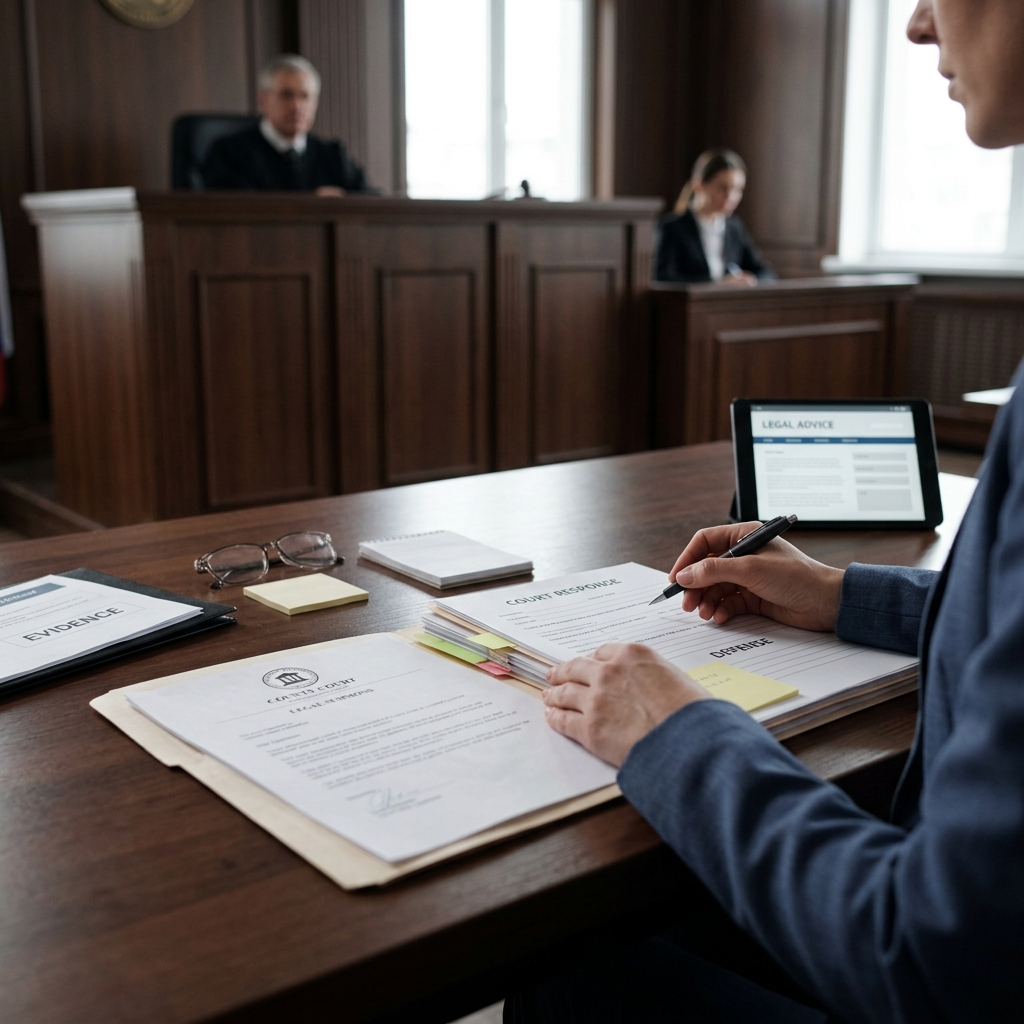
Being sued in small claims court can be stressful, but you have more control than you might think. The key is to act quickly, understand the paperwork, and make informed choices about settlement, defense, or other legal options. This guide walks you through each step so you can protect your rights and present your side of the story effectively.
Understanding Small Claims Court
Small claims courts are designed to resolve disputes involving relatively modest amounts of money in a faster, simpler way than higher courts. Procedures are more informal, and many people represent themselves without a lawyer, although you may still seek legal advice.
- Purpose: Resolve money-related disputes (such as unpaid bills, property damage, or consumer problems) efficiently.
- Lower dollar limits: Each state sets a maximum amount you can sue for; for example, some justice courts limit claims to around $20,000.
- Streamlined process: Shorter hearings, simplified rules of evidence, and forms designed for non-lawyers.
Even though the process is simplified, decisions are still legally binding. A judgment can affect your finances and credit, and it may be enforceable through wage garnishment or seizure of property, depending on state law.
Step 1: Read Every Document Carefully
When you are sued, you will receive official court papers, typically including a summons and a complaint or notice of small claim. These documents explain who is suing you, why, and what the plaintiff wants the court to order.
- Summons: Tells you that you are being sued and sets key deadlines and hearing dates.
- Complaint or claim form: Describes the plaintiff’s version of events and the amount of money they seek.
- Attached evidence: May include contracts, bills, photos, or other documents the plaintiff wants the judge to see.
Read everything slowly and take notes. Identify:
- Who is suing you (an individual, company, landlord, etc.).
- What they claim you did or failed to do.
- How much money they want and how they calculated that amount.
- When and where the hearing or trial is scheduled.
- Any deadline to file a written response or Notice of Intention to Defend or Answer.
Do not ignore these papers. If you fail to respond or appear in court, the judge can issue a default judgment against you, meaning the plaintiff can win automatically.
Step 2: Track Deadlines and Court Requirements
Small claims cases move quickly. Each state has its own rules on how long you have to respond and how much notice you must receive before trial. Missing a deadline can severely limit your options.
| Requirement | Common Example | Action You Should Take |
|---|---|---|
| Respond to summons | Often within about 15–30 days after service, or as stated in your papers. | File your Answer or Notice of Intention to Defend by the deadline noted on the summons. |
| Notice before trial | Some courts require at least 10–13 days notice before trial, depending on how papers were delivered. | If you receive less notice, call the clerk immediately to discuss rescheduling and still attend the scheduled date if no change is confirmed. |
| Subpoena witnesses | Courts may require subpoena requests at least a couple weeks before trial. | Ask the clerk for subpoena forms well before your hearing if you need witnesses compelled to appear. |
Check your local court’s website or self-help center for forms and guidance specific to your state or county.
Step 3: Decide How You Want to Respond
Once you understand the claim, consider your options. Most defendants can choose among several paths, and sometimes you may combine more than one:
- Defend the case fully: File the required response on time and prepare to show why you do not owe what the plaintiff claims.
- Admit part, dispute the rest: Concede you owe something but argue the amount is too high or some charges are unfair.
- File a counterclaim: If the plaintiff actually owes you money or caused you damage, you may be able to bring your own claim in the same case.
- Raise procedural issues: Challenge defects in service, jurisdiction, or legal formality.
- Settle out of court: Try to reach an agreement directly or through mediation and avoid a trial.
- Do nothing: This is almost never in your interest, because it can lead to default judgment.
Before deciding, evaluate the strengths and weaknesses of your position, the financial risk, and whether you have evidence supporting your story.
Step 4: Filing Your Answer or Notice of Intention to Defend
In many jurisdictions, you must file a formal written response—often called an Answer or Notice of Intention to Defend—to inform the court that you plan to contest the claim.
Common steps include:
- Use the specific form referenced in your summons (for example, a combined notice, claim, and summons form in some states).
- State whether you agree or disagree with the plaintiff’s statements. You may briefly explain your side of the story.
- Sign and date the form; some courts require that you certify the truth of your statements under oath.
- File the form with the clerk of the court named in the summons and request a date-stamped copy for your records.
- Provide copies to the plaintiff, usually by mail, if required by local rules.
Always keep copies of everything you file or receive. Organized records make it easier to prepare and present your case.
Step 5: Evaluating Settlement and Mediation
Even if you believe you have a strong defense, resolving the case without a trial can save time, stress, and uncertainty.
Direct Negotiation
You can contact the plaintiff (or their lawyer) to discuss settlement. Before you do:
- Decide what outcome would be acceptable: paying part of the claim, paying in installments, or agreeing to fix a problem.
- Consider whether you are willing to admit any responsibility.
- Prepare to explain your view of the facts clearly and calmly.
If you reach an agreement, put it in writing and make sure it clearly states the amount to be paid, deadlines, and whether the court case will be dismissed once payments are made.
Mediation
Many courts offer or require mediation—a structured conversation with a neutral mediator who helps you and the plaintiff explore settlement options.
To prepare for mediation:
- Organize all relevant documents, such as contracts, receipts, and correspondence.
- Write a brief timeline of events so you can explain the situation clearly.
- Think about possible compromises, including payment plans or partial reductions of the claim.
If you reach agreement, courts often have forms for filing a stipulation or settlement so the case can be closed without trial.
Step 6: Building Your Defense
Whether or not settlement seems likely, you should prepare your case as if it will go to trial. A strong defense rests on both law and facts.
Analyze the Plaintiff’s Claim
Break down the complaint into specific points:
- What conduct are you being accused of (not paying, damaging property, breaching a contract, etc.).
- Which facts you agree with and which you dispute.
- How the plaintiff calculates the amount of money requested.
Consider how an impartial outsider might view the situation and ask whether it appears fair for you to pay all, some, or none of the amount claimed.
Gather Evidence
Courts rely on evidence, not just statements. Begin collecting:
- Written materials: contracts, emails, letters, invoices, account statements, policies, and repair estimates.
- Visual evidence: photographs or videos showing the condition of property or relevant events.
- Financial records: bank statements, receipts, or payment histories showing amounts paid or owed.
- Witness testimony: people who personally saw or heard key events or can speak to the quality of goods and services.
Organize your evidence and label each item as an exhibit. Some courts ask defendants to use letters (Exhibit A, B, C, etc.), and you may need copies for the judge and the plaintiff.
Legal Research and Advice
Small claims courts apply the same laws as other courts, but in a simplified setting. To understand your rights and responsibilities:
- Review statutes or regulations relevant to your type of dispute, such as landlord-tenant laws or consumer protection rules.
- Consult court self-help materials or online guides offered by state judicial branches.
- Consider speaking with a lawyer, even if only for limited advice on weak spots in your case.
- Check whether your homeowners, renters, auto, or liability insurance provides legal defense for the claim.
Step 7: Considering Counterclaims and Additional Parties
If the plaintiff’s actions harmed you financially, you may be entitled to sue them in the same case. This is called a counterclaim.
- Counterclaim: Your claim against the plaintiff, presented together with your defense.
- Cross-claim or third-party claim: In some systems, you may bring claims against co-defendants or additional parties who share responsibility.
Rules for counterclaims and additional parties vary by state. You may need to file separate forms and pay additional fees, and the claim usually must fall within the court’s monetary limits.
Step 8: Exploring Payment Plans and Partial Liability
Sometimes you may acknowledge that you owe money but cannot pay it all at once. Small claims courts often allow or encourage arrangements that make repayment more manageable.
- Proposing installment payments to the plaintiff or to the court.
- Negotiating a reduced lump sum in exchange for prompt payment, especially if the plaintiff prefers certainty.
- Agreeing to perform services or provide repairs as part of a settlement, if appropriate.
If you can resolve the dispute for less than the original claim amount and avoid a judgment, consider that a practical success, even if you pay something.
Step 9: Preparing for the Hearing or Trial
If the case does not settle, you will need to appear in court on the date listed in your notice or as later scheduled by the court. Proper preparation increases your chances of a fair outcome.
Organize Your Presentation
Preparing a clear, concise story helps the judge understand your perspective.
- Outline the main events in chronological order.
- Highlight key facts showing why you are not liable or why the amount claimed is too high.
- Match each point with supporting evidence (documents, photos, witness statements).
Witnesses and Subpoenas
If important witnesses are reluctant to attend, you may ask the court for a subpoena—an order requiring them to appear and testify.
- Request subpoenas from the clerk well before the hearing.
- Verify the date, time, and location so witnesses know where to go.
- Explain to witnesses what topics they may be asked about, without telling them what to say.
Day-of-Hearing Tips
- Arrive early and dress neatly; you do not need formal attire, but a respectful appearance helps.
- Bring all exhibits, copies for the judge and plaintiff, and your outline or notes.
- Listen carefully, avoid interrupting, and address the judge politely.
- Explain clearly what result you are asking for (dismissal, reduced amount, payment plan, etc.).
Step 10: After the Judgment
Once the judge issues a decision, you must understand what it means and what options remain.
- If you win: The court may issue a judgment in your favor or dismiss the plaintiff’s claim. If the plaintiff owes you money, you may need to use enforcement tools such as writs of execution or garnishment, depending on local law.
- If you lose: The judgment will typically state how much you must pay and by when. You may be able to pay voluntarily, negotiate a plan, or appeal the decision if allowed by your state’s rules.
- If you cannot pay: Ask about whether the court or plaintiff will accept installments or other arrangements and seek legal advice about your rights.
Common Mistakes to Avoid
- Ignoring the summons: Failing to respond or appear may lead to default judgment and collection actions.
- Missing deadlines: Late filings can be rejected, and you might lose the chance to present your defense fully.
- Arriving unprepared: Showing up without organized evidence or a clear explanation of your position weakens your case.
- Relying solely on emotion: Judges base decisions on facts and law, not feelings. Focus on proof.
FAQs: Getting Sued in Small Claims Court
Do I need a lawyer in small claims court?
Small claims courts are designed so people can represent themselves, and many defendants do so. However, you may still benefit from consulting a lawyer, especially if the dispute is complex or may affect your credit or business.
What happens if I don’t go to the hearing?
If you do not appear, the judge may enter a default judgment for the plaintiff. That means you could be ordered to pay the full amount requested, plus allowable costs, without presenting your side of the story.
Can I change the hearing date?
Many courts allow rescheduling (continuances) in appropriate circumstances, especially if you did not receive enough notice or have a serious conflict. You usually must contact the clerk and sometimes the plaintiff in advance and explain your reasons.
Can I appeal if I lose?
Appeal rights vary by jurisdiction, but some states allow appeals from small claims decisions to higher courts, often with strict deadlines and additional procedures. Check your local rules or speak to a lawyer promptly after the judgment.
Will the judgment affect my credit?
A money judgment can be part of the public record and may affect your credit report or your ability to borrow, depending on how it is reported by agencies and how state law treats judgments. Paying the judgment and obtaining proof of satisfaction can help limit long-term impact.
Final Thoughts
Being sued in small claims court is serious, but it is manageable when you understand the process. Read your papers carefully, meet every deadline, explore settlement, and present clear evidence supporting your position. Whether you defend fully, negotiate a compromise, or file your own claim, informed action is your best protection.
References
- What To Do When You Have Been Sued in Small Claims Court — Maryland People’s Law Library. 2024-01-01. https://www.peoples-law.org/what-do-when-you-have-been-sued-small-claims-court
- Getting Sued in Small Claims Cases — Colorado Judicial Branch. 2023-06-01. https://www.coloradojudicial.gov/self-help/getting-sued-small-claims-cases
- Getting sued in Small Claims Court — Washington Law Help. 2022-09-15. https://www.washingtonlawhelp.org/en/getting-sued-small-claims-court
- Small claims in California | Self Help Guide — California Courts. 2024-02-10. https://selfhelp.courts.ca.gov/small-claims-california
- General Information – Small Claims Cases — Texas State Law Library. 2023-04-01. https://guides.sll.texas.gov/small-claims
- Filing a Small Claims Case — Texas Justice Court Training Center. 2022-08-01. https://www.tjctc.org/srl/small-claim-plaintiff.html
- Responding to a case filed against me in small claims court — Illinois Legal Aid Online. 2023-07-20. https://www.illinoislegalaid.org/legal-information/responding-case-filed-against-me-small-claims-court
Similar Articles








Read full bio of Sneha Tete


