
Food Sharing with Homeless Protected by First Amendment
Federal appeals court rules that providing meals to the homeless in public qualifies as protected expressive conduct under the U.S. Constitution.
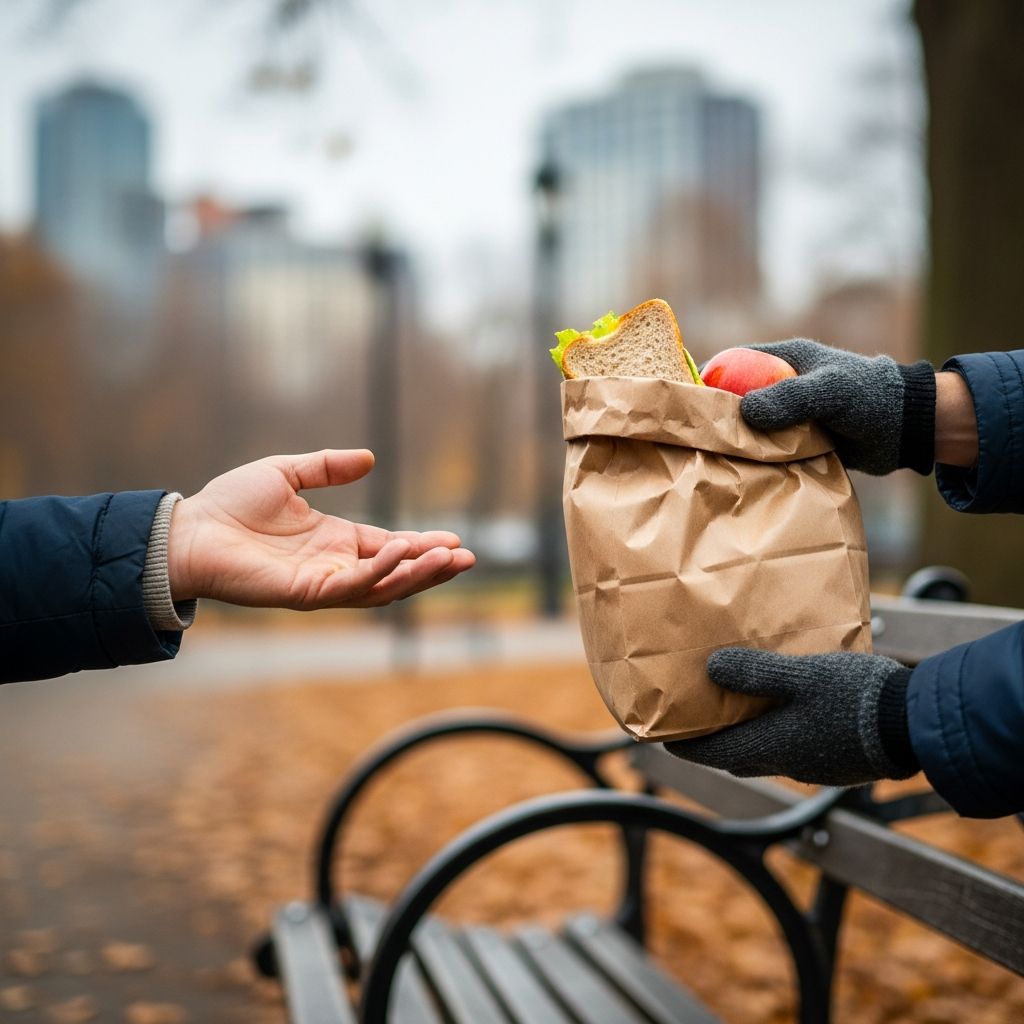
Acts of sharing meals with homeless individuals in public spaces have gained constitutional protection as a form of expressive conduct under the First Amendment, according to a significant ruling by the U.S. Court of Appeals for the 11th Circuit. This decision marks a crucial step in balancing community compassion with local regulations, recognizing food distribution as more than mere charity but a powerful statement on social issues.
Historical Roots of Food as Expression
Throughout human history, communal meals have symbolized solidarity, protest, and care. From ancient feasts marking alliances to modern gatherings protesting inequality, breaking bread together conveys messages of unity and shared humanity. The 11th Circuit drew parallels to iconic events like the Boston Tea Party, where symbolic acts disrupted norms to voice dissent, and biblical references to feeding multitudes as acts of profound expression.
In the context of contemporary America, groups like Food Not Bombs use vegan meals served in public parks to highlight food insecurity, militarism, and homelessness. These events, often featuring banners and organized setups, transform simple picnics into deliberate communications about societal priorities.
The Fort Lauderdale Conflict: A Catalyst for Change
In 2014, Fort Lauderdale enacted ordinances targeting “social services” in parks, explicitly including food provision to meet physical needs. This effectively banned groups from sharing meals with homeless people without permits, which were rarely granted. Volunteers from Fort Lauderdale Food Not Bombs (FLFNB), who held weekly vegetarian share-outs at Stranahan Park, faced arrests for defying these rules.
The group’s gazebo setups, complete with banners displaying a carrot-wielding fist and their name, drew homeless participants amid local debates on vagrancy. Police interventions turned compassionate gatherings into scenes of handcuffs, prompting FLFNB to sue the city for violating their First Amendment rights. A district court initially dismissed the case, deeming the activities insufficiently expressive, but the appeals court overturned this in 2018.
Legal Framework: Defining Expressive Conduct
The First Amendment safeguards not only speech but also symbolic actions intended to convey a particularized message likely understood by observers. Courts apply tests like the one from Spence v. Washington (1974), assessing intent and reasonable comprehension. The 11th Circuit found FLFNB met these criteria: their organized events, amid heated homelessness discussions, signaled advocacy for community care and human rights.
Unlike casual picnics, FLFNB’s gatherings featured tables, signage, and invitations to all, particularly the unhoused. The court noted the backdrop of Fort Lauderdale’s policies, making the message of solidarity unmistakable to a “reasonable observer”. This ruling was unanimous and pioneering among federal appeals courts.
Challenging Permit Schemes and Discretion
Fort Lauderdale’s Park Rule 2.2 required permits for food sharing but lacked clear standards, allowing arbitrary denials. The 11th Circuit deemed this “fatal,” as unbounded discretion invites content-based suppression. In 2021 updates, the court reaffirmed the ban’s unconstitutionality as applied to expressive sharing.
This critique echoes broader concerns over vague ordinances that criminalize poverty. Nationally, cities have proliferated rules restricting public feeding, often under guises of health or aesthetics.
| City Ordinance Type | Key Restriction | First Amendment Challenge Status |
|---|---|---|
| Permit Requirements | Discretionary approval needed | Often struck down for vagueness |
| Group Size Limits | Max 25 people or similar | Tested in multiple circuits |
| Designated Zones Only | Feeding confined to specific areas | Upholds if content-neutral |
This table summarizes common anti-sharing measures and their legal vulnerabilities.
National Landscape of Food-Sharing Restrictions
Since 2013, at least 21 U.S. cities have enacted or tightened bans on public food sharing with the homeless. These join over 100 communities criminalizing survival activities like sleeping outdoors or panhandling, per reports from advocacy groups. About 6% of cities outright prohibit feeding, aiming to reduce visible homelessness but often stifling aid.
- Orlando, Florida: Settled lawsuit allowing feeding with permits after arrests.
- Los Angeles: Caps group sizes and requires 72-hour notices.
- Birmingham, Alabama: Permit fees and hygiene rules challenged successfully.
- Denver, Colorado: Urban camping ban upheld but feeding rules contested.
Such laws disproportionately affect activists and faith groups, prompting First Amendment claims. The National Law Center on Homelessness & Poverty documents how these create de facto criminalization of homelessness.
Implications for Activists and Cities
The FLFNB victory empowers similar groups nationwide, affirming non-religious food sharing as protected speech. Attorneys hailed it as recognizing millennia-old expressions of care. However, cases return to district courts for remedy phases, where cities may refine rules to survive scrutiny—perhaps with objective criteria or ample alternatives.
For municipalities, the ruling urges content-neutral regulations focused on time, place, and manner. Secondary effects like litter or traffic can justify limits if not pretextual. Ongoing litigation tests these boundaries, with FLFNB continuing shares post-ruling.
Broader Social and Policy Ramifications
Beyond law, this decision spotlights America’s homelessness crisis: over 650,000 unhoused nightly, per HUD data. Food sharing addresses immediate hunger but underscores needs for housing-first policies. Critics argue bans push problems underground without solving root causes like affordability.
Supporters of restrictions cite public health, yet evidence shows shared meals build community resilience. The ruling invites dialogue on compassion versus order, potentially influencing urban planning and welfare approaches.
Frequently Asked Questions
Can cities still regulate public food sharing after this ruling?
Yes, but regulations must be content-neutral, with clear standards, ample alternatives, and narrowly tailored to legitimate interests like sanitation.
Does this apply only to activist groups like Food Not Bombs?
No, the logic extends to any organized sharing intended as expression, including religious or charitable events likely conveying a message.
What if a city requires permits with objective criteria?
Such systems may pass muster if they don’t grant officials undue discretion and provide sufficient permit opportunities.
How has this affected other cities’ policies?
Many have revised ordinances to avoid litigation, opting for designated areas or streamlined permits.
Is food sharing protected everywhere in the U.S.?
The 11th Circuit binds Florida, Alabama, and Georgia; other circuits may follow, but nationwide uniformity awaits Supreme Court review.
Conclusion: A Meal as a Message
This landmark case reframes public feeding from potential misdemeanor to constitutional right, blending activism with everyday kindness. As debates on homelessness persist, the judiciary affirms that expression through action—from shared plates to protest banners—remains vital to democracy.
References
- Sharing Food With The Homeless Is Not A Crime — Impact Fund. 2021-08-31. https://www.impactfund.org/social-justice-blog/food-not-bombs-fl
- 11th Circuit rules Fort Lauderdale group feeding homeless is expressive enough for First Amendment protection — Middle Tennessee State University First Amendment Encyclopedia. 2018-08-22. https://firstamendment.mtsu.edu/post/11th-circuit-rules-fort-lauderdale-group-feeding-homeless-is-expressive-enough-for-first-amendment-protection/
- Sharing Food With Homeless People Is Now Protected by First Amendment — Global Citizen. N/A. https://www.globalcitizen.org/en/content/feeding-homeless-first-amendment-protected/
- Court Rules First Amendment Could Protect Food Sharing — Route Fifty. 2018-08. https://www.route-fifty.com/management/2018/08/court-rules-first-amendment-could-protect-food-sharing/150819/
- Sharing Food is Not a Crime — Southern Legal Counsel. N/A. https://www.southernlegal.org/sharing-food-is-not-a-crime
- New Report: The Criminalization of Food-Sharing Practices — National Coalition for the Homeless. N/A. https://nationalhomeless.org/new-report-criminalization-food-sharing-practices/
Similar Articles








Read full bio of medha deb




