
Florida’s Social Media Age Limits: What Parents and Platforms Must Know
A practical, plain-language guide to Florida’s new restrictions on minors’ social media use, and what they mean for families and tech companies.
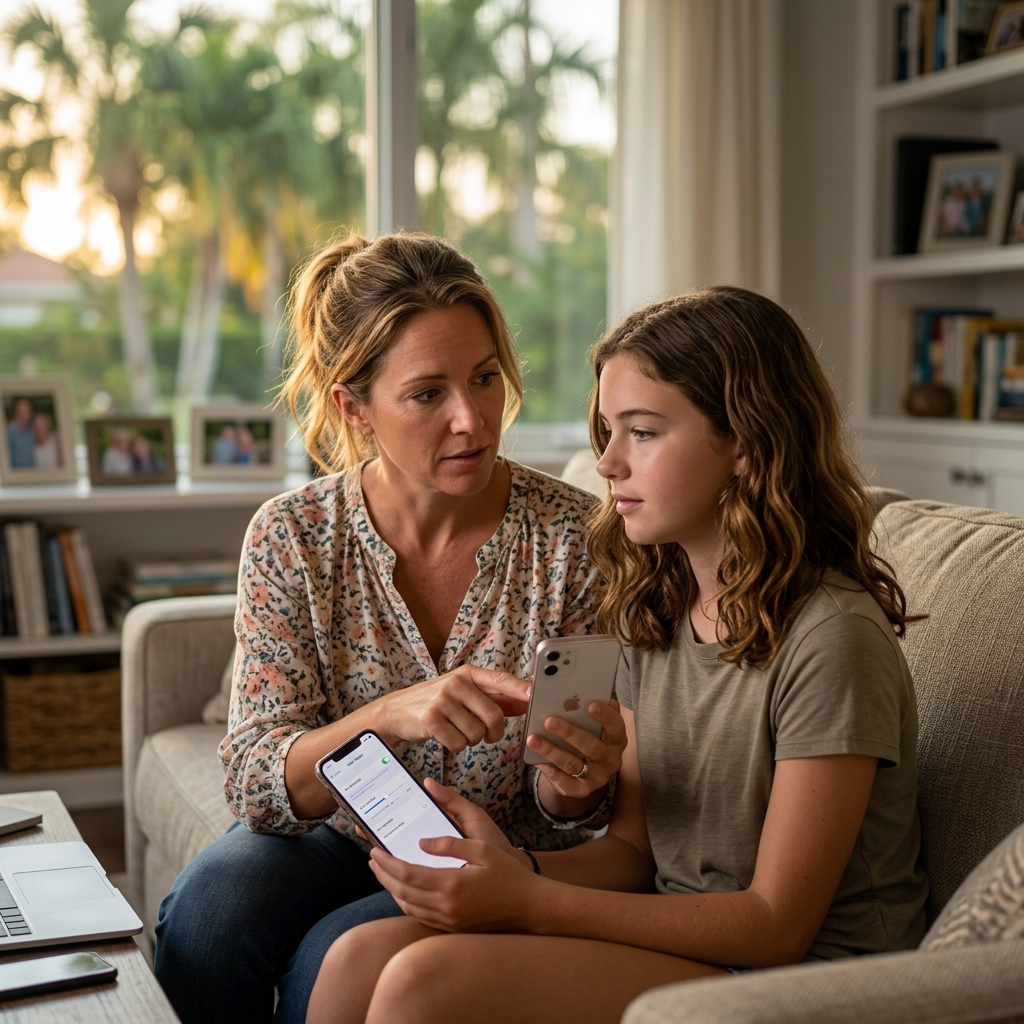
Florida has enacted one of the most far-reaching laws in the United States aimed at limiting minors’ access to social media platforms. The law, commonly referred to as HB 3 – Online Protections for Minors, restricts social media accounts for children under 14 and requires parental consent for 14- and 15-year-olds, while also imposing significant compliance obligations on platforms and age-verification rules for adult content sites.
This article explains what the law does, who it applies to, how it is being enforced, and what parents, teens, and companies should do to prepare.
Background: Why Florida Regulated Minors’ Social Media Use
Florida lawmakers have framed HB 3 as a response to concerns about the mental health and safety of young people online. The statute targets features that legislators view as addictive, such as infinite scrolling, push notifications, and engagement metrics, arguing that these design choices encourage excessive use and expose minors to harmful content.
The law also responds to longstanding debates about:
- Screen time and mental health: Research and public debate have linked heavy social media use to anxiety, depression, and other mental health issues in teens, prompting calls for stronger safeguards.
- Exposure to harmful or explicit material: Lawmakers are particularly concerned about minors encountering sexually explicit content and other materials deemed “harmful to minors” online.
- Data collection and targeted features: The law focuses on platforms that use algorithms and engagement tools to keep young users online longer, reflecting a broader policy effort to address so‑called “addictive” design.
HB 3 is therefore both a child-protection measure and part of a larger national conversation about how to regulate social media and online platforms.
Key Age-Based Rules: Who Can Have an Account?
At the heart of Florida’s law are age thresholds that determine whether minors can hold social media accounts and, if so, under what conditions. The statute is framed as a contract rule: platforms must not enter into contracts with certain minors for social media accounts.
Children Younger Than 14
For children under 14, the rule is straightforward and strict: social media accounts are effectively banned.
- No accounts allowed: Platforms must prohibit minors younger than 14 from becoming account holders.
- Termination of existing accounts: Companies must terminate accounts held by users younger than 14, including accounts that are believed to belong to under‑14 users, and give a 90‑day window for disputes.
- Dispute opportunity: During that 90‑day period, an account holder can attempt to prove they are not under 14; if they do not successfully dispute termination, the account must be permanently closed.
Because most major platforms already bar users under 13 under federal children’s privacy rules, HB 3 goes further by eliminating the possibility of accounts for under‑14 minors, even with parental permission.
Minors Aged 14 and 15
For 14- and 15‑year‑olds, Florida strikes a different balance. They may use social media, but only with explicit parental or guardian consent.
- Consent required: A social media platform must not allow a 14- or 15‑year‑old to enter a contract for an account unless a parent or legal guardian consents.
- Accounts without consent must be closed: If a 14- or 15‑year‑old already has an account and there is no parental consent, the platform must terminate the account.
- Account disputes: As with younger minors, there must be a mechanism for disputing termination—for example, to show that the user is older than 15 or that consent was provided.
Minors Aged 16 and 17
HB 3’s most explicit restrictions focus on under‑16 users, but older minors are not entirely free of regulation. The law also interacts with separate provisions that block under‑18 users from accessing materials considered harmful to minors and require age verification for certain adult content websites.
- Social media: The age‑contract provisions are centered on under‑14 and 14‑15 users, though related litigation has discussed how the law affects broader access for those under 16.
- Adult content sites: Websites featuring explicit content must verify that users are 18 or older through a reliable age‑verification method.
- Harmful materials: Minors under 18 must be blocked from materials deemed harmful to minors, reinforcing the emphasis on content controls.
Summary Table of Age Rules
| Age Group | Social Media Accounts | Parental Consent | Additional Restrictions |
|---|---|---|---|
| Under 14 | Not allowed to hold social media accounts. | Consent cannot override the ban. | Platforms must terminate existing accounts and offer a 90‑day dispute window. |
| 14–15 | Accounts permitted only if contract is accompanied by parental/guardian consent. | Required for new and existing accounts. | Accounts without consent must be terminated; dispute process available. |
| 16–17 | Not explicitly barred in the core age‑contract provisions; subject to related content restrictions. | Consent not generally mandated for accounts in HB 3’s core sections. | Blocked from materials harmful to minors; adult content sites must verify age 18+. |
What Counts as a “Social Media Platform” Under the Law?
Florida does not target specific brand‑name apps in HB 3. Instead, it defines a social media platform functionally, based on how the service operates and how minors use it.
Under the law, a platform is generally covered if it:
- Allows users to upload content or view other users’ content.
- Has at least 10% of daily active users under 16 spending an average of two hours or more per day over the previous 12 months.
- Uses algorithms to analyze user data and select content to display.
- Employs addictive features such as infinite scrolling, push notifications, or visible engagement metrics (likes, shares, reactions).
Because this definition is broad and based on usage patterns, popular platforms such as Instagram, Snapchat, Facebook and YouTube are likely to be covered. Services like basic email or document‑sharing tools generally fall outside this definition.
Enforcement and Penalties for Non‑Compliance
Florida’s law is backed by substantial enforcement mechanisms that apply to social media platforms and, indirectly, provide recourse for affected users.
Government Enforcement
The Florida Department of Legal Affairs (which includes the Attorney General) is empowered to enforce HB 3. Platforms that do not comply face civil penalties under consumer protection law.
- Penalty amount: The law allows for penalties of up to $50,000 per violation for non‑compliant platforms, often framed as violations under the Florida Deceptive and Unfair Trade Practices Act.
- Scope of violations: Each non‑compliant account or failure to terminate may be treated as a separate violation, raising potential liability significantly for large platforms.
- Adult content sites: Separate enforcement applies to websites that fail to implement required age‑verification measures for adult content.
Private Rights and Damages
HB 3 also allows minors to bring legal claims for certain violations. If a platform knowingly or recklessly breaks the age‑based account rules, it may be liable to the minor account holder for damages and attorney’s fees.
- Damages cap: Claimants may be awarded up to $10,000 in damages, plus court costs and reasonable attorney’s fees, for qualifying violations.
- Parents’ ability to sue: Parents and caregivers may sue platforms that wrongfully allow underage children to create accounts, adding an additional layer of risk.
Litigation and Constitutional Challenges
Like similar laws in other states, Florida’s social media restrictions have faced constitutional challenges, particularly under the First Amendment. Technology trade groups and civil society organizations argue that the law improperly restricts minors’ access to speech and interferes with parents’ rights to decide how their children engage online.
Key developments include:
- Initial injunction: A federal district court temporarily blocked enforcement of parts of the law, finding that plaintiffs had raised serious constitutional questions.
- Appeals court stay: A divided panel of the U.S. Court of Appeals for the Eleventh Circuit later allowed Florida to begin enforcing the law while litigation continues, granting a stay of the preliminary injunction.
- Ongoing review: The appeals court is evaluating whether the law impermissibly restricts minors’ access to social media platforms and whether the state’s interest in protecting children justifies the restrictions.
The outcome of these cases will determine whether Florida’s approach becomes a lasting model or is narrowed by constitutional limits, but for now, enforcement has moved forward while legal arguments proceed.
Practical Impact on Families and Teens
Beyond the legal language, HB 3 affects how Florida families manage children’s online lives. Parents, guardians, and teens will need to adapt their habits and expectations.
What Parents Should Do
Parents in Florida can take several steps to navigate the new rules and protect their children’s online experiences:
- Confirm your child’s age on platforms: Check existing accounts to ensure that birth dates and age information are accurate. Incorrect ages could lead to wrongful termination or missed consent opportunities.
- Decide whether to consent for 14- and 15‑year‑olds: Consider your child’s maturity, mental health, and online behavior before granting consent for social media accounts.
- Use platform tools: Many platforms provide parental controls, time limits, and content filters. Use these tools in combination with the law’s protections.
- Talk openly with children: Explain why some accounts may disappear or require your approval, and discuss healthy online habits and privacy.
- Monitor for harmful content: Even with legal protections, teens can encounter inappropriate material. Ongoing conversation and supervision remain essential.
Considerations for Teens
Teenagers should understand that these rules are legal requirements, not simply platform policies. For 14- and 15‑year‑olds, access to social media now depends on parental involvement, and under‑14 users will see accounts removed regardless of consent.
- Respect age limits: Misrepresenting age may violate terms of service and could undermine dispute claims if accounts are terminated.
- Involve parents early: For those eligible, talking with parents about why a social media account is needed and how it will be used can help secure informed consent.
- Adjust communication habits: Teens may need to rely more on messaging apps or platforms not covered by the law or to shift some interactions offline.
Compliance Challenges for Social Media Platforms
For companies, HB 3 raises complex issues about age verification, account management, and feature design. Major platforms already have minimum age policies, but Florida’s law adds state‑specific obligations that may require additional infrastructure.
Key implementation challenges include:
- Age verification and assurance: Platforms must develop ways to assess whether users are younger than 14 or are 14- or 15‑year‑olds without parental consent. This can involve document checks, third‑party verification services, or probabilistic age‑assurance systems.
- Account termination workflows: Companies must build automated and manual processes to flag accounts likely held by under‑14 users and close them within the required time frame, while offering dispute procedures.
- Consent management: For 14- and 15‑year‑olds, platforms need mechanisms to collect, record, and verify parental or guardian consent and to link that consent to specific accounts.
- Feature adjustments: Because the law targets addictive features and harmful content, platforms may adjust default settings for minors, limit notifications, or alter how engagement metrics are displayed to young users.
- State‑specific compliance: Companies operating nationally must decide whether to geo‑target enforcement for Florida users or apply similar rules more broadly to simplify operations.
Frequently Asked Questions (FAQs)
1. Does Florida’s law ban all social media for minors?
No. The law bans accounts for children under 14 and requires parental consent for 14- and 15‑year‑olds. Older minors may still use social media, but they are subject to restrictions on harmful content and age‑verification for adult sites.
2. Can a parent override the under‑14 ban by giving consent?
No. Parents cannot override the ban for children younger than 14. HB 3 does not allow parental consent to substitute for the legal prohibition on accounts for under‑14 minors.
3. What happens if my 14‑year‑old already has multiple social media accounts?
If your child is 14 or 15, platforms must obtain parental or guardian consent for those accounts. Accounts without consent may be subject to termination under the law, though platforms must provide a process to dispute termination, for example by proving age or confirming consent.
4. Is the law currently being enforced despite ongoing court challenges?
Yes, a divided federal appeals court granted Florida’s request to enforce the law while litigation continues, allowing HB 3’s core provisions to go into effect pending final judicial review.
5. Which platforms are likely to be affected?
The law applies based on platform features and usage patterns rather than brand names, but court filings and commentary indicate that widely used platforms like Instagram, Snapchat, Facebook and YouTube are among those likely covered.
6. Are messaging apps or email services included?
Services used primarily for email, cloud storage, or document sharing and collaboration are generally not included in the defined category of social media platforms under related state frameworks, though companies should review the law’s definitions closely.
References
- What to Know About Florida’s New Social Media Law — Social Media Victims Law Center. 2025-01-02. https://socialmediavictims.org/blog/what-to-know-about-floridas-new-social-media-law/
- Mother May I? Florida and Utah Recently Passed Regulations for Minors’ Use of Social Media Platforms — Sheppard Mullin. 2024-04-11. https://www.sheppard.com/insights/blogs/mother-may-i-florida-and-utah-recently-regulations-for-minor-use-of-social-media-platforms
- Florida Bans Social Media for Kids Under 14 — Britannica ProCon.org. 2024-04-02. https://www.britannica.com/procon/Florida-Bans-Social-Media-for-Kids-Under-14
- Florida gets OK to enforce social media law banning kids under 14 — Center for Public Integrity Florida. 2025-11-26. https://www.cfpublic.org/politics/2025-11-26/florida-gets-ok-to-enforce-social-media-law-banning-kids
- Chapter 501 Section 1736 – 2024 Florida Statutes — Florida Senate. 2024-04-01. https://www.flsenate.gov/laws/statutes/2024/501.1736
- Restricting Minors’ Access to Social Media: Divided Ruling over Florida Law Reveals First Amendment Rifts — American Enterprise Institute. 2025-12-03. https://www.aei.org/technology-and-innovation/restricting-minors-access-to-social-media-divided-ruling-over-florida-law-reveals-first-amendment-rifts/
Similar Articles








Read full bio of Sneha Tete


