
Police, Ring Cameras and the New Limits on Digital Surveillance
How recent changes to Ring’s law-enforcement policies reshape police access, digital privacy, and your home security choices.
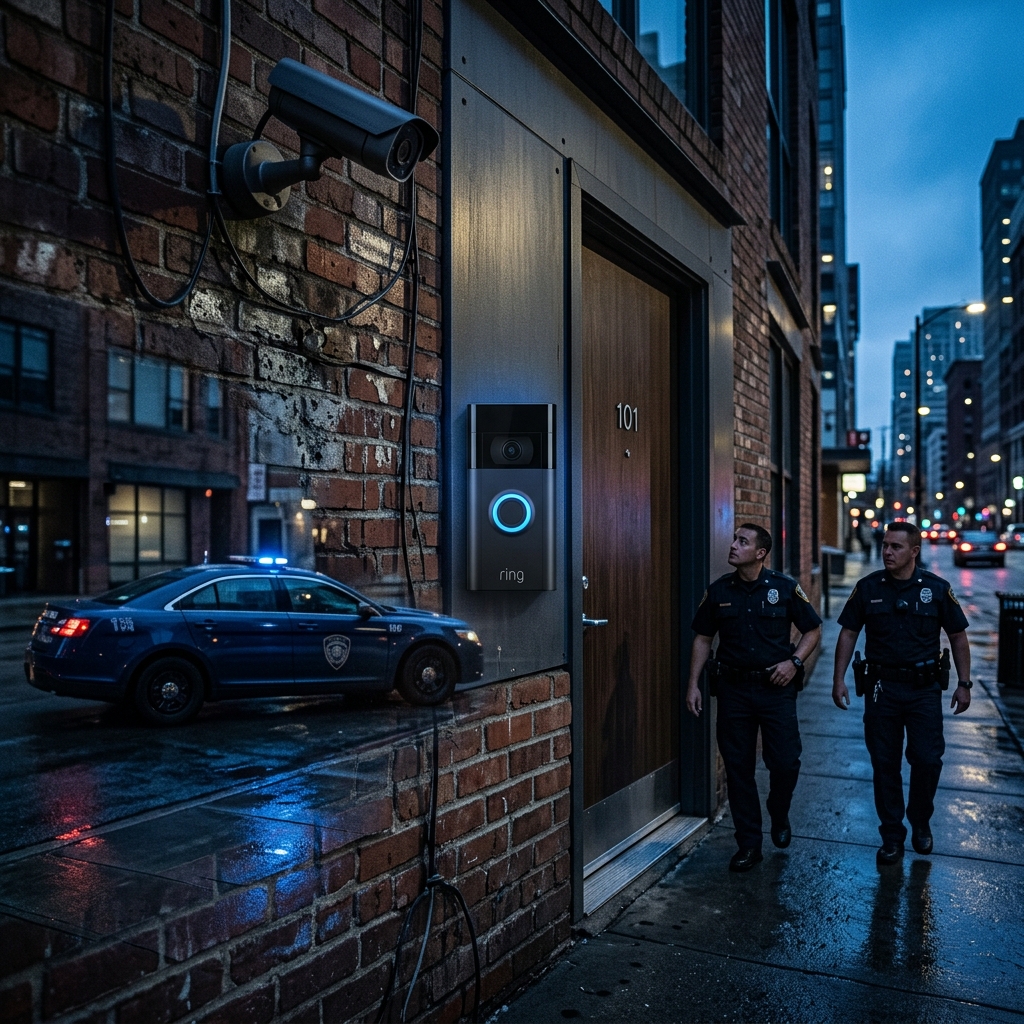
Internet-connected doorbells and home cameras have transformed neighborhood security, but they have also opened a direct window into private life for companies and, potentially, for government agencies. Recent changes to how police can request footage from Amazon-owned Ring have narrowed some of that access, raising important questions about digital privacy, warrants, and the future of home surveillance.
This article explains what has changed, how law enforcement can still obtain Ring videos, why the old “ping your Ring” approach drew controversy, and what practical steps Ring users can take to protect their privacy while still benefiting from smart security technology.
From Seamless Police Requests to New Limits
For years, Ring maintained partnerships that made it easy for local police departments to ask nearby camera owners for video clips through Ring’s own app-based tools. These arrangements blurred the boundary between private consumer technology and public law enforcement infrastructure and sparked sustained criticism from privacy advocates and civil-liberties organizations.
In early 2024, Ring announced that police departments would no longer be able to initiate direct video requests from users through the Neighbors app, effectively ending a streamlined, built-in channel for mass requests for footage. Instead, officers must now rely on more traditional investigative methods — such as knocking on doors, issuing legal process, or using other platforms — to locate relevant recordings.
Although this shift means police can no longer “ping” a large group of Ring owners as easily as before, it does not fully cut off access. Footage can still be provided voluntarily, sought via warrant or court order, or obtained in clearly defined emergencies.
How Police Still Access Ring Footage
The end of in-app mass requests does not mean law enforcement is locked out of Ring’s ecosystem. Rather, access is now governed by a mix of legal process, emergency exceptions, and user consent. Broadly, there are three main pathways.
1. Formal Legal Process: Warrants and Court Orders
Like most technology companies, Ring responds to binding legal demands for information. When police present a valid search warrant, court order, or other lawful request, the company may provide account information or stored videos that fall within the scope of the order.
- Judicial oversight: A warrant generally requires a judge to find probable cause, adding a layer of review before police obtain footage.
- Defined scope: Legal documents specify what data may be provided and for what time period, helping limit how much material is shared.
- Company review: Ring’s legal team evaluates each request and can reject or narrow demands that appear overbroad or inconsistent with applicable law.
Ring publishes transparency reports summarizing how many requests it receives and how often it discloses information, a practice intended to give the public a basic picture of law-enforcement access to customer data over time.
2. Emergency Circumstances Without a Warrant
Most major tech providers maintain an emergency disclosure policy. Under this policy, companies may voluntarily provide limited data to police without a warrant if officers claim the situation involves an imminent threat to life or serious physical harm.
According to consumer privacy reporting, Ring is no exception: it may share videos in urgent, life-threatening scenarios, prioritizing rapid response over standard legal formalities. This practice is not unique to Ring; similar emergency disclosure mechanisms exist at other large technology firms.
However, emergency pathways worry privacy advocates because the precise definition of “imminent danger” can be interpreted broadly. Critics argue these exceptions risk becoming routine rather than reserved for genuinely extraordinary situations.
3. Voluntary User Sharing
Even without direct mass requests, police can still obtain footage directly from camera owners:
- Investigators may go door to door asking residents if they captured video of a specific incident.
- Individuals can choose to export and send clips from the Ring app to officers by email or on physical media.
- Residents might post relevant footage on social media, making it publicly accessible.
In these cases, the decision rests with the user. Officers do not receive automatic access to live feeds or historical footage; they depend on voluntary cooperation or traditional legal tools.
New Corporate Partnerships: Limits on Direct “Pinging,” New Paths to Requests
While Ring has dialed back one method of police contact, it has simultaneously pursued new partnerships that integrate its devices more deeply into investigative workflows. Agreements with companies such as Flock Safety and Axon create fresh pathways for officers to seek evidence from Ring users, even though they no longer initiate requests directly within Ring’s own app.
Ring and Flock Safety
Flock Safety provides software platforms used by police and municipalities to manage data from cameras and license-plate readers. In 2025, Ring and Flock announced a collaboration that would allow law enforcement agencies using Flock software to submit requests for video evidence that flow to Ring users through a Community Requests-style system.
Under this arrangement:
- Police generate a request within Flock’s system describing the incident, location, and timeframe.
- Ring users in the relevant area receive a notification — often via the Neighbors feed or a similar interface — asking if they are willing to share footage.
- Citizens decide whether to respond; police do not see who receives the request or who declines to participate.
- Shared videos are transferred to Flock’s platform and used solely for the identified investigation, according to company statements.
Company representatives emphasize that participation is voluntary and that officers cannot simply browse or “tap into” live feeds without explicit consent.
Ring and Axon
Ring has also pursued integration with Axon, a firm known for body cameras and digital evidence management systems. Reports indicate that Axon’s platform could host community-style requests from verified public-safety agencies, allowing those agencies to solicit video evidence from Ring users within a defined area.
The combined impact of these partnerships, according to independent reporting and advocacy organizations, is a partial re-introduction of law-enforcement request mechanisms that had previously been scaled back, though with new technical and policy constraints.
| Feature | Earlier Ring Police Requests | Current/Partnership-Based Requests |
|---|---|---|
| Who initiates the request? | Local police directly inside Ring’s Neighbors app. | Police via third-party platforms (Flock, Axon), then routed to Ring users. |
| Visibility to users | Requests appear in the Neighbors feed for nearby users. | Notifications or feed posts tied to an external system, but still user-facing. |
| Ability to refuse | Users could ignore the request, but police outreach was streamlined. | Users retain the option to decline; agencies do not see who received or refused. |
| Live-stream access | Not a standard feature, though emergency disclosures existed. | Advocates warn of emerging tools that may allow live access with consent. |
Privacy Concerns and Civil-Liberties Critiques
The evolution of Ring’s law-enforcement policies sits at the center of a broader debate: how much surveillance power should private companies offer to public agencies, and under what safeguards?
Mass Surveillance Risks
Digital-rights advocates argue that when millions of privately owned cameras can be rapidly queried by police, the result looks less like traditional, targeted investigation and more like a pervasive surveillance network. Critics warn that:
- Entire neighborhoods can be mapped and monitored by compiling footage from many individual homes.
- Unregulated sharing risks capturing sensitive moments, visitors, political activity, or everyday life unrelated to crime.
- Marginalized communities may experience disproportionate scrutiny if policing strategies rely heavily on constant video monitoring.
Organizations such as the Electronic Frontier Foundation argue that Ring’s newer partnerships roll back important reforms that had initially sought to distance the company from direct police integration.
Data Security and Government Access
Security risks extend beyond local police. Reports highlight worries that data pipes connecting Ring to law-enforcement platforms might eventually be used or expanded by federal agencies, including those involved in immigration enforcement or national security. While company statements distinguish between local public-safety use and federal access, advocates remain cautious about how data-sharing ecosystems can grow over time.
Even absent federal partnerships, any stored footage is vulnerable to unauthorized access if systems are compromised, accounts are hacked, or credentials are misused. This makes strong encryption and careful account management critical for privacy-conscious users.
Practical Steps for Ring Users to Protect Privacy
Ring customers retain considerable power over how their videos are handled. With thoughtful settings and usage habits, it is possible to gain security benefits while limiting unnecessary exposure to law enforcement and other third parties.
Use End-to-End Encryption Where Available
Ring offers an option for end-to-end encryption (E2EE) on certain devices. When enabled, video streams are encrypted both when in transit and when stored, meaning even Ring cannot view the footage because it lacks the decryption keys.
- Stronger confidentiality: E2EE greatly reduces the ability of third parties, including police and the company itself, to access stored recordings.
- Trade-offs: Some convenience features may be limited when E2EE is active, and not all devices or integrations support it. Understanding these trade-offs is important before enabling it.
Adjust Sharing and Notification Settings
Within the Ring app, users can manage settings related to the Neighbors feed and request visibility. For example, Consumer Reports describes how to disable Community Requests so that users are no longer shown law-enforcement solicitations for video in their feed.
Key actions include:
- Reviewing Neighbors and feed settings to control what types of posts and requests appear.
- Limiting automatic sharing features and avoiding unnecessary public posting of footage.
- Carefully choosing which clips are stored in the cloud and for how long.
Evaluate When to Cooperate with Police Requests
When officers ask for video, it may be helpful for community safety to provide footage, especially for serious offenses. At the same time, residents have the right to ask questions and set boundaries.
Before sharing:
- Clarify the nature of the investigation and what time frame and angle are needed.
- Consider whether the clip contains unrelated private moments that could be edited out.
- Ask whether there is a warrant or legal order if the request feels broad or intrusive.
These conversations can help balance support for legitimate investigations with respect for personal privacy.
Frequently Asked Questions
Can police still get my Ring footage even though they cannot directly ping the app?
Yes. Police can still obtain footage through warrants, court orders, emergency disclosure requests, or by asking you directly. What has changed is that they no longer have a built-in feature to mass-request clips from nearby users solely through Ring’s own Neighbors interface.
Do officers need a warrant every time they want Ring videos?
Not always. Formal legal process is generally required for routine access to stored videos, but emergency disclosure policies allow companies to share limited data without a warrant in cases of imminent danger. Additionally, you can voluntarily hand over footage without any warrant if you choose.
Can law enforcement watch my Ring cameras live?
By default, police cannot log in and watch your cameras in real time. Some emerging tools discussed by advocacy groups would allow live streaming with explicit user consent, but they still depend on you choosing to grant that access and are not standard automatic features.
Will federal agencies like immigration authorities use Ring data?
Company statements and reporting note that certain partnerships are limited to local public-safety agencies and do not provide direct access to federal immigration enforcement. Nonetheless, privacy advocates remain wary that data-sharing systems can evolve and emphasize the importance of strong safeguards and public oversight.
What is the most effective way to keep my Ring videos private?
Enabling end-to-end encryption on supported devices, reducing unnecessary cloud storage, limiting public sharing, and carefully reviewing request notifications are among the best ways to maintain control over your footage. These steps ensure that, in most circumstances, only you can view and decide how to use your recordings.
What These Changes Mean for the Future of Home Surveillance
The shift away from direct in-app police requests, and the rise of new partnership-based pathways, illustrates a broader tension: modern security tools can both empower individuals to protect their homes and amplify government surveillance capabilities. Ending easy “ping” access for police is a step toward restoring some boundaries, but the underlying infrastructure for remote evidence collection remains powerful.
Ultimately, the balance between safety and privacy will depend on several factors: how rigorously companies implement encryption, how courts interpret the limits of emergency access and warrants, how transparent police and technology firms are about their practices, and how informed and engaged users are when configuring their devices.
For anyone using Ring or similar products, understanding these dynamics is no longer optional. It is part of responsible digital citizenship — knowing not only how to secure your front door, but also how to guard the digital doorway that connects your home to law enforcement and the broader surveillance ecosystem.
References
- Can Federal Law Enforcement Access Your Ring Doorbell Videos? — Consumer Reports. 2024-02-08. https://www.consumerreports.org/electronics/personal-information/can-federal-law-enforcement-access-your-ring-doorbell-videos-a4894322123/
- Law Enforcement Information Requests — Ring. 2025-01-01 (reporting year reference). https://ring.com/law-enforcement-information-requests
- Amazon Ring Cameras Deeper Into Policing With Flock Safety, Axon — CNBC. 2025-10-16. https://www.cnbc.com/2025/10/16/amazon-ring-cameras-surveillance-law-enforcement-crime-police-investigations.html
- Amazon’s Ring Cameras Push Deeper Into Police and Government Surveillance — CNET. 2025-10-21. https://www.cnet.com/home/security/amazons-ring-cameras-push-deeper-into-police-and-government-surveillance/
- Amazon Ring Cashes in on Techno-Authoritarianism and Mass Surveillance — Electronic Frontier Foundation. 2025-07-30. https://www.eff.org/deeplinks/2025/07/amazon-ring-cashes-techno-authoritarianism-and-mass-surveillance
- Ring Says Police Partnerships Help Solve Crimes. What Does It Mean for Privacy? — WBUR Here & Now. 2025-09-30. https://www.wbur.org/hereandnow/2025/09/30/ring-police-partnerships
- Ring Expands Law Enforcement Access Amid Renewed Privacy Questions — First Coast News (Facebook post linking to news report). 2024-01-24. https://www.facebook.com/FirstCoastNews/posts/ring-expands-law-enforcement-access-amid-renewed-privacy-questions-click-the-lin/1265057945655293/
Similar Articles








Read full bio of Sneha Tete


