
Suing Over A Negative Online Review: Practical Steps For 2025
Negative reviews sting, but rushing into a lawsuit can create bigger legal, financial, and reputational problems for your business.
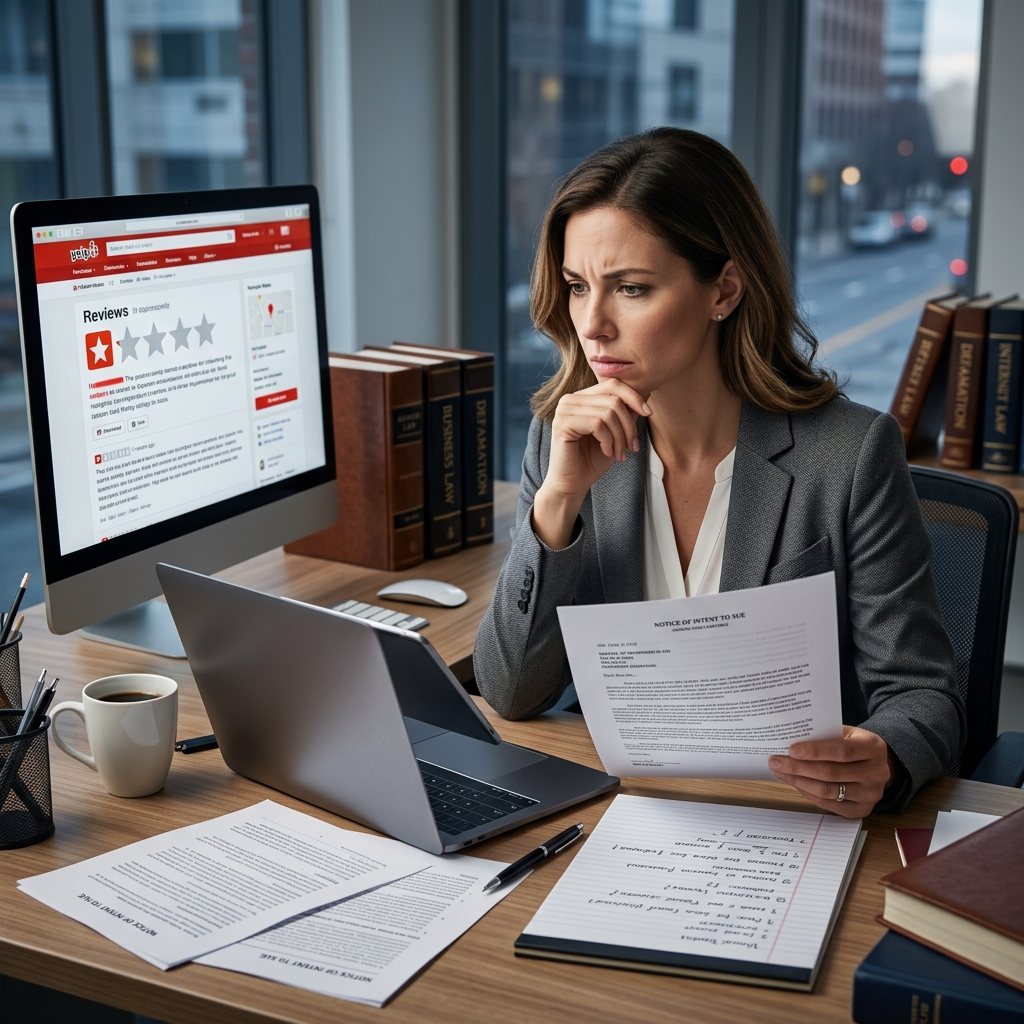
Online reviews can make or break a business. A glowing five-star rating can drive new customers, while a harsh one-star review can feel like a personal attack and a real threat to your livelihood. Before you consider suing over a negative comment, it is essential to understand what the law actually protects, when a review crosses the line into defamation, and why a lawsuit is often the least effective way to repair the damage.
This guide explains the legal framework around online reviews, practical steps you can take to respond, and situations where legal action may be appropriate. It is general information, not legal advice, but it can help you avoid costly missteps when emotions are running high.
Why Negative Online Reviews Matter So Much
Consumers rely heavily on online reviews when deciding where to eat, which contractor to hire, or which professional service to use. A single detailed negative review can influence dozens or hundreds of potential customers, especially if it appears near the top of a search results page or on a major platform.
For business owners, this can create intense pressure. You may worry that:
- Revenue will drop if the review scares away new customers.
- Long-term reputation will suffer because bad reviews tend to stand out more than good ones.
- Future clients will misinterpret one unhappy experience as your standard level of service.
- Competitors could exploit the review to position themselves as a better alternative.
These concerns are understandable. However, responding impulsively — especially by threatening legal action — can magnify the problem and draw more attention to the review.
Opinion vs. Defamation: The Core Legal Distinction
Most negative reviews are legally protected because they express personal opinions or truthful accounts of a consumer’s experience. The key legal issue is whether the review contains a false statement of fact that harms the business’s reputation.
| Type of Statement | Example | Likely Legal Status |
|---|---|---|
| Subjective opinion | “In my opinion, the service was terrible.” | Generally protected speech; not defamation. |
| True factual statement | “The contractor arrived two hours late to our appointment.” | Protected; truth is a complete defense to defamation. |
| False factual allegation | “This business overcharged me and altered my invoice” (if untrue). | May be defamatory if it is false and causes reputational or financial harm. |
| Harassing or abusive content | “The owner is a disgusting thief” with slurs or violent language. | May violate platform rules and could support a defamation or harassment claim. |
To be defamatory, a statement typically must:
- Assert or imply a specific fact about the business or owner.
- Be false – the law does not punish truthful criticism.
- Tend to harm reputation, leading to loss of customers or standing in the community.
- Be made with at least negligence regarding the truth, and sometimes with actual malice if public figures are involved.
By contrast, statements that are merely unflattering, annoying, or harshly worded but clearly opinion are usually not actionable.
The Consumer Review Fairness Act: Protecting Honest Reviews
In the United States, a key federal law affecting online reviews is the Consumer Review Fairness Act (CRFA). The CRFA was enacted to stop businesses from using contract terms to silence or punish honest consumer feedback.
Under the CRFA, businesses generally may not include standardized provisions that:
- Prohibit customers from posting reviews of their products, services, or conduct.
- Impose a fee, penalty, or other punishment on someone who leaves a review.
- Require customers to transfer their intellectual property rights in the content of their reviews to the business.
However, the law allows companies to restrict or seek removal of reviews that:
- Contain confidential or private information, such as medical or financial details.
- Are libelous, harassing, abusive, obscene, or vulgar, or inappropriate regarding race, gender, or other characteristics.
- Are unrelated to the company’s products or services.
- Are clearly false or misleading.
For business owners, this means you cannot legally silence all criticism, but you do have some recourse when reviews cross clear lines of abuse or deception.
Why Suing Over a Review Is Usually a Bad First Move
Even when a review feels unfair, jumping directly to a lawsuit can create serious downsides. Courts in many jurisdictions have seen a rise in defamation claims tied to online comments, but only a fraction result in significant damages. Before filing a complaint, consider these risks:
- High legal costs: Defamation cases are fact-intensive, require evidence, and often drag on. Legal fees can easily exceed the economic harm from a single review.
- Anti-SLAPP laws: Many states have anti-SLAPP (Strategic Lawsuits Against Public Participation) statutes that allow courts to dismiss lawsuits aimed at silencing speech and can require plaintiffs to pay the defendant’s legal costs.
- Uncertain outcome: You must prove falsity, harm, and the appropriate mental state of the reviewer (negligence or malice). This is not simple, especially when the review mixes opinion and fact.
- The Streisand effect: Suing can draw attention to the very review you want people to ignore. News coverage or social media discussion may amplify the negative comment far beyond its original audience.
- Customer backlash: Potential customers may view litigation as heavy-handed or hostile to feedback, damaging your brand’s image of fairness and openness.
For these reasons, many legal practitioners advise exploring non-litigation options first and reserving court action for truly extreme cases involving demonstrably false, malicious, and damaging statements.
Constructive Ways to Respond to a Negative Review
Instead of threatening to sue, you can often turn a negative review into an opportunity to demonstrate professionalism and care. Thoughtful responses can reassure future customers that you take problems seriously and are willing to fix them.
1. Pause and Assess the Situation
Before acting, take time to review the comment calmly:
- Identify any specific complaints about your product or service.
- Check whether any alleged facts are accurate or partially accurate.
- Determine whether the tone is harsh but still within normal consumer criticism, or whether it becomes abusive or clearly false.
- Evaluate how visible the review is (e.g., front page of search results vs. buried among many others).
2. Craft a Professional Public Response
On most platforms, you can reply to the review. A measured, courteous response can signal to other readers that you take feedback seriously. Consider:
- Thanking the reviewer for raising the issue, even if you disagree with their assessment.
- Briefly explaining relevant facts (without revealing private customer information).
- Offering a way to resolve the problem offline, such as a phone call or email.
- Avoiding personal attacks, sarcasm, or threats, which may reflect poorly on your brand.
This approach often reassures prospective customers more than a dispute over who is “right” and shows you as solution-oriented.
3. Reach Out Privately
In some cases, contacting the reviewer directly can defuse tension. Many platforms allow businesses to send private messages, or you may have the customer’s contact information from prior transactions.
When you reach out:
- Express empathy and a genuine desire to understand what went wrong.
- Offer concrete steps to make things right — such as correcting an error, issuing a refund where appropriate, or offering a replacement.
- Once the issue is resolved, politely ask if they would consider updating or removing the review.
Not every reviewer will respond, but many will appreciate the gesture and are willing to revise a comment once they feel heard.
4. Flag Content That Violates Platform Policies
Major review platforms and search engines have policies against certain types of content, including threats, hate speech, and clearly false information. If a review crosses those lines, you can:
- Use the platform’s flagging tools (often accessed via a flag icon or three-dot menu next to the review).
- Provide a brief explanation and any supporting documentation showing why the review violates the platform’s rules.
- Follow up through the platform’s formal complaint or support channels if the issue is serious.
Still, be aware that under the U.S. Communications Decency Act, platforms are generally not liable for content posted by users and are not required to remove reviews simply because a business disagrees with them.
When Legal Action May Be Appropriate
Although lawsuits should not be your default response, some situations may justify consulting an attorney and considering formal legal steps.
Legal action becomes more plausible when:
- You have
the review contains false factual statements, not just harsh opinions. - The reviewer appears to be a competitor or malicious actor rather than a genuine customer.
- The review has caused substantial, documented financial harm, such as lost contracts or demonstrable drops in revenue tied to the comment.
- The content includes serious accusations (fraud, criminal conduct, professional misconduct) that are provably untrue.
- Non-legal remedies — responses, outreach, flagging, negotiation — have all failed.
Potential legal tools include:
- A cease and desist letter requesting removal or correction of clearly false statements.
- A defamation lawsuit against the individual poster, possibly including discovery to identify anonymous reviewers through subpoenas.
- Action against a competitor for false advertising or unfair competition if fake reviews are part of a broader strategy to mislead customers.
Given the complexity of defamation law and the risk of anti-SLAPP penalties, you should always consult an attorney experienced in online defamation or media law before taking these steps.
Protecting Your Business Reputation Proactively
Reducing the impact of occasional negative reviews is easier if you invest in a strong, positive online presence. Consider these preventive strategies:
- Encourage satisfied customers to leave reviews on major platforms. A few bad comments are less influential when surrounded by many positive accounts.
- Monitor key review sites regularly so you can respond promptly and calmly to new feedback.
- Train staff in customer service and complaint resolution to minimize experiences that lead to harsh reviews.
- Document transactions and communications where appropriate, which can be helpful if you later need to demonstrate that a specific claim is false.
- Develop a written policy for how your business responds to online criticism to help avoid emotional reactions.
Over time, a pattern of constructive engagement and high-quality service will do more to protect your reputation than any legal strategy.
Frequently Asked Questions
Can a business sue someone for a negative online review?
Yes, a business can file a lawsuit, but it will only succeed if the review includes false statements of fact that caused reputational or financial harm and meets the legal standards for defamation. Truthful reviews and opinions are generally protected.
What makes a review defamatory instead of just rude?
A review may be defamatory if it falsely asserts specific facts, such as accusing a business of criminal behavior, fraud, or serious professional misconduct, and those statements injure reputation. Simply saying the service was “terrible” or “disappointing” is typically protected opinion.
Can I put a clause in my contracts banning negative reviews?
Standardized contract clauses that ban negative reviews or penalize customers for honest feedback are generally illegal under the Consumer Review Fairness Act. You risk federal enforcement and penalties if you use such terms.
Are platforms like review websites liable for false reviews?
In the U.S., websites and online platforms are typically protected from liability for user-generated content under the Communications Decency Act. They may remove content that violates their policies, but they are not usually legally responsible for false statements made by users.
When should I contact a lawyer about a review?
You should consider legal advice when a review contains serious, provably false allegations, appears to be part of a malicious or competitive campaign, or has led to significant, documented business losses. An attorney can help you weigh costs, risks, and potential outcomes.
References
- Can I Get Sued for a Negative Online Review? — Super Lawyers. 2021-06-10. https://www.superlawyers.com/resources/civil-rights/can-i-get-sued-for-a-negative-online-review/
- How To Fight Back Against a Bad Online Review — Rocket Lawyer. 2023-03-01. https://www.rocketlawyer.com/business-and-contracts/business-operations/legal-guide/how-to-fight-back-against-a-bad-online-review
- Consumer Review Fairness Act: What Businesses Need to Know — Federal Trade Commission. 2017-02-01. https://www.ftc.gov/business-guidance/resources/consumer-review-fairness-act-what-businesses-need-know
- Managing Negative Reviews: Legal Risks and Solutions — Klemchuk LLP. 2022-05-15. https://www.klemchuk.com/ideate/managing-negative-customer-reviews
- Online defamation: When a bad review may cross the line — Johns, Flaherty & Collins. 2019-10-01. https://www.johnsflaherty.com/blog/online-defamation-when-a-bad-review-may-cross-the-line
Similar Articles








Read full bio of medha deb


