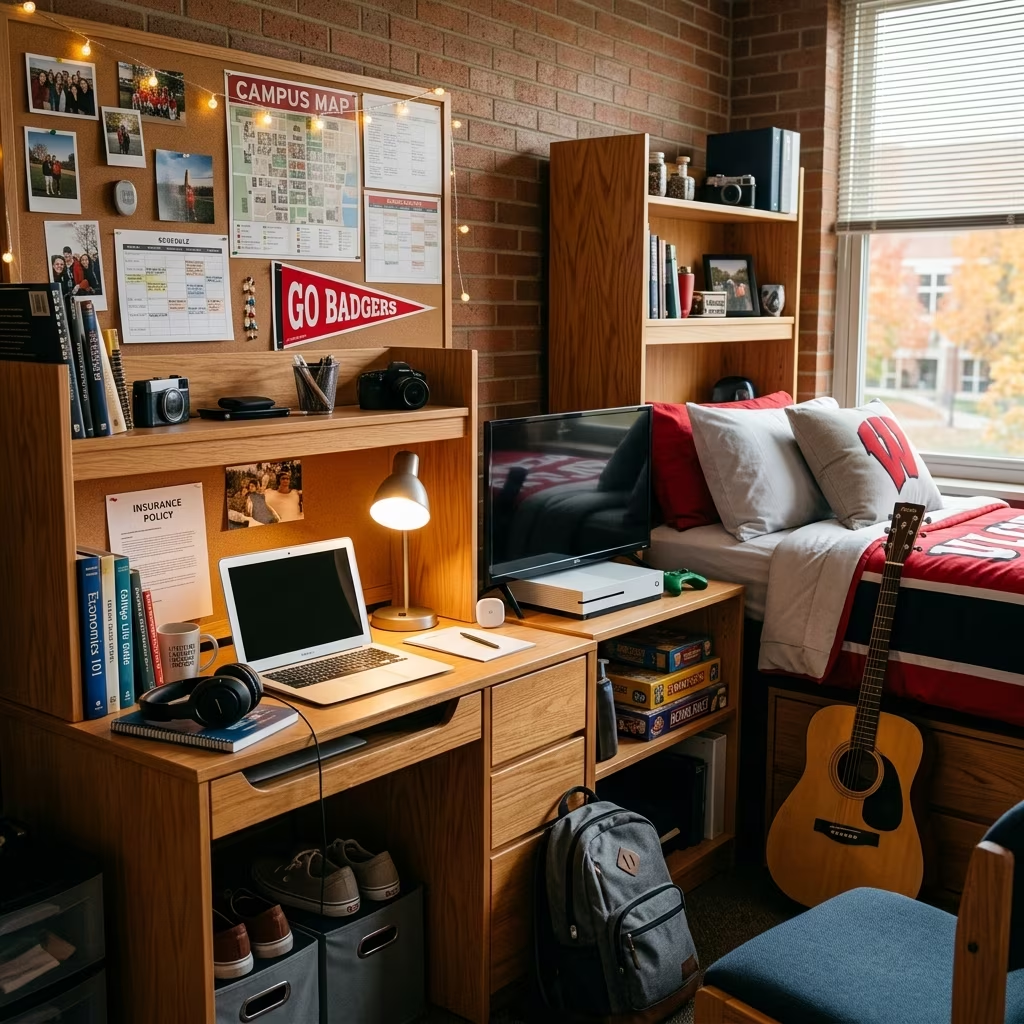
Sending a student to college means moving laptops, phones, textbooks, and other personal items into a shared living space that you do not control. While universities typically insure their buildings, they generally do not cover a student’s personal belongings if they are stolen, damaged, or destroyed. This leaves many families wondering whether they need a dedicated dorm room insurance or renters insurance policy.
This guide explains how coverage for college students usually works, when standalone dorm or renters insurance makes sense, and how to choose a cost-effective policy that matches your student’s situation.
What Is Dorm Room Insurance?
“Dorm room insurance” is an informal term often used to describe personal property coverage tailored to students living in on‑campus housing. Some universities partner with insurance providers to market dorm‑specific policies, while others simply recommend standard renters insurance.
In practice, dorm room insurance typically offers:
- Coverage for personal belongings such as laptops, tablets, phones, gaming consoles, clothing, and small appliances if they are stolen or damaged by covered events like fire or certain types of water damage.
- Limited liability coverage in some policies, which can help if the student is legally responsible for injuries to others or accidental damage to their property.
- Relatively low premiums, often in the range of tens of dollars per month, depending on coverage limits and deductibles.
It is important to understand that many insurers do not use the label “dorm insurance” in their policy documents. Instead, the coverage may fall under a standard renters insurance policy or be included as an extension of a parent’s homeowners insurance.
How Parents’ Homeowners Insurance May Cover Students
For students living in university‑owned housing, a parent’s homeowners insurance often provides some protection for the student’s belongings. Research by industry groups and insurers indicates that homeowners policies commonly extend personal property coverage to dependent college students living in on‑campus housing, up to a percentage of the personal property limit.
Typical features include:
- Personal property coverage away from home: Many homeowners policies cover items located outside the primary residence, including in a dorm room, but usually with a sublimit (often around 10% of the overall personal property limit).
- Age and dependency requirements: Coverage commonly applies to students under a certain age (often under 26) who are considered residents of the parents’ household for legal and insurance purposes.
- Deductible and claims impact: Any claim under the homeowners policy is subject to the policy deductible and may affect future premiums, which families should weigh against the value of the items being replaced.
Because these details differ by insurer, families should review their homeowners policy and discuss the situation with their insurance agent before relying on this coverage.
Key Questions to Ask Your Insurer
- How much coverage applies to my student’s belongings in a dorm room?
- Are there special limits for electronics, jewelry, or musical instruments?
- Are there any conditions, such as the student’s legal residence or age, that affect coverage?
- How does theft coverage apply when the student is away from campus for extended periods (study abroad, internships, etc.)?
When Renters Insurance Is More Appropriate
While dorm room insurance is often discussed for on‑campus living, renters insurance becomes particularly important when a student moves off campus into an apartment or house. In these situations, the landlord’s insurance typically covers the building itself but not the tenant’s belongings or personal liability.
Students living off campus may encounter:
- Lease requirements: Many landlords require tenants to obtain renters insurance as a condition of the lease.
- Higher value of property: Off‑campus housing might involve more furniture, kitchen appliances, and other items, increasing the potential loss if an incident occurs.
- More complex liability risks: Hosting social events, having roommates, or maintaining pets can increase the chance of liability claims if someone is injured or property is damaged.
Renters insurance policies usually combine personal property coverage with liability protection, helping cover not only theft and damage but also certain lawsuits and medical payments for guests who are injured in the rental.
Common Coverage Types for College Students
| Coverage Type | Main Purpose | Typical Use for Students |
|---|---|---|
| Homeowners Personal Property Extension | Covers belongings away from the parents’ home up to a percentage limit. | On‑campus dorms, student considered a resident of parents’ household. |
| Dorm Room Insurance | Marketed specifically for students; covers theft and certain damage to belongings in dorms. | On‑campus dorms where homeowners coverage is limited or unavailable. |
| Renters Insurance | Provides property and liability coverage for rented apartments or houses. | Off‑campus housing; may be required by landlords and useful whenever the student has significant belongings. |
How to Decide If Your Student Needs Additional Coverage
Not every student needs a standalone dorm or renters policy. Assess the situation using a few practical factors drawn from insurer guidance and consumer protection sources.
1. Value of Items in the Dorm Room
Take stock of what your student is bringing to college. High‑value items such as laptops, smartphones, tablets, scientific calculators, cameras, and gaming systems can quickly add up to several thousand dollars. Clothing, textbooks, sports equipment, and musical instruments can further increase the total.
If the combined value of these items exceeds the portion of homeowners coverage available for property away from home, or if the homeowners deductible is higher than what you are willing to pay out of pocket, an additional policy may be advisable.
2. Campus Safety and Building Security
The risk of theft and vandalism is influenced by the surrounding area and the security features of the residence hall. Consider:
- Reported crime rates in the campus neighborhood (available through campus security reports and local law enforcement agencies).
- Presence of secure entry systems, such as key cards or staffed desks.
- Policies on guests and overnight visitors.
- Whether students are educated about locking doors and securing belongings.
Higher crime risk or limited security may justify more robust insurance protection.
3. Financial Ability to Replace Items
Families with the financial flexibility to replace lost or damaged items might choose to self‑insure, while others prefer the predictability of a monthly premium. Because homeowners deductibles can be substantial, filing a claim for a single laptop or phone may not be cost‑effective.
Renters or dorm insurance often features lower deductibles than homeowners policies, making it easier to claim for moderate losses without incurring large out‑of‑pocket costs.
4. Living Situation: On‑Campus vs. Off‑Campus
The student’s housing arrangement is a key factor:
- On‑campus housing: Homeowners coverage may be sufficient, particularly for students who are younger and legally tied to their parents’ residence, but verifying the policy terms is essential.
- Off‑campus housing: Renters insurance is usually recommended, and in many cases required, because landlords’ policies generally do not cover tenant belongings or personal liability.
What Dorm and Renters Insurance Typically Cover
While details differ by insurer and policy, coverage for college students generally includes several core elements.
Personal Property Protection
This covers loss or damage to belongings from specific causes listed in the policy, such as:
- Theft of electronics or other items from the dorm room or apartment.
- Fire or smoke damage affecting clothing, furniture, and academic materials.
- Certain types of water damage, depending on the policy terms.
Policies often set maximum limits for categories of items, such as computers or jewelry, and may offer riders or endorsements to increase those limits.
Liability Coverage
Liability coverage protects the insured student if they are found legally responsible for injuries to others or damage to others’ property. For example, if a guest is injured in the student’s room and alleges negligence, liability coverage can help pay for legal defense and certain damages, up to policy limits.
Homeowners policies may also provide liability coverage to college students away from home, sometimes on a worldwide basis, subject to exclusions.
Additional Living Expenses
Some policies include coverage for extra living costs if the student’s dorm or apartment becomes temporarily uninhabitable due to a covered loss. This can help pay for alternative housing or meals while repairs are made.
Steps to Protect Your Student’s Belongings
Insurance works best when combined with practical safety habits. Insurers and consumer protection organizations recommend several simple measures to reduce the risk of loss.
- Take an inventory of items brought to school, including photos or a video tour of the room, and store this record in secure cloud storage.
- Document serial numbers for electronics to aid recovery if they are stolen.
- Encourage good security habits, such as locking doors and windows, not leaving valuables unattended in public areas, and being cautious about allowing strangers into the residence.
- Consider leaving unnecessary valuables at home if they are not essential for academic or daily life.
Frequently Asked Questions About Dorm Room Insurance
Do all college students need dorm room insurance?
No. Whether a student needs a separate dorm or renters policy depends on factors such as the value of their belongings, campus safety, existing homeowners coverage, and whether they live on or off campus. Some families rely on homeowners coverage for on‑campus living, while others prefer the additional protection and lower deductibles of a dedicated policy.
Is renters insurance required by law for students?
There is no legal requirement that college students carry renters insurance. However, landlords for off‑campus apartments or houses often require tenants to purchase renters coverage as part of the lease. Universities rarely mandate renters insurance for dorm residents, although they may recommend it.
Will the university replace stolen or damaged belongings?
Universities generally insure their own buildings and infrastructure, not students’ personal items. If a laptop or phone is stolen from a dorm room, the school is typically not responsible for replacing it. Students and families are expected to rely on personal insurance or out‑of‑pocket payments.
Are study‑abroad programs covered?
Coverage for items kept in a dorm or off‑campus housing while a student is away for extended periods, such as a semester abroad, can be limited. Some homeowners policies require that the insured visit the residence periodically for theft coverage to apply. Families should review policy conditions and consider supplemental coverage if the student will be away for long durations.
How affordable is renters insurance for students?
Renters insurance is generally considered relatively affordable, with many policies costing a modest amount per month depending on location, coverage limits, and deductibles. Because premiums are typically lower than those for homeowners insurance, renters coverage can be a cost‑effective way to protect valuable electronics and other belongings.
Does dorm room insurance cover roommates’ belongings?
Policies usually cover only the named insured’s belongings, not those of roommates, unless roommates are explicitly added to the policy. Each roommate may need their own coverage, or the group can jointly purchase a policy if allowed by the insurer.
How to Choose the Right Policy
When comparing dorm or renters insurance options, families may find it helpful to:
- Review existing homeowners coverage first to understand what is already available for the student’s situation.
- List high‑value items and estimate their total replacement cost to determine appropriate coverage limits.
- Pay attention to deductibles and weigh the trade‑off between lower premiums and higher out‑of‑pocket expenses in the event of a claim.
- Ask about endorsements for specialized items like musical instruments or high‑end electronics.
- Confirm liability coverage, including limits and any exclusions relevant to common student activities.
By taking time to understand coverage options and risks, families can tailor an insurance approach that protects a student’s belongings without unnecessary cost, whether through homeowners coverage, dorm insurance, renters insurance, or a combination of these tools.
References
- Here’s how to know if your college kid actually needs ‘dorm insurance’ — CNBC. 2024-09-10. https://www.cnbc.com/2024/09/10/what-dorm-insurance-is-and-how-to-know-if-your-college-kid-needs-it.html
- Why should college students have a renters insurance policy? — Homebody. 2023-08-01. https://www.homebody.com/blog/why-should-college-students-have-renters-insurance
- Do College Students Need Renters Insurance? — Travelers. 2023-05-10. https://www.travelers.com/resources/renters/renters-insurance-for-college-students
- Renters Insurance for College Students — Progressive. 2022-07-15. https://www.progressive.com/answers/renters-insurance-for-college-students/
- Insurance Tips for College Students and Their Belongings — State Farm. 2021-09-01. https://www.statefarm.com/simple-insights/college/tips-to-keep-your-college-students-and-their-belongings-safe
- Do College Students Need “Home” Insurance? — Tower Hill Insurance. 2020-02-12. https://www.thig.com/learning-center/insurance-basics/do-college-students-need-home-insurance/