
Illinois Child Influencer Law: Rights, Risks and Parent Duties
Illinois now lets child influencers claim a share of family content earnings and sue over unpaid or mishandled social‑media income.
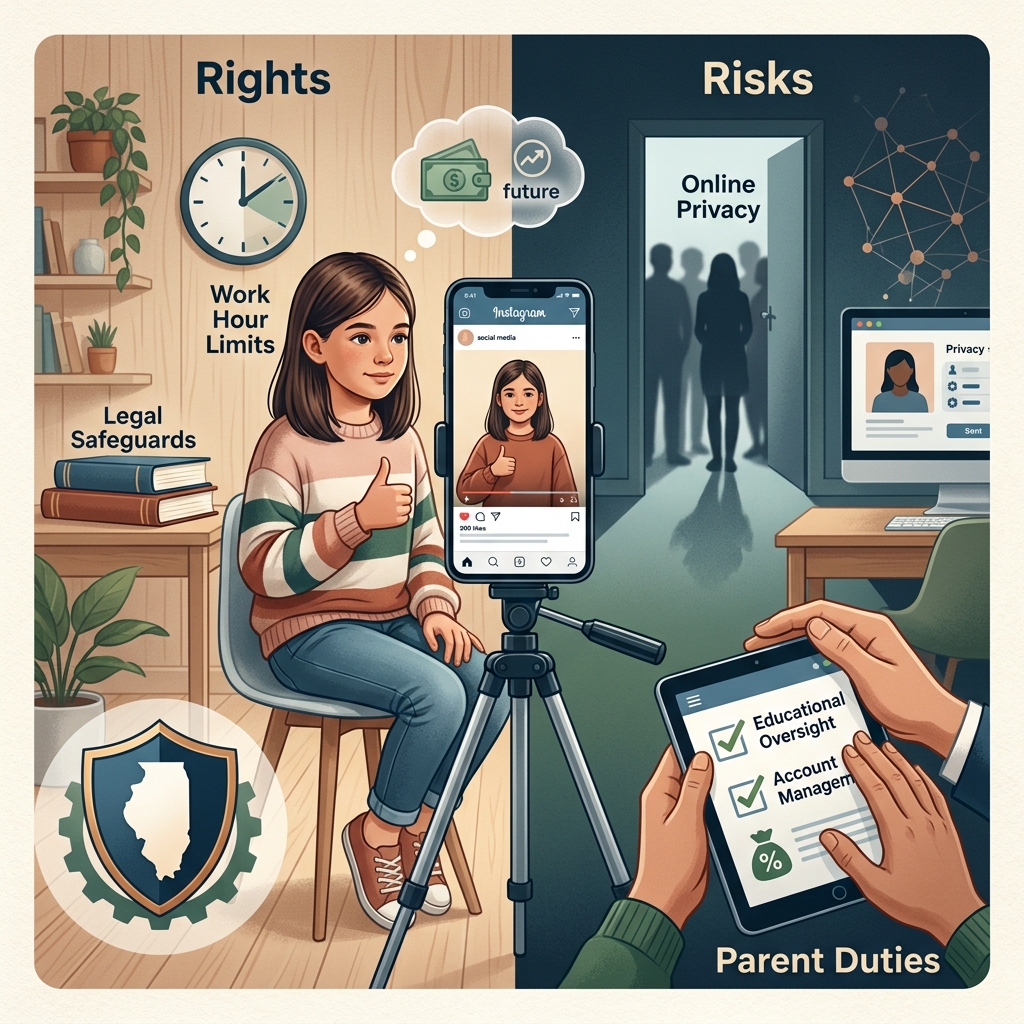
Illinois has adopted one of the first laws in the United States specifically designed to protect child influencers who appear in monetized online content created by parents and other adult vloggers. This law amends the state’s child labor framework to recognize that children featured in family vlogs and social media videos are doing work that can generate substantial income—and that they deserve a legally protected share of those earnings.
Under the new rules, certain minors can now ensure they are paid for their role in content, have money reserved for them in a trust account, and even bring lawsuits against adults who misuse, withhold, or fail to account for their share of social media income. The change reflects growing concern that children’s lives are being documented online without adequate safeguards for their financial and privacy interests.
How Illinois Defines a Protected Child Influencer
The statute does not cover every child who ever appears in a video. Instead, it focuses on minors who are regularly featured in compensated content and whose presence is a significant part of a vlogger’s monetized activity.
- Age limit: The law protects minors who are under 16 years old.
- Relationship to the creator: It targets content made by a parent, caregiver, or other adult vlogger who includes the child in videos or posts designed to generate income.
- Content threshold: A minor is covered when their name, image, likeness, or photograph appears in at least 30% of the creator’s compensated content produced within a 30‑day period during the previous 12 months.
- Monetization threshold: The relevant videos must either meet the platform’s internal threshold for generating payments or result in actual compensation of at least a small amount per view (for example, $0.10 per view).
These conditions aim to distinguish occasional family snapshots from sustained participation in a monetized media project. The law also clarifies that when a minor produces their own vlogs, those self‑created videos generally are not subject to these specific requirements, though other labor or platform rules may still apply.
Core Financial Protections: Payment and Trust Accounts
The heart of the Illinois law is a requirement that minors who meet the participation and compensation thresholds must receive a defined portion of the income generated by the content featuring them, with those funds preserved for future use.
Guaranteed Compensation for Featured Minors
Once the statutory criteria are met, vloggers are legally obligated to share a portion of their gross earnings from qualifying content with the child. The law uses the percentage of time or extent to which the child’s name, image, or likeness is included in the content to determine how much of the overall revenue must be allocated to that minor.
Key elements include:
- Not optional: Payment is required, not discretionary, when the thresholds are met.
- Based on presence: The more a child appears relative to other content, the larger their share of earnings must be.
- Applies to gross earnings: The calculation starts from gross compensation related to the content, not what remains after expenses.
Mandatory Trust Accounts for Child Earnings
Illinois draws inspiration from older protections for child entertainers by requiring that the minor’s share of earnings be set aside in a trust account until adulthood. Similar trust rules exist for child actors in some states, and recent laws in places like California and Minnesota have applied that concept to online creators as well.
Under the Illinois law:
- Creation of a qualifying trust: Parents or vloggers must establish a trust that meets statutory standards and is clearly identified for the benefit of the minor.
- Regular deposits: The portion of earnings attributed to the child must be deposited into the trust as income is received.
- Access at adulthood: The minor generally gains full access to the funds upon turning 18 or becoming legally emancipated.
These accounts are designed to prevent adults from spending all of the money during the child’s youth and to ensure that the minor receives a direct financial benefit from years of participation in online content once they are old enough to control it.
Record‑Keeping and Transparency Obligations
Beyond paying and saving money, the law requires that adults creating content with minors maintain detailed records and share information with the child.
- Content logs: Vloggers must keep records of all qualifying content in which the minor appears, including dates and descriptions.
- Income documentation: They must document how much compensation each piece of content generated and how much of that income relates to the minor’s participation.
- Trust transaction records: Adults are required to track deposits into the child’s trust account and retain evidence of those transfers.
- Regular access: Minors must be able to review these records at reasonable intervals so they can understand how their earnings are handled.
These transparency requirements give children and, in some cases, courts a clear paper trail to verify that payments were made correctly and that trust funds were properly maintained.
When Minors Can Sue Over Social Media Earnings
A particularly significant aspect of the Illinois law is that it grants minors a private right of action—in other words, the right to sue—if adults fail to follow the rules.
Grounds for Legal Claims
According to legal analyses of the statute, minors can bring lawsuits in several situations:
- Non‑payment or underpayment: If a vlogger knowingly or recklessly fails to compensate a minor who meets the thresholds, the child may sue to enforce the payment provisions.
- Improper trust handling: Minors can bring claims if required funds are not placed into a qualifying trust account or if deposits are missing or incomplete.
- Record‑keeping failures: A separate right of action allows minors to sue over violations of the record‑keeping and transparency requirements.
Importantly, this right of action is not limited to non‑family creators. Children may sue their own parents or caregivers if those adults are the vloggers who violated the law. As a result, the statute creates an enforceable legal framework inside the family relationship, something historically uncommon in child labor cases involving parents.
Potential Remedies
The law authorizes minors to seek remedies that may include payment of owed earnings, proper funding of trust accounts, and compliance with record‑keeping obligations. While specific damage calculations will depend on individual cases and judicial interpretation, the presence of a direct cause of action gives minors leverage to negotiate or litigate when they believe their earnings have been mishandled.
Illinois in the Broader Landscape of Child Influencer Protections
Illinois’s statute is part of a wider movement to extend traditional child labor protections and entertainment trust rules to the world of online content creation. The law was the first in the nation to specifically safeguard the earnings of minors featured in influencer content.
Comparison With Other States
| State | Who is protected? | Key financial rule | Special features |
|---|---|---|---|
| Illinois | Minors under 16 featured in monetized vlogs or social media content created by adults. | Portion of gross earnings based on child’s presence must be placed in a trust accessible at adulthood. | Private right of action for minors, record‑keeping obligations, content appearance thresholds. |
| California | Minors featured in monetized online content; also expands long‑standing child actor protections to content creators. | At least 15% of a minor’s earnings must be deposited into a trust (similar to Coogan accounts). | Extends existing entertainment industry rules to platforms like YouTube and other social media. |
| Minnesota | Minors appearing in online content, with special focus on younger children under 14. | Children under 14 must receive 100% of proceeds from content featuring them. | Includes a right to request deletion of content after age 13 or once individuals reach adulthood. |
In addition, policy tracking shows that more than a dozen other states have introduced bills requiring trust accounts or other safeguards for minor content creators, though not all proposals have become law. This suggests that Illinois is at the forefront of a potentially nationwide rethinking of how children are treated in the digital creator economy.
What This Means for Parents and Family Vloggers
Parents who run monetized social media channels or family vlogs featuring their children need to treat these activities as a regulated form of work for minors. That means understanding which content triggers legal obligations and planning systems to comply.
Practical Steps for Compliance
- Audit your content: Review the last year of posts and videos to determine whether any child has appeared in at least 30% of compensated content during a 30‑day period and whether those videos meet platform revenue thresholds.
- Track earnings carefully: Separate income attributable to content featuring minors, especially when children are central to the channel’s appeal.
- Set up compliant trust accounts: Work with financial and legal professionals to create trusts that meet statutory requirements and to document all deposits.
- Create robust records: Develop a consistent method for logging content, views, income, and trust transfers so you can supply minors with transparent reports.
- Consider consent and privacy: Beyond statutory obligations, think about how much of a child’s life is being shared and whether they understand or consent to their online presence.
Parents should also anticipate that older children may ask detailed questions about past earnings and their future rights. Clear communication and accurate records can reduce conflict and potential litigation.
Implications for Marketers, Brands and Platforms
Companies that sponsor family content or work with child influencers indirectly are not the primary targets of the Illinois law, but they still face reputational and contractual considerations.
- Contract clauses: Brands may require adult creators to warrant that they comply with all child labor and influencer laws, including trust and payment obligations.
- Risk management: Marketing teams will want assurance that content featuring minors will not later become the subject of high‑profile disputes over unpaid earnings.
- Platform policies: Social media platforms may update internal tools or guidance to help creators track monetized content featuring minors and understand applicable laws.
As more states adopt similar rules, compliance will become an increasingly important part of influencer campaign planning and content strategy.
Frequently Asked Questions (FAQs)
Does every child who appears in a monetized video have to be paid?
No. The Illinois law focuses on minors under 16 who appear in at least 30% of a creator’s compensated content within a defined period and whose videos meet certain monetization thresholds. Occasional appearances that do not meet those thresholds may fall outside the statute, but other legal considerations could still apply.
Can a child sue their parents under the Illinois law?
Yes. If a parent is the vlogger and fails to compensate a qualifying minor, does not maintain a proper trust account, or neglects required records, the child has a private right of action and may sue to enforce those provisions.
What happens to the trust money if the family needs funds before the child turns 18?
The law is designed to preserve the child’s earnings for their benefit at adulthood, and withdrawals that conflict with trust requirements may violate the statute. Families should consult legal counsel before attempting to access those funds early, as improper withdrawals could lead to claims or penalties.
Does the law apply if the child runs their own channel?
The Illinois statute primarily targets adults who create content featuring minors and profit from it. When a minor produces their own vlogs, other regulations and platform rules may apply, but the specific trust and payment obligations discussed here generally focus on adult‑run channels.
Are similar protections coming to other states?
Yes. Illinois’s law, along with measures adopted in California and Minnesota, has inspired proposed legislation in numerous other states, many of which would require a portion of minor content creators’ earnings to be held in trust accounts. The landscape is evolving quickly, so creators should monitor developments in every state where they operate.
References
- New Illinois Law Mandates Influencers to Compensate Child Participants — Loeb & Loeb LLP. 2024-07-02. https://www.loeb.com/en/insights/passle/2024/07/new-illinois-law-mandates-influencers-to-compensate-child-participants
- Groundbreaking Illinois Law Protects Child Influencers from Financial Exploitation — Fisher Phillips. 2024-07-03. https://www.fisherphillips.com/en/insights/groundbreaking-illinois-law-protects-child-influencers-from-financial-exploitation
- New Laws Protecting Child Influencers: What Marketers and Influencers Need to Know — Davis+Gilbert LLP. 2024-07-09. https://www.dglaw.com/new-laws-protecting-child-influencers-what-marketers-and-influencers-need-to-know/
- Utah Joins California, Illinois in Establishing Safeguards for Child Influencers — ABC News / Good Morning America. 2025-01-08. https://abcnews.com/GMA/Family/parenting-influencers-speak-new-law-designed-protect-kids/story?id=111580202
- Legal Obligations for Parents of Child Influencers — Kane County Divorce Attorneys. 2024-07-15. https://www.kanecountydivorceattorneys.com/st-charles-lawyers/legal-obligations-for-parents-of-child-influencers
- New Laws Protect Content Creators That Are Minors — MultiState. 2025-06-25. https://www.multistate.us/insider/2025/6/25/protecting-young-influencers-new-laws-protect-content-creators-that-are-minors
Similar Articles








Read full bio of medha deb


