
Tenant Privacy Rights: Essential Guide For Landlords & Tenants
How landlords protect property while respecting a tenant’s right to quiet, private home life.
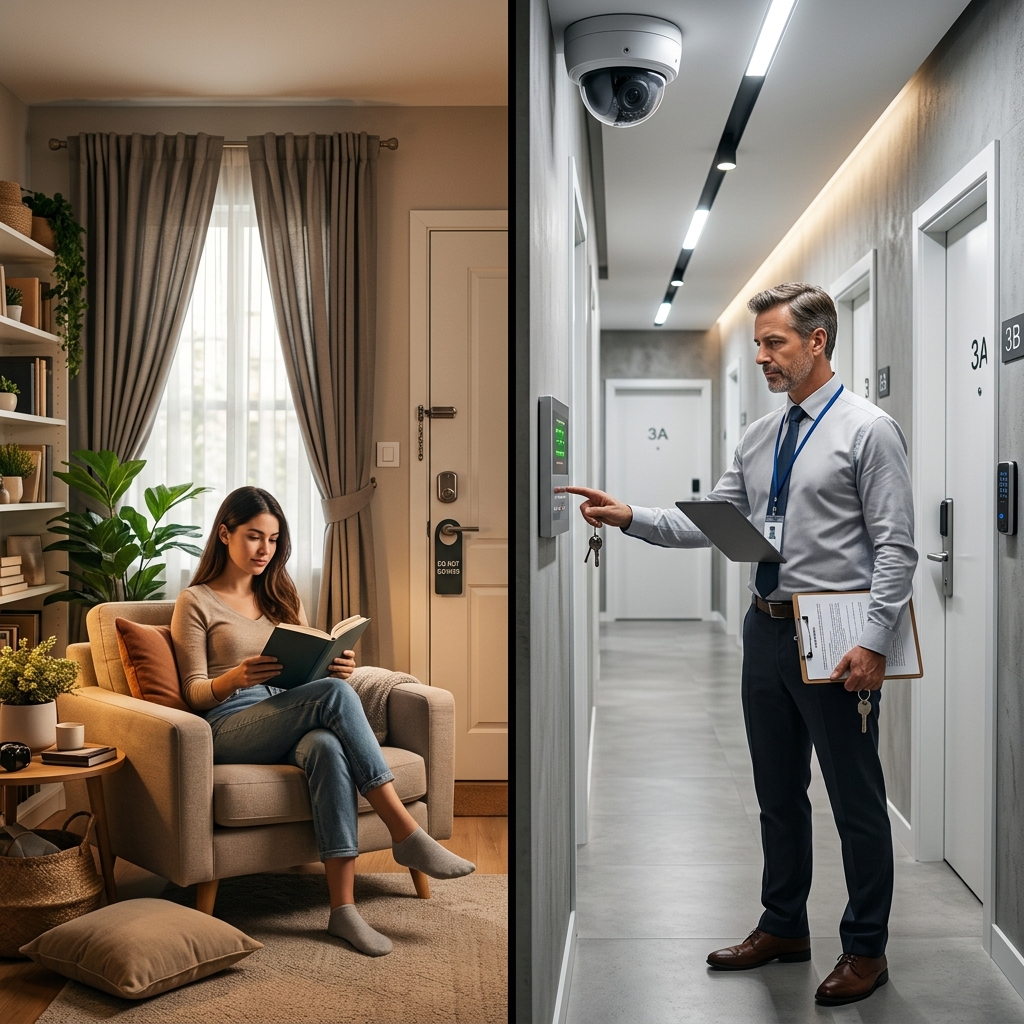
Renting a home creates a legal relationship that is practical, personal, and sometimes tense. Tenants need the ability to live privately and peacefully, while landlords must protect the building, handle repairs, and respond to emergencies. The law generally tries to balance those interests by limiting intrusion, requiring notice before entry, and setting boundaries around surveillance and personal information.
That balance matters because a rental unit is not a vacant asset once someone moves in. It becomes a home, and the tenant’s expectation of privacy increases substantially. At the same time, a landlord still has responsibilities tied to safety, habitability, and property preservation. Understanding where those interests overlap can help both sides avoid conflict and legal mistakes.
Why privacy matters in a rental home
Privacy in housing is more than a courtesy. It is tied to the basic idea that a tenant should be able to use the rental property without unnecessary interference. In practice, that means the tenant generally controls day-to-day life inside the unit, while the landlord retains only limited rights to enter for legitimate reasons.
This expectation of privacy also supports what many tenancy laws call quiet enjoyment. That phrase means the resident should be able to live in the home without unreasonable interruptions, harassment, or repeated intrusions. A landlord does not surrender every property right, but once the lease begins, the tenant’s right to private use becomes central.
- Tenants should be able to live without surprise visits.
- Landlords should be able to maintain the property and address risks.
- Both sides benefit when access rules are clear in the lease.
When a landlord may enter the unit
In most rental situations, a landlord cannot simply walk into a unit whenever it is convenient. Entry usually requires a valid reason and prior notice unless an emergency makes immediate access necessary. Common lawful reasons include repairs, inspections, showing the unit to future occupants, or responding to damage that could spread if ignored.
Notice rules vary by jurisdiction, but many housing systems expect some form of advance warning before non-emergency entry. The exact timing can differ, yet the underlying principle is consistent: tenants should not be surprised by routine access. Written notice is often preferred because it creates a record and reduces disputes over what was said and when.
| Situation | Typical access rule |
|---|---|
| Routine maintenance | Advance notice is usually required |
| Inspection | Advance notice is usually required |
| Emergency leak, fire, or safety threat | Immediate entry may be allowed |
| Showing the unit to new renters or buyers | Notice is generally required |
When entry is required, landlords should keep the visit focused on the reason given. Entering for one purpose and then using that access to search through personal belongings can cross a legal and ethical line.
What counts as an emergency
Emergency access is one of the most important exceptions to ordinary privacy rules. If waiting for notice could increase harm or property damage, immediate entry may be justified. Examples often include burst pipes, fire, gas leaks, flooding, or a condition that threatens nearby units.
The emergency exception is narrow. It is not a general permission to enter whenever the landlord is worried or curious. The situation should present a real and pressing risk, not a minor inconvenience. Once the emergency is under control, normal notice rules usually return.
- Immediate danger to people or property may justify entry.
- After the urgent issue ends, the landlord should revert to standard notice procedures.
- Repeated claims of “emergency” for routine matters can raise legal problems.
Surveillance and the limits of monitoring
Security tools can help protect a building, but they can also create privacy concerns if used carelessly. Cameras in common areas may be lawful in many settings, especially near entrances, parking areas, or shared lobbies, because those places are not part of the tenant’s private living space. Cameras inside a unit, however, are far more likely to be illegal or highly problematic.
Even where monitoring is permitted, landlords should be careful not to capture private spaces or track a tenant in a way that feels invasive. Recording inside a bathroom, bedroom, or another exclusively private area is especially sensitive. Landlords should also avoid using hidden devices or deceptive monitoring methods unless a very specific law clearly allows it.
Technology can make the line blurrier. Smart locks, noise monitors, and building sensors may improve safety, but they also collect information. If a device records patterns of occupancy or movement, it may create privacy obligations that are easy to overlook.
Personal information is part of tenant privacy
Privacy does not stop at the front door. During an application and tenancy, landlords often collect identification records, financial details, emergency contacts, rental history, and sometimes background information. That material must be handled with care because it may include sensitive personal data.
Good data practices matter for two reasons. First, tenants have a reasonable expectation that their information will not be shared casually. Second, many privacy laws limit how personal data may be collected, stored, used, and deleted. A landlord should collect only what is needed for the rental relationship and should keep it only as long as necessary.
- Collect only information tied to a legitimate rental purpose.
- Store paper records securely and restrict who can access them.
- Protect digital files with passwords and access controls.
- Delete or destroy records safely when they are no longer needed.
How landlords can reduce privacy disputes
Most privacy conflicts do not begin with a major violation. They often start with vague rules, poor communication, or a landlord who believes a unit still functions like a vacant property. Clear procedures can prevent those misunderstandings.
A written entry policy is one of the best tools available. It should explain when notice is given, how much notice will usually be provided, who may enter, and how emergencies are handled. The same principle applies to repairs and inspections. If tenants know what to expect, they are more likely to cooperate, and the landlord is less likely to face complaints.
Landlords should also train employees, contractors, and property managers. A property owner may understand the rules, but a maintenance worker or leasing agent might not. If one of them enters too early, uses the wrong key, or photographs private belongings without a valid reason, the landlord may be responsible for the result.
Practical habits that protect both sides
Good privacy protection does not require a complicated legal strategy. It starts with consistent habits that show respect for the home and the tenancy relationship.
- Give notice in writing whenever possible.
- State the reason for entry clearly and honestly.
- Limit access to the minimum time needed for the task.
- Avoid entering personal areas beyond what is necessary.
- Keep records of notices, repairs, and approvals.
- Use secure methods for storing tenant applications and documents.
Tenants can help as well by communicating repair concerns promptly, documenting improper entries, and reviewing the lease carefully. A lease that addresses access times, emergency procedures, and notice methods can reduce uncertainty from the start.
What tenants can do if privacy is violated
When a landlord enters without warning, monitors a tenant improperly, or mishandles personal information, the first step is often a direct written complaint. Many disputes are resolved when the tenant clearly explains the issue and asks for a change in behavior. Keeping the message factual and specific is usually more effective than making broad accusations.
If the problem continues, a tenant may need to preserve evidence, such as texts, emails, photographs of notices, or a log of unauthorized entries. Depending on local law, possible remedies can include a formal demand, a local housing complaint, or a civil claim for privacy-related harm. The available options depend on the facts and the jurisdiction.
Tenants should also pay attention to retaliation concerns. A landlord generally should not punish a resident for asserting legal rights, asking for proper notice, or reporting unsafe conduct. Retaliation can complicate an already serious privacy problem.
How the law views balance, not absolutes
The most useful way to think about rental privacy is as a balancing test rather than an all-or-nothing rule. The tenant’s home life deserves strong protection, but landlords are not stripped of every right to protect the property. Repairs, inspections, emergencies, and lawful security measures all remain part of the landlord’s role.
Problems usually arise when one side pushes too far. A landlord who enters too often, watches too closely, or keeps too much data may treat the tenancy like surveillance instead of housing. A tenant who refuses every legitimate inspection or repair visit may make it impossible to maintain a safe building. The legal system generally expects both sides to act reasonably.
Frequently asked questions
Can a landlord enter without permission?
Usually only in limited circumstances. For non-emergency matters, advance notice and a valid purpose are typically required. Emergencies may allow immediate entry.
Can a landlord install cameras?
Cameras in common areas may be allowed in some situations, but cameras inside a tenant’s private living space are generally highly restricted and may be unlawful.
Does privacy include documents and online records?
Yes. Privacy concerns apply not only to the unit itself, but also to personal information collected during the rental process. That includes applications, identification records, and other sensitive data.
What should a tenant do after an unwanted entry?
The tenant should document what happened, save any notice or messages, and raise the issue in writing. If the conduct continues, local tenant or legal help may be necessary.
Is every state the same?
No. Entry notice rules, surveillance limits, and data-handling duties vary by location. A lease can add detail, but it cannot usually override mandatory legal protections.
Conclusion: making security compatible with privacy
A well-run rental property does not require constant intrusion. The best housing relationships usually rely on clear notice, limited access, careful handling of personal information, and respect for the fact that the unit is someone’s home. When landlords protect property without treating tenants like permanent guests, and tenants cooperate with reasonable maintenance and safety needs, both privacy and security are better served.
References
- Tenant privacy rights: complete guide for landlords — Minut. 2025-11-05. https://www.minut.com/blog/tenant-privacy-rights
- Privacy in the landlord and tenant relationship — Office of the Privacy Commissioner of Canada. 2024-02-15. https://www.priv.gc.ca/en/privacy-topics/landlords-and-tenants/privacy-in-the-landlord-and-tenant-relationship/
- Residential Tenants’ Rights Guide — New York State Attorney General. 2025-01-01. https://ag.ny.gov/sites/default/files/tenants_rights.pdf
- Tenant Rights to Privacy and Safety — Nolo. 2025-08-20. https://www.nolo.com/legal-encyclopedia/tenant-rights-privacy-safety
- Tenants’ Legal Rights to Privacy — Justia. 2025-06-11. https://www.justia.com/real-estate/landlord-tenant/information-for-tenants/tenants-right-to-privacy/
Similar Articles








Read full bio of Sneha Tete


