
American Flag Display Standards for Commercial Enterprises
Master federal flag code requirements for proper business flag displays and workplace patriotism.
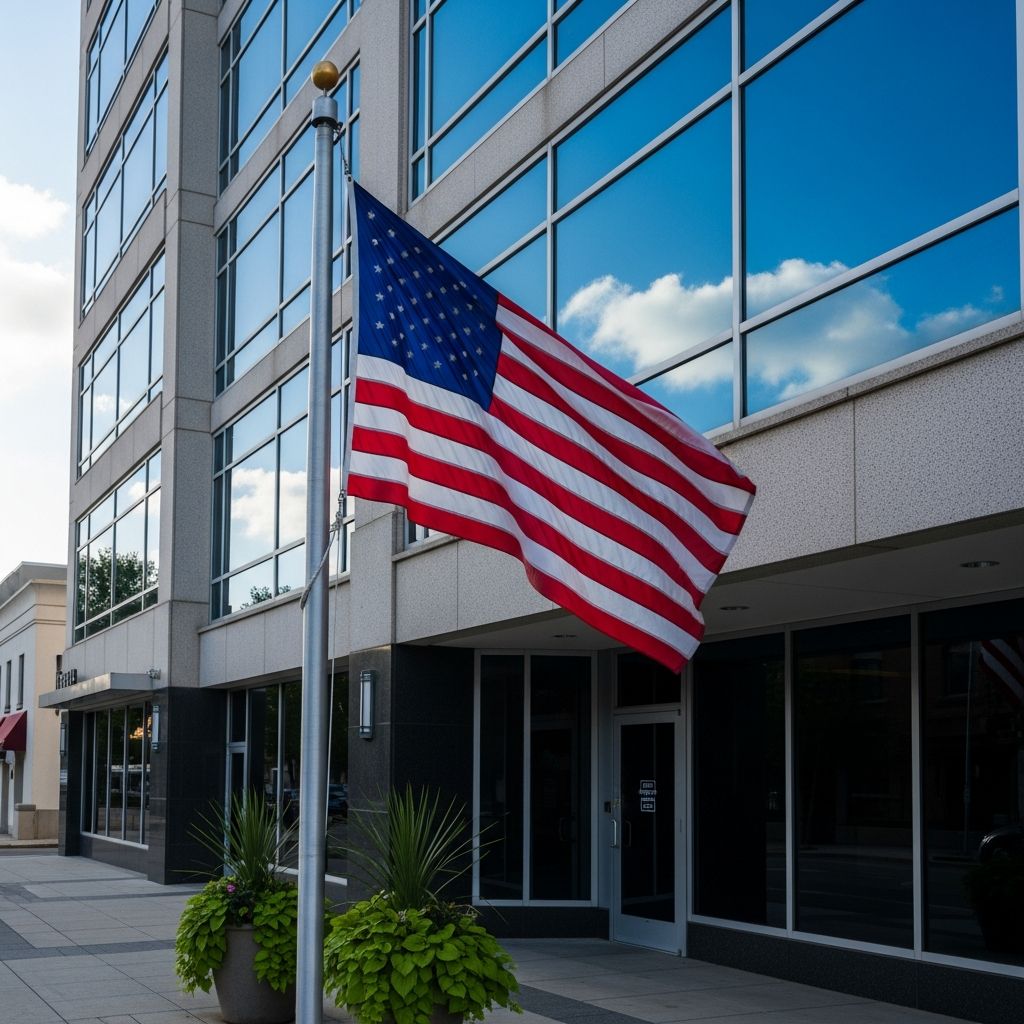
Understanding Federal Flag Code Requirements for Business Establishments
Displaying the American flag at your business is more than a patriotic gesture—it carries legal and ethical responsibilities that stem from federal regulations. The United States Flag Code, formally known as Public Law 94-344, establishes comprehensive guidelines that all organizations, including commercial enterprises, should follow when exhibiting this national symbol. These regulations exist to ensure respect for the flag and maintain consistency in how Americans honor their nation’s emblem across all settings, from government buildings to private corporations.
Business owners and managers have a responsibility to understand these guidelines, not only for legal compliance but also to foster a workplace culture that values national symbols and civic pride. Non-compliance with flag code standards can inadvertently send messages that undermine the significance of the flag and may reflect poorly on your organization’s commitment to patriotic values. By implementing proper flag display practices, businesses demonstrate professionalism, respect for national traditions, and attention to detail in all operational aspects.
Positioning and Placement Hierarchy When Multiple Flags Are Present
One of the most critical aspects of flag display involves understanding the proper positioning hierarchy when your business displays multiple flags simultaneously. The American flag must always occupy the position of superior prominence, which means it should be positioned at the center and at the highest point among any grouping of flags. This principle applies regardless of how many flags are displayed or what other flags accompany the national ensign.
When flags are arranged horizontally across a flagpole or displayed from adjacent staffs, the U.S. flag must be elevated above all others. If your business displays state flags, municipal flags, or corporate organizational flags alongside the national flag, each of these should be positioned lower and less centrally than the American flag. Corporate or organizational flags, in particular, should always be flown at a notably lower height to demonstrate appropriate deference to the national symbol.
For businesses displaying flags from wall-mounted crossed staffs, the American flag should occupy the position to the right from the viewer’s perspective, with its staff positioned in front of any other flag’s staff. This forward placement creates a visual hierarchy that immediately identifies the U.S. flag as the primary symbol being displayed. The principle of central and superior positioning applies to indoor displays as well; whether flags hang in a corporate lobby, conference room, or reception area, the American flag must maintain its position of prominence.
Temporal Guidelines: When to Display and Maintain Your Flag
Federal flag code establishes clear guidance regarding the appropriate times for flag display. The universal custom, as outlined in official flag etiquette standards, specifies that the flag should be displayed only from sunrise to sunset on buildings and stationary flagstaffs in open settings. This traditional practice reflects historical customs that recognized daylight hours as the appropriate period for flag display on most occasions.
However, businesses that wish to maintain continuous flag displays can do so by implementing proper nighttime illumination. If you choose to keep your flag flying after sunset, federal guidelines permit this practice provided that the flag is adequately lit by artificial lighting during darkness. This accommodation allows businesses to maintain round-the-clock flag presence while still honoring the principle that the flag should be clearly visible and properly displayed at all times.
Weather conditions also factor into when flags should remain displayed. The flag should not be displayed during severe or harsh weather conditions when it may experience damage, including rain, snow, or windstorms, unless your organization utilizes an all-weather flag specifically manufactured to withstand such conditions. Regular inspection of flag condition is essential; a tattered, faded, or visibly damaged flag should be retired appropriately and replaced with a flag in good condition.
Structural and Architectural Considerations for Flag Installation
The physical manner in which your flag is attached and displayed carries significant importance under federal guidelines. When the American flag is displayed from a staff that projects horizontally or at an angle from your building’s window sill, balcony, or front facade, the union (the blue rectangular section containing stars) must be positioned at the peak of the staff. This positioning ensures the flag’s most significant element is displayed in the most prominent location possible.
For flags suspended over sidewalks using ropes extending from your building to an external pole, the flag should be hoisted with the union first, extending outward from the building. This arrangement creates a visual presentation where the union leads the flag’s extension, establishing proper orientation for pedestrians viewing the display. When flags are suspended across interior corridors or lobbies, they should hang vertically with the union positioned according to directional guidance based on the building’s entrance configuration.
Buildings with single main entrances require the union to be positioned to the observer’s left upon entry. Multi-entrance buildings necessitate more complex positioning: when entrances face east and west, the union should face north, and when entrances face north and south, the union should face east. If entrances exist in multiple directions, the union should consistently face east as a standard reference point. These specific requirements ensure consistent, respectful flag presentation regardless of your building’s architectural design.
Display Contexts and Specialized Situations
Different business contexts require adapted flag display practices. When the American flag appears on speaker platforms, whether flat or from a staff, it should be positioned above and behind the speaker to maintain superiority and visibility. In church settings or public auditoriums where businesses may hold events or meetings, the flag must hold a position of superior prominence, positioned in advance of the audience and in the position of honor at the speaker’s right as they face the audience.
When displaying flags over the middle of streets adjacent to business locations, the flag should hang vertically with the union positioned to the north in east-west streets or to the east in north-south streets. These directional requirements create standardized presentations that Americans recognize across different geographic locations, reinforcing visual consistency in patriotic display.
Business events, ceremonies, or commemorative occasions may involve flag-raising and lowering ceremonies. These events provide opportunities to educate employees and guests about proper flag respect while creating moments that reinforce organizational values around patriotism and civic responsibility. Ceremonies conducted with proper protocols—including deliberate, respectful handling and appropriate verbal acknowledgments—enhance the significance of these displays and strengthen workplace culture.
Materials, Construction, and Maintenance Standards
The physical condition of your displayed flag directly reflects your business’s commitment to respectful presentation. The flag should never be fastened, displayed, or stored in ways that permit it to be easily torn, soiled, or damaged in any manner. This requirement means careful attention to flagpole hardware, attachment mechanisms, and surrounding environmental factors that might compromise flag integrity.
Federal code explicitly prohibits using the flag as wearing apparel, bedding, drapery, or decorative covering for surfaces. The flag should never be festooned, drawn back, or folded in ways that restrict its natural hanging position; it must always be allowed to fall freely and openly. Additionally, nothing should be placed, marked, or attached to the flag itself, including insignia, letters, words, designs, or any other identifying marks.
The flag should never serve as an advertising vehicle or be used for commercial purposes in any manner. This prohibition means your business cannot use the flag as a backdrop for product displays, embroider it on merchandise, or incorporate it into advertising campaigns. Similarly, the flag cannot be used as a ceiling covering or employed as a receptacle for holding or carrying items. These restrictions protect the flag’s symbolic dignity by preventing its reduction to utilitarian purposes or commercial exploitation.
Comparative Table: Common Flag Display Scenarios
| Display Scenario | Primary Requirement | Secondary Considerations |
|---|---|---|
| Multiple flags on single pole | U.S. flag at highest point, centered | Other flags positioned below and to sides |
| Flags on adjacent staffs | U.S. flag to right, staff in front | Ensure equal visibility of all flags |
| Wall-mounted display | Flag above and behind speaker/viewers | Proper lighting if evening event |
| Outdoor daytime display | Visible from sunrise to sunset | No weather damage; all-weather flag if necessary |
| Continuous 24-hour display | Nighttime artificial illumination required | Regular maintenance to prevent deterioration |
| Interior corridor/lobby | Vertical suspension with directional union | Union positioned based on entrance configuration |
Prohibition Against Misuse and Disrespectful Treatment
Federal law contains explicit prohibitions regarding flag treatment that protect the symbol from degradation and misuse. No other flag, whether from another nation or international organization, should be displayed at equal, above, or in superior prominence to the American flag within United States territory. This hierarchical protection ensures the American flag maintains its recognized primacy in all domestic contexts, including business environments.
Bunting—decorative fabric arrangements in red, white, and blue—should be used for covering speaker desks and platform fronts instead of displaying actual flags in these contexts. When bunting is employed, the blue should always appear above, white in the middle, and red below to maintain proper color sequencing that respects flag symbolism.
Your business should never use the flag in ways that would cause it to appear soiled, torn, or damaged. This means avoiding outdoor display during severe weather unless using certified all-weather materials, protecting poles and attachments from rust or deterioration, and implementing regular inspection schedules to identify worn flags before they become noticeably degraded. A visibly damaged flag should be respectfully retired and replaced with a flag in proper condition.
Workplace Policy Development and Employee Education
Establishing clear internal policies regarding flag display demonstrates organizational commitment to federal compliance and cultural respect. Businesses should document their flag display practices, including specific placement locations, maintenance schedules, and protocols for special ceremonies or events. These documented policies provide consistency and serve as reference materials when addressing questions or concerns about flag handling.
Employee education initiatives should address flag etiquette fundamentals, explaining why specific positioning rules exist and how they reflect respect for national symbols. Training sessions can address proper flag care, identification of damage indicators, and appropriate handling procedures. When employees understand the reasoning behind these guidelines, they become advocates for proper practices and help maintain workplace culture that values these traditions.
Organizations should create mechanisms for employees to raise concerns or suggestions about flag display and handling without fear of repercussion. This open communication approach fosters continuous improvement and catches potential issues before they become problematic. When errors or missteps in flag display occur, prompt correction demonstrates the organization’s commitment to compliance and respect.
Periodic Review and Policy Adjustment
Flag display policies should be reviewed periodically—at minimum annually—to ensure continued compliance with federal guidelines and to address any changes in business operations, facility modifications, or organizational structure. As businesses relocate, expand facilities, or add new flag displays, each scenario requires assessment for compliance with specific positioning and visibility requirements based on the new configuration.
Leadership should designate responsibility for flag maintenance and display oversight to ensure someone has clear accountability for these duties. This assignment prevents gaps in care and ensures regular inspection, timely replacement of worn flags, and consistent application of positioning standards. Documentation of maintenance activities, flag retirement dates, and display modifications creates an organizational record of compliance efforts.
Frequently Asked Questions About Business Flag Display
Q: Can my business display the flag at night without artificial lighting?
A: No. Federal guidelines indicate that flags displayed outdoors should only remain visible from sunrise to sunset, unless nighttime illumination is provided. If you wish to maintain a continuous display, install appropriate outdoor lighting to ensure the flag remains visible and properly illuminated after dark.
Q: What should I do if my flag becomes torn or faded?
A: Damaged flags should be retired respectfully and replaced with flags in good condition. Continuing to display a visibly worn or damaged flag fails to demonstrate appropriate respect for the national symbol. Many organizations hold flag retirement ceremonies to mark the respectful conclusion of a flag’s service.
Q: Can I display my company flag above or at the same height as the American flag?
A: No. When displayed together, the American flag must be at the highest point and centered position. Corporate flags should always be positioned lower and with less visual prominence to show appropriate deference to the national symbol.
Q: Are there exceptions to the sunrise-to-sunset display rule?
A: Yes, the primary exception is when you provide adequate nighttime artificial illumination. If your flag is properly lit after sunset, you can maintain continuous display. Additionally, weather exceptions exist for severe conditions unless you use all-weather certified flag materials.
Q: How should the flag be positioned if displayed from a building’s balcony?
A: When the flag is displayed from a staff projecting horizontally or at an angle from a building’s balcony, the union (blue section) must be positioned at the peak of the staff. This positioning ensures the flag’s most significant element is displayed most prominently.
Q: Can I use the flag in my business’s advertising or marketing materials?
A: No. Federal code explicitly prohibits using the flag for advertising purposes in any manner whatsoever. The flag cannot be printed on temporary materials, embroidered on merchandise, or used as a backdrop for commercial promotions.
Q: What is the proper way to retire a worn American flag?
A: Worn flags should be retired respectfully, often through formal ceremonies. Many communities have flag retirement programs, and veteran organizations frequently conduct respectful flag disposal services. Treating flag retirement as a formal process reinforces organizational respect for the symbol.
References
- Displaying The Flag: A Guide For Businesses & Organizations — Show Allegiance. 2024. https://www.showallegiance.com/blogs/american-flag/displaying-the-flag-a-guide-for-businesses-organizations
- Tips for Displaying the US Flag at Your Business — Liberty Flagpoles. 2024. https://www.libertyflagpoles.com/blogs/libertyblog/tips-for-displaying-the-us-flag-at-your-business
- 4 USC Chapter 1: THE FLAG — Office of the Law Revision Counsel, U.S. House of Representatives. https://uscode.house.gov/view.xhtml?path=%2Fprelim%40title4%2Fchapter1&edition=prelim
- Flag Code — The American Legion. https://www.legion.org/advocacy/flag-advocacy/flag-code
- 4 U.S. Code § 8 – Respect for flag — Legal Information Institute, Cornell Law School. https://www.law.cornell.edu/uscode/text/4/8
- Flag Etiquette — Veterans of Foreign Wars (VFW). https://www.vfw.org/community/flag-etiquette
- Public Law 94-344: Federal Flag Code — United States Congress. https://www.law.cornell.edu/uscode/text/4
Similar Articles








Read full bio of Sneha Tete




