
Limits of First Amendment on Violent Speech
Exploring where the First Amendment draws the line on speech that incites violence, issues true threats, or provokes fights.
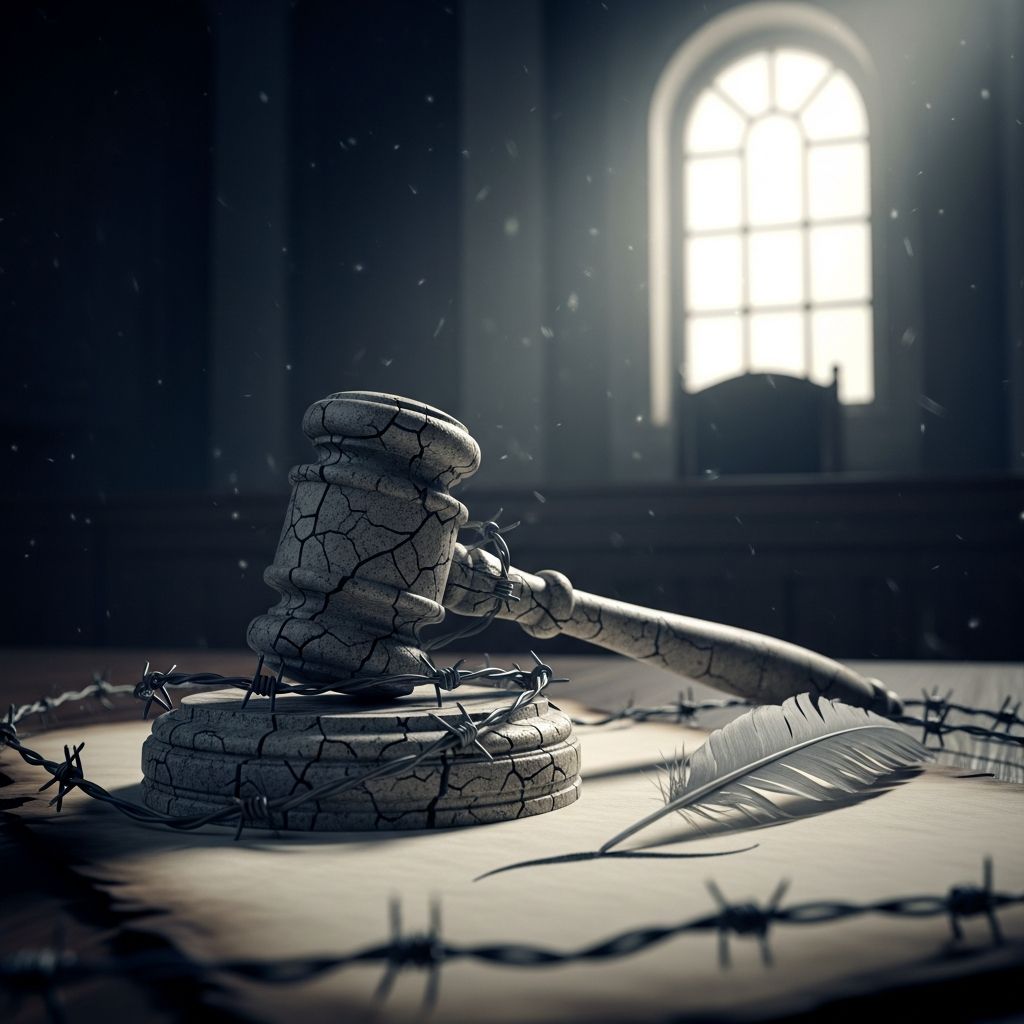
The First Amendment safeguards a wide array of expression, but it does not extend to speech that directly endangers public safety by promoting violence. Courts have carved out narrow exceptions for categories like incitement to imminent lawless action, true threats, and fighting words, balancing free expression with societal protection.
Core Principles of Free Speech Protection
At its heart, the First Amendment protects spoken words, writings, symbols, and expressive conduct from government censorship, even if offensive or controversial. This includes political rhetoric, protests, art, and clothing choices that convey messages. However, protection evaporates when speech transitions into actions or words likely to cause immediate harm.
Supreme Court rulings emphasize context: speech must be evaluated based on circumstances, intent, and likelihood of harm. Viewpoint neutrality is key—governments cannot suppress ideas merely because they dislike them, but they can regulate time, place, and manner neutrally.
Incitement: The Brandenburg Standard
The landmark case Brandenburg v. Ohio (1969) set the modern test for unprotected incitement. The Court ruled that speech advocating force or lawbreaking is protected unless it is directed at inciting or producing imminent lawless action and is likely to produce such action.
In Brandenburg, a Ku Klux Klan leader’s rally speech called for violence against government officials but was deemed abstract advocacy, not imminent incitement, due to no immediate danger. This high bar protects heated political discourse, like civil rights speeches with strong emotional appeals, as long as they do not provoke instant lawlessness.
- Key elements: Imminence (immediate risk), direction (targeted call), and likelihood (probable result).
- Protected: General calls for revolution or revenge without specifics.
- Unprotected: ‘Let’s burn this building now’ to a crowd ready to act.
True Threats: Subjective Intent Matters
True threats are statements conveying a serious intent to commit unlawful violence against specific individuals or groups, unprotected because they instill fear and potential harm. The Supreme Court in Counterman v. Colorado (2023) clarified that prosecutors must prove the speaker acted recklessly—aware others could interpret words as threats—without needing intent to execute.
Context distinguishes threats from hyperbole. In Watts v. United States (1969), a protester’s statement ‘If they draft me, I’ll shoot the President’ during an anti-war rally was political venting, not a threat. Conversely, online posts targeting judges with violent details or cross-burnings intended to intimidate cross into unprotected territory.
| Protected Hyperbole | Unprotected True Threat |
|---|---|
| Political rant at rally | Direct online death threat |
| Symbolic protest act | Specific intent to harm named person |
| Emotional advocacy | Reckless statements causing fear |
Fighting Words: Provocation to Immediate Violence
Fighting words—personally abusive epithets likely to provoke an immediate violent response—are unprotected since 1942’s Chaplinsky v. New Hampshire. These are narrow: face-to-face insults inflicting injury or inciting breach of peace, examined in totality of circumstances.
Courts have narrowed this doctrine; profane or angry speech alone does not qualify. Laws must be precisely tailored, and directed insults unprotected only if clearly meant to spark fights. No fixed list exists—context rules.
Hate Speech and Symbolic Expression
Contrary to common belief, hate speech is generally protected unless fitting an unprotected category like true threats or incitement. Symbols like flags or crosses are safeguarded expressive acts, but become unprotected if conveying true threats, e.g., cross-burning as intimidation.
In Virginia v. Black (2003), the Court struck down laws presuming cross-burning intent, requiring proof of threatening purpose to avoid chilling protected symbolism.
Time, Place, Manner Restrictions
Governments can limit expression’s logistics without content censorship: no protests blocking emergency entrances or during rush hour, applied neutrally. Civil disobedience breaking laws (e.g., blocking streets) loses protection despite expressive intent.
Heckler’s Veto and Harassment
Speech infringing others’ rights via disruption (heckler’s veto) or severe harassment is unprotected. Universities and public forums may remove disruptors or enforce anti-harassment policies if speech exceeds protected bounds.
Recent Developments and Applications
Post-2023 rulings like Counterman emphasize subjective speaker mindset, raising prosecution bars amid social media’s rise. Political violence concerns prompt law enforcement to distinguish threats from advocacy, preventing extremism without overreach.
Cases involving online extremism test these limits: ambiguous posts may protect under Brandenburg, but reckless threats do not.
Frequently Asked Questions
Does the First Amendment protect all offensive speech?
No, offensive speech is protected unless it falls into unprotected categories like true threats or incitement.
Can symbolic acts like flag burning be restricted?
Generally no, as expressive speech, unless conveying true threats.
What makes speech a ‘true threat’?
A reckless statement serious enough that a reasonable recipient fears violence.
Is hate speech illegal under the First Amendment?
No, it’s protected absent fitting an exception like fighting words.
Can protests be regulated for time and place?
Yes, with neutral, reasonable restrictions to avoid disruption.
Balancing Rights in Modern Contexts
In today’s digital age, platforms and authorities navigate these doctrines amid rising online vitriol. The high bar preserves robust debate while shielding against harm. Understanding these limits empowers informed expression without legal peril.
Scholars note evolving applications: social media amplifies reach, potentially heightening imminence risks, yet courts uphold Brandenburg’s rigor. Educational institutions apply similar tests, protecting discourse while barring harassment.
References
- Frequently Asked Questions – Free Speech — Iowa State University. Accessed 2026. https://freespeech.iastate.edu/faq
- First Amendment – Freedom of Expression at Ohio State — Ohio State University. Accessed 2026. https://freedomofexpression.osu.edu/first-amendment
- True Threats Guidance — Georgetown Law Institute for Constitutional Advocacy and Protection. 2024-08. https://www.law.georgetown.edu/icap/wp-content/uploads/sites/32/2024/08/True-Threats-Guidance-3.pdf
- Five Ways the First Amendment Protects Your Speech — ACLU of DC. Accessed 2026. https://www.acludc.org/news/five-ways-first-amendment-protects-your-speech-and-three-ways-it-does-not/
- Unprotected Speech — University of Southern California. Accessed 2026. https://freeexpression.usc.edu/about-freedom-of-expression-at-usc/defining-free-speech/unprotected-speech/
- True Threats | Constitution Annotated — Library of Congress. Accessed 2026. https://constitution.congress.gov/browse/essay/amdt1-7-5-6/ALDE_00013807/
Similar Articles








Read full bio of medha deb




