
Filing a Bar Complaint: The Complete Guide
Understand the step-by-step process of filing a disciplinary complaint against your attorney, from submission to resolution and potential outcomes.
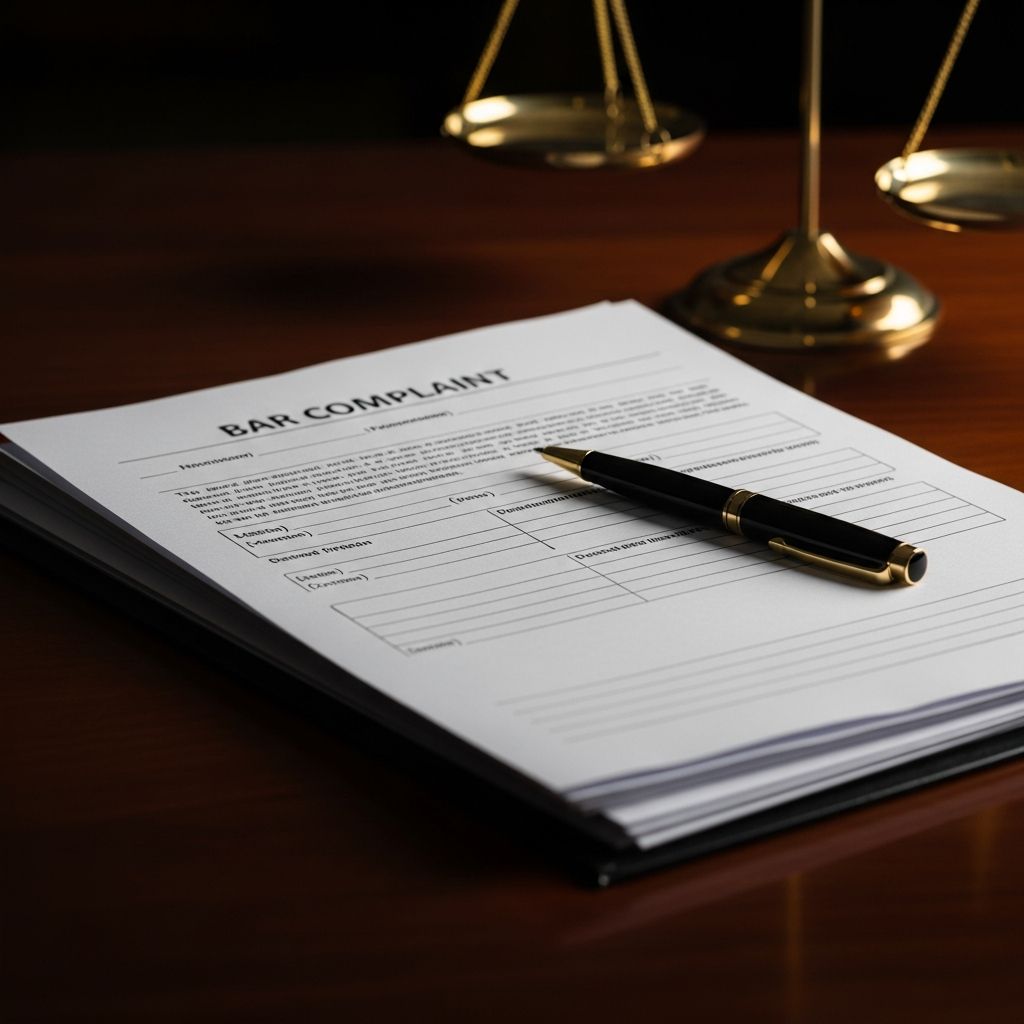
When an attorney fails to meet professional standards, clients have the right to seek accountability through the bar disciplinary system. This process ensures ethical practice and protects the public from substandard legal representation. Understanding the mechanics of filing a complaint empowers individuals to navigate this system effectively.
Recognizing When to File a Complaint
Not every dissatisfaction with a lawyer warrants a formal bar complaint. Common grounds include neglect of cases, failure to communicate, mishandling client funds, conflicts of interest, or incompetence in legal matters. Fee disputes, however, often require separate resolution mechanisms rather than disciplinary action.
- Ethical Violations: Breaches of professional conduct rules, such as lying to clients or abandoning cases.
- Misconduct Examples: Retaining fees without providing services or disclosing confidential information without consent.
- Non-Disciplinary Issues: Simple billing disagreements, which may go through local bar fee arbitration.
Before proceeding, document all interactions, including emails, letters, and phone logs, to substantiate claims.
Step-by-Step Process to Submit a Complaint
Filing begins with identifying the appropriate regulatory body, typically a state-specific Attorney Grievance Committee or Disciplinary Board. These entities operate under supreme court oversight and consist of lawyers and laypersons.
- Locate the Correct Agency: Jurisdiction depends on the attorney’s office location, not the client’s residence. Use state bar websites for directories.
- Prepare Documentation: Submit a written statement detailing the issues, supported by evidence like contracts, correspondence, and timelines.
- Complete Required Forms: Many states offer downloadable PDFs; include attorney details, your contact information, and a clear narrative of events.
- Submit Securely: Email or mail to the designated office; some accept online portals.
| State | Primary Agency | Contact Method | Key Requirement |
|---|---|---|---|
| New York (1st Dept) | Attorney Grievance Committee | 180 Maiden Lane, 17th Floor, NY 10038 | Detailed letter or form with evidence |
| New Jersey | Office of Attorney Ethics | Email PDF to oae.mbx@njcourts.gov | Grievance form attachment |
| Pennsylvania | Disciplinary Board | Online or mail statement | Factual complaint narrative |
| North Carolina | State Bar | Portal submission | Evidence of dishonesty for funds |
Complaints must allege conduct violating rules of professional responsibility, proven by clear and convincing evidence in formal proceedings.
Initial Screening and Investigation Phase
Upon receipt, agencies conduct a preliminary review, typically within 30-45 days. Trivial or meritless claims may be dismissed early, but viable ones trigger investigation.
The attorney receives a copy and must respond in writing, often within 21 days. Investigators may interview parties, review records, and gather witness statements. Complainants can supplement with new evidence post-filing.
- Private Resolutions: Minor issues might end with confidential cautions or admonitions.
- Escalation Triggers: Serious allegations lead to docketed investigations.
- Timeline Variability: Reviews can take months, depending on complexity.
Formal Charges and Hearing Procedures
If evidence supports misconduct, a formal complaint is issued. The attorney answers within a set period, followed by a hearing before a panel of attorneys and public members or a special master.
Hearings resemble trials: evidence presentation, witness testimony (including from complainants), and cross-examination. Decisions require clear and convincing proof of violations.
Possible outcomes include dismissal (with appeal rights within 21 days to a review board), diversion programs for minor issues, or disciplinary sanctions.
Types of Disciplinary Actions
Discipline ranges from mild to severe, tailored to misconduct gravity.
- Private Sanctions: Admonitions or reprimands not publicized but noted in attorney records.
- Public Reprimands: Formal censures published for transparency.
- Suspensions: Temporary license revocation, from months to years.
- Disbarment: Permanent loss of license for egregious violations.
- Probation: Supervised practice with conditions.
Courts oversee final actions in many states, ensuring due process.
Client Remedies Beyond Discipline
Bar complaints do not award damages or resolve fees. Separate avenues exist:
- Fee Arbitration: Local bar committees mediate billing disputes.
- Client Security Funds: Reimburse losses from attorney dishonesty; e.g., Pennsylvania’s PaLFCS or North Carolina’s fund.
- Civil Lawsuits: Sue for malpractice if negligence caused harm.
- New Representation: Consult another lawyer for case continuity.
State-Specific Variations in the Process
While core elements align, procedures differ:
In New York, Appellate Division committees handle investigations, referring severe cases to court. Complainants learn of private actions taken.
New Jersey uses district ethics committees; diversions correct minor ethics lapses non-publicly.
Pennsylvania emphasizes factual complaints and directs fee issues elsewhere, with client security claims for theft.
Michigan routes through the Attorney Grievance Commission for misconduct probes.
Always verify current rules via official state bar sites, as processes evolve.
Common Challenges and Pitfalls
Complainants often face delays, attorney denials, or insufficient evidence dismissals. Appeals exist but are time-limited. Emotional tolls are real; consider support resources.
Avoid anonymous filings, as they hinder investigations. False complaints risk sanctions.
Frequently Asked Questions (FAQs)
Q: How long does the entire process take?
A: From filing to resolution, it can span 6 months to over a year, varying by case complexity and state.
Q: Will my complaint remain confidential?
A: Initial stages often are private; public only if formal discipline occurs.
Q: Can I get my money back through this?
A: No, discipline doesn’t compensate; pursue client funds or lawsuits separately.
Q: What if my lawyer is out of state?
A: File where they practice or are licensed; multi-state bars coordinate.
Q: Is retaliation possible from my lawyer?
A: Ethical rules prohibit it; report any to the bar immediately.
Empowering Yourself as a Client
Proactive steps like regular attorney check-ins prevent issues. If problems arise, act promptly to preserve evidence and rights. The bar system upholds justice integrity, benefiting all.
This guide synthesizes procedures to demystify accountability. For personalized advice, contact your state bar directly.
References
- Guide to Attorney Discipline — New York State Bar Association. Accessed 2026. https://nysba.org/public-resources/guide-to-attorney-discipline/
- How To File A Complaint Against A Lawyer or Judge in NY — New York City Bar Association. Accessed 2026. https://www.nycbar.org/serving-the-community/about-lawyers-judges/complaints-about-lawyers-judges-how-to-file-a-complaint-against-a-lawyer-or-judge-in-ny/
- File an Ethics Grievance — NJ Courts. Accessed 2026. https://www.njcourts.gov/attorneys/attorney-ethics-and-discipline/file-ethics-grievance
- File a Complaint — PA Disciplinary Board. Accessed 2026. https://www.padisciplinaryboard.org/for-the-public/file-complaint
- I Am Having a Dispute with a Lawyer — North Carolina State Bar. Accessed 2026. https://www.ncbar.gov/for-the-public/i-am-having-a-dispute-with-a-lawyer/
- Regulatory Agencies/Authorities — State Bar of Michigan. Accessed 2026. https://www.michbar.org/professional/disciplinary
- Complaints About Attorneys — NYCOURTS.GOV. Accessed 2026. https://ww2.nycourts.gov/attorneys/grievance/complaints.shtml
Similar Articles








Read full bio of Sneha Tete




