
Federal Blueprints for Protecting Voting Rights
Exploring how executive actions can aggressively safeguard electoral access.
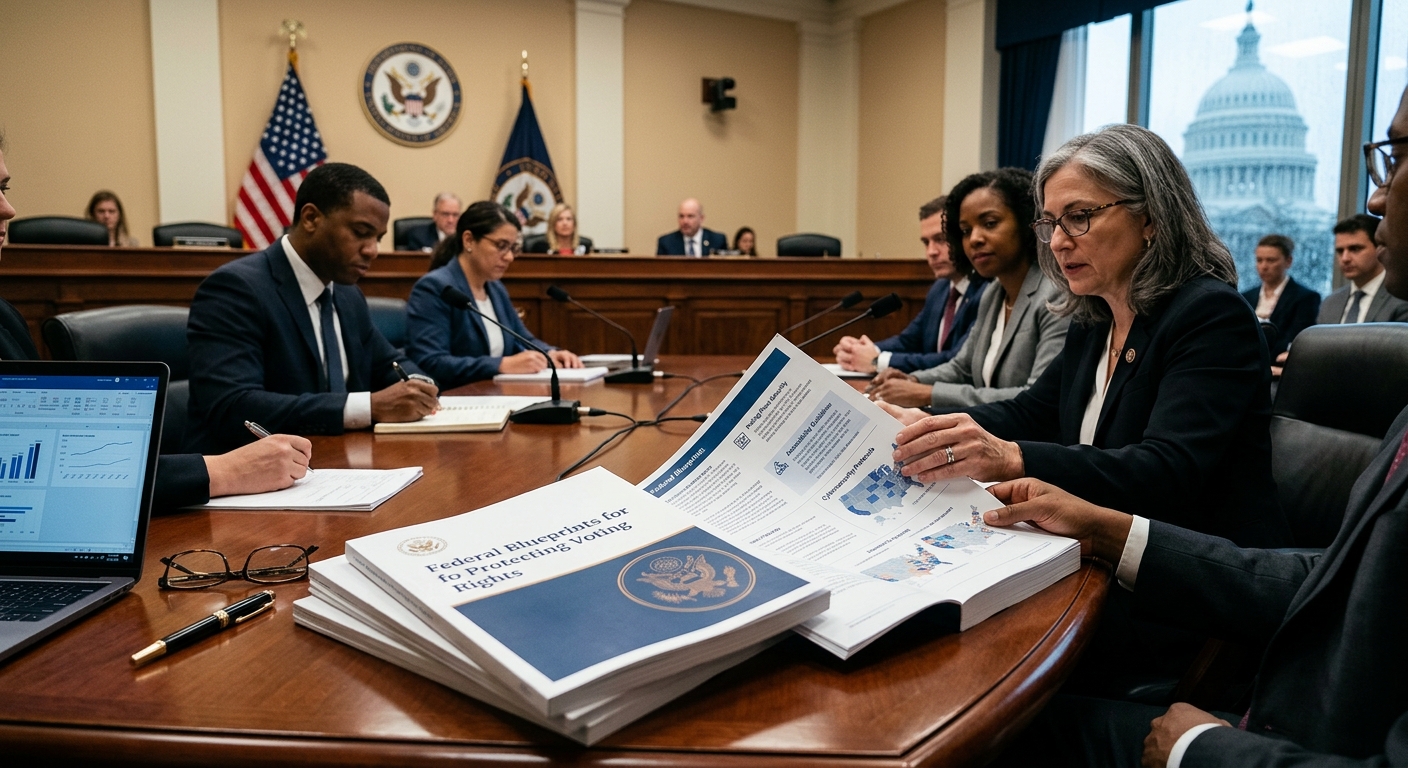
The Essential Role of the Federal Government in Safeguarding Democracy
The foundation of any representative democracy is the unhindered ability of its eligible citizens to participate in the electoral process. In the United States, the administration of elections is largely decentralized, managed by states, counties, and local municipalities. While this localized approach provides logistical flexibility, it also creates a patchwork of regulations that can lead to systemic disparities in ballot access. When localized legislative efforts threaten to constrict democratic participation, the federal government possesses both the constitutional authority and the moral imperative to intervene. Ensuring the franchise requires more than passive observation; it demands a robust, proactive blueprint leveraging the full weight of executive agencies and federal legal frameworks to protect voters from disenfranchisement.
Throughout American history, the expansion of civil liberties has frequently necessitated federal intervention to override discriminatory state-level practices. From the monumental civil rights legislation of the 1960s to modern executive directives aimed at modernizing registration, the interplay between state autonomy and federal oversight remains a critical frontier. Establishing a comprehensive federal strategy to protect democratic participation involves mobilizing the Department of Justice, utilizing the administrative capacity of federal agencies, and addressing the unique barriers faced by historically marginalized and justice-impacted populations. Such an agenda is not merely a theoretical exercise; it is an urgent necessity in an era characterized by rapidly shifting legal landscapes surrounding the ballot box.
The Landscape of Electoral Access and Franchise Preservation
To understand the necessity of federal action, one must first analyze the evolving landscape of electoral administration across the country. In recent years, a significant number of jurisdictions have pursued legislative and administrative changes that fundamentally alter the mechanics of voting. While proponents frequently argue that these measures are essential for maintaining electoral security and administrative efficiency, critics and civil rights advocates point to the disproportionate impact these changes often have on specific demographics, particularly minority communities, low-income citizens, and the elderly.
Rising Tides of Restrictive Electoral Legislation
The mechanisms of disenfranchisement have grown increasingly sophisticated. Contemporary restrictive measures rarely take the explicit forms seen in the early 20th century; instead, they operate through bureaucratic friction. Common legislative maneuvers include the stringent narrowing of acceptable voter identification, drastic reductions in the availability of secure ballot drop boxes, the systematic consolidation of polling locations in densely populated urban centers, and the aggressive purging of voter registration rolls based on infrequent participation rather than confirmed changes in residency or eligibility. The compounded effect of these policies is a structural barrier that transforms a constitutional right into an administrative burden.
These localized restrictions underscore the critical need for a universal federal floor. When states are left entirely to their own devices without the threat of federal oversight, the risk of partisan manipulation of electoral mechanics increases exponentially. The federal government’s role is to ensure that regardless of the state or county a citizen resides in, their fundamental right to participate in federal elections remains unobstructed and fundamentally equal to that of their peers nationwide.
Executive Mechanisms for Defending the Ballot
While permanent structural changes to electoral rights require congressional legislation, the executive branch wields substantial administrative and regulatory power that can be deployed unilaterally. An aggressive executive strategy can drastically alter the landscape of voter access by transforming the federal government from a passive observer into an active facilitator of democratic participation .
Transforming Federal Agencies into Registration Hubs
The National Voter Registration Act (NVRA) of 1993 established a foundational principle: government agencies that interact with the public should facilitate voter registration . While this mandate has historically been associated with state-level Departments of Motor Vehicles (the “Motor Voter” law), the executive branch has the authority to aggressively expand this concept across federal departments. Agencies such as the Department of Veterans Affairs (VA), the Indian Health Service (IHS), and the Social Security Administration interact with millions of Americans daily. By administratively designating these federal entities as official voter registration agencies, the executive branch can provide seamless registration opportunities to millions of citizens, particularly those in underserved or rural communities.
This “all-of-government” approach requires meticulous coordination. Executive orders can mandate that federal agencies evaluate their daily operations to identify touchpoints where non-partisan voter registration information can be distributed. Furthermore, the federal government, as the nation’s largest employer, can set a private-sector standard by guaranteeing paid administrative leave for all federal employees to cast their ballots or serve as non-partisan poll workers, thereby mitigating the severe shortage of electoral staff experienced in recent election cycles.
Mobilizing the Department of Justice
The most potent weapon in the federal government’s arsenal against voter suppression is the United States Department of Justice (DOJ), specifically its Civil Rights Division. For decades, the Voting Section of the Civil Rights Division has been tasked with enforcing federal statutes, most notably the surviving provisions of the Voting Rights Act of 1965 . A committed executive branch must ensure that this division is not only adequately funded but fundamentally expanded to meet the scale of modern electoral challenges.
Historically, the DOJ has announced initiatives to double its enforcement staff to combat the proliferation of restrictive state voting laws . This influx of legal resources allows the federal government to proactively monitor state legislation, issue guidance on compliance with federal civil rights laws, and, when necessary, initiate aggressive affirmative litigation against jurisdictions that enact discriminatory electoral procedures. By actively challenging illegal purges of voter rolls, discriminatory redistricting maps, and targeted barriers to absentee voting, the DOJ acts as a critical deterrent against unconstitutional state overreach.
Establishing Specialized Electoral Integrity Task Forces
Beyond the centralized operations of the Civil Rights Division in Washington, D.C., the executive branch can leverage its decentralized network of federal prosecutors. A highly effective strategy involves directing the Attorney General to establish specialized Electoral Integrity Task Forces across all 94 U.S. Attorney’s Offices nationwide. This approach mirrors the federal government’s response to other systemic threats, such as environmental crimes or cyber security vulnerabilities.
By mandating that each federal district designate a specific Assistant U.S. Attorney (AUSA) as a dedicated liaison for voting rights enforcement, the DOJ creates a hyper-local surveillance and enforcement network. These designated federal prosecutors would be tasked with engaging directly with local civil rights organizations, monitoring county-level election board meetings, and serving as a rapid-response legal mechanism during early voting periods and on Election Day. This decentralization ensures that federal oversight is not a distant threat, but a localized reality capable of immediately addressing suppression tactics before they irreversibly taint an election.
Empowering Marginalized and Justice-Impacted Voters
A comprehensive federal blueprint for voting rights must explicitly address populations that are systematically excluded from the electoral process due to systemic bureaucratic neglect. Chief among these populations are justice-impacted individuals who legally retain the right to vote but face insurmountable administrative barriers.
Federal Custody and the Right to Participate
On any given day, hundreds of thousands of Americans are held in federal and local detention facilities in a pre-trial status. Under the law, because these individuals have not been convicted of a felony, they retain their constitutional right to vote. Furthermore, many individuals serving federal sentences for misdemeanor convictions are similarly eligible. However, the logistical reality of obtaining, completing, and returning an absentee ballot from within a detention facility often amounts to de facto disenfranchisement.
The executive branch holds direct administrative control over the Federal Bureau of Prisons (BOP) and the United States Marshals Service. To protect the franchise of this population, the administration can issue binding directives requiring all federal correctional facilities to implement comprehensive voter facilitation programs. This includes providing justice-impacted individuals with proactive voter eligibility assessments upon intake, unfettered access to non-partisan voter registration materials, dedicated assistance in requesting absentee ballots from their home jurisdictions, and ensuring the secure and timely outbound mailing of completed ballots. By dismantling the administrative barriers within its own penal institutions, the federal government sets a critical civil rights standard for state and county jails to follow.
Legislative Synergy: The Limits of Executive Action
While an aggressive executive strategy is a mandatory component of protecting the ballot, it is inherently limited by the boundaries of administrative law. Executive orders, agency directives, and DOJ litigation priorities are subject to the political philosophies of the sitting administration and can be swiftly rescinded or reversed by subsequent presidents. Therefore, executive action must be viewed as an immediate stabilization mechanism, not a permanent cure.
To secure enduring protections, the executive branch must simultaneously exhaust its political capital to champion foundational legislative reforms. The gutting of the preclearance requirements of the Voting Rights Act by the Supreme Court severely hobbled the federal government’s ability to block discriminatory laws before they take effect. Restoring these statutory anchors—by passing comprehensive legislation that modernizes federal oversight, establishes national baseline standards for early voting and mail-in ballots, and outlaws partisan gerrymandering—is the only way to insulate the democratic process from the volatile swings of state-level partisanship.
Comparative Analysis: Federal Avenues for Electoral Protection
The table below outlines the varying mechanisms available to the federal government to secure voter access, detailing the responsible branch, the speed of implementation, and the long-term durability of the action.
| Strategic Mechanism | Branch of Government | Speed of Implementation | Durability & Scope |
|---|---|---|---|
| Agency-Based Voter Registration Directives | Executive (White House / Agencies) | Rapid (via Executive Order) | Low durability (can be rescinded); Moderate scope. |
| DOJ Affirmative Civil Rights Litigation | Executive (Department of Justice) | Moderate (requires court proceedings) | High durability once ruled; Case-by-case scope. |
| Establishing U.S. Attorney Task Forces | Executive (Attorney General) | Rapid (Administrative mandate) | Low durability; High localized scope. |
| Restoring VRA Preclearance Standards | Legislative (Congress) | Slow (requires statutory passage) | Highest durability; Broad national scope. |
Frequently Asked Questions (FAQs)
What is the National Voter Registration Act (NVRA) and how does it involve federal agencies?
The National Voter Registration Act of 1993, commonly known as the “Motor Voter” law, requires state governments to offer voter registration opportunities at motor vehicle agencies, as well as at offices that provide public assistance or state-funded programs serving persons with disabilities . Additionally, it allows the federal government to designate federal agencies as voter registration sites, meaning entities like military recruitment offices or federal health facilities can be mandated to facilitate civic participation.
Can the President of the United States force state legislatures to change their election laws?
No. The U.S. Constitution generally delegates the administration of elections to the states. The President cannot unilaterally rewrite a state’s election code via executive order. However, the federal government can intervene if state laws violate constitutional amendments (such as the 14th or 15th Amendments) or existing federal civil rights statutes. In these instances, the DOJ can sue the state to enjoin (stop) the illegal practices.
How does the Department of Justice enforce voting rights without “preclearance”?
Before 2013, jurisdictions with a history of discrimination had to get federal approval (“preclearance”) before changing election laws. With that provision currently inactive, the DOJ relies primarily on Section 2 of the Voting Rights Act . Section 2 allows the federal government (or private parties) to sue a jurisdiction after a law has been passed if it can be proven that the law has a discriminatory intent or results in a disparate impact on minority voters’ ability to participate in the political process .
Do people incarcerated in federal prisons have the right to vote?
It depends entirely on their legal status and their home state’s laws. Individuals who are incarcerated pre-trial (meaning they have not been convicted of the crime they are accused of) legally retain their right to vote. Those convicted of misdemeanors generally retain their voting rights as well. The disenfranchisement of convicted felons varies wildly by state. Federal policy can impact this by ensuring that the Bureau of Prisons physically provides the necessary administrative support (stamps, ballots, access to information) for eligible individuals to exercise their rights.
Conclusion
Safeguarding democratic participation is not a passive endeavor; it requires the continuous, aggressive application of federal authority to counteract attempts at voter suppression. By reimagining the role of federal agencies as facilitators of civic engagement, unleashing the litigation power of the Department of Justice, and establishing hyper-local enforcement networks, the executive branch can provide a formidable shield against disenfranchisement. However, lasting electoral integrity ultimately demands a symbiotic approach, requiring both immediate executive intervention and robust legislative codification. The health of a democratic republic relies entirely on the premise that the ballot box remains unequivocally accessible to every eligible citizen, and the federal government holds the ultimate responsibility for ensuring that premise remains a reality.
References
- Executive Order 14019: Promoting Access to Voting — The White House. 2021-03-07. https://www.whitehouse.gov/briefing-room/presidential-actions/2021/03/07/executive-order-on-promoting-access-to-voting/
- Statutes Enforced by the Voting Section — U.S. Department of Justice. 2024-03-22. https://www.justice.gov/crt/statutes-enforced-voting-section
- The National Voter Registration Act of 1993 (NVRA) — U.S. Election Assistance Commission (EAC). 2023-01-15. https://www.eac.gov/voters/national-voter-registration-act
- U.S. Justice Department to double civil rights staff focused on voting rights — Reuters. 2021-06-11. https://www.reuters.com/world/us/us-justice-department-double-civil-rights-staff-focused-voting-rights-2021-06-11/
Similar Articles








Read full bio of Sneha Tete


