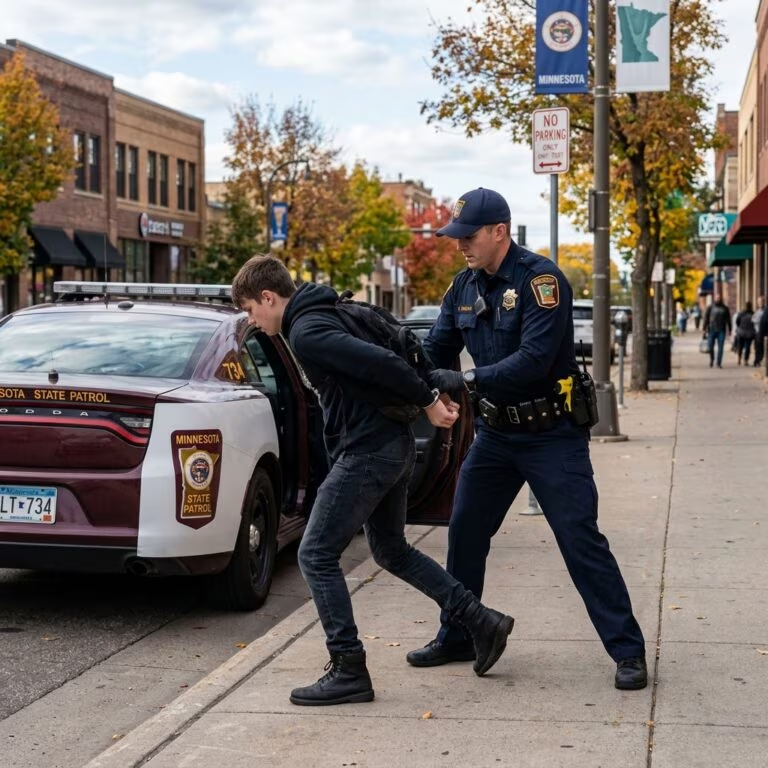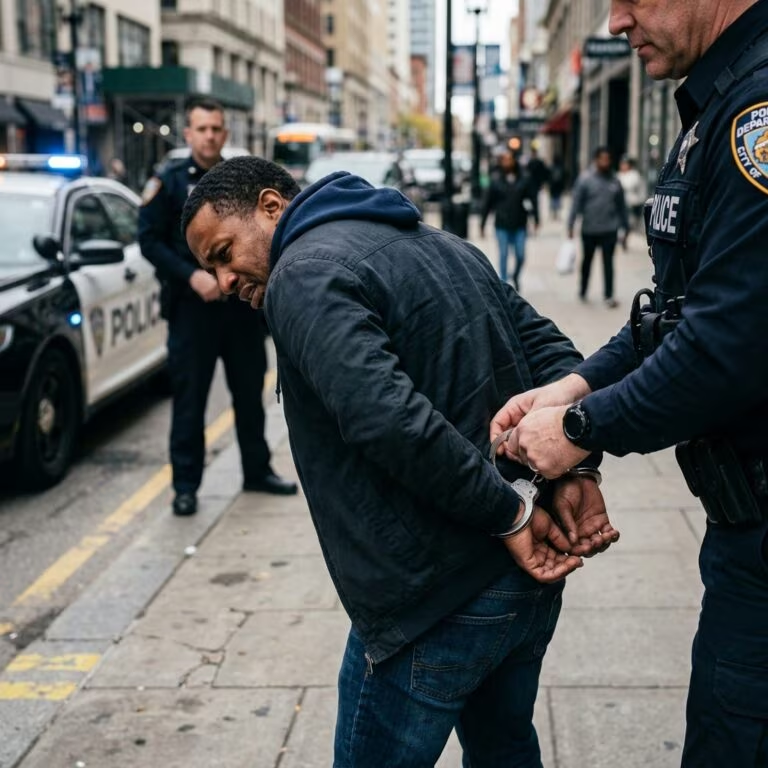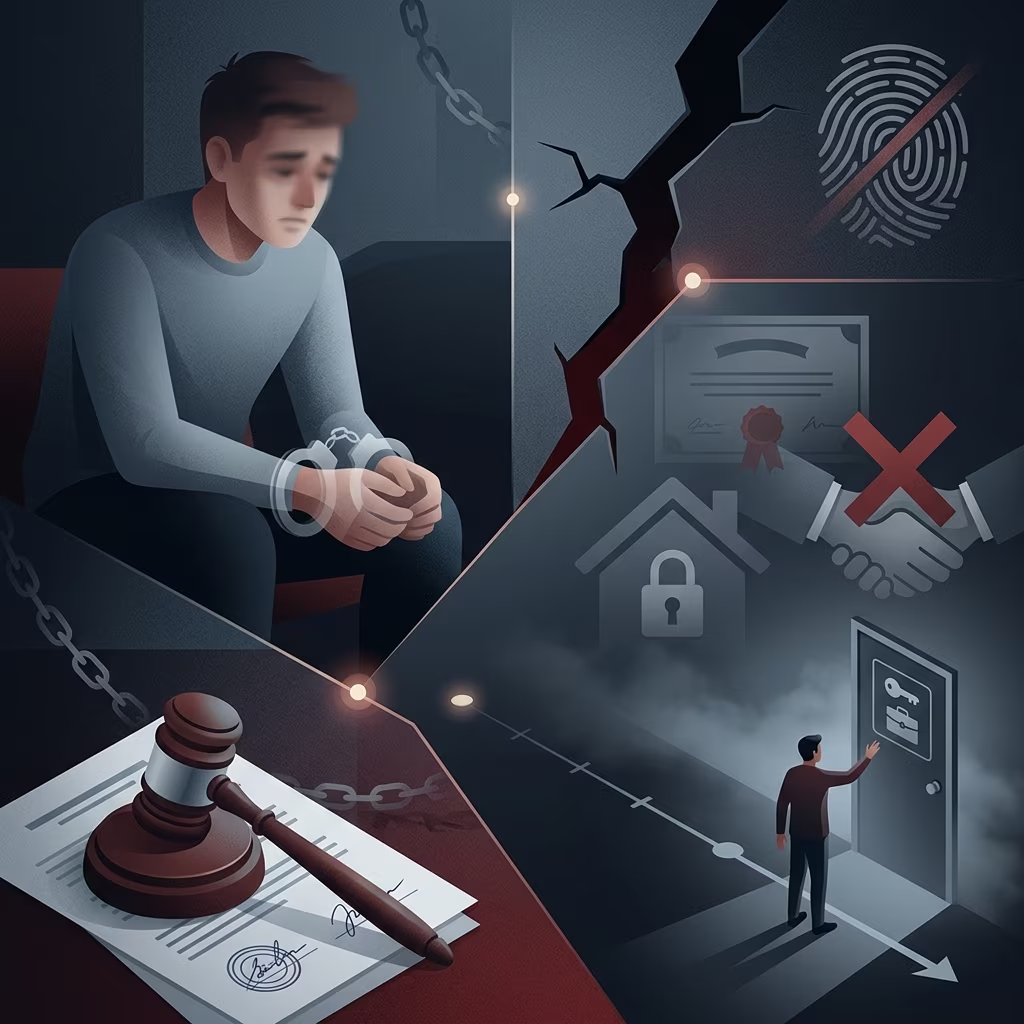
Fake IDs are often seen as a shortcut to nightlife, alcohol, or age-restricted spaces. In reality, using or carrying a fake ID is a criminal offense in every U.S. state and can trigger a cascade of legal and personal consequences that last far beyond a single night out. This article explains how fake ID laws work, the penalties you could face, and how a single decision can affect your education, career, and financial future.
What Counts as a Fake ID?
States broadly define fake ID offenses to cover an array of conduct involving identity documents. While specific terminology differs from one jurisdiction to another, the underlying idea is the same: any wrongful use or possession of identification meant to deceive others can be criminal.
Common examples include:
- Possessing a **counterfeit driver’s license** created to mimic a government-issued ID.
- Using an **altered ID**, such as changing the date of birth or photo to appear older.
- Borrowing or buying **someone else’s legitimate ID** and presenting it as your own.
- Manufacturing or selling fake IDs for profit or distribution to friends or customers.
- Using false identification to access **age-restricted goods or venues** (alcohol, tobacco, bars, clubs, casinos).
In many states, simply having a fake or altered identification document is illegal, even if you never present it to a bartender, door staff, or police officer.
How Fake ID Laws Are Structured
Although details vary by jurisdiction, fake ID conduct is typically covered under a combination of statutes addressing government records, forgery, and age-related offenses.
Broadly, states use three main legal approaches:
- Forgery or counterfeit document laws – focus on creating, altering, or possessing forged instruments, including IDs.
- Government record or identity document statutes – penalize tampering with official records and identification cards.
- Alcohol and age-specific regulations – make it illegal for minors to misrepresent age or present false ID to buy alcohol.
Depending on which statute applies, the exact charge might be a minor summary offense, a misdemeanor, or in more serious situations, a felony.
Misdemeanor vs. Felony: Levels of Offense
Most routine fake ID situations involving underage drinking or entry into a bar are prosecuted as lower-level offenses, but the stakes increase sharply when fraud, identity theft, or large-scale production is involved.
| Offense Level | Typical Situations | Possible Penalties |
|---|---|---|
| Summary / Infraction | First-time possession of fake ID for alcohol, minor age misrepresentation. | Fines, possible short license suspension, no jail or minimal jail in some states. |
| Misdemeanor | Using fake ID at a bar, repeatedly possessing fake IDs, simple forgery of ID. | Up to 1 year in jail, higher fines, probation, driver’s license suspension. |
| Felony | Using fake ID for fraud, identity theft, firearms purchases, or large-scale production. | More than 1 year in prison, substantial fines, long-term felony record. |
In many jurisdictions, prosecutors have broad discretion to decide whether to pursue misdemeanor or felony charges when a fake ID is linked to other criminal conduct.
Typical Penalties for Fake ID Convictions
Even when charges are on the lower end of the spectrum, the legal consequences can be serious. Penalties typically include a mix of financial sanctions, restrictions on driving, and potential jail or probation.
Fines and Court Costs
Fines are the most common immediate consequence of a fake ID conviction. Statutes often distinguish between first and subsequent offenses:
- First-time or summary offenses may carry fines up to a few hundred dollars, plus court costs and surcharges.
- Misdemeanors often permit fines up to $1,000 or more; some states allow higher ceilings for serious misdemeanors.
- Felony cases, especially those tied to broader fraud schemes, can result in fines reaching many thousands of dollars.
Jail or Incarceration
Jail time for fake ID offenses is very situational and may depend on prior record, intent, and whether the ID was used to facilitate other crimes.
- Minor or first-time cases often result in no jail, but judges may impose short sentences or suspended time in some circumstances.
- Misdemeanor convictions can carry up to a year in jail, though shorter terms such as 30–90 days are more common when incarceration is imposed.
- Felony convictions—especially for forgery or criminal possession of a forged instrument—can lead to multiple years in state prison.
Driver’s License Suspension
Many states automatically tie fake ID offenses to driving privileges, even if the offense did not involve a vehicle.
Common patterns include:
- Mandatory suspension of your driver’s license for a fixed period (for example, 180 days for certain offenses).
- Graduated suspensions that increase with each additional fake ID conviction.
- Administrative actions by motor vehicle agencies triggered by court notification of the conviction.
Even a relatively short suspension can make everyday life complicated, affecting commuting, work, school, and family responsibilities.
Probation and Other Court Conditions
Courts frequently use probation and non-jail sanctions to address fake ID cases while still signaling their seriousness.
- Supervised or unsupervised probation with requirements to obey all laws, stay in school, or maintain employment.
- Mandatory alcohol education, counseling, or community service.
- Orders not to enter bars or purchase alcohol for a designated period.
Collateral Consequences Beyond the Courtroom
The direct penalties are only part of the story. A fake ID case can have ripple effects that follow you for years, particularly if it results in a criminal conviction.
Criminal Record and Background Checks
Even a misdemeanor fake ID conviction can generate a permanent or long-lasting criminal record. This record may show up in routine background checks for:
- Internships and entry-level jobs, especially in banking, finance, or security-sensitive fields.
- Professional licensing (law, accounting, healthcare, education).
- Apartment rentals and housing applications.
- Certain volunteer opportunities or leadership roles.
Fake ID crimes are frequently categorized as offenses related to honesty or deception, which can raise red flags for employers and licensing boards.
Impact on Education and Campus Life
Colleges and universities often treat fake ID conduct as a violation of both law and campus policy.
- Disciplinary hearings that may result in warnings, probation, suspension from housing, or other sanctions.
- Potential loss of scholarships or eligibility for certain campus programs.
- Required participation in alcohol education or counseling programs.
Some institutions coordinate closely with local law enforcement, meaning a bar incident can quickly become both a criminal case and a campus disciplinary matter.
Long-Term Career and Financial Effects
A fake ID case can feel like a short-term issue, but its long-term financial impact should not be underestimated.
- Reduced access to high-trust professions that heavily weigh integrity and background checks.
- Higher insurance costs or difficulty qualifying for certain financial products if a record suggests risk.
- Out-of-pocket expenses for legal counsel, fines, program fees, and transportation during license suspensions.
When Fake ID Use Becomes a Serious Crime
Many people associate fake IDs mainly with underage drinking, but in the eyes of the law, using identity documents fraudulently can be far more serious.
Link to Fraud and Identity Theft
Fake IDs used to obtain money, benefits, or property can bring felony charges based on forgery, fraud, or identity theft statutes.
- Opening bank accounts or lines of credit under a false identity.
- Claiming government benefits using someone else’s information.
- Attempting to purchase firearms with forged or counterfeit identification.
Court systems treat these cases as more than simple age misrepresentation; they implicate broader concerns about financial integrity and public safety.
Manufacturing or Distribution of Fake IDs
Operating a fake ID business—whether online or in person—can lead to multiple charges, including forgery, conspiracy, and in some states felony-level identity document offenses.
Authorities view large-scale production or sale of counterfeit IDs as a gateway to more serious crimes, which is why penalties escalate sharply in these scenarios.
Defensive Options and Legal Strategies
If you are accused of a fake ID offense, the choices you make early in the process can significantly shape the outcome. While only a licensed attorney can give tailored advice, there are several common themes in defending these cases.
Challenging the Evidence
Defense strategies may focus on whether officers had a lawful basis to seize or examine the ID, and whether the document meets the legal definition of a fake or forged instrument.
- Questioning how the ID was obtained and whether any constitutional rights were violated.
- Arguing that the document does not clearly qualify as a counterfeit under the relevant statute.
- Examining whether the prosecution can prove intent to deceive or misrepresent age.
Diversion, Deferred Judgments, and Plea Options
Many jurisdictions aim to avoid permanently harming young people’s futures for isolated mistakes, especially when there is no history of prior offenses.
- Diversion programs that allow defendants to complete education, counseling, or community service in exchange for dismissal upon successful completion.
- Deferred judgments, in which the court temporarily postpones conviction and may later expunge the case if conditions are met.
- Plea agreements reducing charges to lesser offenses or non-criminal violations to limit record impact.
Because the rules and availability of such options vary widely, speaking with counsel promptly is often critical.
Practical Tips to Avoid Fake ID Trouble
The most effective way to avoid fake ID problems is straightforward: do not create, buy, carry, or use false identification. Still, understanding practical risk-reduction strategies is useful for students and young adults navigating age-restricted environments.
- Decline offers to share or borrow IDs – using someone else’s government-issued license as your own can lead to charges for both parties.
- Be cautious with online vendors – purchasing counterfeit IDs through websites can expose you to additional fraud or identity theft risks, beyond criminal charges.
- Know campus and local policies – universities and college towns often have active enforcement around bars and events.
- Seek legal advice quickly if stopped – paying a fine without understanding collateral consequences, such as license suspensions, can be a costly mistake.
Frequently Asked Questions (FAQs)
Is using a fake ID always a crime?
Yes. Every U.S. state treats using or possessing a fake ID as unlawful, though the specific charge and severity vary. Even a first offense aimed solely at buying alcohol is typically at least a summary offense or misdemeanor.
Could I go to jail for using a fake ID at a bar?
It is possible, particularly if the offense is charged as a misdemeanor and you have prior record, but many first-time cases result in fines and non-jail sanctions. However, jail is more likely if the fake ID is connected to other crimes or repeated violations.
Will my driver’s license be suspended?
In many states, yes. Courts often notify motor vehicle agencies when someone is convicted, triggering suspensions ranging from a month to several months or more, even when the fake ID incident did not involve driving.
Can a fake ID conviction affect my career?
Yes. Fake ID offenses are often categorized as honesty or fraud-related crimes, which can raise concerns for employers, especially in finance, law, or positions involving access to sensitive information. A criminal record can also complicate licensing and professional advancement.
Is it possible to keep a fake ID case off my record?
In some jurisdictions, diversion programs, deferred judgments, or negotiated pleas may reduce or eliminate long-term record impact, particularly for first-time offenders. Outcomes depend heavily on local law and the specific facts of the case, so prompt legal counsel is important.
References
- Carrying a Fake ID — Penn State “Safe & Aware” Program. 2023-01-10. https://safeaware.psu.edu/parents/drug-and-alcohol-laws-in-pennsylvania/carrying-a-fake-id
- Fake ID: Laws and Penalties — Nolo / CriminalDefenseLawyer.com. 2022-06-15. https://www.criminaldefenselawyer.com/resources/criminal-defense/juvenile/fake-id-laws-and-penalties.htm
- Fake IDs — University of Iowa Student Legal Services. 2022-09-01. https://studentlegal.uiowa.edu/know-the-law/criminal-law/fake-ids
- Use or Possession of a Fake ID in Texas: Laws, Penalties & Defenses — Lorfing Law. 2024-03-20. https://lorfinglaw.com/blog/possession-of-fake-id-texas/
- New York Fake ID Crimes: FAQ — Saland Law. 2023-05-02. https://www.new-york-lawyers.org/frequently-asked-questions/new-york-fake-id-crimes-faq/
- Fake ID Crimes: Punishments in Virginia — The Wilson Law Firm. 2023-09-12. https://www.tkevinwilsonlawyer.com/faqs/fake-id-crimes-punishments-in-virginia.cfm
- Possession of a Fake ID in Massachusetts: Potential Consequences — The Law Offices of R. Sweeney. 2024-11-05. https://www.rsweeneylaw.com/blogs/2024/november/possession-of-a-fake-id-in-massachusetts-potenti/