
Face Covering Laws Across America: A Complete Guide
Understanding mask regulations, mandates, and restrictions by state and jurisdiction.
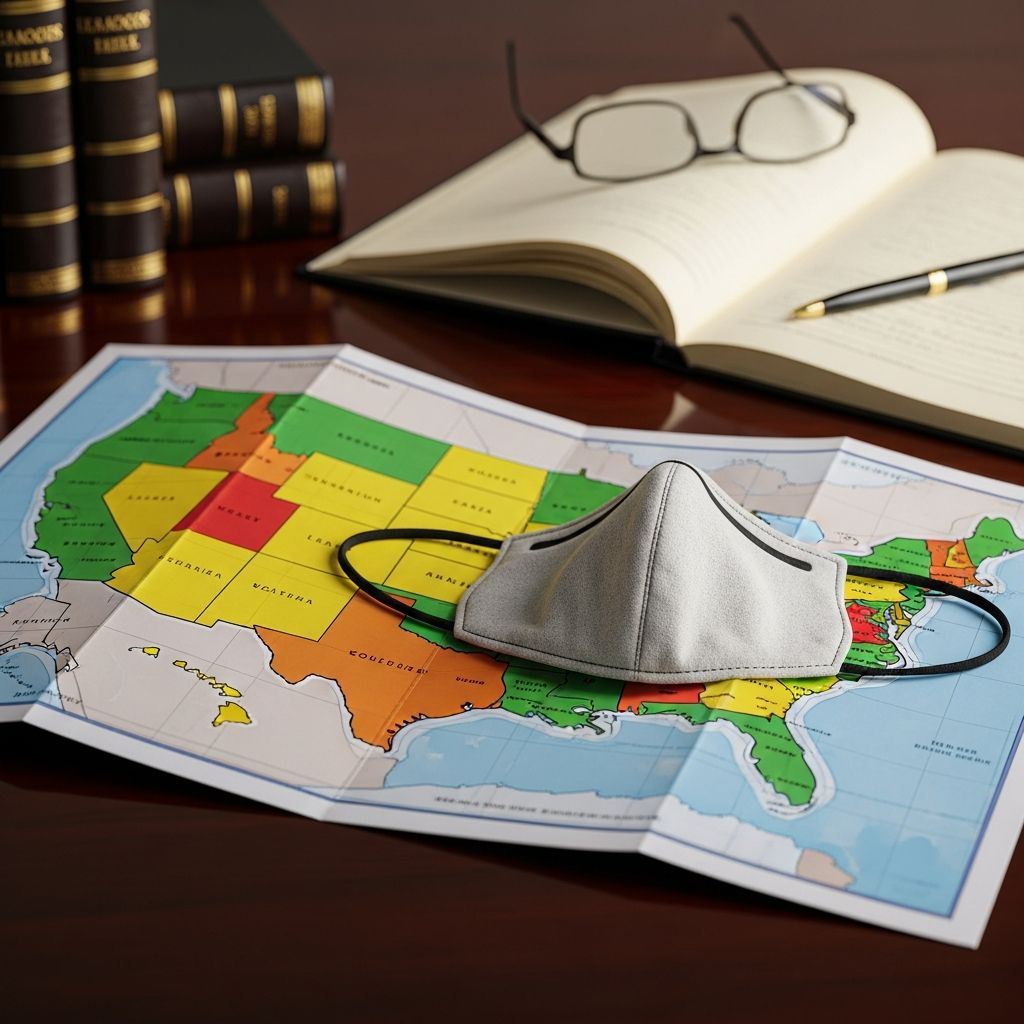
Understanding Face Covering Legislation Across the United States
Face covering policies have become an important area of legal regulation across the United States, shaped by public health considerations, individual rights, and evolving governmental approaches. The landscape of mask-related legislation varies significantly from state to state, reflecting different priorities and responses to health emergencies. This comprehensive guide explores the various types of face covering laws, their applications, exemptions, and the reasoning behind different regulatory approaches adopted by American states and local jurisdictions.
The Evolution of Mask Mandates and Requirements
During the COVID-19 pandemic, many states implemented mandatory mask requirements as part of their public health response. As of late 2020, governors in 35 states had issued emergency orders establishing statewide mandatory masking requirements. These mandates represented a coordinated effort to slow disease transmission across diverse populations and communities. However, as vaccination rates increased and public health conditions evolved, many states began reassessing their policies.
The transition from mandatory requirements to voluntary recommendations occurred at different times across various jurisdictions. Some states aligned their policies with Centers for Disease Control and Prevention (CDC) guidance, which recommended different masking levels based on local transmission rates. Others maintained stricter requirements in specific settings, such as healthcare facilities and public transportation. The variation in these transitions reflected both the decentralized nature of American governance and differing perspectives on the appropriate balance between public health protection and personal freedom.
Categories of State Mask Policies
Contemporary face covering laws in the United States can be organized into several distinct categories, each reflecting different legislative philosophies and public health approaches:
- Universal Indoor Requirements: Some jurisdictions maintain broad requirements for face coverings in all indoor public spaces, with limited exemptions for specific activities or medical conditions.
- Sector-Specific Mandates: Many states require masks only in particular settings such as healthcare facilities, public transportation, schools, or long-term care facilities, while allowing flexibility in other areas.
- Conditional Requirements: Several states tie masking requirements to specific conditions, such as vaccination status, local transmission levels, or the presence of immunocompromised individuals.
- Recommendation-Based Approaches: Some jurisdictions have moved away from mandatory requirements but continue providing guidance and recommendations for mask use in various contexts.
- Anti-Mask Legislation: A growing number of states have enacted laws restricting or prohibiting mask wearing in certain circumstances, reflecting concerns about identity concealment and security.
Federal Guidelines and Workplace Requirements
The federal government has established several frameworks governing mask use in specific contexts. Federal agencies follow CDC COVID-19 Community Level guidance to determine appropriate prevention strategies, with mask recommendations varying based on transmission levels in specific counties. At low transmission levels, individuals are encouraged to wear masks based on personal preference. At medium levels, masks are recommended for individuals at high risk of serious illness or those who are immunocompromised. At high transmission levels, masking is recommended indoors regardless of vaccination status.
The Occupational Safety and Health Administration (OSHA) provides guidance for workplace settings, particularly in areas experiencing high or substantial disease transmission. OSHA recommends that workers in these areas wear face coverings indoors regardless of vaccination status and requires employers to provide masks at no cost to employees. Employers must also discuss reasonable accommodations for workers unable to wear certain types of masks due to disabilities. Federal contractors are required to ensure compliance with published CDC guidance for masking and physical distancing at covered contractor workplaces.
Healthcare and Long-Term Care Facility Requirements
Healthcare settings represent one area where mask requirements remain nearly universal across American states. These requirements reflect the heightened transmission risk in medical environments where vulnerable populations congregate and procedures that generate respiratory particles occur regularly. Most states maintain mandatory masking policies in hospitals, clinics, and other healthcare facilities, often without seasonal variation or fluctuation based on transmission levels.
Long-term care facilities similarly maintain robust mask requirements to protect elderly and immunocompromised residents. These facilities typically require staff, visitors, and residents to wear masks in common areas and during direct care provision. Some states have specifically exempted these settings from broader policy changes, maintaining consistent masking protocols even when general public mask recommendations have been relaxed or eliminated.
Transportation and Public Transit Policies
Public transportation represents another sector where mask requirements have remained relatively consistent across many jurisdictions. Bus systems, train services, and other public conveyance operators frequently maintain masking requirements for passengers and staff, recognizing the difficulty of maintaining physical distance in crowded transit environments. While federal requirements on commercial aircraft were subject to legal challenges and eventually rescinded, many individual transit agencies have chosen to maintain their own masking policies independent of federal mandates.
Education and School-Related Masking Guidelines
Schools and educational institutions have adopted varying approaches to face covering requirements. Some states have empowered local school districts to make independent masking decisions based on local transmission rates and community preferences. Others have established statewide policies either requiring or prohibiting mask mandates in schools. The intersection of parental choice, student health, and educational access has made school masking policies particularly contentious in many communities.
Anti-Mask Statutes and Historical Context
Many American states retain anti-mask laws originally enacted decades ago, often during periods of significant social upheaval or in response to specific security concerns. These historical statutes typically prohibit wearing masks or face coverings in public places, though they often include exceptions for legitimate purposes such as theatrical performances, holiday celebrations, occupational requirements, and religious observances.
Virginia maintains anti-mask legislation enacted in 1950 that makes it illegal for individuals over 16 years old to wear face coverings, with exemptions available for professional trades, theatrical performances, or medical reasons supported by physician documentation. Connecticut’s law, originating in 1949, specifically targets masks worn with intent to deprive others of their legal rights based on protected characteristics including race, gender identity, or disability.
North Carolina implemented comprehensive anti-mask legislation in 2024, effective in October of that year, establishing a general prohibition on masking in public and private settings with exceptions for holidays, theater, occupational purposes, motorcycles, and medical or surgical devices used to prevent disease transmission. The law requires mask removal if ordered by law enforcement or property owners or occupants.
Some states have implemented anti-mask legislation specifically directed at pandemic-related policies rather than at historical identity concealment concerns. Georgia, West Virginia, Louisiana, and Minnesota have enacted statutes with varying scopes regarding mask prohibitions, though Georgia’s statute has been narrowly interpreted by its state Supreme Court to apply only when mask wearers intend to threaten, intimidate, or commit violence.
State-by-State Regulatory Approaches
Individual states have adopted diverse regulatory frameworks reflecting their unique circumstances and policy priorities. Texas prohibits state and local governments from enacting COVID-19 mask mandates through legislation codified in the Texas Health and Safety Code, though this does not prohibit private mask wearing. Colorado permits fully vaccinated individuals to forgo masks in indoor public spaces under most circumstances, while encouraging unvaccinated adults to continue masking when around members of different households.
Maine and Massachusetts have aligned their policies with CDC guidance, permitting fully vaccinated individuals to avoid masks indoors while recommending continued masking by unvaccinated individuals in indoor public spaces and outdoor settings where physical distancing cannot be maintained. Michigan increased indoor and outdoor capacity to 100 percent and eliminated mask requirements entirely for residents.
New Jersey maintains sector-specific requirements, mandating masks on public transportation, in healthcare settings, long-term care facilities, and childcare settings while lifting general indoor and outdoor mask requirements. Wisconsin follows CDC guidance in determining appropriate masking recommendations for its residents.
Medical and Religious Exemptions
Many jurisdictions recognize exemptions from mask requirements based on medical conditions or religious beliefs. Medical exemptions typically require documentation from healthcare providers specifying the medical necessity for mask exemption and expected duration. Religious exemptions accommodate individuals whose faith traditions prohibit face coverings, though the scope and specificity of these exemptions vary considerably by jurisdiction.
Some states have implemented exemptions for individuals unable to medically tolerate face coverings while maintaining requirements for others. Healthcare providers and employers must work with employees and customers to identify reasonable accommodations for individuals with disabilities that prevent or complicate mask wearing.
Employer Obligations and Workplace Compliance
Employers in jurisdictions with mask requirements must ensure compliance and may face specific obligations regarding mask provision, employee accommodation, and visitor management. Many states require employers to provide masks to employees at no cost when masks are mandated in their workplace. Businesses must also establish reasonable accommodations for employees with disabilities affecting mask tolerance and cannot discriminate against individuals choosing to wear masks designed to inhibit disease transmission.
Anti-discrimination protections extend to individuals choosing to wear masks for public health purposes, provided the masks are not designed to obscure identity. Employers must also communicate clearly regarding mask policies and any changes to requirements based on evolving public health conditions or transmission levels.
Frequently Asked Questions
Q: Are mask requirements still in effect throughout the United States?
A: Mask requirements vary significantly by state and jurisdiction. While universal indoor mask mandates have largely been discontinued, many states maintain requirements in specific settings such as healthcare facilities, long-term care homes, and public transportation. Some states have implemented anti-mask legislation, while others maintain recommendation-based guidance.
Q: What is the difference between a mask mandate and a mask recommendation?
A: A mask mandate is a legally binding requirement with potential penalties for non-compliance, while a recommendation is guidance that individuals may choose to follow based on personal preference and risk assessment. Recommendations carry no legal enforcement mechanism.
Q: Can private businesses require masks despite state laws prohibiting mask mandates?
A: Generally, yes. State laws prohibiting government mask mandates typically do not prevent private businesses from establishing their own mask requirements for employees and customers. Businesses retain the authority to set policies within their facilities.
Q: What accommodations must employers provide for employees unable to wear masks?
A: Employers must discuss reasonable accommodations for employees with disabilities preventing mask wearing, which may include modified duties, remote work arrangements, or alternative protective equipment. Accommodations must be individualized based on specific circumstances.
Q: Are medical masks exempt from anti-mask statutes?
A: Many anti-mask statutes specifically exempt medical or surgical devices used to prevent disease transmission, though the definition and application of this exemption varies by state. Some states require documentation supporting medical necessity.
Q: How do CDC Community Levels determine mask recommendations?
A: The CDC establishes three transmission levels—low, medium, and high—based on local COVID-19 hospitalization rates and case trends. Recommendations escalate from personal preference at low levels to universal masking indoors at high transmission levels.
Q: What penalties apply for violating mask requirements or prohibitions?
A: Penalties vary considerably by jurisdiction and type of violation. Some states impose fines for individuals failing to comply with mask requirements, while violations of anti-mask statutes may result in criminal charges ranging from misdemeanors to felonies with potential imprisonment.
References
- State by State Face Mask Mandates — LeadingAge. 2021. https://leadingage.org/state-state-face-mask-mandates/
- Facing Your Face Mask Duties – A List of Statewide Orders — Littler Mendelson P.C. 2022. https://www.littler.com/news-analysis/asap/facing-your-face-mask-duties-list-statewide-orders
- Local, state and federal face mask mandates during the COVID-19 pandemic — National Center for Biotechnology Information (NCBI/PMC). 2020. https://pmc.ncbi.nlm.nih.gov/articles/PMC7844166/
- Anti-Mask Laws, COVID-19, and the First Amendment — International Center for Not-for-Profit Law (ICNL). 2021. https://www.icnl.org/post/analysis/anti-mask-laws-covid-19-and-the-first-amendment
- Does Texas have an anti-mask law? — State Law Library of Texas. 2023. https://www.sll.texas.gov/faqs/anti-mask-law/
- Mask bans and proposed bans by state — The Sick Times. 2024. https://thesicktimes.org/mask-bans-and-proposed-bans-by-state/
Similar Articles








Read full bio of Sneha Tete




