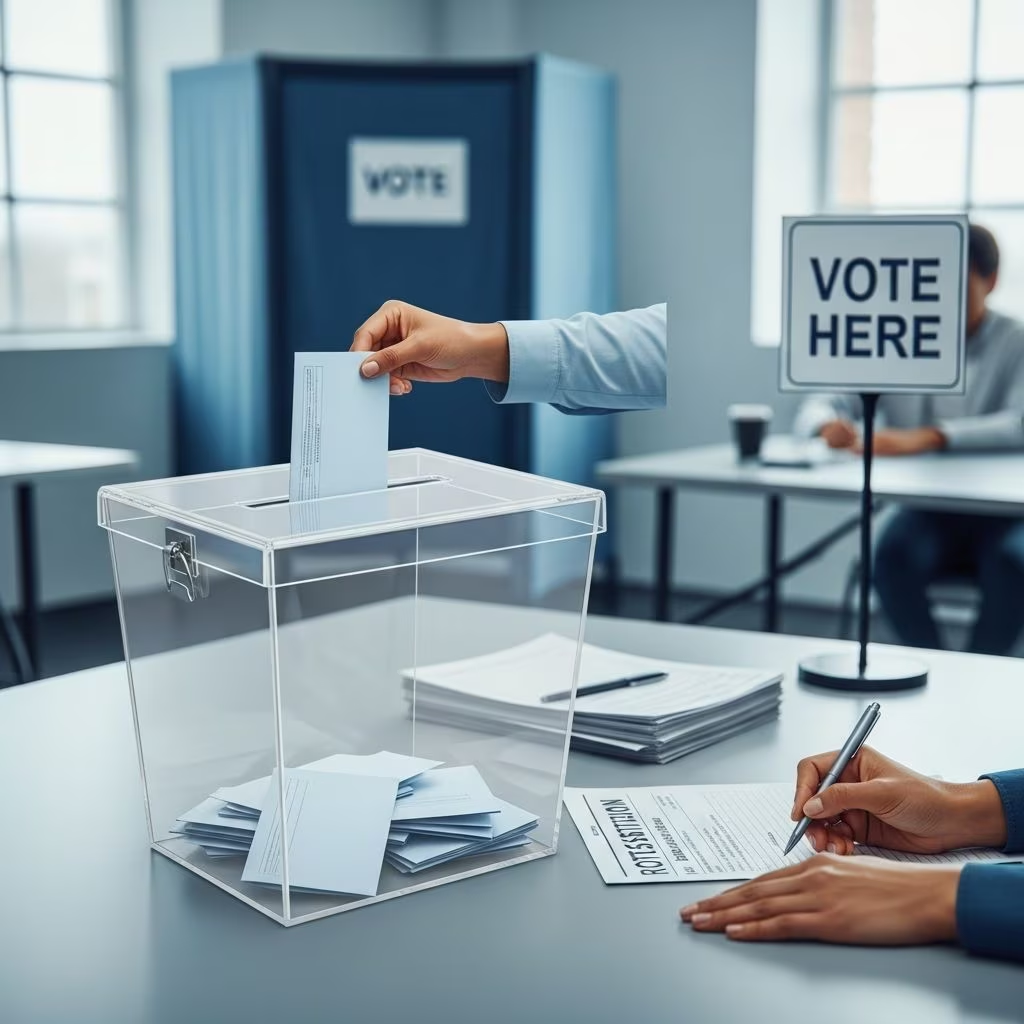
Polling places serve as the cornerstone of democratic elections, where citizens exercise their fundamental right to vote. However, strict regulations govern these locations to prevent interference, ensure accessibility, and maintain order. These rules, rooted in federal and state statutes, protect voters from intimidation, coercion, and undue influence while promoting an equitable voting environment. This article delves into the most significant polling place laws, drawing from authoritative legal sources to provide voters, election officials, and observers with clear guidance.
Federal Prohibitions on Military and Armed Interference
One of the most ironclad rules in U.S. election law forbids the deployment of federal troops or armed personnel at polling sites. Enacted post-Civil War, this statute explicitly criminalizes such actions to safeguard electoral integrity. Under 18 U.S.C. § 592, any officer or individual in U.S. military or civil service who orders, brings, or maintains troops or armed men at election locations faces severe penalties, including fines, up to five years imprisonment, and disqualification from federal office. This law permits armed forces only to repel armed enemies of the United States, with no exceptions for maintaining peace or order—a provision deliberately removed over a century ago.
Recent concerns about federal agents, such as ICE personnel, underscore the law’s relevance. Deploying such forces near polls constitutes intimidation, actionable under the Voting Rights Act of 1965, which protects voters and even those aiding voting efforts without requiring proof of intent. States bolster these protections with their own criminal statutes against voter intimidation, often extending to armed presence near drop boxes or facilities.
Electioneering Restrictions: Maintaining Neutrality
Electioneering—actively influencing voters through advocacy or displays—is universally prohibited near polling places to preserve a neutral atmosphere. Every state imposes some form of restriction, typically within 100 to 250 feet of entrances. For instance, Kansas law defines electioneering as knowingly persuading voters via signs, stickers, posters, or verbal appeals within polling sites or a 250-foot radius on election day and during advance voting. Exceptions exist for vehicle bumper stickers used solely for voter transport.
These rules extend to digital and physical campaigning. Voters cannot wear candidate apparel or distribute materials inside, ensuring decisions remain unswayed. Violations carry criminal penalties, emphasizing the sanctity of the voting booth. Election workers enforce these boundaries diligently, often posting clear signage.
| State Example | Restricted Distance | Prohibited Activities |
|---|---|---|
| Kansas | 250 feet | Signs, stickers, verbal persuasion |
| General U.S. Trend | 100-250 feet | Wearing apparel, distributing flyers |
This table illustrates common variations, highlighting the need for location-specific awareness.
Accessibility Standards for Inclusive Voting
Federal mandates require polling places to be physically accessible, addressing barriers for voters with disabilities, the elderly, and rural residents. The Americans with Disabilities Act (ADA) and Help America Vote Act (HAVA) set benchmarks for ramps, wide doorways, and adaptive equipment. Closures have surged post-2013 Shelby County v. Holder, with 1,688 sites shuttered between 2012-2018, disproportionately affecting communities of color and disabled voters.
Key physical considerations include level entrances, sufficient turning space (minimum 60 inches), and reachable voting machines (controls at 15-48 inches high). Checklists from the U.S. Election Assistance Commission (EAC) and Department of Justice guide compliance, such as parking with accessible spots and clear paths without protruding objects. Non-compliance risks disenfranchisement lawsuits, underscoring ongoing efforts to expand accessible locations.
- Entrance Requirements: No steps; ramps with 1:12 slope maximum.
- Interior Layout: 36-inch wide aisles; privacy screens at proper heights.
- Voting Systems: Audio ballots, tactile aids for visually impaired.
- Signage: Braille and large-print directions.
Firearms and Weapons Policies at Vote Centers
Gun restrictions at polling places balance Second Amendment rights with election safety. Many states ban firearms within or near vote centers, with exceptions for law enforcement. The Supreme Court’s Bruen decision (2022) upheld prohibitions in “sensitive places” like polls, citing historical precedents from the Founding era to prevent violence. Texas federal courts affirmed this, noting polling places’ longstanding status as arms-free zones.
Police must know local laws on concealed/open carry; violations can lead to removal or arrest. Armed surveillance, such as photographing drop boxes, is often deemed intimidation. Voters should report suspicious activity to officials, who coordinate with law enforcement trained on election protocols.
Protections Against Voter Intimidation and Harassment
Beyond physical rules, laws shield voters from psychological coercion. Prohibited acts include spreading false fraud claims, tailing vehicles, recording voters, or challenging eligibility aggressively. The Voting Rights Act empowers swift judicial intervention. State attorneys general and secretaries of state provide hotlines for reporting.
In Kansas, no residency duration is required beyond 21-day registration, easing access while upholding integrity. Advance voting sites follow similar safeguards, prohibiting all-mail elections with candidates to prevent manipulation.
Frequently Asked Questions (FAQs)
Can federal agents patrol polling places?
No, federal law strictly bans troops or armed federal personnel at polls except against armed enemies, punishable by prison.
What counts as electioneering?
Displaying candidate items, persuading voters, or wearing apparel within restricted zones; check state distances like Kansas’ 250 feet.
Are polling places required to be ADA-compliant?
Yes, with ramps, accessible machines, and clear paths per EAC/DOJ standards to ensure voting for all.
Can I carry a gun to vote?
Most states prohibit it; Bruen confirms polls as sensitive areas. Verify local laws.
What if I face intimidation?
Report to poll workers or hotlines; Voting Rights Act provides remedies without proving intent.
Election Worker Best Practices
Poll workers enforce rules neutrally. Training covers de-escalation, accessibility checks, and documentation. National Association of Secretaries of State resources outline state-specific electioneering distances. Communities benefit from proactive planning, like alternative sites for closures.
Historical closures highlight disparities: rural and minority areas suffer most, prompting litigation and reforms. Future-proofing involves hybrid models blending in-person and mail options.
Voters prepare by confirming site accessibility via state portals and knowing rights. Informed participation strengthens democracy.
References
- Federal and State Election Laws Ban Federal Forces from Polling Places — Brennan Center for Justice. 2020. https://www.brennancenter.org/our-work/research-reports/federal-and-state-election-laws-ban-federal-forces-polling-places
- Democracy Diverted: Polling Place Closures and the Right to Vote — The Leadership Conference on Civil and Human Rights. 2019. https://civilrights.org/democracy-diverted/
- Electioneering – Statute 25-2430 — Kansas State Legislature. Current as of 2026. https://kslegislature.gov/li/b2011_12/statute/025_000_0000_chapter/025_024_0000_article/025_024_0030_section/025_024_0030_k/
- Empowering Democracy: What Police Need to Know at the Polls — States United Democracy Center. 2024. https://statesunited.org/resources/police-need-to-know-polls/
- Summary Electioneering Prohibitions Near Polling Places — National Conference of State Legislatures. 2025-03-11. https://www.ncsl.org/elections-and-campaigns/electioneering-prohibitions
- 18 U.S. Code § 592 – Troops at polls — Legal Information Institute, Cornell Law School. Current. https://www.law.cornell.edu/uscode/text/18/592