
Engagement Ring Recovery: Legal Deadlines and State Laws
Understanding timeframes and jurisdiction rules for reclaiming engagement rings after broken engagements.
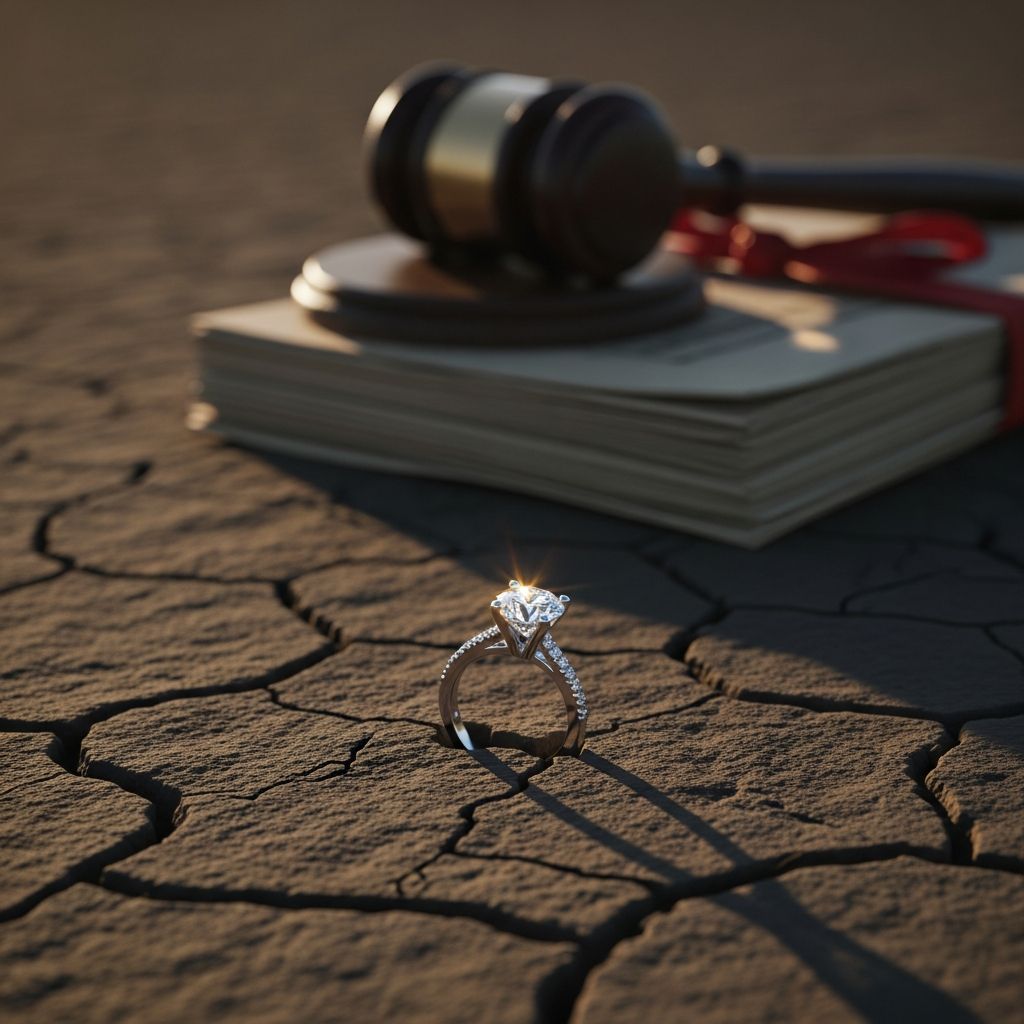
Understanding Engagement Ring Recovery Within Legal Timeframes
When an engagement ends, the question of who retains the engagement ring often becomes a contested legal matter. Beyond the emotional significance of the ring itself lies a complex intersection of property law, contract principles, and jurisdiction-specific statutes that determine whether and when a person can recover their ring. Understanding these legal frameworks is essential for anyone facing this situation, particularly regarding the critical question of timing. Many people do not realize that there are strict deadlines for pursuing legal action to recover an engagement ring, and missing these deadlines can permanently forfeit their right to recover the item regardless of its monetary or sentimental value.
The Conditional Gift Framework in Engagement Ring Cases
At the heart of engagement ring recovery disputes lies a foundational legal concept: the conditional gift. Unlike ordinary gifts, which are unconditional transfers of property that cannot be reclaimed, engagement rings occupy a unique legal category. The ring is traditionally presented with an implicit or explicit condition—that the recipient will marry the giver. When this condition is not fulfilled due to a cancelled engagement, the legal status of the ring becomes subject to dispute.
Courts across the United States recognize that an engagement ring represents more than a simple expression of affection. The ring symbolizes a mutual commitment to marriage, and its transfer is contingent upon the fulfillment of that commitment. This conditional nature distinguishes engagement rings from other personal gifts and creates grounds for the donor to seek recovery if the engagement terminates before the wedding takes place. However, the specific rules governing recovery vary significantly by jurisdiction, creating a complex patchwork of state laws that individuals must navigate.
Statute of Limitations: The Critical Deadline for Action
One of the most important factors in engagement ring recovery is understanding the statute of limitations—the legal deadline by which a claim must be filed. In jurisdictions where a specific statute applies, such as California under Civil Code Section 1590, donors typically have five years from the time the relationship ended or from when they made a formal request for return to file a lawsuit seeking recovery. This five-year window represents a substantial period, but it is not indefinite. Once this deadline passes, courts will generally dismiss any claim for recovery, regardless of the merits of the case or the value of the ring.
Understanding when the statute of limitations begins running is crucial for protecting your legal rights. The clock typically starts when the engagement terminates, not when you first discover the other party will not return the ring. This means that even if the recipient promises to return the ring at some future date but fails to do so, the statute of limitations continues to advance. Waiting too long to take action can result in the complete loss of your legal remedy.
It is important to note that not all jurisdictions have a clear statute of limitations specifically addressing engagement ring recovery. In some states, the applicable limitation period may fall under general property recovery statutes or contract law provisions. In other jurisdictions, courts may apply a “reasonableness” standard rather than a fixed deadline. When no specific statute applies, some courts consider whether a demand for return was timely and reasonable under the circumstances. This variability underscores the importance of consulting with a local attorney as soon as possible after an engagement ends if you wish to recover the ring.
State-by-State Variations in Ring Recovery Rules
The legal landscape for engagement ring recovery is not uniform across the United States. Different states have adopted fundamentally different approaches to determining who has the right to retain an engagement ring after an engagement ends. These variations can significantly impact your ability to recover the ring and should be carefully considered.
No-Fault Jurisdictions: The Conditional Gift Approach
The majority of states follow what is known as a no-fault approach to engagement ring recovery. Under this framework, the court treats the engagement ring as a conditional gift without considering which party bears responsibility for ending the engagement. In these jurisdictions, if the marriage does not occur, the ring automatically reverts to the person who gave it, regardless of circumstances. States like New York adhere strictly to this principle, holding that fault is irrelevant to the question of ring ownership.
The Pennsylvania Supreme Court articulated a compelling rationale for this no-fault approach in the case Lindh v. Surman. The court reasoned that attempting to assign blame for broken engagements would encourage parties to make bitter accusations against one another and would place judges in the difficult position of determining fault in highly personal matters. By removing fault from the equation entirely, the court believed it could achieve a clearer, more predictable legal standard that discourages contentious litigation.
Under the no-fault approach, the donor’s right to recover the ring is straightforward: if no marriage occurs, the ring must be returned. This simplicity provides clarity but may feel unjust in cases where the ring giver initiated the breakup without valid justification while the recipient would have been willing to proceed with the marriage.
Fault-Based Jurisdictions: Responsibility Determines Ownership
A smaller but significant number of states apply a fault-based analysis to engagement ring disputes. In these jurisdictions, including California, Missouri, and Texas, the party responsible for ending the engagement faces consequences regarding ring ownership. Under this approach, if the ring recipient unjustifiably broke the engagement, they must return the ring to the donor. Conversely, if the donor broke the engagement, the recipient may retain the ring as compensation for the broken promise.
Texas courts have held that a donor who bears primary responsibility for ending the engagement may not recover the ring. Similarly, Illinois courts have determined that recipients who terminate the engagement without justification forfeit their right to keep or dispose of the ring. This fault-based approach attempts to address what some view as the unfairness of the no-fault system by providing remedies to the innocent party in a broken engagement.
The challenge with fault-based approaches is determining which party bears responsibility for the breakup. Engagements often end due to complex combinations of factors and mutual disagreements rather than clear-cut breaches by one party. Courts applying fault-based analysis must sometimes make difficult factual determinations about the parties’ conduct and intentions.
Comparative Overview of Ring Recovery Approaches
| Approach | Key Principle | Who Keeps Ring | Example States |
|---|---|---|---|
| No-Fault Analysis | Engagement ring is a conditional gift; fault irrelevant | Always the donor (giver) if no marriage occurs | New York, Pennsylvania, majority of states |
| Fault-Based Analysis | Responsibility for breakup determines ownership | Recipient keeps ring if donor broke engagement; otherwise donor recovers | California, Missouri, Texas |
| Reasonableness Standard | Recovery possible if demand is timely and reasonable | Depends on timing and circumstances of the claim | Some jurisdictions without specific statutes |
The Special Case of Marriages That Do Not Last
An interesting exception to engagement ring recovery rules involves couples who marry but then divorce shortly thereafter. In one notable case, Smith v. Smith, a court held that a wife could retain the engagement ring even though the marriage lasted only four months. This decision reflects the principle that once the condition of marriage is satisfied—that is, once the couple actually marries—the ring’s status changes fundamentally. The ring becomes a marital asset or a gift within the marriage rather than a conditional gift. The length or success of the marriage does not typically affect the ring’s ownership once the condition of marriage has been fulfilled.
This rule applies consistently across most jurisdictions: if you marry, you keep the ring regardless of what happens to the marriage afterward. The conditional nature of the gift dissolves once the condition (marriage) occurs.
Practical Steps for Pursuing Ring Recovery
If you are seeking to recover an engagement ring after an engagement has ended, taking prompt and deliberate action is essential to protect your legal rights. The following steps can help guide your process:
- Act quickly: Do not delay in taking action. The statute of limitations or reasonableness considerations may work against you as time passes. Begin the recovery process within weeks or months of the engagement ending, not years later.
- Consult a local attorney: Family law attorneys in your state understand the specific rules applicable to your jurisdiction. An attorney can advise you on your state’s approach to ring recovery and the applicable deadline for filing suit.
- Request return in writing: Send a formal written request to the other party asking for the ring’s return. This creates a documented record and may restart certain limitation periods depending on your state’s law. Keep copies of all correspondence.
- Attempt negotiated resolution: Before pursuing litigation, try to resolve the matter through direct communication, mediation, or negotiation. This approach is faster, less expensive, and less emotionally draining than litigation.
- Document the ring’s value: Gather evidence about the ring’s monetary value, including the original receipt, appraisals, and photographs. This information will be important if litigation becomes necessary.
- Explore alternative remedies: In some cases, if the other party refuses to return the ring itself, you may be able to pursue recovery through other legal claims such as breach of contract, unjust enrichment, or fraud, depending on your state’s law and the specific circumstances.
Reasonable Timing and Legal Delay
Even in jurisdictions without a specific statute of limitations for engagement ring recovery, the concept of reasonableness plays an important role in determining whether your claim will succeed. If an engagement ended in 2020 and you request the ring’s return within two years, most courts would consider this request reasonable. However, if you waited ten years or longer to demand the ring’s return, a court might find your claim unreasonable. The rationale behind this approach is that the longer you wait, the more likely the other party has sold, pawned, or given away the ring, and they may no longer possess it or be able to prove they do.
Reasonableness considerations may also account for your knowledge of where the ring is and whether you took reasonable steps to locate it. If the recipient deliberately concealed the ring’s location or gave you reason to believe they no longer had it, your delay might be more forgivable than if you simply chose not to pursue recovery for an extended period.
Financial Realities of Ring Recovery
Before pursuing legal action to recover an engagement ring, it is wise to consider the financial practicality of doing so. Jewelry loses significant value once it is purchased and leaves the store. A ring that cost $5,000 to purchase might only be worth $2,500 or $3,000 on the resale market. Attorney’s fees and court costs for pursuing a lawsuit can easily reach $1,000 to $5,000 or more, depending on the complexity of the case and your local legal market. If the ring has limited resale value, the costs of recovery may exceed the financial benefit you would receive.
Consider whether your primary motivation is recovering the monetary value of the ring or recovering the specific ring due to its sentimental or family significance. If it is purely financial, you may need to weigh the recovery amount against legal costs. If the ring holds significant sentimental value or has been in your family for generations, the emotional benefit of recovery may justify the legal expenses.
What Happens to Engagement Rings During Divorce
It is important to distinguish between engagement ring disputes that occur when an engagement ends before marriage and disputes that occur during divorce proceedings. If a couple marries and then divorces, the engagement ring is typically treated as a gift or marital property depending on your state’s law, rather than as a conditional gift subject to return. In divorce proceedings, the ring may be considered part of the marital estate and subject to division, or it may be treated as separate property if it was given before the marriage. The rules differ significantly from those that apply to pre-marriage engagement ring disputes.
Frequently Asked Questions About Engagement Ring Recovery
Q: Is there a time limit for asking for an engagement ring back?
A: Yes, in most jurisdictions. If your state has a specific statute (such as California’s five-year window), you must file suit within that period. Even without a specific statute, courts generally require that demands for return be made within a reasonable timeframe. Waiting years or decades to request the ring’s return may result in your claim being dismissed as unreasonable.
Q: Does it matter who ended the engagement?
A: It depends on your state’s law. In the majority of states using a no-fault approach, fault does not matter—the ring must be returned regardless of who broke the engagement. However, in fault-based states like California, Texas, and Missouri, the party responsible for ending the engagement may lose the right to keep the ring.
Q: What if we got married but then divorced?
A: Once a marriage occurs, the condition attached to the ring is satisfied. The ring is no longer considered a conditional gift and typically remains with the recipient as a gift or marital property. The length of the marriage does not change this outcome.
Q: Can I get the ring back if the recipient gave it away or sold it?
A: If the recipient no longer has the ring, you may pursue a monetary claim instead for the ring’s value. You could potentially sue for breach of contract, unjust enrichment, or conversion, depending on your state’s law and the circumstances.
Q: Should I pursue litigation for an engagement ring?
A: Consider whether the ring’s resale value exceeds the cost of litigation. Additionally, consider the emotional toll of pursuing a lawsuit against your former partner. Mediation or negotiated settlement are often more efficient and cost-effective alternatives.
Q: What should I do if someone refuses to return my engagement ring?
A: Send a formal written request for return, consult with a family law attorney in your jurisdiction, and learn about your state’s specific rules. If negotiation fails, your attorney can advise whether litigation is worthwhile and what claims you can pursue.
References
- What is the statute of limitations to ask for an engagement ring back? — Avvo Legal Answers. Accessed April 3, 2026. https://www.avvo.com/legal-answers/what-is-the-statute-of-limitations-to-ask-for-an-e-5476942.html
- When Do You Have to Return Engagement or Wedding Rings? — DivorceNet. Accessed April 3, 2026. https://www.divorcenet.com/resources/divorce/before-after-divorce/what-happens-wedding-rings-after-divorce
- Happily Never After: If my Engagement Ends, Do I Have to Give My Engagement Ring Back? — Smith Debnam Law. Accessed April 3, 2026. https://www.smithdebnamlaw.com/article/happily-never-engagement-ends-give-engagement-ring-back/
Similar Articles








Read full bio of medha deb




