
Enforceability of Reserved Parking Spots
Unravel the legal complexities of reserved parking: public vs. private rules, enforcement powers, and real-world implications for drivers everywhere.
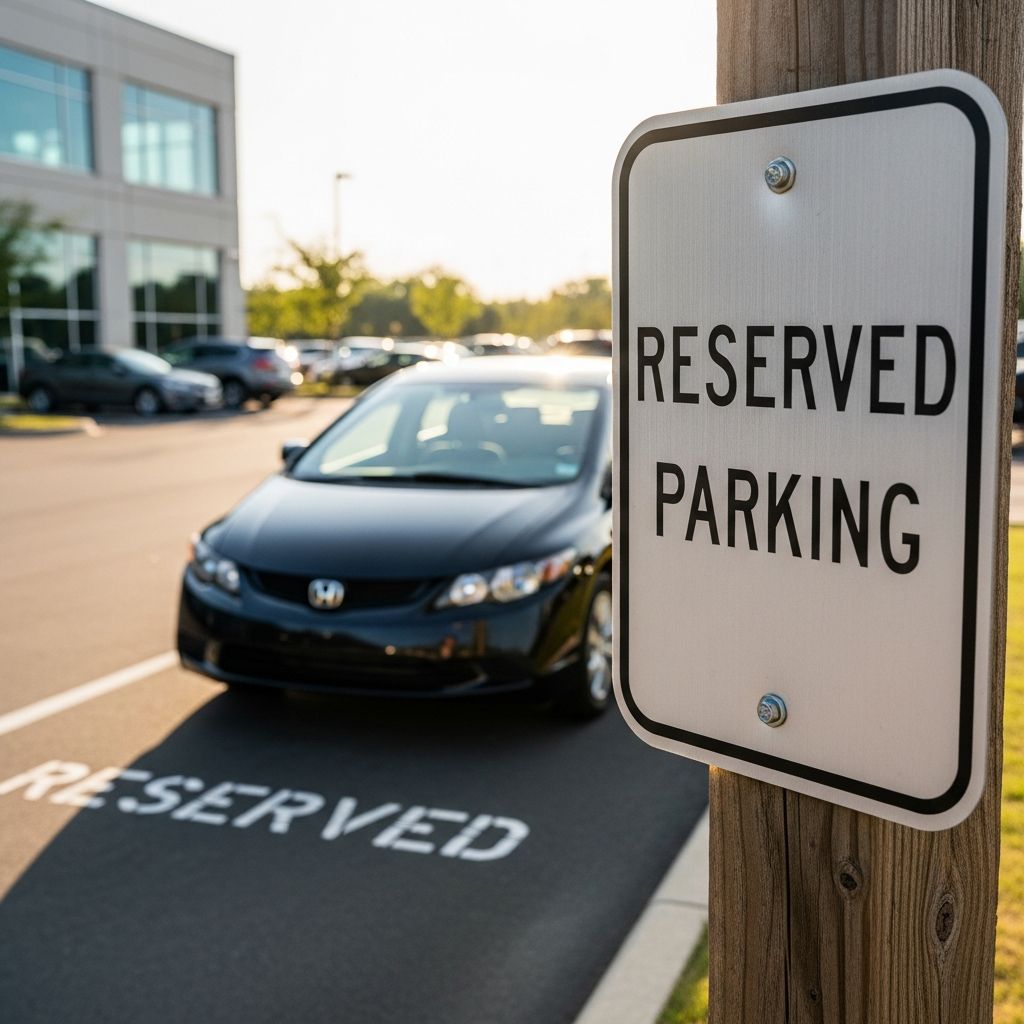
Reserved parking spots appear everywhere—from apartment complexes and office buildings to shopping centers and even public streets. But do these designations carry the force of law, or are they mere suggestions? The answer hinges on location, signage, local ordinances, and property ownership. This article delves into the legal framework governing reserved parking, distinguishing between private and public spaces, exploring enforcement mechanisms, and offering actionable insights for drivers and property managers.
Understanding the Divide: Private vs. Public Parking Areas
The core distinction in parking law revolves around property type. Private lots, owned by businesses, HOAs, or individuals, operate under different rules than public streets regulated by municipalities.
- Private Property Dominance: Owners hold significant authority to dictate parking rules, including reservations for tenants, employees, or VIPs.
- Public Spaces Limitations: Governments impose stricter controls to ensure fair access, often prohibiting private reservations on streets.
In private settings, a simple sign can transform a spot into an exclusive zone, backed by the owner’s right to control their land. Public areas, however, require official signage and ordinances for any restrictions.
Legal Foundations in Private Parking Facilities
Businesses and property managers frequently designate spots for specific uses, such as customer parking, employee zones, or deliveries. These reservations gain enforceability through property rights and contractual agreements.
Landowners can impose rules via leases, posted notices, or lot markings. Violators risk warnings, booting, or towing at the owner’s expense. Courts generally uphold these measures if proper notice exists, viewing them as extensions of trespass law.
| Factor | Supports Enforceability | Weakens Enforceability |
|---|---|---|
| Signage | Clear, permanent signs with towing warnings | Vague, temporary, or absent signs |
| Marking | Painted lines, bollards, or barriers | No physical indicators |
| Agreement | Lease clauses or tenant contracts | No prior notice to parkers |
| Towing | Licensed towers, photo evidence | Unauthorized removal |
This table highlights key elements that courts evaluate. For instance, a strip mall reserving spots for anchor tenants often includes these in rental agreements, making challenges difficult.
State Regulations on Government and Institutional Parking
Government properties feature rigidly enforced reserved spots, especially for officials and emergency vehicles. New Jersey administrative code explicitly allows marked reserved spaces in state parking areas, mandating obedience to signs. Florida statutes empower the Department of Management Services to assign and rent reserved spots to employees or carpools, with fees funding maintenance and strict reassignment rules for unused spaces.
These laws underscore preferences for carpools and essential services, limiting assignments to available inventory. Violations trigger towing at the owner’s cost, demonstrating robust public-sector enforcement.
Restrictions on Public Street Reservations
Unlike private lots, public streets rarely permit individual reservations. Philadelphia’s code bans selling, leasing, or reserving street spaces by private entities, reserving this power for the city. Pennsylvania vehicle code prohibits parking in unauthorized zones, including reserved areas defined by official signs, but allows local ordinances for loading zones.
Drivers cannot claim exclusivity on public roads without permits. Businesses occasionally seek temporary zones for events, but permanent private claims face rejection to promote equity.
Towing and Boot Enforcement Mechanisms
Towing represents the ultimate enforcement tool. Private owners may authorize removal of violators, but must follow protocols: visible warnings, 24-hour notice in some states, and licensed operators.
Florida grants state agencies towing authority for reserved spots under departmental control. Costs, often $200+, plus storage fees, deter repeat offenses. Booting—immobilizing wheels—offers a cheaper alternative, reversible upon payment.
Challenges arise if procedures falter. Courts may invalidate tows lacking signage or due process, awarding damages to owners.
Homeowners Associations and Residential Reserves
HOAs commonly reserve spots for residents, guests, or permit holders. Governing documents (CC&Rs) outline rules, enforced via fines, liens, or towing.
Effectiveness depends on clarity: numbered spots tied to addresses work best. Guests often receive temporary passes. Disputes frequently reach small claims, where judges prioritize bylaws over convenience claims.
- Enforce via numbered permits linked to units.
- Post rules conspicuously at entrances.
- Document violations with photos and timestamps.
Workplace Parking Policies and Employee Rights
Employers reserve spots for executives, carpools, or hybrids to incentivize green commuting. Policies must avoid discrimination, complying with ADA for accessible spots.
Unions sometimes negotiate parking perks in contracts. Remote work trends challenge these, prompting lot repurposing.
Navigating Business Parking Disputes
Retailers mark “customer only” zones to aid patrons. Adjacent businesses occasionally contest spillover, but lot owners decide.
Legal forums note movable signs may signal informal arrangements, like strip mall pacts granting tenants spots. Respecting signs avoids hassles; escalation risks towing fees.
Challenging Unjust Reservations: Driver Protections
Suspect a bogus reserve? Verify ownership and signage legitimacy. Public streets demand city permits; private lots require owner consent.
Post-tow, demand release paperwork and contest in court if flawed. Some states mandate hearings within days.
Best Practices for Property Owners
To bulletproof reservations:
- Install durable, compliant signs (e.g., “Reserved – Unauthorized Vehicles Towed at Owner’s Expense”).
- Paint spots distinctly.
- Contract licensed towers.
- Log violations systematically.
- Review local laws annually.
Future Trends in Parking Management
Technology reshapes enforcement: apps for permits, cameras for monitoring, and smart sensors for dynamic allocation. Cities experiment with shared spots via apps, blurring reserve lines.
EV mandates prioritize charging reserves, sparking new disputes.
Frequently Asked Questions (FAQs)
Can a business legally reserve parking in its private lot?
Yes, property owners control private lots and can designate reserved spots with proper signage and towing authority.
Are reserved signs on public streets enforceable?
Generally no, unless authorized by local government via official permits or ordinances.
What happens if I park in a reserved spot and get towed?
You pay fees for release; contest if signage was inadequate or on public property without authority.
Do HOAs have unlimited power over resident parking?
No, rules must follow governing documents and state laws; arbitrary enforcement invites lawsuits.
Can workplaces charge for reserved employee parking?
Yes, many do, especially in high-demand urban areas, per company policy.
How do I prove a spot isn’t truly reserved?
Check for official markings, owner confirmation, and local records; temporary signs weaken claims.
References
- N.J. Admin. Code § 13:56-1.11 – Reserved parking spaces — New Jersey Administrative Code. Accessed 2026. https://www.law.cornell.edu/regulations/new-jersey/N-J-A-C-13-56-1-11
- Florida Statutes § 272.161 – Rental of reserved parking spaces — Florida Legislature. 2025. https://www.leg.state.fl.us/Statutes/index.cfm?App_mode=Display_Statute&Search_String=&URL=0200-0299/0272/Sections/0272.161.html
- Legal Answers on Storefront Parking Claims — Avvo Legal Community. Accessed 2026. https://www.avvo.com/legal-answers/can-a-store-front-claim-an-exclusive-parking-spot–1739662.html
- Philadelphia Code Chapter 12-3100 – Selling, leasing, or reserving of parking spaces — City of Philadelphia. Accessed 2026. https://codelibrary.amlegal.com/codes/philadelphia/latest/philadelphia_pa/0-0-0-286354
- Pennsylvania Consolidated Statutes Title 75 § 3353 – Prohibitions in specified places — Pennsylvania General Assembly. Accessed 2026. https://www.legis.state.pa.us/WU01/LI/LI/CT/HTM/75/00.033.053.000..HTM
Similar Articles








Read full bio of Sneha Tete




