
Gaming Disorder: Employer Accommodation Duties
Navigating legal requirements for accommodating employees with gaming disorder under ADA and workplace policies.
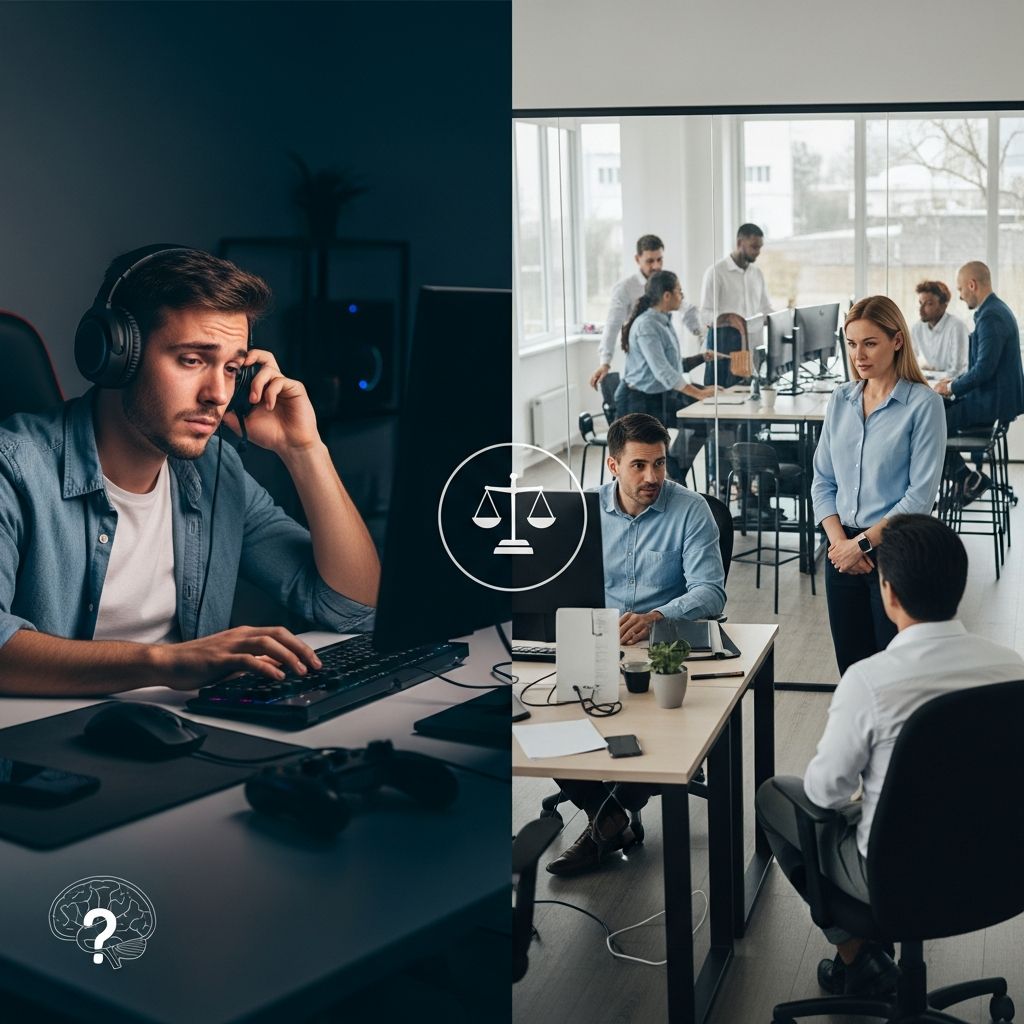
Gaming disorder, characterized by excessive video game play that interferes with daily life, raises complex questions for employers regarding legal obligations under disability laws. While not automatically qualifying as a protected disability, severe cases may trigger requirements for reasonable accommodations if they substantially limit major life activities.
Defining Gaming Disorder in a Professional Context
Gaming disorder involves a persistent pattern where individuals prioritize gaming over essential responsibilities, leading to negative consequences in personal, social, and occupational domains. Affected employees might exhibit reduced productivity, frequent distractions, or withdrawal symptoms impacting job performance. According to diagnostic criteria, this pattern must persist for at least 12 months to warrant clinical attention, distinguishing it from casual gaming habits.
In workplaces reliant on digital tools, gaming disorder can manifest subtly, such as sneaking game sessions during breaks or struggling with impulse control near computers. Employers must differentiate between recreational use and impairing conditions to avoid misclassifying behaviors that affect team dynamics or output.
- Key symptoms include inability to reduce gaming time despite efforts.
- Loss of interest in other hobbies or relationships due to gaming.
- Continued play despite awareness of harmful impacts on work or health.
Legal Framework: ADA and Qualifying Disabilities
The Americans with Disabilities Act (ADA) mandates reasonable accommodations for qualified individuals with disabilities, defined as physical or mental impairments substantially limiting one or more major life activities. Gaming disorder’s status remains debated, as it lacks universal recognition in all diagnostic manuals, but individual assessments determine eligibility on a case-by-case basis.
Unlike established conditions like depression, gaming disorder faces skepticism in claims processes due to its novelty. The ADA does not list specific disorders; instead, it evaluates functional limitations. For instance, if gaming compulsions prevent an employee from focusing on core tasks, it could qualify, prompting accommodation discussions.
| Aspect | Gaming Disorder | Traditional Mental Health Disabilities |
|---|---|---|
| Recognition | Emerging, case-specific | Well-established (e.g., anxiety, PTSD) |
| ADA Coverage | Possible if substantially limiting | Typically covered |
| Common Challenges | Skepticism, proof of impact | Clear precedents |
The Interactive Process: Engaging with Employees
Upon receiving an accommodation request, employers must initiate an interactive process to explore viable options. This involves open dialogue to understand the employee’s needs without requiring formal diagnosis disclosure unless volunteered. Documentation of these discussions protects against claims of non-compliance.
Refusing to engage or prematurely denying requests violates ADA guidelines. Instead, collaborate to identify adjustments enabling essential job functions. For gaming disorder, this might mean restricting non-essential device access rather than blanket bans, ensuring policies support rather than hinder accommodations.
Practical Accommodation Examples for Gaming Challenges
Accommodations for mental health conditions, including potential gaming disorder, focus on environmental tweaks, scheduling flexibility, and support mechanisms. These low-cost changes often boost retention and productivity.
- Schedule Adjustments: Flexible hours, part-time options, or extended breaks to manage urges.
- Environmental Modifications: Relocating workstations away from gaming temptations, noise reduction, or private spaces.
- Leave Policies: Additional time for therapy, counseling, or recovery without depleting sick leave.
- Technology Controls: Software blockers on work devices, monitored internet use for non-essential roles.
- Support Structures: On-site coaching, regular check-ins, or employee assistance programs (EAPs).
These measures must not fundamentally alter job essentials. For example, a programmer needing computer access cannot demand gaming privileges, but therapy leave could be reasonable.
Employer Policies and Risk Management Strategies
Proactive policies mitigate risks. Handbooks should outline accommodation procedures, ban non-work internet use judiciously, and require device acknowledgments. Training supervisors on ADA interactive processes ensures consistent handling.
Monitor performance impacts without targeting gaming specifically to avoid discrimination claims. If accommodations fail to resolve issues, progressive discipline applies equally, provided good-faith efforts are documented.
Challenges and Limitations in Accommodation Requests
Not all gaming-related issues qualify; mild habits do not trigger ADA protections. Courts scrutinize whether impairments truly limit major life activities, and employers can deny undue hardships causing significant expense or disruption.
Digital-heavy workplaces complicate matters—denying computer access might be reasonable for non-digital roles but problematic otherwise. Policies prohibiting personal phones in work areas could serve as preemptive measures without ADA violations.
Steps for HR When Handling Potential Claims
- Listen to the employee’s request without judgment.
- Consult legal or HR experts promptly.
- Document all communications and proposed solutions.
- Implement trial accommodations with evaluation periods.
- Follow up regularly to assess effectiveness.
Frequently Asked Questions
Does gaming disorder automatically qualify under the ADA?
No, it requires proof of substantial limitation on major life activities, evaluated individually.
What if an employee requests gaming time off as an accommodation?
Unlikely to be reasonable; focus on therapy or breaks, not enabling the behavior.
Can employers ban personal devices to prevent gaming issues?
Yes, for roles not requiring them, as long as applied uniformly and interactively discussed.
How much does accommodating mental health typically cost?
Often minimal; many involve scheduling or policy tweaks with high ROI via retention.
What resources help with accommodation planning?
The Job Accommodation Network (JAN) offers free, tailored advice from the U.S. Department of Labor.
Future Trends in Digital Mental Health at Work
As remote work and digital tools proliferate, gaming and digital addictions may prompt more claims. Employers should update policies, leveraging EAPs and mental health training. Emerging research could solidify gaming disorder’s status, urging preparedness.
Balancing empathy with business needs defines success. By fostering inclusive environments, companies not only comply but thrive amid evolving workforce health challenges.
References
- Can I Get Disability for Gaming Disorder? — GES Injury Attorneys. 2023. https://www.gesinjuryattorneys.com/can-i-get-disability-for-gaming-disorder
- Accommodations for Employees with Mental Health Conditions — U.S. Department of Labor, Office of Disability Employment Policy. Accessed 2026. https://www.dol.gov/agencies/odep/program-areas/mental-health/maximizing-productivity-accommodations-for-employees-with-psychiatric-disabilities
- Gonna Have To Face It We’re Addicted to…Everything?! Digital Addictions in the Workplace — Fisher Phillips LLP. 2026. https://www.fisherphillips.com/print/v2/content/13772/gonna-have-to-face-it-we-re-addicted-to-everything-digital-addictions-in-the-workplace.pdf
- Are Digital Addiction Claims About to Invade Your Workplace? — Workforce.com. 2023. https://www.workforce.com/news/are-digital-addiction-claims-about-to-invade-your-workplace
- The ADA: Your Employment Rights as an Individual With a Disability — U.S. Equal Employment Opportunity Commission (EEOC). Accessed 2026. https://www.eeoc.gov/publications/ada-your-employment-rights-individual-disability
- Reasonable Accommodation and the Interactive Process — OutSolve. 2023. https://www.outsolve.com/blog/reasonable-accommodation-and-the-interactive-process
Similar Articles








Read full bio of medha deb




