
Employer Limits on Bathroom Breaks: Legal Rights
Understand your workplace rights to bathroom access, OSHA rules, and how employers can set reasonable limits without violating federal law.
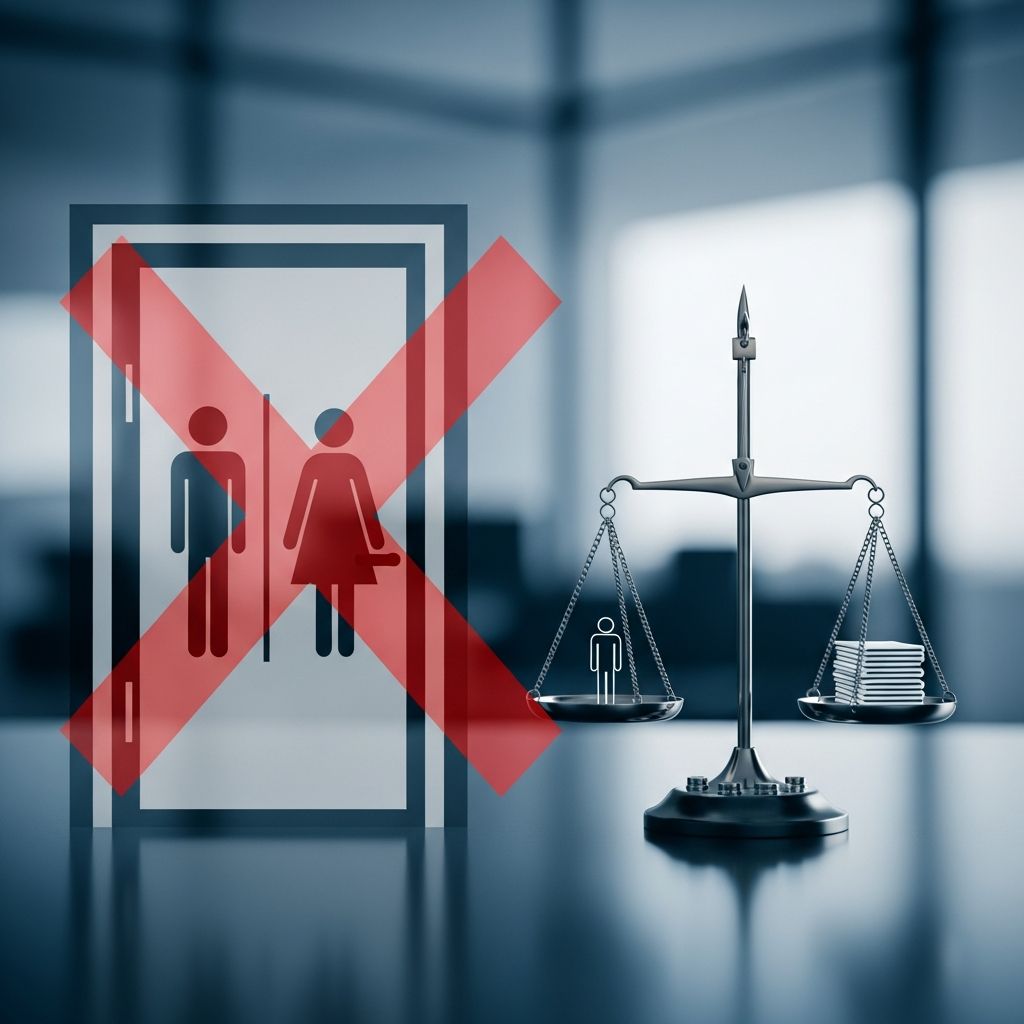
Workplace policies on restroom use often spark debates between productivity demands and basic human needs. Federal regulations, primarily from OSHA and the FLSA, establish boundaries ensuring employees have reasonable access to facilities without excessive delays. This article delves into these laws, health implications, accommodations for special circumstances, and practical guidance for both employers and workers.
Core Federal Regulations Governing Restroom Access
The foundation of bathroom break rights stems from the Occupational Safety and Health Administration (OSHA), which mandates sanitary toilet facilities available for immediate use when needed. Under 29 CFR 1910.141, employers must provide restrooms that meet specific criteria: gender-segregated unless single-occupancy, equipped with privacy locks, and sufficiently numerous based on employee count—for instance, one toilet per 15 workers. Facilities must be within a quarter-mile for most sites, with mobile crews accessing them in under 10 minutes.
OSHA evaluates restrictions case-by-case, considering delay duration, policy consistency, medical accommodations, and health complaints. Unreasonable limits, like denying access during urgent needs, violate standards, but employers may implement systems like relief workers on assembly lines to minimize disruptions, provided wait times remain brief.
The Fair Labor Standards Act (FLSA) complements this by requiring compensation for breaks under 20 minutes, treating short restroom visits as work time. Longer unpaid breaks fall outside this, allowing flexibility but not at the expense of health.
Defining ‘Reasonable’ Restrictions in Practice
Reasonableness hinges on context: a 2014 NLRB case scrutinized a policy capping weekly breaks at 30 minutes total, deeming it potentially excessive. OSHA advises against blanket denials, urging policies that account for individual variances like hydration levels or shift lengths.
Average adults visit restrooms 6-7 times daily, totaling 3-4 hours, with individual breaks around 20 minutes on average—though frequency varies widely. Employers cannot confine usage to scheduled breaks; urgent needs supersede. Abuse, such as prolonged non-essential absences, warrants address through communication rather than outright bans.
| Workplace Type | Common Restriction Methods | OSHA Compliance Tips |
|---|---|---|
| Assembly Lines | Signal for relief worker | Ensure replacement arrives quickly (<5 min) |
| Office Environments | Self-regulated access | Provide ample facilities; no sign-out required |
| Warehouses/Fields | Proximity mandates | Toilets within 1/4 mile; portable units if needed |
| Healthcare/Retail | Shift rotations | Accommodate peak needs; monitor for equity |
This table illustrates tailored approaches, emphasizing minimal disruption while upholding access rights.
Health Consequences of Inadequate Access
Restricting breaks poses serious risks: holding urine increases urinary tract infections (UTIs), especially in women, and contributes to kidney, bladder, and incontinence issues. Elderly, pregnant, or chronically ill workers face amplified dangers, including bowel complications. Chronic denial exacerbates conditions like irritable bowel syndrome or diabetes-related urgency.
- Short-term effects: Discomfort, reduced focus, productivity dips from distraction.
- Long-term risks: Renal damage, infections, mental stress from humiliation or pain.
- Vulnerable groups: Pregnant employees (frequent urination), menopausal women (overactive bladder), shift workers (circadian disruptions).
Studies link poor access to higher absenteeism and turnover, underscoring the need for balanced policies.
Protections Under Disability and Leave Laws
The Americans with Disabilities Act (ADA) requires reasonable accommodations for conditions necessitating frequent breaks, such as Crohn’s disease, interstitial cystitis, or prostate issues. Employers must engage in interactive processes: adjust schedules, permit flexible timing, or modify facilities without undue hardship.
Family and Medical Leave Act (FMLA) offers unpaid protected leave for serious health events indirectly tied to restroom needs, like post-surgical recovery. State laws layer on: California mandates paid 10-minute breaks every 4 hours; Massachusetts requires similar. Texas grants employer discretion absent specifics.
For medical needs, employees should disclose conditions confidentially, providing documentation if requested, to secure adjustments.
State Variations and Emerging Trends
No uniform federal break mandate exists beyond OSHA/FLSA, so states fill gaps:
- California: Paid rest breaks; unlimited bathroom access outside if reasonable.
- New York: Sanitation rules mirror OSHA; unions often negotiate extras.
- Florida: Minimal; relies on federal baselines.
- Illinois: NLRB precedents influence manufacturing sectors.
Post-pandemic, remote/hybrid work blurs lines, but on-site rules persist. Gig economy platforms increasingly face scrutiny for denying drivers restroom stops.
Best Practices for Employers Crafting Policies
Proactive policies foster trust:
- Consult OSHA/ANSI for facility ratios.
- Draft clear, flexible guidelines communicated via handbooks.
- Train supervisors on accommodation duties.
- Track complaints anonymously to refine rules.
- Integrate into wellness programs, promoting hydration without excess.
Signal systems or apps for logging needs prevent abuse while ensuring equity. Regular audits confirm compliance, mitigating liability.
Employee Strategies and Reporting Violations
Workers should:
- Review handbooks; request clarification.
- Document denials with dates/impacts.
- Communicate medical needs early.
- Report to HR or OSHA (1-800-321-OSHA) if unsafe.
Unionized? File grievances. Retaliation is illegal under OSHA/ADA. Legal aid via state labor departments or EEOC aids escalation.
Frequently Asked Questions (FAQs)
Can employers monitor bathroom time?
Yes, indirectly via policies or logs, but not invasively; compensable if under 20 minutes per FLSA.
Is it legal to deny bathroom breaks?
No, if unreasonable; OSHA prohibits delays causing health risks.
What if I have a medical condition needing frequent breaks?
ADA mandates accommodations; inform employer for dialogue.
How many breaks are average daily?
6-7, varying by individual; no fixed federal quota.
Can I be fired for too many breaks?
Not if legitimate; abuse may lead to discipline post-warning.
Do state laws override federal ones?
They supplement; stricter rules apply.
These FAQs address common concerns, empowering informed decisions.
Navigating Disputes and Future Outlook
Disputes often resolve via internal talks, but persistent issues warrant OSHA inspections—citations carry fines up to $15,625 per violation. Courts uphold employee wins when evidence shows unreasonableness, as in relief-delay cases.
Future trends may include AI-monitored facilities or wellness-integrated apps, but core rights remain anchored in health imperatives. Collaborative workplaces prioritize access yield healthier, more productive teams.
References
- Bathroom Breaks: Can Employers Monitor Your Time? — GovDocs. 2023. https://www.govdocs.com/can-employer-legally-monitor-time-spend-bathroom/
- OSHA Bathroom Break Laws: Key Stats and Insights — OSHA Outreach Courses. 2024-01-15. https://www.oshaoutreachcourses.com/blog/osha-bathroom-break-laws/
- OSHA Standards for Employee Bathroom Breaks — 360training. 2023-05-20. https://www.360training.com/blog/federal-law-bathroom-breaks
- OSHA Laws for Bathroom Breaks in the Workplace — OSHA.com. 2024. https://www.osha.com/blog/osha-bathroom-break-laws
- OSHA Laws for Bathroom Breaks in the Workplace — Learntastic. 2023-11-10. https://learntastic.com/blog/osha-laws-for-bathroom-breaks-in-the-workplace
Similar Articles








Read full bio of medha deb




