
Elevator Cameras: 4 Legal Rules, Privacy Tips For 2025 Guide
Uncover the truth about surveillance in elevators: where privacy ends and security begins in everyday rides.
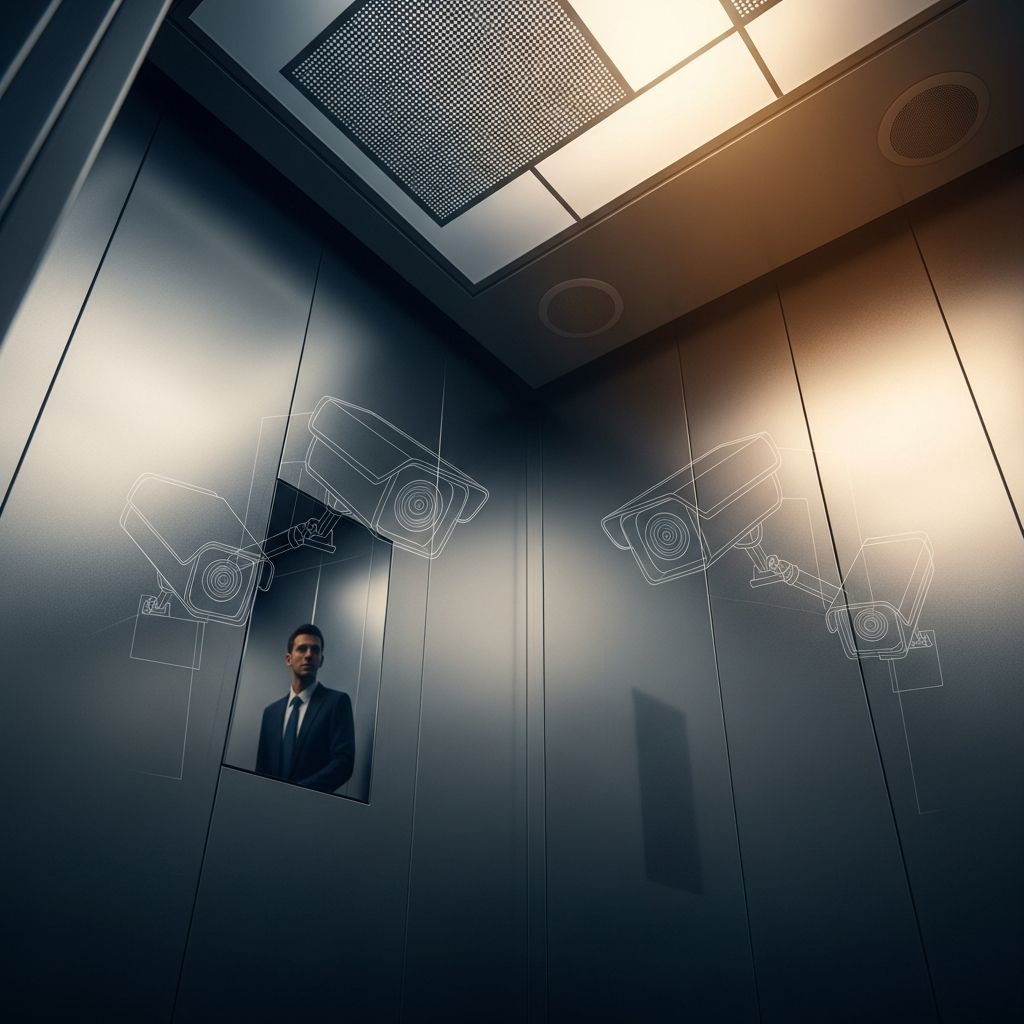
In the confined space of an elevator, passengers often feel isolated, assuming their actions and words remain private. However, legal frameworks classify elevators as semi-public areas where privacy expectations are minimal. Building owners can deploy video surveillance for security without violating rights, provided it serves a valid purpose like preventing crime or ensuring safety. This balance stems from the principle of “reasonable expectation of privacy,” which does not extend fully to shared transit spaces like elevators, lobbies, or hallways.
Why Elevators Attract Surveillance Cameras
Elevators in commercial buildings, hotels, apartments, and public venues frequently feature cameras mounted high on walls or ceilings. These devices capture video to deter misconduct, document incidents, and aid investigations. For instance, in office towers or stadiums, footage has proven invaluable in resolving disputes or identifying perpetrators of assaults and thefts. Industry experts note that while not every elevator nationwide has cameras—estimated at around 900,000 units total—modern installations make it commonplace in urban settings.
The push for cameras arises from practical needs. Elevators are potential hotspots for violence or vandalism due to their enclosed nature, which can foster a false sense of anonymity. High placement of cameras minimizes intrusion while maximizing coverage of entrants and exits, aligning with business interests in liability reduction and occupant protection.
Core Legal Framework for Video Monitoring
U.S. law permits video recording in elevators under the umbrella of legitimate business interests. Private property owners hold broad rights to monitor common areas, but boundaries exist to prevent abuse. Courts evaluate surveillance based on whether individuals have a “reasonable expectation of privacy”—a test where elevators fail because they are accessible to anyone with building entry.
Federal and state regulations reinforce this. No national mandate requires elevator cameras, but once installed, they must adhere to guidelines. Key rules include:
- Video Only: Pure visual recording is standard and legal.
- No Audio Capture: Microphones are typically disabled to sidestep wiretapping statutes.
- Visible or Signposted: Many jurisdictions demand notices of monitoring.
- Prohibited Zones: Bathrooms, changing areas, or private residences are off-limits.
These constraints ensure surveillance enhances safety without overreaching into personal spheres.
Audio Recording: The Strict Prohibition
Unlike video, audio introduces severe legal hurdles. Federal wiretap laws, such as the Electronic Communications Privacy Act (ECPA), criminalize intercepting oral communications without consent. In elevators, enabling sound recording—even passively—risks penalties including fines and imprisonment up to five years for willful violations.
Building managers disable audio to comply, recognizing elevators as transient public zones. Even bystanders cannot legally record conversations surreptitiously using personal devices. This protection underscores why viral clips from elevators, like celebrity altercations, often lack soundtracks; distributing audio footage invites prosecution.
| Aspect | Video Allowed? | Audio Allowed? | Legal Basis |
|---|---|---|---|
| Elevator Interior | Yes (business purpose) | No | Reasonable privacy expectation low; ECPA bans audio |
| Lobby/Hallway | Yes | No | Semi-public access |
| Private Apartment | No | No | High privacy expectation |
| Posted Notice | N/A | N/A | Reduces liability claims |
Eavesdropping Realities in Shared Spaces
Conversations in elevators carry inherent risks of being overheard by fellow riders—no law shields against this. The Supreme Court has long held that public discussions lack privacy if audible to others. Thus, casual chats about personal matters occur at the speaker’s peril in these open environments.
However, escalating from listening to recording crosses into illegality. Smartphones or wearables covertly capturing audio violate state and federal interception rules. Selling such material compounds offenses, as seen in high-profile cases where outlets faced lawsuits despite public interest claims.
Smart Elevators and Evolving Data Threats
Advancements in IoT have birthed “smart elevators,” integrating sensors, destination controls, and analytics. These systems log traffic patterns, user selections, and sometimes biometrics, raising fresh privacy concerns. While enhancing efficiency—reducing wait times by predicting flows—they amass data vulnerable to breaches.
Cyber risks abound: remote access by technicians could expose logs, and hackers might eavesdrop via networked audio if enabled. Vendors must implement encryption, access logs, and compliance with regulations like GDPR analogs or CCPA. Building owners should vet providers on cybersecurity certifications and data policies.
- Data Collected: Floor calls, ride durations, peak usage.
- Risks: Insider misuse, ransomware, unauthorized surveillance.
- Mitigations: Firewalls, audits, minimal retention.
OSHA standards further mandate safe operations, indirectly supporting surveillance for emergency response without compromising privacy.
Property Owner Responsibilities and Best Practices
Owners installing cameras must notify occupants via signage, such as “Area Under Video Surveillance.” Fixed access systems, like keycards, comply with ADA if operable parts are reachable, but elevators remain unrestricted for general use.
Best practices include:
- Regular footage reviews only for incidents.
- Secure storage with deletion timelines.
- Staff training on privacy limits.
- Third-party audits for smart systems.
Violations invite lawsuits under torts like intrusion upon seclusion, emphasizing proactive compliance.
Passenger Rights and Practical Advice
Riders cannot demand camera removal but can report misuse to management or authorities. If footage involves you in a dispute, request access under retention policies. For concerns, document locations and signs.
Tips for privacy-conscious users:
- Speak softly on sensitive topics.
- Avoid confrontations, knowing recordings exist.
- Use stairs in low-risk buildings if wary.
- Report tampering or hidden audio suspicions.
Frequently Asked Questions
Are elevator cameras required by law?
No federal mandate exists, but local codes or building policies often implement them for safety.
Can I record video inside an elevator myself?
Yes for personal use if no audio, but public distribution may trigger issues; respect others’ rights.
What if I spot an unmarked camera?
Report to building management; undisclosed surveillance may violate notice rules.
Do residential elevators differ from commercial ones?
Private homes offer full privacy; shared apartment elevators mirror commercial semi-public status.
How long is footage typically kept?
30-90 days standard, longer only for active investigations.
Future Trends in Elevator Monitoring
AI-driven cameras now detect anomalies like falls or fights in real-time, alerting security without constant viewing. Facial recognition trials promise contactless access but spark bias debates. Privacy advocates push for anonymization tech, blurring faces automatically.
As buildings go greener with smart systems, data privacy will dominate discussions. Expect tighter regs mirroring Europe’s standards, demanding consent for non-essential logging. Owners balancing security with rights will define the next era.
(Word count: 1678)
References
- Elevators and Your Privacy — Connections Elevator. 2023-05-15. https://www.connectionselevator.com/elevators-and-your-privacy/
- Do Elevators Have Cameras? Security, Safety, and Legal Considerations Explained — Backstreet Surveillance. 2024-08-20. https://www.backstreet-surveillance.com/blog/post/do-elevators-have-cameras-security-safety-and-legal-considerations-explained
- Chapter 4: Elevators and Platform Lifts — U.S. Access Board (.gov). 2023-11-01. https://www.access-board.gov/ada/guides/chapter-4-elevators-and-platform-lifts/
- 1917.116 – Elevators and escalators — Occupational Safety and Health Administration (OSHA, .gov). 2022-07-12. http://www.osha.gov/laws-regs/regulations/standardnumber/1917/1917.116
- It’s no loss for privacy when elevator videos bust the badly behaved — Los Angeles Times. 2014-09-02. https://www.latimes.com/local/abcarian/la-me-ra-no-privacy-in-elevators-20140902-column.html
Similar Articles








Read full bio of Sneha Tete




