
Maximize Your E-Commerce Revenue During Holiday Shopping Events
Complete strategies for online retailers to capitalize on peak shopping seasons and drive conversions.
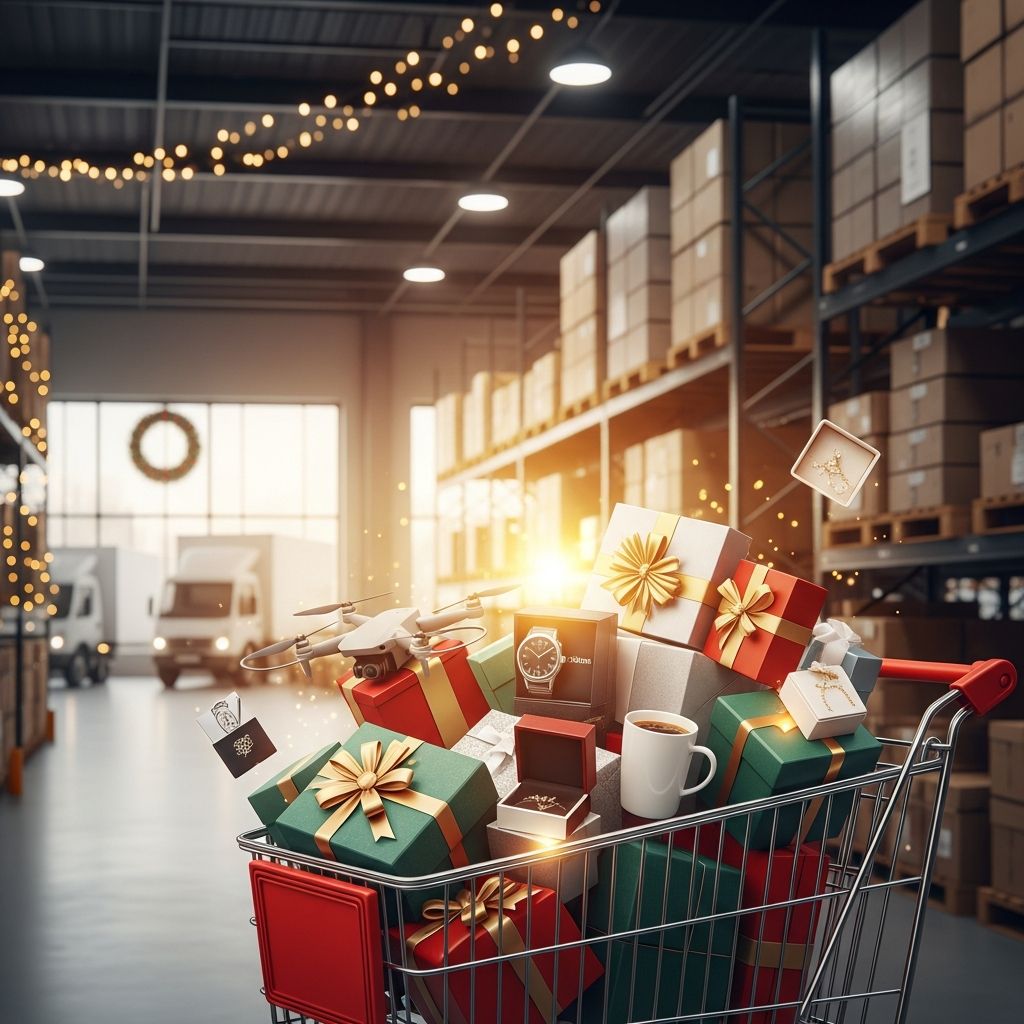
Building Your E-Commerce Foundation for Peak Shopping Seasons
The most successful online retailers understand that peak shopping seasons require more than just luck—they demand strategic planning, operational readiness, and customer-centric preparation. As consumer spending patterns shift dramatically during major shopping events, businesses that fail to prepare adequately risk missing significant revenue opportunities. This comprehensive guide outlines the essential strategies needed to transform your online retail operation into a high-performing sales machine during peak shopping periods.
Establishing Clear Business Objectives and Sales Targets
Before implementing any tactics, successful online retailers establish concrete, measurable goals that align with their broader business strategy. These objectives should extend beyond simple revenue targets and encompass multiple dimensions of business growth.
Begin by analyzing your historical performance data to understand which products generate the most interest and revenue during peak seasons. Review customer behavior patterns, conversion rates, and average order values from previous years to establish realistic benchmarks. This data-driven approach prevents businesses from setting goals that are either too conservative or dangerously ambitious.
Beyond sales revenue, consider establishing supplementary objectives such as:
- Increasing your email subscriber base to expand your direct marketing channel
- Growing your social media following to enhance brand visibility
- Capturing new customer acquisition metrics to measure market expansion
- Improving customer retention rates to build long-term business value
- Enhancing customer satisfaction scores to strengthen brand reputation
Strategic Product Selection and Promotion Planning
Effective peak season preparation begins with identifying which products will drive the most profit and customer engagement. Rather than promoting everything in your inventory, successful retailers strategically curate their offerings to maximize impact.
Analyze your product catalog to identify items that align with seasonal shopping trends while also recognizing opportunities to differentiate your business. While many retailers focus on electronics and home goods, consider whether your unique product mix offers opportunities to compete in underserved categories. This counter-programming approach can reduce competitive pressure while attracting customers seeking alternatives.
Develop a tiered promotion strategy that spans multiple phases:
- Pre-season warm-up promotions featuring modest discounts to build momentum
- Peak event promotions offering your most aggressive discounts and bundled offers
- Post-event clearance sales to capture late shoppers and manage excess inventory
Implementing Dynamic Discount Structures
Consumer research consistently demonstrates that shoppers actively seek value during peak shopping seasons. Recent studies indicate that value-seeking behaviors are prevalent across all income demographics, with younger consumers particularly aggressive in hunting for deals using digital comparison tools.
While steep discounts attract attention, smaller businesses often lack the margin to compete solely on price. Conditional discount strategies offer an effective alternative that protects profitability while still delivering perceived value.
Consider these conditional discount approaches:
- Percentage discounts applied only to orders exceeding a specific dollar threshold
- Bundle offers combining complementary products at attractive price points
- Tiered discounts that reward larger purchases with progressively better rates
- Conditional free shipping applied to orders meeting minimum purchase requirements
- Flash sales with steep discounts limited to specific 24-48 hour windows
Historical data suggests that average promotional discounts during peak seasons hover around 38%, though specific rates vary significantly by product category. Strategic retailers research their competitive landscape to establish discount levels that remain competitive without sacrificing margins.
Mastering Inventory Management and Logistics
Peak shopping seasons create unprecedented demand pressure on inventory systems. Inadequate stock levels result in lost sales and disappointed customers, while excess inventory creates cash flow challenges and storage costs.
Conduct a comprehensive inventory audit several weeks before your peak season begins. Analyze stock levels of your top-performing products to ensure adequate supply throughout the promotional period. Consider developing contingency plans for popular items that may sell faster than anticipated, including pre-order options or waitlist systems to capture sales you cannot immediately fulfill.
For businesses operating both online and physical locations, inventory management becomes even more complex. Hybrid retailers should consider offering incentives that drive customers to store locations, which simultaneously reduces shipping volumes and creates opportunities for additional impulse purchases during pickup visits.
Shipping logistics represent a critical operational consideration during peak seasons. Carriers typically increase rates significantly during high-volume periods due to capacity constraints. Many consumers expect free shipping regardless of order size, creating a tension between customer expectations and business profitability. Strategic responses include:
- Absorbing free shipping costs as a competitive necessity and marketing advantage
- Offering free shipping only on orders exceeding a specific threshold
- Promoting in-store pickup as an alternative that reduces shipping volume and costs
- Developing partnerships with multiple carriers to secure better rates during peak periods
Building Customer Loyalty Programs That Drive Repeat Business
New customer acquisition during peak seasons is valuable, but retaining existing customers provides superior long-term business value. Well-designed loyalty programs create emotional connections that transcend price competition, encouraging customers to remain loyal even when competitors offer lower prices.
Launch your loyalty program well in advance of peak shopping seasons through targeted email marketing campaigns. Implement a tiered structure that rewards customers based on their engagement level, creating aspirational benefits that encourage participation and increased spending. Immediate welcome rewards or introductory bonus points significantly increase signup rates compared to programs that defer benefits.
Differentiate your loyalty program through:
- Exclusive early access to peak season sales for existing members
- Higher discount percentages reserved for loyalty program participants
- Points accumulation that compounds across purchases, rewarding repeat customers
- Birthday or anniversary specials that maintain engagement throughout the year
- Special recognition for top-tier members through VIP benefits and personalized service
Developing Targeted Marketing Communication Strategies
Email marketing and social media channels represent the most cost-effective promotional tools available to online retailers. However, effectiveness depends on strategic execution rather than volume of communications.
During peak seasons, consumer inboxes become saturated with promotional messages. Rather than attempting to communicate all your offers in a single email, distribute information across multiple messages with staggered send times. This approach prevents message fatigue while creating repeated touchpoints that maintain brand awareness.
Subject line optimization significantly impacts email performance. Emails containing specific peak season keywords achieve substantially higher click-through rates compared to generic promotional messages. Personalization amplifies effectiveness further—segment your email list based on customer purchase history and preferences, delivering customized offers that align with individual interests rather than broadcasting identical promotions to your entire subscriber base.
Social media marketing offers relatively inexpensive reach to millions of potential customers. Develop engaging content that encourages sharing and interaction rather than purely promotional messaging. Leverage trending hashtags to increase discoverability while maintaining authentic brand voice. Consider incentivizing shares through additional discount codes or exclusive giveaways, transforming followers into active brand advocates.
Optimizing Your Digital Platform for Peak Traffic
Peak shopping seasons create unprecedented traffic volume on e-commerce platforms. Websites designed for normal traffic patterns often experience performance degradation, slow load times, and potential crashes during high-demand periods.
Mobile optimization deserves particular attention, as an increasing percentage of peak season shopping occurs on smartphones and tablets. Ensure your website functions seamlessly across all device types, with rapid load times and intuitive navigation. Test your checkout process thoroughly to eliminate friction points that could discourage customers from completing purchases.
Create dedicated landing pages that highlight your peak season promotions. These pages should immediately communicate your value proposition, feature compelling product photography, and guide visitors toward specific promotional offers. A-B testing different landing page variations reveals which messaging resonates most strongly with your target audience.
Scaling Customer Support to Meet Increased Demand
Peak seasons bring exponentially more customer inquiries—questions about product details, shipping timelines, return policies, and technical issues. Businesses that fail to scale support capacity risk frustrated customers who abandon purchases and leave negative reviews.
Prepare your support infrastructure by:
- Recruiting and training temporary support staff before peak season begins
- Expanding available support channels to include live chat, email, phone, and social media
- Implementing comprehensive FAQ sections that address common customer questions
- Scheduling support staff for evening and overnight shifts to accommodate global shopping patterns
- Creating detailed product guides and instructional content that reduces support ticket volume
Ensure all support team members understand your complete promotional offerings, return policies, and shipping procedures. Clear, empowered support staff transforms customer service interactions into relationship-building opportunities that encourage future purchases.
Creating an Extended Promotional Timeline
Successful peak season strategies recognize that consumer shopping begins well before the main event. Retailers who begin promotional activities weeks in advance build momentum and capture early buyers.
Implement an early-bird sale phase offering moderate discounts to customers who shop before the main promotional period. This approach generates revenue from motivated buyers while spreading demand across an extended timeline rather than concentrating all sales in a narrow window. Create anticipation through teasers and previews that build excitement for your main promotional event.
The extended timeline also provides opportunity to capture different customer segments—deal hunters who shop early, mainstream consumers during peak periods, and procrastinators who shop at the last moment. Tailor messaging and offers to each segment’s unique motivations and shopping patterns.
Designing VIP Experiences for Valued Customers
Your existing customer base represents your highest-margin business segment, yet many retailers focus promotional intensity on new customer acquisition. Strategic retailers ensure their most valuable customers feel appreciated and rewarded.
Create exclusive VIP shopping experiences including early access to promotional sales before general public announcement, private discount codes with better terms than public offers, and personalized product recommendations based on purchase history. These VIP treatments require minimal cost implementation while generating tremendous customer goodwill and repeat business.
Develop holiday gift guides that help your existing customers find perfect presents while featuring your best-margin products. Enhance these guides with professional photography and detailed product descriptions that facilitate purchasing decisions. Consider collaborating with graphic designers to elevate gift guides into visually compelling digital catalogs that enhance the shopping experience.
Monitoring Performance and Adapting Strategies
Peak season preparation should include monitoring systems that enable real-time response to unexpected challenges. Track key performance indicators including conversion rates, average order values, customer acquisition costs, and support response times.
Establish contingency plans for potential issues—inventory stockouts of top products, website performance problems, or unusually high support volume. Identify decision-making authority in advance so your team can quickly implement solutions without waiting for approvals.
Frequently Asked Questions
Q: How far in advance should I begin preparing for peak shopping seasons?
A: Optimal preparation typically begins 6-8 weeks before the main promotional event. This timeline allows adequate opportunity for inventory procurement, staff recruitment and training, marketing campaign development, and technology platform optimization.
Q: What discount level is competitive for peak shopping seasons?
A: Historical data suggests average discounts range from 30-40%, though competitive levels vary significantly by product category. Research your specific market and competitor offerings to establish appropriate discount levels that balance competitiveness with profitability.
Q: How can small businesses compete with larger retailers on price?
A: Rather than competing solely on discount depth, small businesses should emphasize unique products, personalized service, community relationships, and distinctive brand experiences that larger retailers cannot replicate.
Q: Should I offer free shipping during peak seasons?
A: Consumer research indicates that free shipping significantly influences purchasing decisions. Many successful retailers implement conditional free shipping thresholds rather than offering unrestricted free shipping, balancing customer expectations with profitability.
Q: How do I manage inventory across online and physical store locations?
A: Implement inventory management systems that provide real-time visibility across all sales channels. Consider directing customers to store locations for pickup, which reduces shipping volume while creating cross-selling opportunities.
Q: What should I prioritize if I have limited marketing budget?
A: Email marketing and organic social media typically deliver the highest return on investment for small businesses. Focus on building your email subscriber base and creating engaging social content that encourages sharing without requiring paid promotion.
References
- Tips for Preparing Small Businesses for Black Friday — U.S. Chamber of Commerce. 2025. https://www.uschamber.com/co/start/strategy/black-friday-tips-for-small-businesses
- 9 Ways Businesses Can Prepare for Black Friday and Cyber Monday — Working Solutions. 2025. https://workingsolutions.com/blog/9-ways-businesses-can-prepare-for-black-friday-and-cyber-monday/
- 10 Black Friday Marketing Strategies for Small Businesses — DHL Belgium. 2025. https://www.dhl.com/discover/en-be/small-business-advice/business-innovation-trends/peak-season/prepare-your-business-for-black-friday
- How to Prepare Your E-Commerce Business for Black Friday and Cyber Monday — CustomCat. 2025. https://customcat.com/go-getter-blog/how-to-prepare-your-ecommerce-business-for-black-friday-cyber-monday/
- 12 Black Friday Ideas for Small Businesses — noissue. 2025. https://noissue.co/blog/black-friday-ideas-for-small-businesses/
- How Your Small Business Can Make the Most Out of Black Friday Weekend — Lili. 2025. https://lili.co/blog/how-your-small-business-can-make-the-most-out-of-black-friday-weekend
Similar Articles








Read full bio of Sneha Tete




