
Driving Without Corrective Lenses: Legal Risks
Understand state laws on vision requirements for driving and penalties for ignoring corrective lens restrictions to stay safe and legal on the road.
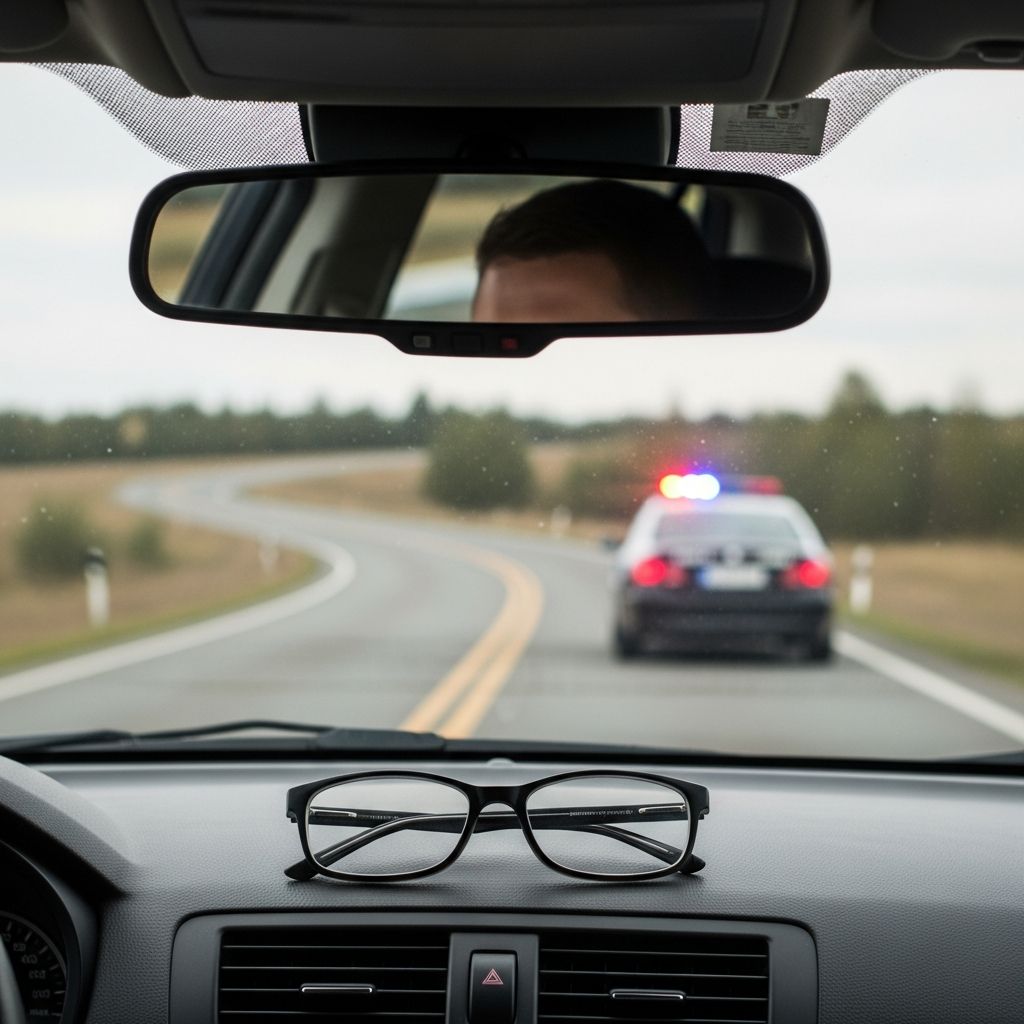
Many drivers rely on glasses or contact lenses to meet minimum vision standards for obtaining a driver’s license. Failing to wear these corrective devices while operating a vehicle can lead to serious legal consequences, including fines, points on your record, or even license suspension. This article explores the nationwide patchwork of vision regulations, potential penalties, and practical steps to ensure compliance.
Why Vision Matters for Safe Driving
Clear vision is fundamental to detecting hazards, reading signs, and judging distances on the road. State Departments of Motor Vehicles (DMVs) enforce specific visual acuity and field of vision thresholds to protect public safety. If your license includes a ‘corrective lenses required’ restriction—often marked as code 02 or similar—it means you must wear glasses, contacts, or other aids whenever you drive. Ignoring this can transform a routine trip into a traffic violation.
Visual acuity is typically measured as 20/40, meaning you can read at 20 feet what a person with normal vision reads at 40 feet. Peripheral vision requirements ensure you can see to the sides. States test these during license applications or renewals, adding restrictions if needed.
State-by-State Vision Standards Overview
Vision rules differ significantly across the U.S., with no uniform federal standard beyond general safety guidelines. Most states require at least 20/40 acuity in at least one eye or combined, but some are more lenient, like allowing 20/70 with restrictions.
| State | Minimum Acuity (Better Eye or Combined) | Visual Field Requirement | Key Restrictions |
|---|---|---|---|
| California | 20/40 using both eyes or one eye | 20° in both eyes | Corrective lenses if needed to pass |
| Florida | 20/40 | 140° horizontal | Daylight only if marginal; lenses mandatory |
| Texas | 20/70 combined | 110° | Restriction violation fine over $200 |
| New York | 20/40 | 140° | Bioptics allowed with training |
| Pennsylvania | 20/100 combined | 120° horizontal | Daylight restriction for lower acuity |
| Illinois | 20/70 combined | 140° | Outside mirrors if field limited; bioptics ok |
This table summarizes select states; full details vary, and many require mirrors or daylight-only driving for borderline cases.
Penalties for Violating Lens Restrictions
Getting pulled over without your required corrective lenses is treated as a serious infraction. Consequences escalate based on location and prior offenses.
- Fines: Range from $200 in Texas to $500 in North Carolina, equivalent to driving without a license.
- Misdemeanor Charges: In Florida, it’s a second-degree misdemeanor with up to 60 days jail and $500 fine.
- Points and Suspension: Two convictions in Texas can lead to license revocation. Many states add 2-4 points, risking insurance hikes.
- Aggravating Factors: If an accident occurs, lack of lenses strengthens negligence claims, potentially leading to civil liability or DUI-like charges.
Officers verify restrictions via your license, so excuses like ‘I forgot’ rarely work. Courts view it as willfully disregarding safety rules.
Special Cases: Bioptic Telescopes and Low Vision
For those with significant impairments, bioptic telescopes—small magnifiers mounted on glasses—offer a driving option in 37 states. These allow spotting distant objects while using regular lenses for close tasks.
Requirements include:
- Training from certified driving rehabilitation specialists (CDRS).
- Power limits (e.g., no more than 4x magnification).
- Often daylight-only initially, with night driving possible after 1-2 accident-free years.
- Annual recertification and road tests.
States like Indiana mandate strict protocols, while others are discretionary. Visual fields must still meet thresholds, typically 105-140 degrees.
How to Check and Update Your License Restrictions
Not sure if your license has a lenses restriction? Review your physical license or online DMV portal. Codes like ’02’ or ‘B’ indicate corrective lenses required.
- Visit your state’s DMV website for vision standards.
- Schedule a vision exam with an optometrist; get a report if retesting.
- Pass a behind-the-wheel test if removing restrictions.
- Carry documentation proving compliance.
To remove a restriction, demonstrate unaided 20/40 vision via re-exam. Some states allow this at renewal; others require in-person visits.
Insurance and Long-Term Impacts
A conviction for this violation boosts premiums by 20-50%, as insurers see it as high-risk behavior. Multiple offenses trigger SR-22 filings, mandatory high-liability proof.
Employers checking driving records (e.g., delivery jobs) may terminate based on violations. In accident scenarios, admissibility of your restriction in court can sway fault determinations.
Practical Tips for Compliance
Prevention beats penalties:
- Dashboard Reminder: Keep a spare pair or case visible.
- Routine Checks: Test vision yearly; prescriptions change.
- Alternatives: Consider contacts for active driving or LASIK for permanent correction (post-surgery DMV report needed).
- Passenger Help: Have a spotter for verification if fields are limited.
For low-vision drivers, consult organizations like the International Academy of Low Vision Specialists for bioptic programs.
Frequently Asked Questions (FAQs)
What if I pass the vision test without glasses at the DMV?
No restriction is added, but if your acuity drops later, get re-evaluated before driving unaided.
Can I drive at night without my glasses?
No, if restricted—night vision worsens issues, and many states limit low-acuity drivers to daylight.
Is driving with expired prescription glasses illegal?
Not directly, but if it fails state standards, it’s equivalent to no correction. Renew promptly.
What states allow bioptic driving without restrictions?
None fully; all impose training, fields, or daylight limits initially.
How do I fight a ticket for no lenses?
Prove you wore them (witnesses, photos) or challenge via trial, but success is rare without evidence.
Recent Trends in Vision Enforcement
With aging populations, DMVs increasingly scrutinize renewals. Tech like automated license scanners flags restrictions faster. Post-2020, some states eased renewals online but mandate vision self-reports, with audits.
Advocacy grows for bioptic expansion, but safety data drives caution—low-vision crashes are higher per mile.
References
- Driving Without Glasses — Improv Traffic School. 2023. https://www.myimprov.com/driving-without-glasses/
- Driving Restrictions per State — EyeWiki (American Academy of Ophthalmology). 2024-01-15. https://eyewiki.org/Driving_Restrictions_per_State
- What happens if you are caught driving without glasses in Texas? — Avvo Legal Answers. 2023-05-10. https://www.avvo.com/legal-answers/what-happens-if-you-are-caught-driving-without-gla-4898964.html
- DMV Driving Laws: Eye Test and Requirements — International Academy of Low Vision Specialists. 2024. https://ialvs.com/dmv-driving-laws-copy/
- State Laws for Bioptic Driving — Bioptic Driving USA. 2023. http://www.biopticdrivingusa.com/state-laws/
Similar Articles








Read full bio of Sneha Tete




