
Vote Without A Driver’s License: 36-State ID Options For Voters
Unravel state-specific voter ID rules: Discover if your driver's license is mandatory or if alternatives suffice for casting your ballot.
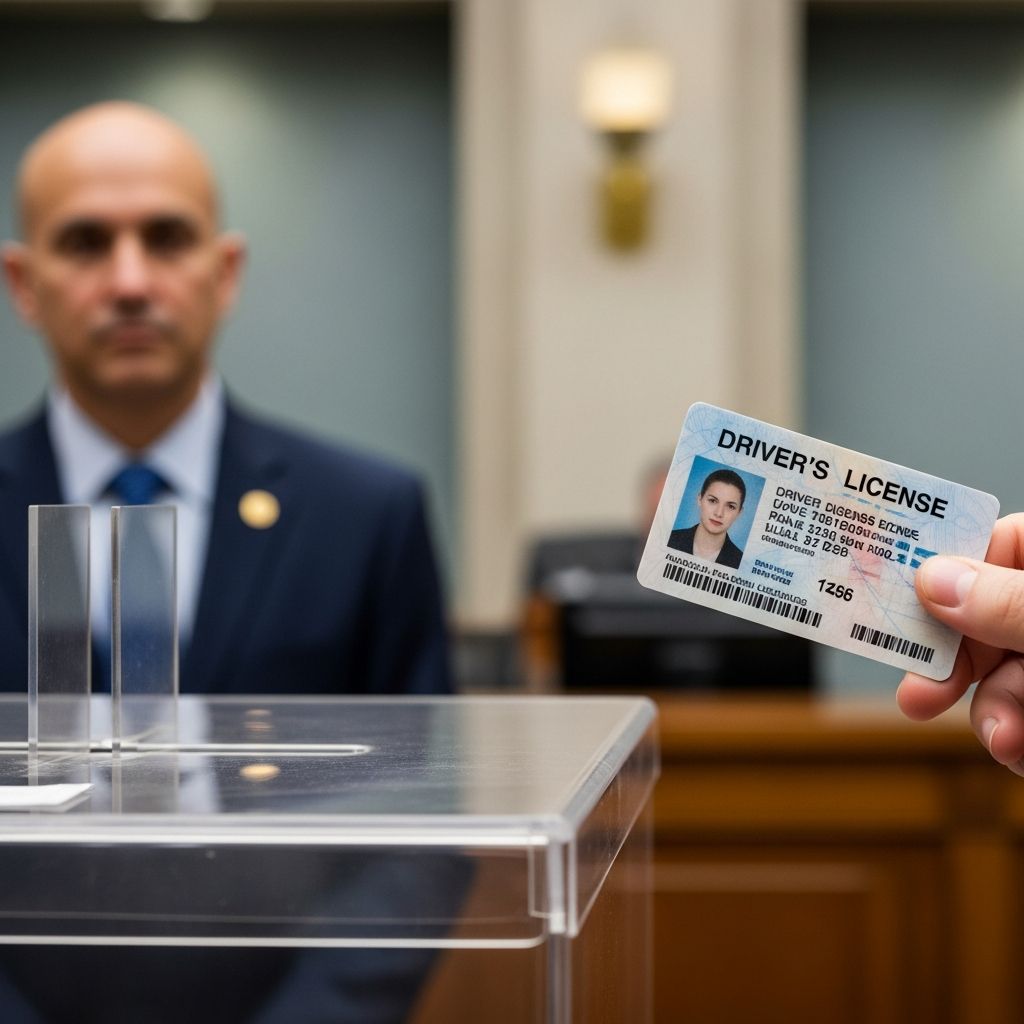
Voting is a fundamental right in the United States, but accessing the polls often hinges on meeting specific identification standards set by each state. Contrary to common belief, a driver’s license is not universally required nationwide to cast a ballot. While many states list it as a preferred form of photo ID, numerous alternatives exist, and some jurisdictions impose no ID mandate at all for registered voters. This variability stems from state legislatures balancing election integrity with voter accessibility.
Understanding the Landscape of Voter Identification Rules
State voter ID laws fall into distinct categories: strict photo ID, non-strict photo ID, non-photo ID options, and no ID requirements. As of recent updates, 36 states enforce some form of ID request or requirement at polling places. Strict photo ID states, such as Georgia and Texas, demand government-issued photo identification before a regular ballot is issued; without it, voters may receive provisional ballots subject to later verification. Non-strict policies, prevalent in places like Florida and Michigan, allow voting via affidavit or signature match if ID is absent.
No-ID states like California and New York rely on registration records, signature verification, or poll worker familiarity to confirm identity, particularly in all-mail voting systems such as Oregon’s. These differences reflect ongoing debates over fraud prevention versus disenfranchisement risks, with federal overlays like the Help America Vote Act (HAVA) of 2002 mandating ID for certain first-time mail registrants.
State-by-State Breakdown of ID Policies
To illustrate the diversity, consider key examples. In
Alabama
, a photo ID is mandatory, accepting driver’s licenses, passports, or tribal IDs; provisional ballots apply otherwise.Alaska
permits photo or non-photo options, including utility bills or paychecks.California
requires no ID for most in-person or mail votes, emphasizing signature matching.**Texas** enforces strict photo ID but offers non-photo alternatives like birth certificates or bank statements for those without.
North Carolina
similarly requires photo ID, with student or military IDs qualifying. States likeMaine
andMinnesota
demand no documentation, trusting prior registration data.| State | ID Type | Key Acceptable Forms (Excluding Driver’s License) |
|---|---|---|
| Georgia | Strict Photo | State ID, Passport, Military ID, Voter ID Card |
| Florida | Non-Strict Photo/Non-Photo | Passport, Debit/Credit Card, Utility Bill |
| California | No ID | None Required |
| Texas | Strict Photo (Non-Photo Option) | Birth Certificate, Handgun License, Utility Bill |
| New York | No ID | None Required (Signature Match) |
| Ohio | Strict Photo | State ID, Passport, Military ID |
| Pennsylvania | No ID (First-Time Exception) | Utility Bill for First-Timers |
This table highlights that driver’s licenses are common but not exclusive; passports, state-issued non-driver IDs, and even utility bills frequently substitute.
Alternatives to a Driver’s License for Proving Identity
For non-drivers—such as the elderly, disabled, or urban dwellers without vehicles—states provide viable workarounds. Common non-photo options include:
- Utility bills, bank statements, or government checks showing name and address.
- Military or student IDs, passports, or tribal enrollment cards.
- Affidavits sworn at the poll, often with poll worker or witness verification.
- Voter registration cards, though not always sufficient alone.
In mail-in scenarios, signature comparison against registration files predominates, sidestepping ID entirely in states like Colorado and Utah. First-time voters registering by mail face HAVA rules: photo ID, utility bills, or paychecks if no prior ID was provided.
Special Considerations for Vulnerable Populations
Certain groups face unique hurdles. Seniors without recent photos may use expired IDs (allowed in some states like Wisconsin) or non-photo docs. Students can leverage university IDs, though validity varies—accepted in Arkansas but scrutinized elsewhere. Disabled voters might qualify for assistance or exemptions, and tribal members rely on federally recognized IDs.
Homeless individuals or those with name changes (e.g., post-marriage) can affirm identity via affidavits or mail confirmations. Rural voters distant from DMVs benefit from free state ID programs in places like Indiana, mitigating access barriers.
Federal Influences and Recent Legislative Shifts
The HAVA sets a baseline: new federal election voters via mail must provide a driver’s license number, last four SSN digits, or face ID at polls. Recent proposals like the 2024 SAVE Act aim to mandate citizenship proof for registration, akin to Real ID standards, though not yet law.
Court rulings have shaped landscapes; Pennsylvania’s strict photo ID was overturned in 2012, reverting to no-ID status. Ongoing litigation in strict states tests accessibility claims.
Practical Steps to Prepare for Election Day
1. Check your state’s rules via official secretary of state websites.
2. Gather multiple IDs: passport, state non-driver ID (often free), or utility bill.
3. Register early in-person to bypass first-time ID rules.
4. Explore early or mail voting for signature-based verification.
5. Know provisional ballot cures—many states allow 3-7 days post-election to validate.
Pro tip: Update registration post-move or name change to match poll book records, reducing challenges.
Frequently Asked Questions (FAQs)
Can I vote without any government-issued ID?
Yes, in 14 states plus D.C., no ID is needed if you’re registered; alternatives like affidavits suffice elsewhere.
What if my driver’s license is expired?
Many states accept expired IDs within 1-4 years; check locally, or use passport/utility bill backups.
Do I need ID for mail-in ballots?
Rarely; signature matching is standard. Some like Utah require ID copies for certain voters.
Is a voter registration card enough?
Usually not alone, but pairs well with other docs in non-strict states.
How do I get a free state ID if I don’t drive?
Contact your DMV or election office; programs exist in states like Georgia and Texas for voting purposes.
Debating Voter ID: Security vs. Access
Proponents argue IDs curb fraud, citing isolated non-citizen cases, though studies show in-person impersonation rarity. Critics highlight disproportionate impacts on minorities, low-income, and elderly groups less likely to hold licenses. Data from the Brennan Center indicates 11% of citizens lack current photo ID, fueling turnout concerns.
Empirical reviews by the Heritage Foundation document few fraud convictions, while NCSL tracks 36 states’ evolutions toward hybrid models blending security with inclusivity.
Evolving Trends in Voter Verification Technology
Beyond physical IDs, biometrics like facial recognition pilot in parts of India influence U.S. discussions, but privacy fears stall adoption. Blockchain pilots for registration and apps verifying via smartphone selfies emerge, potentially reducing paper ID reliance. Signature digitization and AI matching enhance mail voting accuracy without added burdens.
By 2026, expect more states adopting digital wallets for IDs, streamlining polls while addressing equity.
Conclusion: Empower Your Vote
Whether you wield a driver’s license or a utility bill, understanding your state’s nuances ensures participation. Election integrity thrives on informed citizens—verify requirements, prepare documents, and exercise your voice. Voting remains accessible; barriers are surmountable with preparation.
References
- Voter ID Requirements: Proof of Citizenship and Identity Laws — Super Lawyers. 2023. https://www.superlawyers.com/resources/civil-rights/voter-id-requirements-proof-of-citizenship-and-identity-laws/
- What kind of identification (ID) do I need to register to vote? — U.S. Vote Foundation. 2024-01-15. https://voterhelpdesk.usvotefoundation.org/en/support/solutions/articles/151000051288-what-kind-of-identification-id-do-i-need-to-register-to-vote-
- Voter ID requirements — USAGov (.gov). 2025-10-01. https://www.usa.gov/voter-id
- Voter identification laws in the United States — Wikipedia (informed primary sources). 2024-07-15. https://en.wikipedia.org/wiki/Voter_identification_laws_in_the_United_States
- Voter Identification Requirements for In-Person Voting — Movement Advancement Project. 2024. https://www.lgbtmap.org/democracy-maps/in_person_voting
- Voter ID Laws — National Conference of State Legislatures (.org). 2025-03-20. https://www.ncsl.org/elections-and-campaigns/voter-id
- ID Requirements — Voting Rights Lab. 2024-11-05. https://tracker.votingrightslab.org/issues/id-requirements?law=100
Similar Articles








Read full bio of Sneha Tete




