
Driver Liability When Striking Protesters
Exploring legal responsibilities of drivers who collide with demonstrators amid rising protest activity and protective legislation.
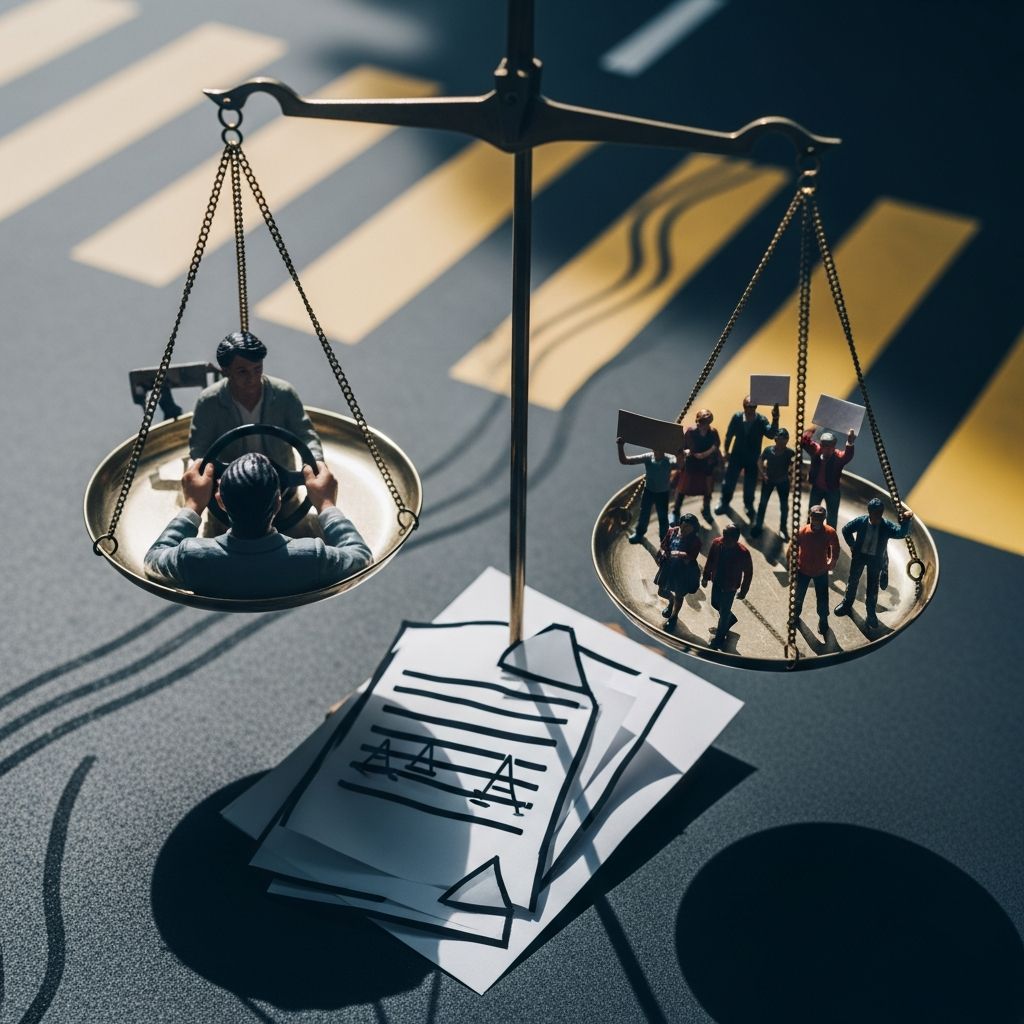
In an era of frequent public demonstrations, collisions between vehicles and protesters raise complex legal questions about fault, immunity, and public safety. Drivers navigating roads blocked by crowds often face split-second decisions, while protesters exercise First Amendment rights. This article delves into evolving laws shielding drivers, conditions for liability, real-world cases, and strategies to minimize risks.
Legal Evolution of Driver Protections in Protest Zones
Recent years have seen a surge in legislation aimed at protecting motorists from liability when encountering obstructive protests. These laws typically arise in response to high-profile incidents where vehicles were surrounded or attacked, prompting lawmakers to prioritize driver safety and traffic flow.
Many states have introduced bills that eliminate or limit civil liability for drivers who unintentionally injure individuals blocking roadways during unpermitted gatherings. For instance, provisions grant immunity if the driver exercises ‘due care’ and the assembly lacks official permission. This reflects a policy shift toward viewing traffic obstruction as a misdemeanor offense, punishable by fines or jail time.
Criminal immunities are also emerging, allowing drivers to claim self-defense under ‘stand your ground’ doctrines if they reasonably perceive imminent harm. Sponsors often cite national protest trends as justification, arguing that motorists should not be ‘sitting ducks’ when fleeing threats.
Key State Laws Granting Driver Immunities
Several jurisdictions have enacted or proposed measures specifically addressing vehicular incidents during protests. These statutes vary in scope but share common themes of conditional protection.
- Unpermitted Blockades: Drivers injuring participants in unpermitted events blocking streets gain civil immunity if acting with due care. Obstruction becomes an aggravated misdemeanor.
- Riotous Assemblies: Immunity extends to those fleeing ‘unlawful or riotous assemblages’ under reasonable belief of danger, covering both civil suits and criminal charges.
- Reasonable Force: Laws justify ‘reasonable and necessary’ force, including lethal action, against illegal roadway blockers if escape is attempted.
These protections do not apply universally. Intentional acts remain prosecutable, and courts evaluate ‘due care’ based on circumstances like speed and warnings given.
Civil vs. Criminal Liability: Critical Distinctions
| Aspect | Civil Liability | Criminal Liability |
|---|---|---|
| Burden of Proof | Preponderance of evidence | Beyond reasonable doubt |
| Defenses Available | Affirmative defenses like riot participation | Stand Your Ground, self-defense |
| Outcomes | Damages for injury/death | Charges like manslaughter, battery |
| Protest Context | Immunity if unpermitted blockade | Prosecutable if non-violent protesters |
Civilly, drivers can raise protester involvement in a ‘riot’—defined by violence or disorder—as an affirmative defense, potentially dismissing suits. However, this does not preempt lawsuits; courts decide validity. Criminally, while defenses bolster cases, charges like aggravated battery or murder can proceed, especially against peaceful demonstrators.
Experts note that ‘stand your ground’ laws may deter prosecutions pre-trial, as seen in dropped cases where drivers accelerated through crowds.
Factors Determining Fault in Protest-Related Collisions
Liability hinges on multifaceted elements beyond simple driver-protester dynamics. Courts scrutinize:
- Driver Conduct: Speeding, impairment, or ignoring detours heightens responsibility. Conversely, honking, slow acceleration, or prior warnings support defenses.
- Protester Actions: Permits, adherence to sidewalks, and violence levels matter. Unpermitted street blockages shift blame.
- Event Organization: Poor planning, like absent safety marshals or ignored traffic controls, implicates organizers.
- Environmental Hazards: Municipal failures in signage or barriers contribute shared fault.
Injured pedestrians retain claim rights, pursuing compensation via insurance or suits. Multiple liable parties often lead to apportioned damages based on comparative negligence.
Real-World Cases and Their Lessons
High-profile incidents illustrate legal applications. In one Florida case, a driver plowing through blockers faced initial charges, but prosecutors dismissed them, signaling high evidentiary bars. Governors’ statements, like emphasizing flight rights, have fueled perceptions of blanket immunity, though nuanced laws prevail.
Another example involved a motorist surrounded by a mob; invoking self-defense led to no conviction, highlighting how perceived threats influence outcomes. These cases underscore documentation’s importance: dashcams, witness accounts, and immediate 911 calls strengthen positions.
Safety Protocols for Drivers Encountering Protests
Prevention trumps litigation. Recommended steps include:
- Stay Alert: Monitor news for planned events and use alternate routes.
- De-escalate: Avoid engaging verbally; lock doors and roll up windows.
- Maneuver Cautiously: Honk continuously, inch forward if trapped, prioritizing escape without excess speed.
- Document Everything: Activate cameras, note details post-incident.
- Seek Aid: Call authorities immediately, even if unharmed.
Insurance often covers damages, but protest-specific riders may apply; review policies.
Protester Responsibilities and Risk Mitigation
Demonstrators must balance expression with safety. Secure permits, designate traffic monitors, and stick to approved areas. Avoid surrounding vehicles, as this invites legal vulnerabilities. Organizers bear duties for crowd control, potentially facing suits if negligence proven.
Insurance and Financial Implications
Post-collision, drivers file under comprehensive/collision coverage for vehicle repairs, while bodily injury claims target liability limits. Protesters pursue personal injury settlements, factoring medical bills, lost wages, and pain. Immunity laws reduce payouts but don’t erase premiums hikes or deductibles.
Broader Policy Debates and Future Trends
These laws spark controversy: proponents decry protester disruptions endangering innocents; critics fear chilling dissent via vehicular threats. As protests evolve, expect refined statutes balancing rights. Federal oversight remains minimal, leaving states dominant.
Frequently Asked Questions
Can drivers claim immunity for hitting any protester?
No, immunity requires unpermitted blockades, due care, and reasonable threat perception. Peaceful, permitted assemblies offer no shield.
Do these laws prevent criminal charges?
Not absolutely; defenses like Stand Your Ground apply, but prosecutors can pursue if evidence shows recklessness.
Who else might be liable besides the driver?
Protest organizers for poor safety, municipalities for hazards, or even property owners.
Should drivers stop to help after a collision?
Prioritize safety: call 911, render aid if safe, but avoid leaving scene without authorities.
Are dashcams crucial in these scenarios?
Yes, they provide irrefutable evidence supporting self-defense claims.
References
- US Protest Law Tracker — International Center for Not-for-Profit Law (ICNL). 2023. https://www.icnl.org/usprotestlawtracker/?location=&status=&issue=4&date=&type=
- Can You File a Claim If You’re Hit by a Car During a Protest? — West Coast Trial Lawyers. 2023-10-15. https://westcoasttriallawyers.com/hit-by-a-car-during-a-protest
- PolitiFact FL: Can Florida drivers run over protesters without consequence? — WLRN. 2025-06-13. https://www.wlrn.org/light/law-justice/2025-06-13/florida-drivers-run-over-protesters-law
- What to Do If Protesters Attack Your Car — Woc Leydon. 2024. https://www.woclleydon.com/blog/what-to-do-if-protesters-attack-your-car/
Similar Articles








Read full bio of medha deb




