
Domestic Drone Operations: Legal Boundaries and Risks
Examining the legal framework, privacy concerns, and potential for misuse of drones within U.S. borders amid evolving technology.
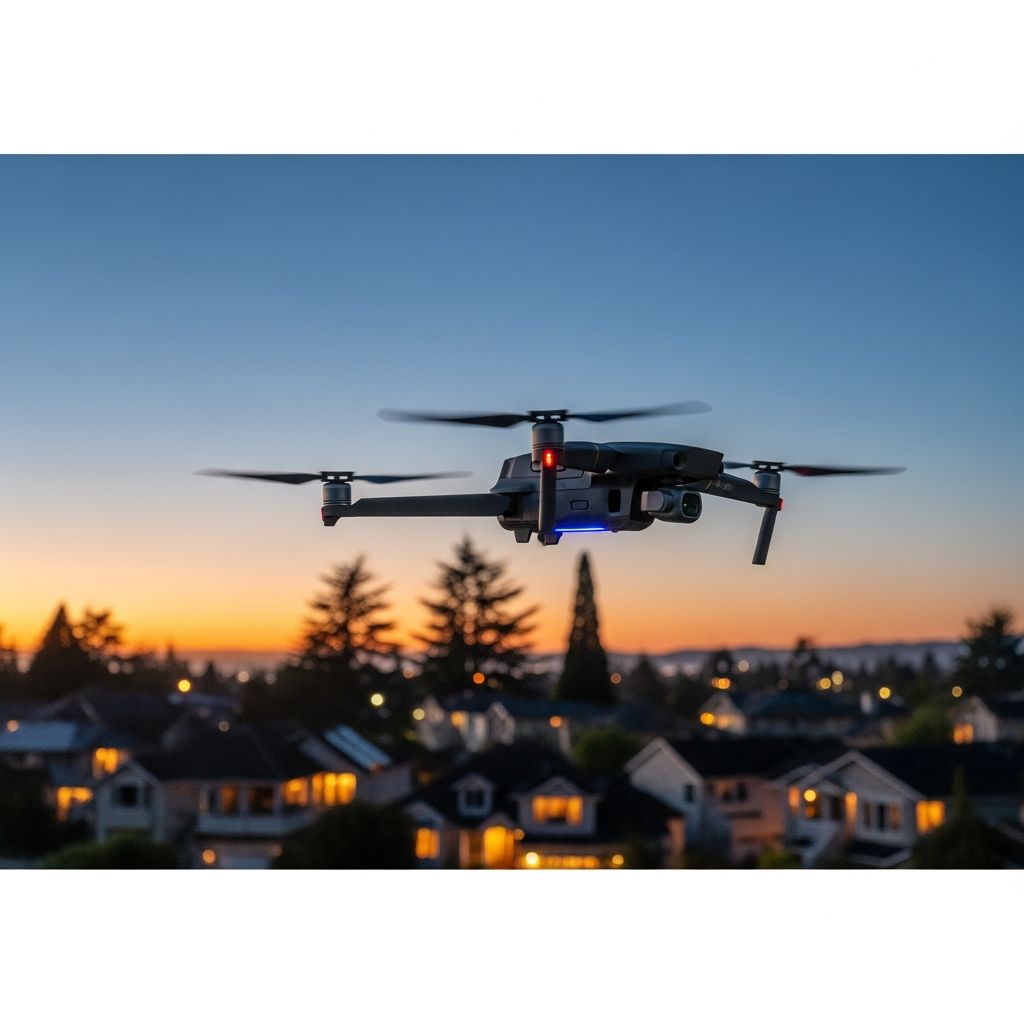
Unmanned aerial vehicles, commonly known as drones, have transitioned from military tools to everyday devices used for recreation, commerce, and public safety. While their deployment abroad has sparked global debates on targeted killings, their integration into U.S. domestic spaces raises unique questions about privacy, regulation, and the potential for escalation to armed use. This article dissects the current legal framework governing drones within American airspace, highlights key challenges, and addresses fears of ‘domestic drone strikes’ in civilian contexts.
Evolution of Drone Technology in the United States
Drones first gained prominence in military applications, particularly for precision strikes overseas. Domestically, however, their use has exploded in civilian sectors. The Federal Aviation Administration (FAA) reports millions of registered drones, with applications spanning agriculture, filmmaking, and emergency response. This proliferation stems from affordable hardware and advanced sensors, enabling real-time surveillance capabilities that rival traditional aircraft.
Early adoption focused on hobbyists, but commercial entities soon recognized their value. For instance, real estate agents use drones for property overviews, while farmers monitor crop health. Law enforcement agencies have increasingly turned to drones for search-and-rescue missions and traffic monitoring, citing cost savings over manned helicopters. Yet, this growth has outpaced regulatory development, creating a patchwork of rules that struggle to address emerging risks.
Federal Regulations: FAA Oversight and Beyond
The FAA holds primary authority over U.S. airspace under the Federal Aviation Regulations (FAR). Drones under 55 pounds must comply with Part 107 for commercial operations, requiring pilot certification, visual line-of-sight flying, and restrictions over populated areas. Recent updates, including remote ID requirements, mandate broadcasting location data akin to digital license plates.
However, federal rules do not fully cover privacy or data collection. The FAA emphasizes safety, deferring privacy concerns to other statutes. This gap has led to calls for comprehensive legislation. Congress has considered bills like the Drone Act of 2023, aiming to standardize operations while enhancing cybersecurity against hacking risks.
| Category | Key FAA Rules | Penalties for Violation |
|---|---|---|
| Recreational | Register drone, fly below 400 ft, no night ops without waiver | Fines up to $1,329 per violation |
| Commercial (Part 107) | Certified pilot, VLOS, no over people without waiver | Civil penalties up to $32,666, criminal up to $250,000 |
| Public Safety | COA required, operational limits | Case-by-case enforcement |
Privacy Rights Under Siege: Fourth Amendment Implications
The Fourth Amendment protects against unreasonable searches, but drones equipped with high-resolution cameras and thermal imaging challenge these safeguards. Courts have ruled that prolonged aerial surveillance without a warrant violates privacy expectations established in cases like Kyllo v. United States, where thermal imaging was deemed intrusive.
Domestic drone use by police often skirts warrants through ‘public view’ doctrines, arguing that flights over open spaces capture only visible activities. Critics contend this ignores the persistent nature of drone monitoring, which can aggregate data into detailed profiles. A 2024 Supreme Court case involving persistent drone tracking of a suspect’s property underscored these tensions, ruling in favor of warrant requirements for extended surveillance.
- Key Privacy Risks: Facial recognition integration, data storage durations, and third-party sharing.
- Mitigation Strategies: State laws mandating warrants for law enforcement drones, like those in Florida and California.
- Public Backlash: Incidents of unauthorized filming leading to lawsuits under state tort laws.
Law Enforcement Adoption: Benefits and Controversies
Police departments nationwide deploy drones for tactical advantages. In active shooter scenarios, drones provide overhead views without endangering officers. The Chula Vista Police Department reports drones resolving 90% of calls without officer dispatch, reducing risks and costs.
Controversies arise from misuse, such as warrantless crowd monitoring during protests. The 2020 racial justice demonstrations saw drones logging facial data, prompting ACLU challenges. Ethical concerns include bias in AI-driven target selection and the ‘mission creep’ toward routine surveillance.
Balancing utility requires transparency: departments must publish policies, conduct audits, and engage communities. Federal grants for drone programs often include civil liberties training, but compliance varies.
The Shadow of Weaponization: Armed Drones at Home?
While armed drones dominate foreign policy discussions, domestic weaponization remains theoretical yet alarming. The Posse Comitatus Act prohibits military involvement in civilian law enforcement, but exceptions exist for drug interdiction and border security. Customs and Border Protection (CBP) operates Predator drones along borders, unarmed but surveillance-heavy.
Fears of ‘domestic drone strikes’ echo international debates on targeted killings. Under the Authorization for Use of Military Force (AUMF) of 2001, strikes abroad must adhere to Law of Armed Conflict (LOAC) principles: distinction, proportionality, and necessity. Domestically, such actions would invoke due process under the Fifth and Fourteenth Amendments, requiring judicial oversight.
Experts warn of slippery slopes: non-lethal munitions like tear gas launchers have been tested on drones. A 2025 congressional hearing examined scenarios where SWAT teams might use armed UAVs against barricaded suspects, raising proportionality questions.
International Lessons for U.S. Policy
U.S. drone strikes overseas provide cautionary tales. The Obama-era Presidential Policy Guidance imposed stricter rules outside active hostilities, prohibiting ‘high-value targets’ if capture was feasible. Civilian casualties, often underreported, have fueled anti-American sentiment and legal challenges.
Domestically, these precedents underscore transparency needs. The U.S. Court of Appeals has analyzed AUMF applicability to non-9/11 groups, affirming broad executive latitude but demanding sovereignty respect. Applying LOAC domestically is untenable absent declared war, reverting to human rights law prohibiting extrajudicial killings.
State-Level Responses and Future Legislation
With federal inaction, states lead. Virginia bans drone weaponization, while Texas permits hunting with them under strict rules. A comparative overview:
| State | Drone Privacy Law | Weapon Ban |
|---|---|---|
| California | Warrant for surveillance | Yes |
| Florida | Restricted zones near critical infrastructure | Partial |
| Texas | No general warrant rule | No |
Pending federal bills propose a national registry for armed-capable drones and mandatory kill switches. Bipartisan support grows amid privacy scandals.
Public Perception and Ethical Considerations
Surveys reveal divided opinions: 60% support drone use for disasters, but only 30% for protest monitoring. Ethical debates center on dehumanized killing—drones lower perceptual distance to targets, potentially eroding moral hesitations. Philosophers argue for ‘proportionality audits’ pre-deployment.
Frequently Asked Questions (FAQs)
Can police use drones without a warrant in the U.S.?
Generally yes for brief, public-view flights, but warrants are required for persistent or technologically enhanced surveillance per recent rulings.
Are armed drones legal for domestic law enforcement?
No federal authorization exists; state bans predominate, and Posse Comitatus limits military use.
What are the main privacy risks from domestic drones?
Intrusive data collection, lack of consent, and indefinite retention without oversight.
How does FAA regulate drone flights?
Part 107 for commercial ops mandates certification, height limits, and no-fly zones.
Could domestic drone strikes ever be justified legally?
Only in extreme self-defense scenarios with due process; LOAC does not apply absent armed conflict.
Path Forward: Safeguards for a Drone-Saturated Sky
To harness drones’ benefits while curbing abuses, policymakers must prioritize: (1) unified privacy legislation, (2) independent oversight boards, (3) public data portals on drone deployments, and (4) international alignment on ethical standards. Technological fixes like encrypted feeds and auto-redaction software offer promise. Ultimately, domestic drones demand vigilant stewardship to prevent overreach.
References
- Are U.S. Drone Strikes Legal? — Center for American Progress. 2013-04-15. https://www.americanprogress.org/article/are-u-s-drone-strikes-legal/
- Drone Strikes and Targeted Killings: Domestic and International Legal Framework — U.S. Court of Appeals for the Second Circuit. 2014-04. https://www.ca2.uscourts.gov/docs/jc_reports/2014/4_Drone_Strikes.pdf
- The Legal and Human Costs of 20 Years of U.S. Drone Strikes — Amnesty International USA. 2021-02-09. https://www.amnestyusa.org/blog/targeted-killing-and-the-rule-of-law/
- Lethal and Legal? The Ethics of Drone Strikes — U.S. Army War College Press. 2019. https://press.armywarcollege.edu/monographs/429/
- The Civilian Impact of Drones — Center for Civilians in Conflict. 2012-09. https://civiliansinconflict.org/wp-content/uploads/2017/09/The_Civilian_Impact_of_Drones_w_cover.pdf
Similar Articles








Read full bio of Sneha Tete




