
Flood Coverage in Home Insurance Explained
Uncover the truth about flood protection: Standard home policies exclude floods, but NFIP offers essential safeguards for your property.
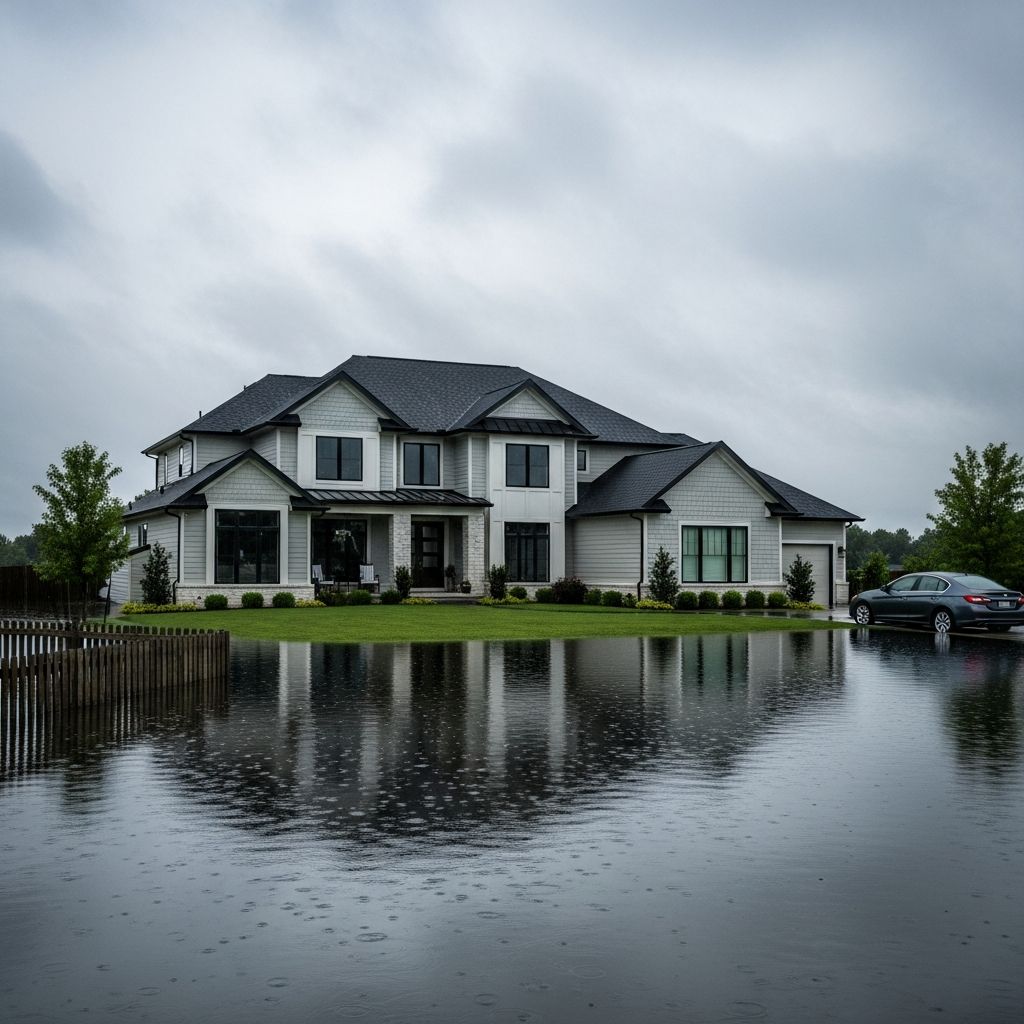
Protecting your home from water-related disasters requires understanding the limitations of standard policies. While many assume comprehensive coverage, floods demand specialized insurance to avoid devastating financial losses.
Key Differences Between Water Damage and Flooding
Homeowners often confuse various types of water damage, leading to surprises during claims. Standard policies cover sudden internal issues but exclude external flooding events.
- Sudden leaks: Burst pipes or appliance failures qualify for coverage under dwelling and personal property sections.
- External floods: Rising water from rivers, storms, or heavy rain overtaking homes remains uncovered without add-ons.
- Roof infiltration: Rain entering through storm-damaged openings may be covered, unlike ground-level surges.
This distinction hinges on the source and nature of water intrusion. Internal, accidental damage triggers standard protections, whereas floods involve widespread overflow beyond a single property.
Why Standard Homeowners Policies Exclude Floods
Insurance carriers categorize floods as high-risk, catastrophic events affecting entire regions. Including them in base policies would raise premiums unsustainably for all policyholders.
Floods differ from covered perils like wind or fire because they involve surface water accumulation. Policies explicitly exclude “flood,” defined as two or more acres of land inundated or two or more properties affected by similar conditions.
| Coverage Type | Included in Standard Policy? | Examples |
|---|---|---|
| Sudden Pipe Burst | Yes | Water heater rupture soaking floors |
| Rain via Broken Window | Yes | Storm shatters glass, rain enters |
| River Overflow | No | Neighborhood-wide inundation |
| Sewer Backup | No (add-on needed) | Overloaded drains during storm |
Exclusions prevent moral hazard and maintain affordability. Homeowners in low-risk areas subsidize high-risk ones under universal flood inclusion, which carriers avoid.
Understanding the National Flood Insurance Program (NFIP)
The NFIP, managed by FEMA, fills the gap left by private insurers. Available nationwide where communities participate, it offers standardized policies up to $250,000 for structures and $100,000 for contents in residential properties.
Key features include:
- Mandatory dwelling coverage: Protects foundation, walls, built-ins like furnaces and plumbing.
- Optional contents: Covers furniture, clothing, electronics against flood submersion.
- Separate deductibles: Often $1,000 to $5,000 per category, applied before payouts.
Business owners access higher limits: $500,000 each for building and contents. Policies activate after a 30-day waiting period, emphasizing proactive purchase.
When Is Flood Insurance Mandatory?
Lenders require coverage for properties in Special Flood Hazard Areas (SFHAs) with federally backed mortgages like FHA, VA, USDA, or those from Fannie Mae/Freddie Mac.
Even outside high-risk zones, 25% of flood claims originate from moderate/low-risk areas. Proximity to rivers, coastlines, or poor drainage warrants voluntary purchase.
Flood maps (Flood Insurance Rate Maps or FIRMs) designate zones. Check FEMA’s site or consult agents for your property’s status. Recent map updates reflect climate-driven risk increases.
What Does NFIP Specifically Cover and Exclude?
NFIP targets direct physical loss by flood, reimbursing repair or replacement at actual cash value minus depreciation for contents.
Covered items:
- Electrical systems, wiring, outlets
- HVAC units, central air conditioners
- Well pumps, machinery in basements
- Carpeting, flooring if installed over concrete slabs
Exclusions: Temporary market floods under 30 days, earth movement, mold remediation beyond initial cleanup, and outdoor property like decks or fences.
Basements receive limited coverage: Cleanup to $100,000 max, but no sump pumps or dehumidifiers unless elevated.
Private Flood Insurance Alternatives
Beyond NFIP, private carriers offer policies without caps or waiting periods, often at competitive rates in low-risk areas. These may cover higher values or additional perils like sewer backups.
Compare via agents; some exceed NFIP limits and include faster claims processing. Availability grows as private markets expand post-2012 reforms.
Filing a Claim After Flood Damage
Act swiftly: Document damage with photos/videos before cleanup. Contact your NFIP Write Your Own (WYO) insurer or FEMA directly for NFIP claims.
- Secure property against further damage.
- Make temporary repairs if safe (keep receipts).
- Submit proof of loss within 60 days.
- Avoid permanent repairs until adjuster inspects.
Claims average $50,000; payouts fund rebuilding, not profits. Appeals possible if disputes arise.
Cost Factors and Savings Tips
Premiums range $500-$2,000 annually, based on zone, elevation, construction. Preferred Risk Policies (PRPs) suit low/moderate-risk homes at discounted rates.
- Elevate utilities to cut costs.
- Strengthen foundations.
- Bundle with homeowners for discounts.
Shop annually; community participation lowers rates via NFIP discounts.
Frequently Asked Questions
Does my mortgage require flood insurance?
Yes, if in a high-risk FEMA zone with federal backing. Lenders notify via elevation certificates.
Can renters buy flood coverage?
Absolutely; NFIP contents policies protect belongings up to $100,000 without owning the structure.
How long to wait for coverage activation?
Standard 30 days; exceptions for policy changes or first-time buyers in some cases.
Is flood damage from hurricanes covered?
NFIP covers storm surges meeting flood definitions; wind damage falls under homeowners.
What if my area floods without declaration?
NFIP pays regardless of presidential declarations; don’t rely solely on FEMA aid.
Preparing Your Home for Flood Risks
Mitigate losses through elevation, flood vents, backflow valves. Landscaping diverts water; sandbags aid short-term defense.
Emergency kits, evacuation plans enhance safety. Annual reviews align coverage with rising values and risks.
In summary, proactive flood insurance bridges critical gaps. With floods costing billions yearly, informed homeowners safeguard their biggest asset effectively.
References
- Does insurance cover rain and flood damage? — American Family Insurance. 2025. https://www.amfam.com/resources/articles/understanding-insurance/does-insurance-cover-rain-and-flood-damage
- Guide to Flood Insurance for Homeowners — Bankrate. 2025. https://www.bankrate.com/insurance/homeowners-insurance/flood-insurance/
- Understanding Flood Insurance — Maryland Insurance Administration. 2024. https://insurance.maryland.gov/Consumer/Documents/agencyhearings/Understanding-Flood-Insurance.pdf
- Does Homeowners Insurance Cover Water Damage? — Progressive. 2025. https://www.progressive.com/answers/does-home-insurance-cover-water-damage/
- Does Homeowners Insurance Cover Water Damage? — Allstate. 2026-01. https://www.allstate.com/resources/home-insurance/water-damage
Similar Articles








Read full bio of Sneha Tete




