
Understanding Digital Content Laws: Legal Streaming vs. Unauthorized Access
Navigate the complexities of online streaming laws and discover what's legal versus illegal.
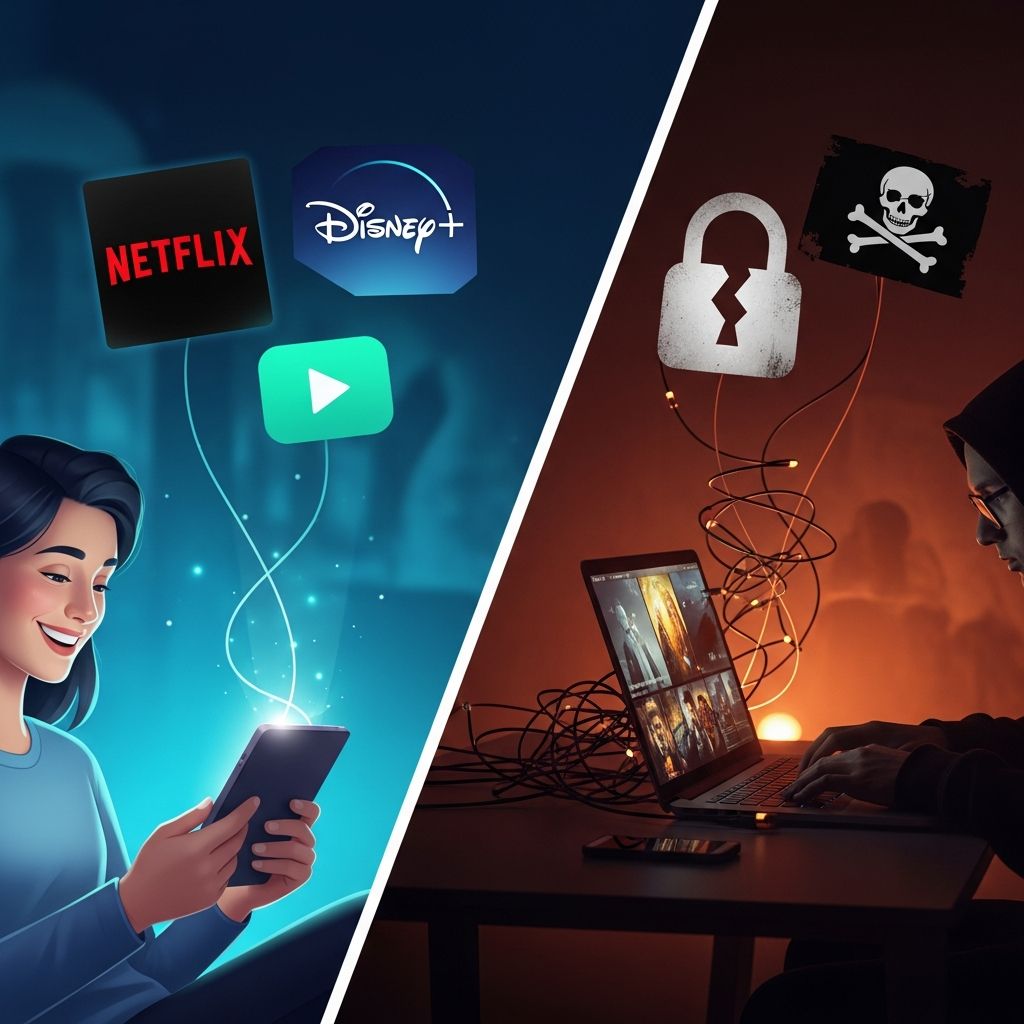
The digital landscape has fundamentally transformed how people consume entertainment. With countless streaming platforms available today, understanding the legal implications of where and how you watch movies, television shows, and listen to music has become increasingly important. The line between legitimate viewing and copyright infringement can sometimes seem blurry, but the law makes clear distinctions about what constitutes lawful consumption versus illegal activity.
The Foundation of Copyright Protection in Digital Media
Copyright law in the United States establishes that content creators and copyright holders possess exclusive rights to distribute and display their work. These protections exist to ensure that artists, filmmakers, musicians, and production companies receive compensation for their creative efforts and can control how their intellectual property is used. When you watch content through an authorized platform—whether that’s Netflix, Disney+, HBO, or a movie theater—you’re respecting these rights by accessing the material through licensed channels.
The distinction between watching and copying becomes crucial in legal discussions about streaming. When you stream content privately from an authorized source, you are not violating copyright law. However, when that same content comes from unauthorized sources without the copyright holder’s permission, the legal situation becomes complicated.
What Makes Streaming Legal or Illegal
The legality of streaming content depends primarily on whether the platform providing that content has obtained proper licensing from the copyright holder. Legal streaming services have negotiated agreements with studios, networks, and production companies to distribute their content. When you use these services, both the platform and you as the viewer are operating within the bounds of the law.
Illegal streaming occurs when content is distributed without authorization. This typically happens through:
- Unauthorized websites that host movies and television shows without licensing agreements
- Peer-to-peer networks that allow users to download and share content directly with each other
- Torrent sites that facilitate the distribution of copyrighted material through distributed networks
- Platforms operating from jurisdictions outside U.S. legal reach, making enforcement challenging
Many of these illegal streaming sites deliberately obscure their location and routing to avoid legal detection. Some operate on the dark web, further complicating enforcement efforts.
The Critical Distinction: Streaming Versus Downloading
An important legal distinction exists between streaming and downloading content. When you download a file, you create a permanent copy on your device, which constitutes reproduction under copyright law. This action clearly violates copyright protections, regardless of whether the source is authorized.
Streaming, by contrast, involves temporary data transmission that allows you to view or listen to content without creating a permanent copy on your device. The technical mechanics of streaming are different from downloading, and courts have recognized this distinction in legal decisions. Private viewing of streamed content, where the viewer is not making copies and not distributing the material, occupies a different legal position than downloading.
Criminal Liability: Who Actually Faces Charges
The question of whether viewers can face criminal charges for watching unauthorized streams is more nuanced than many assume. Currently, criminal prosecution typically targets those who upload, host, or operate streaming platforms rather than individual viewers. The entertainment industry has chosen to pursue legal action against the sources of infringement—the people facilitating and profiting from unauthorized distribution.
However, this approach may change. Proposed legislation, such as the “Protect Lawful Streaming Act,” would make commercial streaming piracy operations felonies punishable by significant fines and prison sentences. While such proposed laws focus on for-profit operations rather than casual viewers, the landscape of streaming regulation continues to evolve.
Civil Liability and Private Lawsuits
Even where criminal liability may not apply, copyright holders possess the option to pursue civil lawsuits against viewers. While prosecuting individual viewers remains expensive and logistically challenging, it has occurred in limited circumstances. For example, the UFC successfully sued one viewer for $12,000 for accessing a pay-per-view stream through an unauthorized website.
The practical obstacles to such litigation are substantial. Copyright holders would need to obtain IP addresses from streaming platforms or internet service providers, then convince those entities to provide identifying information about account holders. Despite these challenges, the theoretical possibility of civil suits creates legal exposure for unauthorized streaming viewers.
Understanding Potential Penalties
Those charged with illegal streaming offenses can face substantial financial consequences. For viewers caught using unauthorized streaming services, penalties typically range from $750 to $30,000. These figures reflect the law’s recognition that copyright infringement causes real economic harm to content creators and distributors.
The penalties escalate dramatically for those uploading and distributing content. Anyone charged with uploading copyrighted materials faces fines starting at $150,000. For operators of commercial piracy services, the potential consequences include felony charges, imprisonment, and multi-million-dollar fines.
The entertainment industry quantifies the damage from piracy as nearly $250 billion annually. This figure helps explain the aggressive enforcement approach and the substantial penalties associated with streaming violations.
The “Ignorance Is No Defense” Legal Principle
Courts have long recognized that the general public understands piracy constitutes illegal activity. This understanding has been reinforced through messaging displayed in cinemas since the mid-1980s and is as widely known as basic legal rights. Because of this widespread knowledge, the legal system will not accept the defense that a person did not know that watching professionally produced entertainment without authorization is illegal.
This principle has significant implications. Even if someone claims they were unaware that a particular streaming site operated illegally or that viewing unauthorized content violated copyright law, courts will not find this argument persuasive. The widespread publicity surrounding copyright protections means that ignorance provides no legal protection.
Public Performance and Social Viewing
An additional layer of legal complexity emerges when considering public performances. Watching a stream privately presents a different legal situation than hosting a viewing party using an unauthorized stream. When content is displayed to multiple people beyond the immediate family, it may constitute a public performance, which creates separate copyright violations and potential criminal liability.
This distinction matters significantly. Someone streaming unauthorized content to themselves faces different legal exposure than someone streaming the same content to a group at a gathering. The copyright holder’s exclusive right to public performance becomes relevant in the latter scenario.
Practical Challenges in Enforcement
Despite the clear legal prohibitions against unauthorized streaming, enforcement remains challenging. Many illegal streaming operations are based outside the United States and beyond the jurisdiction of American courts. Even when sites are identified and shut down, new ones quickly emerge to fill the void.
The complexity of routing and rerouting data across international networks makes it difficult to pinpoint the actual location where content is being uploaded or hosted. Without jurisdiction over the perpetrators, U.S. authorities cannot effectively charge or arrest them. This enforcement gap has led the entertainment industry to focus on pursuing viewers within American borders as a strategy to deter unauthorized streaming.
Identifying Illegal Streaming Services
Consumers should be able to recognize characteristics of illegal streaming platforms to make informed decisions about where they access content. Illegal sites typically:
- Offer current movies and television shows for free or at prices far below legitimate services
- Display excessive advertisements or pop-ups
- Lack professional website design and organization
- Require installation of suspicious software or browser extensions
- Operate through constantly changing domain names or mirrors
- Lack clear contact information or customer support channels
- Use vague terminology about content licensing or origins
Legitimate streaming services invest in professional platforms, maintain consistent branding and domains, and operate transparently about their licensing agreements with content providers.
Legal Streaming Alternatives and Options
The proliferation of affordable legal streaming options has reduced arguments that authorization costs are prohibitively expensive. Major platforms offer tiered subscription models, some with free ad-supported tiers. Additionally, traditional options like movie theaters, rental services, and broadcast television continue to provide authorized ways to access entertainment.
The cost of legal streaming services, when spread across the quantity of content available and the number of household members who can access them, typically proves more economical than legal consequences for unauthorized viewing.
Frequently Asked Questions
Q: Can I legally watch movies on any website for free?
A: Free legal options exist, including ad-supported streaming services and content authorized for free distribution. However, not all free streaming sites are legitimate. Verify that websites have proper licensing agreements before using them.
Q: What’s the difference between streaming and downloading in legal terms?
A: Downloading creates a permanent copy on your device, which is a clear copyright violation. Streaming allows temporary viewing without creating a copy. Courts have recognized this technical distinction as legally significant.
Q: Could I actually be sued for watching an illegal stream?
A: While theoretically possible, the practical likelihood remains low due to enforcement challenges. However, civil suits have occurred in specific cases. Criminal prosecution typically targets operators rather than viewers.
Q: What happens if I’m caught illegally streaming?
A: Penalties for viewers range from $750 to $30,000 in civil cases. Criminal charges are less common for casual viewers but remain possible, particularly if proposed legislation passes.
Q: Is it illegal to watch a stream at a party if the source is unauthorized?
A: Yes. Displaying unauthorized content to an audience constitutes a public performance, which creates additional copyright violations beyond private viewing.
References
- Internet Crime: Streaming Movies Online Illegal? — Huppertz & Powers. Accessed April 2026. https://waukeshacriminalattorneys.com/internet-crime-penalties-illegal-streaming/
- Is it Illegal to Watch Unauthorized Television Streams Online? — North Carolina Journal on Law and Technology. https://journals.law.unc.edu/ncjolt/blogs/is-it-illegal-to-watch-unauthorized-television-streams-online/
- To Watch or not to Watch: A Crash Course In Media Streaming Law — Kelly Warner Law. Accessed April 2026. https://kellywarnerlaw.com/media-streaming-law-overview
- Is watching streaming movies online illegal? — Avvo Legal Answers. Accessed April 2026. https://www.avvo.com/legal-answers/is-watching-streaming-movies-online-illegal–264584.html
- 10 Signs You’re Using Illegal Movie Websites — HowStuffWorks. https://computer.howstuffworks.com/10-signs-streaming-movie-site-not-legit.htm
Similar Articles








Read full bio of medha deb




