
Diet Changes as Legal Defense: Beyond the Twinkie Myth
Exploring how dietary shifts and mental health intersect in courtrooms, from historical myths to modern legal strategies.
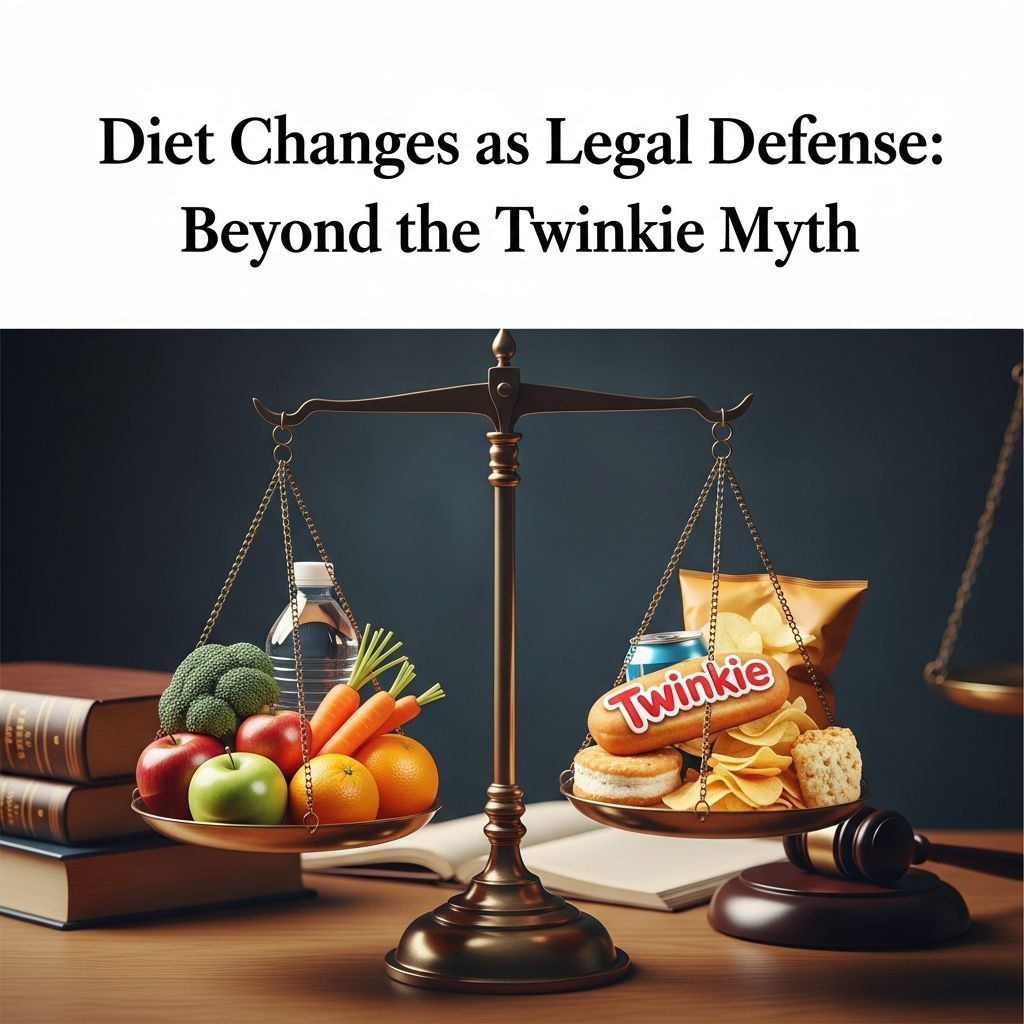
In the realm of criminal law, few concepts have captured public imagination as vividly as the so-called “Twinkie defense.” This term evokes images of sugary snacks driving individuals to unthinkable acts, but the reality is far more nuanced, rooted in arguments about mental health and behavioral changes. While popularized by media, it represents a broader discussion on how physiological factors, including diet, can intersect with legal notions of responsibility. This article examines the historical context, key cases, psychological underpinnings, and evolving judicial responses to such defenses.
The Birth of a Legal Legend
The phrase “Twinkie defense” originated in the late 1970s during a high-stakes trial that gripped the nation. Dan White, a former San Francisco supervisor, was accused of assassinating Mayor George Moscone and Supervisor Harvey Milk in 1978. Facing first-degree murder charges, White’s legal team pursued a diminished capacity strategy, arguing that severe depression had impaired his ability to premeditate the killings.
Central to the defense was evidence of White’s drastic lifestyle shifts. Previously health-conscious, he had abandoned exercise and adopted a diet heavy in processed sugars, exemplified by Twinkies. Psychiatrists testified that this change symbolized his mental deterioration rather than directly causing the crime. The jury, influenced by this narrative, convicted White of voluntary manslaughter instead, leading to a lenient sentence that sparked public fury and the White Night riots.
Media sensationalism transformed a minor detail into a moniker, overshadowing the core mental health plea. This misrepresentation endures, turning a legitimate tactic into a punchline for absurd excuses.
Understanding Diminished Capacity in Court
Diminished capacity defenses challenge the prosecution’s claim of full intent, positing that mental states—whether from illness, intoxication, or other factors—reduce culpability. In White’s case, jury instructions explicitly allowed consideration of “substantially reduced mental capacity, whether caused by mental illness, mental defect, intoxication, or any other cause” when evaluating elements of murder.
Legal scholars note that such arguments require robust expert testimony linking the impairment to the crime. Sugar consumption alone rarely suffices; it must tie to diagnosable conditions like depression. Post-White, California amended its penal code to tighten first-degree murder requirements, eliminating the need to prove “mature and meaningful reflection,” effectively curbing similar claims.
- Key Elements of a Successful Defense: Expert psychiatric evaluation, behavioral evidence, and jury sympathy.
- Common Pitfalls: Overreliance on trivial factors without medical backing, leading to public backlash.
- Judicial Evolution: Stricter standards post-1979 to prevent abuse.
Psychological Science Behind Diet and Behavior
Does diet truly influence cognition enough to excuse criminal acts? Research indicates correlations between nutrition and mood, but causation is contentious. High-sugar diets can exacerbate depression symptoms, disrupting serotonin levels and energy regulation, mimicking or worsening mental illness.
However, no peer-reviewed studies support junk food as a direct homicide trigger. Instead, dietary shifts often signal underlying disorders. In forensic psychology, this manifests as “behavioral markers”—slovenliness, withdrawal—that attorneys leverage to humanize defendants.
| Dietary Factor | Potential Mental Effect | Legal Relevance |
|---|---|---|
| High Sugar Intake | Mood swings, fatigue | Symptom of depression, not cause |
| Caffeine Overload | Anxiety, impulsivity | Diminished control claims |
| Self-Medication (e.g., Cough Syrup) | Psychosis risk | Intoxication defense |
This table summarizes patterns seen in cases, emphasizing symptomology over direct causality.
Notable Cases Echoing the Twinkie Strategy
Beyond White, similar arguments have surfaced with mixed results. In the trial of Dr. Louis Chen, accused of murdering his partner and son, defense counsel highlighted depression worsened by junk food and cough syrup abuse. Despite the plea, Chen was convicted, illustrating limits of the approach.
Kenneth Parks’ 1987 sleepwalking acquittal, while not diet-related, parallels by using medical automatism to negate intent. More directly, Oregon bus driver Kenneth Sands blamed excessive caffeine for assaults, but was found guilty, underscoring jury skepticism.
These examples reveal a pattern: success hinges on compelling evidence and cultural context. The Twinkie label persists as slang for any substance-exacerbated impairment claim, often as a desperate measure.
Public Perception vs. Legal Reality
Media amplification distorts these defenses. Reporters coined “Twinkie defense” from incidental testimony, igniting myths of sugar-fueled murder. Public outrage post-White led to reforms, yet the trope endures in pop culture, eroding trust in mental health arguments.
Lawyers caution against overusing such tactics, as they risk alienating juries. Modern strategy favors comprehensive psychological profiles over singular factors like diet.
Legislative and Ethical Implications
White’s outcome prompted California’s Penal Code changes, raising the bar for proving premeditation. Nationally, it fueled debates on accountability: should biological excuses mitigate severe crimes?
Ethically, these defenses spotlight neuroscientific advances, urging courts to integrate evidence-based psychiatry. Critics argue they undermine justice for victims, while proponents see them as humane.
Modern Applications and Future Trends
Today, defenses evolve with science. Gut-brain axis research links microbiome disruptions from poor diet to impulsivity, potentially bolstering claims. Cases involving keto diets or fasting-induced delirium are emerging, though rare.
Forensic experts predict increased viability with neuroimaging, proving brain changes from malnutrition. Yet, judges remain wary, requiring irrefutable links.
Frequently Asked Questions (FAQs)
What exactly was the Twinkie defense?
It referred to Dan White’s 1979 trial, where junk food consumption evidenced his depression-induced diminished capacity, not that Twinkies caused the murders.
Has the Twinkie defense been successful since 1979?
Rarely; most invoking cases like Louis Chen’s result in convictions, as courts demand stronger proof.
Can diet alone negate criminal intent?
No, it must demonstrate via experts how it impairs specific mental elements of the crime.
Why did the public react so strongly to Dan White’s verdict?
The manslaughter conviction and light sentence for high-profile assassinations fueled riots, viewing it as injustice.
Is there scientific backing for diet affecting criminal behavior?
Indirect links exist via mood and cognition impacts, but not as a standalone defense.
Navigating Nutrition in the Courtroom
Defendants claiming diet-driven impairment must present multidisciplinary evidence: nutritional logs, medical histories, and brain scans. Prosecutors counter with lifestyle choice arguments, framing indulgence as volitional.
Judicial training now emphasizes distinguishing symptoms from excuses, balancing compassion with deterrence. As obesity and mental health crises rise, these defenses may proliferate, demanding refined standards.
In sum, the Twinkie saga underscores law’s adaptation to human complexity. Far from a gimmick, it invites scrutiny of how bodies and minds intersect under legal gaze.
References
- The Twinkie Defense? Crazy Criminal Defenses That Worked — Criminal Law AZ. 2023. https://www.criminallawaz.com/the-twinkie-defense-crazy-criminal-defenses-that-worked/
- The Twinkie Defense – Not for Every Case — New Jersey Criminal Defense Attorney Blog. 2022-05-15. https://www.newjerseycriminaldefenseattorney-blog.com/twinkie-defense-not-every-case/
- Twinkie defense — Legal Information Institute, Cornell Law School. 2024. https://www.law.cornell.edu/wex/twinkie_defense
- Twinkie defense — Wikipedia (informed primary sources). 2024-01-20. https://en.wikipedia.org/wiki/Twinkie_defense
- The Trial of Dan White: The Diminished Capacity (“Twinkie”) Defense — Famous Trials. 2023. https://www.famous-trials.com/danwhite/588-defense
- ‘Twinkies Made Me Do It’ — Attorney at Law Magazine. 2021-08-10. https://attorneyatlawmagazine.com/the-lighter-side/legal-history/twinkies-made-me-do-it
- Twinkie defense — Law.com Dictionary. 2024. https://dictionary.law.com/Default.aspx?selected=2177
Similar Articles








Read full bio of Sneha Tete




