
Determining Fault in Three-Vehicle Crashes
Unravel the complexities of liability in multi-car collisions: key scenarios, evidence, and legal principles explained.
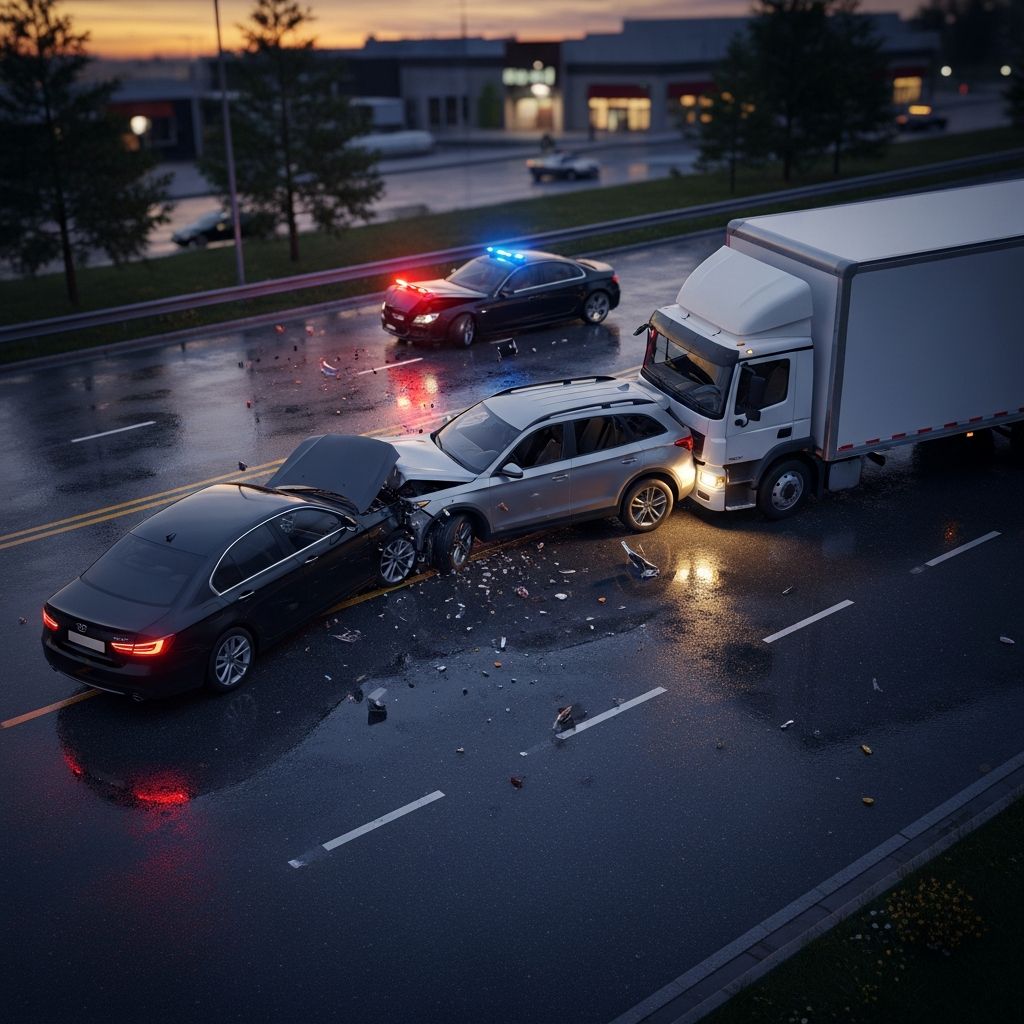
Three-vehicle crashes present unique challenges in assigning liability due to multiple drivers, vehicles, and impact points. Fault is typically established through negligence principles, where investigators assess each party’s adherence to road safety standards.
Core Legal Foundations of Liability
In personal injury law, fault hinges on negligence, defined as failing to exercise reasonable care. This requires proving duty of care, breach, causation, harm, and damages. Most U.S. states apply comparative negligence, apportioning blame percentages that adjust compensation accordingly.
For instance, if Driver A is 40% at fault and suffers $10,000 in damages, recovery drops to $6,000 under modified comparative rules prevalent in states like Massachusetts. Pure contributory negligence, rare today, bars recovery for any fault contribution.
Prevalent Collision Patterns and Liability Analysis
Multi-vehicle incidents often follow predictable patterns, each demanding specific fault evaluation.
- Chain Reaction Rear-Ends: The lead vehicle sets the stage; fault shifts if brake lights fail or sudden stops lack cause. Middle vehicles bear responsibility for tailgating, while rear drivers are presumed liable unless evidence shows otherwise.
- Intersection T-Bones: Right-of-way violations dominate, analyzed via signals, yields, and impact angles. A runner of a red light initiates, but secondary impacts may distribute blame.
- Lane Change Merges: Unsafe lane shifts without signaling trigger swerves into adjacent traffic, potentially implicating multiple parties.
- Loss-of-Control Spreads: Speeding or impairment causes veering, drawing innocents into secondary collisions; initial actor holds primary fault.
| Scenario | Primary Fault Factors | Potential Shared Liability |
|---|---|---|
| Chain Rear-End | Tailgating, brake failure | Lead stop abruptness, speed |
| Intersection | Signal violation, no yield | Distracted scanning |
| Lane Change | No signal, blind spot | Overreactive swerve |
| Loss of Control | Excess speed, impairment | Road hazards |
Investigigation Techniques for Accurate Fault Allocation
Resolving liability demands rigorous evidence collection. Police reports offer initial timelines, officer diagrams, and citations. Dashcam footage, traffic cams, and business surveillance capture sequences objectively.
Witness accounts provide contextual narratives, though subject to bias. Vehicle black box data—event data recorders—reveals speed, braking, and steering pre-impact, subpoenaed for precision.
Accident reconstruction experts apply physics, skid marks, and damage patterns to model events scientifically, crucial for disputed claims. Photos of debris fields, gouges, and vehicle positions finalize spatial reconstructions.
Influential External Contributors
Beyond drivers, non-human elements modulate fault.
- Road and Weather: Icy patches or potholes may invoke government liability if negligently maintained.
- Vehicle Defects: Brake failures or tire issues trace to manufacturers if maintenance records clear owners.
- Traffic Infrastructure: Malfunctioning signals or obscured signs factor into municipal responsibility.
Investigators review maintenance logs to differentiate owner neglect from defects.
Insurance Implications and Claim Strategies
Insurers apportion payouts per fault percentages, often litigating complex cases. Policy limits cap recoveries, prompting underinsured motorist claims. Victims should notify carriers promptly, preserving evidence independently.
Legal representation accelerates processes, countering adjuster lowballs. Statutes of limitations—typically 2-3 years—urge swift action.
Frequently Asked Questions
Can all drivers in a three-car crash share fault?
Yes, comparative negligence allows percentage-based allocation, such as 50% for the instigator and 25% each for reactors.
What role do police reports play?
They supply official narratives, diagrams, and citations, heavily influencing insurer decisions despite non-binding status.
Is the last driver always liable in rear-ends?
No; presumptions yield to evidence like sudden stops or defects.
How do experts reconstruct crashes?
Using physics, data recorders, and scene metrics to simulate sequences.
Does weather absolve drivers?
No, but adjusted standards apply; excessive speed in rain heightens fault.
Steps Post-Three-Vehicle Incident
- Ensure safety, call 911 for injuries and reports.
- Document scene: photos, contacts.
- Seek medical evaluation, even minor symptoms.
- Contact insurer, consult attorney for complexities.
- Avoid statements sans counsel.
These crashes amplify injury risks—whiplash, fractures, TBIs—necessitating thorough claims.
References
- 3-Car Accidents: Who’s At Fault, Who Pays for Damages? — InjuryLawyer.com. 2023. https://injurylawyer.com/blog/3-car-accidents-whos-at-fault-who-pays-for-damages/
- How Is Fault Determined In A Multi-Vehicle Car Accident — Sweeney Merrigan. 2024-03-15. https://www.sweeneymerrigan.com/blog/how-is-fault-determined-in-a-multi-vehicle-car-accident/
- 3 Car Accident Scenarios: Who’s At Fault? Who Pays — Maier & Orth, P.C. 2023-08-10. https://www.maierattorney.com/3-car-accident-scenarios-whos-at-fault-who-pays
- How to Determine Fault in Multi-Vehicle Car Accidents — Resmini & Associates. 2024. https://www.resminilawoffices.com/blog/how-to-determine-fault-in-multi-vehicle-car-accidents/
- Who Is at Fault in a Rear-end Collision Involving 3 Cars? — Recovery Law Center. 2023-11-20. https://recoverylawcenterhawaii.com/blog/whos-at-fault-in-a-3-car-accident/
Similar Articles








Read full bio of Sneha Tete




