
Defending Marijuana DUI Charges Effectively
Discover proven legal strategies to challenge and potentially dismiss marijuana DUI charges, protecting your rights and future.
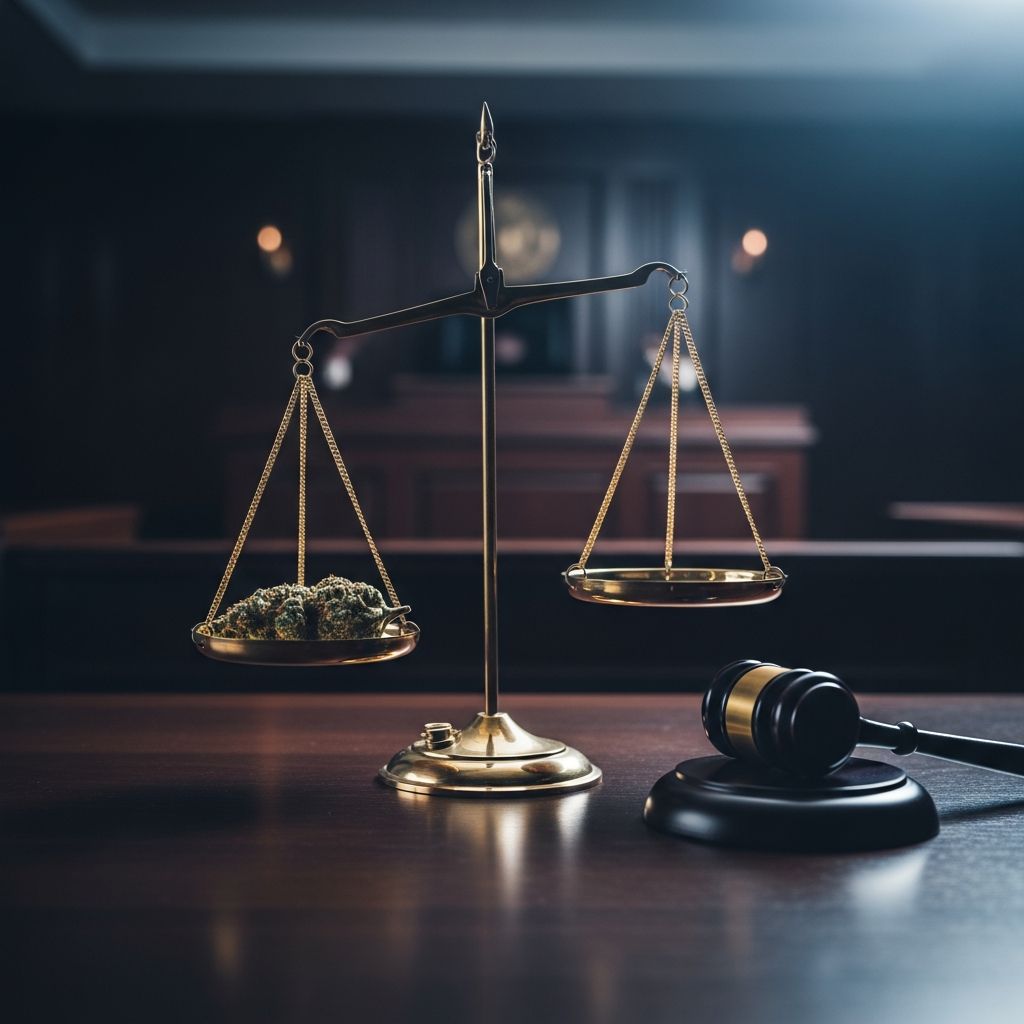
Marijuana DUI charges are increasingly common as cannabis legalization spreads across states, but unlike alcohol DUIs, they present unique defense opportunities due to scientific and procedural challenges. Successful defenses often hinge on exposing weaknesses in police procedures, test reliability, and proof of actual impairment. This article outlines comprehensive strategies to challenge these charges, drawing from legal precedents and expert analyses.
Understanding the Landscape of Cannabis-Related Driving Offenses
Driving under the influence of marijuana carries severe penalties similar to alcohol impairment cases, including license suspension, fines, probation, and potential jail time. However, prosecutors must prove not just the presence of THC—the psychoactive compound in cannabis—but genuine impairment affecting safe driving. No universal per se limit exists for THC nationwide, unlike the 0.08% BAC threshold for alcohol, making conviction reliant on subjective evidence.
In states like California and Colorado, where recreational use is legal, mere detection of THC metabolites (which linger for days or weeks) does not equate to intoxication at the time of driving. This scientific gap often undermines prosecution cases, providing fertile ground for defense attorneys to argue reasonable doubt.
Challenging the Foundation: Validity of the Traffic Stop
The cornerstone of any DUI defense begins with the initial police encounter. Officers must have reasonable suspicion—based on observable traffic violations, erratic driving, or safety concerns—to pull over a vehicle. A stop lacking this foundation violates the Fourth Amendment, rendering all subsequent evidence inadmissible.
Defense strategies include:
- Scrutinizing dashcam and bodycam footage: Review for absence of swerving, speeding, or other violations. Subjective hunches, like ‘driving too slow,’ rarely suffice without corroboration.
- Cross-examining officer testimony: Highlight inconsistencies between reports and video evidence, such as post-hoc justifications added after tests.
- Third-party witnesses: Gather accounts from passengers or nearby drivers confirming normal operation.
If the stop is deemed unlawful, courts suppress field sobriety tests (FSTs), blood samples, and statements, often collapsing the case.
Dissecting Field Sobriety Tests in Cannabis Cases
Standard FSTs—heel-to-toe walk, one-leg stand, and horizontal gaze nystagmus—were designed for alcohol detection and perform poorly for marijuana. Cannabis impairment manifests differently, often without the horizontal eye jerking or balance loss seen in alcohol cases.
| Test Type | Alcohol Reliability | Marijuana Limitations |
|---|---|---|
| Heel-to-Toe Walk | High correlation with BAC | Affected by anxiety, fatigue, or terrain; not THC-specific |
| One-Leg Stand | Indicates balance loss | Marijuana may cause time distortion, not physical sway |
| Horizontal Gaze Nystagmus | Strong indicator | Rarely present in cannabis users; low predictive value |
Attorneys challenge FSTs by introducing medical evidence of alternative causes for ‘failures,’ such as inner ear issues, medications, or even the officer’s instructions. Video analysis often reveals non-compliant testing conditions, like poor lighting or uneven surfaces.
The Science Behind THC Testing and Its Vulnerabilities
Blood, urine, or saliva tests detect THC metabolites long after psychoactive effects fade—up to 30 days in chronic users. This temporal disconnect means positive results prove prior use, not current impairment.
- Blood test flaws: Chain-of-custody errors, contamination, or lab calibration issues can invalidate samples. Expert toxicologists testify that metabolite levels (e.g., 5 ng/mL THC) correlate weakly with driving ability.
- Breathalyzer equivalents: Emerging oral fluid devices lack standardization and court acceptance.
- Urine tests: Least reliable, detecting non-psychoactive breakdown products.
Defense experts cite studies showing no linear impairment threshold for THC, unlike alcohol, bolstering arguments that test results alone fail to prove guilt.
Leveraging Legal Protections for Medical Cannabis Users
In medical marijuana states, a valid patient card explains THC presence without implying impairment. Florida law, for instance, permits possession and use but prohibits driving while actually affected—not merely testing positive.
Key defenses:
- Presenting prescription records and consumption logs timed well before driving.
- Arguing ‘rising metabolite’ theory: Levels peak post-consumption, declining during impairment window.
- Challenging officer observations subjective to cannabis stereotypes (e.g., bloodshot eyes from allergies).
This defense shifts burden to prosecutors to differentiate lawful medical use from unsafe operation.
Alternative Explanations and Rising Doubt
Courts require proof beyond reasonable doubt. Introducing plausible alternatives erodes certainty:
- Medical conditions: GERD, diabetes, or neurological disorders mimic ‘clues’ like odor or slow speech.
- Prescription interactions: Common meds cause drowsiness or coordination issues.
- Innocent ingestion: Secondhand smoke or contaminated products (rare but arguable).
Affidavits from physicians or toxicologists, combined with driving records showing no prior incidents, paint a non-intoxicated picture.
Procedural Errors and Evidence Suppression
Beyond the stop, Miranda rights violations, coerced consents, or warrantless searches provide suppression motions. For blood draws, hospitals must follow strict protocols; deviations (e.g., delayed testing) taint results.
In multi-state analyses, improper FST administration leads to dismissals in 20-30% of challenged cases, per defense reports.
Navigating Penalties and Plea Options
First offenses typically mean fines ($500-$2000), 6-12 month suspensions, DUI classes, and ignition interlocks. Repeat offenses escalate to felonies with years in prison. Skilled negotiation yields reductions to reckless driving or wet reckless, preserving records.
| Offense Level | Common Penalties | Defense Goal |
|---|---|---|
| First | Fines, suspension, probation | Dismissal or reduction |
| Second (within 7-10 yrs) | Jail (10-90 days), longer suspension | Plea to lesser charge |
| Third+ | Felony, 1+ years jail | Trial or diversion |
Role of Expert Witnesses in Building Your Case
Toxicologists, accident reconstructionists, and forensic experts dismantle prosecution narratives. They explain THC pharmacokinetics—how delta-9 THC peaks quickly then dissipates—undermining ‘recent use’ claims.
Frequently Asked Questions (FAQs)
Can I be charged with marijuana DUI if THC is legal in my state?
Yes, impairment while driving remains illegal regardless of legalization status. However, lack of per se limits aids defenses.
Do field sobriety tests prove cannabis impairment?
No, they are alcohol-calibrated and unreliable for THC; courts increasingly recognize this.
How long does THC stay detectable in blood?
Psychoactive THC clears in hours, but metabolites linger 3-30 days depending on usage.
Is a medical card a complete defense?
Not fully, but it justifies presence and requires proof of actual impairment.
What if I was parked, not driving?
Some states require ‘physical control’; sleeping in a vehicle may not qualify if keys are inaccessible.
Steps to Take Immediately After Arrest
1. Hire a DUI specialist familiar with cannabis cases.
2. Request all discovery: videos, tests, reports.
3. Avoid discussing details on jail calls.
4. Document medical history and timelines.
5. Prepare for DMV hearings to contest suspensions.
Proactive defense transforms daunting charges into winnable battles, safeguarding freedom and livelihood.
References
- Winning Is Everything: 5 Ways To Successfully Challenge A DUI Charge — M Reid Law. Accessed 2026. https://www.mreidlaw.com/winning-is-everything-5-ways-to-successfully-challenge-a-dui-charge/
- Building a Defense Against DUI Marijuana Charges — Robert M. Lovelaw. Accessed 2026. https://www.robertmalovelaw.com/library/building-a-defense-against-dui-marijuana-charges.cfm
- Guide For Navigating Marijuana DUI Charges — Perlman & Cohen. Accessed 2026. https://perlmancohen.com/guide-for-navigating-marijuana-dui-charges/
- Former DA: 3 reasons it’s easier to beat a DUI of marijuana — Shouse Law Group (YouTube). 2023. https://www.youtube.com/watch?v=SkT2co6nljI
- Understanding Marijuana DUI Defense — Virtuoso Criminal & DUI Lawyers (YouTube). Accessed 2026. https://www.youtube.com/watch?v=DtRgTOyPQlE
Similar Articles








Read full bio of Sneha Tete




