
Understanding Defamation Claims in Political Contexts
Explore the complex legal standards that govern defamation suits filed by public officials and figures.
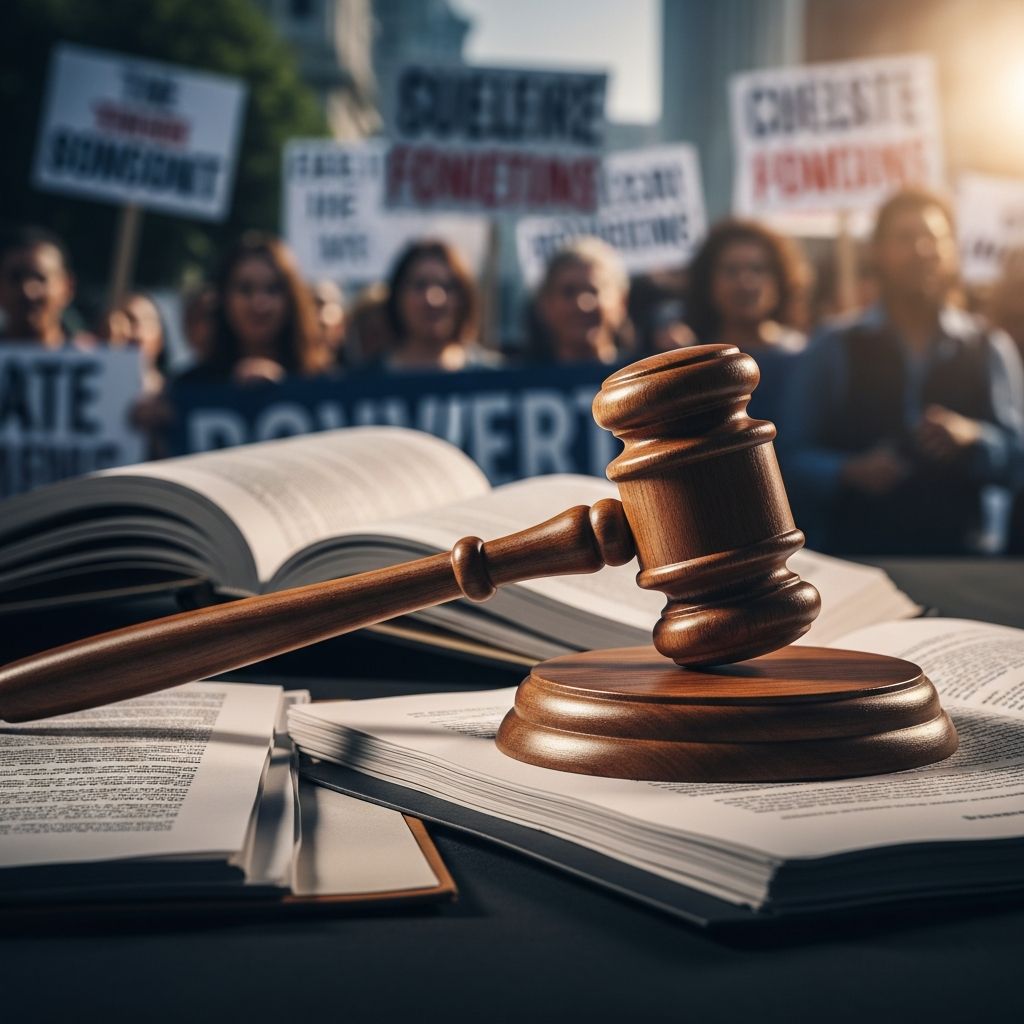
Navigating Defamation Law When Public Figures Assert Claims
When prominent political figures pursue defamation lawsuits against authors, publishers, or media outlets, the legal landscape becomes significantly more complicated than typical defamation disputes. The intersection of constitutional protections, established precedent, and the unique status of public officials creates a framework that substantially favors free speech and public discourse over claims of reputational harm. Understanding these legal mechanisms is essential for comprehending high-profile litigation involving political figures and the media.
The Heightened Burden: Proving Actual Malice
One of the most consequential distinctions in American defamation law separates claims brought by private individuals from those initiated by public figures. When a public official or public figure pursues a defamation claim, they must clear a significantly higher evidentiary threshold than their private counterparts. Specifically, public figures must demonstrate that the defendant acted with “actual malice”—a legal standard requiring proof that the defendant published the disputed statement either knowing it was false or with reckless disregard for whether it was true or false.
This demanding standard originated from landmark Supreme Court jurisprudence and fundamentally restructures the litigation landscape. Rather than requiring a defendant to prove the truthfulness of a statement, the burden shifts to the public figure plaintiff to affirmatively demonstrate the defendant’s knowledge of falsity or conscious disregard for accuracy. This reversal represents a deliberate constitutional choice to prioritize robust public debate and discourage frivolous litigation intended primarily to chill speech.
The actual malice standard thus functions as a substantial barrier to successful defamation litigation by political figures. Publishers and authors benefit from this protective framework, which recognizes the legitimate public interest in candid discussion of political matters and the accessibility of public figures to alternative remedies through public response and debate.
Third-Party Liability and Non-Disclosure Agreement Complications
Beyond the actual malice requirement, defamation litigation involving political figures frequently implicates additional legal doctrines related to third-party liability and contractual obligations. When sources or individuals with inside knowledge have executed non-disclosure agreements restricting their ability to disclose information, questions emerge regarding whether publishers or authors who publish such information can be held liable for inducing breach of contract.
Legal analysis of this question reveals substantial constitutional and common law protections for publishers. Courts have recognized that extending liability to third parties—particularly media defendants who neither signed nor substantially negotiated the underlying non-disclosure agreement—would create troubling implications for free speech and investigative journalism. The theoretical foundation for such liability requires establishing that the publisher or author actively encouraged or induced the breach, knowledge of the restrictive covenant, and substantial causation.
However, jurisprudence addressing similar circumstances—particularly cases involving the receipt and publication of materials obtained through improper means—demonstrates judicial reluctance to impose liability on publishers for the conduct of their sources. When a defendant publishes information received from a third party who violated contractual or legal obligations, courts have repeatedly held that First Amendment protections generally bar civil liability provided the defendant did not participate in the initial violation.
This protective framework rests on practical and constitutional foundations. Imposing liability on publishers for source conduct would substantially chill investigative reporting, create perverse incentives discouraging sources from coming forward with information of legitimate public interest, and fundamentally compromise the role of the press in democratic society.
The Prior Restraint Doctrine and Pre-Publication Suppression
When political figures seek to suppress publication through cease-and-desist letters or threats of legal action, additional constitutional doctrine becomes relevant. The prior restraint doctrine reflects a longstanding principle that courts should rarely, if ever, issue injunctions preventing publication in advance of actual litigation. This constitutional safeguard recognizes that pre-publication suppression represents a particularly grave threat to free speech.
Prior restraints are subject to heightened constitutional scrutiny and face a heavy presumption of unconstitutionality. Courts may issue such orders only in exceptional circumstances involving immediate threats to national security or similarly grave concerns. Ordinary defamation disputes, regardless of their prominence or the status of the plaintiff, do not meet this extraordinarily demanding threshold.
Distinguishing between threats to sue for post-publication damages—which do not constitute prior restraints and remain permissible—and demands for pre-publication suppression becomes critically important in analyzing cease-and-desist letters from political figures. A legal demand to cease publication coupled with threats of damages represents an attempt at intimidation rather than a constitutionally permissible prior restraint, but it operates within the bounds of permissible legal remedies available to potential plaintiffs.
The threat of substantial liability, however, creates practical pressures on publishers and authors. While the constitutional prohibition on prior restraints remains robust, the prospect of expensive litigation and potential damages judgments functions as an economic disincentive to publication. Courts and commentators have grappled with the tension between recognizing this practical reality and maintaining principled distinctions between prohibited prior restraints and permissible post-hoc liability.
Core Elements of a Successful Defamation Claim
Regardless of whether the plaintiff is a public figure or private individual, defamation liability requires satisfaction of several foundational elements:
- Factual Falsity: The statement must be demonstrably false rather than opinion, hyperbole, or protected speech. Truth represents an absolute defense to defamation liability.
- Defamatory Character: The statement must harm reputation by exposing the subject to contempt, ridicule, or financial injury, or lowering their standing in the community.
- Publication: The defendant must have communicated the statement to a third party through some medium capable of reaching a broader audience.
- Identification: The statement must reasonably appear to refer to the plaintiff such that others would understand it as concerning that specific individual.
- Damages: The plaintiff must demonstrate actual harm to reputation or, in certain circumstances, presumed damages.
- Fault (actual malice for public figures): The defendant must have acted with the requisite mental state, varying depending on plaintiff classification.
Each element requires independent proof, and deficiency in any single element defeats the entire claim. For public figures, the actual malice requirement adds particular complexity, as it demands subjective inquiry into the defendant’s state of mind at the time of publication.
Distinguishing Opinion from Factual Assertion
Courts have long recognized that opinion enjoys robust First Amendment protection unavailable to false factual statements. This distinction creates substantial practical importance in analyzing defamation claims, as characterizations, interpretations, and viewpoints cannot form the basis of defamation liability regardless of their accuracy or the plaintiff’s objections.
The boundary between protected opinion and actionable false statement remains contextually dependent. Courts examine whether a reasonable reader would interpret the statement as asserting objective fact or as expressing subjective evaluation. Statements employing obvious hyperbole, appearing within opinion sections of publications, or explicitly framed as analysis rather than reporting receive greater protection. Conversely, statements presented as factual assertions supported by purported documentary evidence face lower protection thresholds.
This doctrinal framework reflects the recognition that political discourse necessarily involves substantial opinion, interpretation, and contested characterization. Requiring proof of objective falsity rather than mere disagreement preserves space for vigorous debate while simultaneously protecting individuals from false factual accusations.
Document Preservation and Discovery Complications
When cease-and-desist letters accompany threats of litigation, they frequently include demands to preserve documents and materials related to the disputed publication. These preservation obligations carry independent legal significance, as destruction or alteration of relevant materials following notice of potential litigation can expose defendants to sanctions and adverse inferences regarding destroyed evidence.
However, document preservation obligations operate reciprocally. If a political figure’s legal counsel demands preservation from publishers and authors, defendants may reasonably expect similar obligations to attach to the political figure and their associates. This reciprocal burden reflects principles of litigation fairness and prevents either party from destroying exculpatory or inculpatory evidence.
Strategic considerations emerge in the context of preservation demands. Early specification of relevant documents and clear notification of preservation obligations establishes baseline expectations for all parties. Ambiguous preservation demands risk exceeding reasonable scope, potentially inviting challenges regarding proportionality and relevance.
Comparative Analysis: Standards by Plaintiff Category
The classification of the plaintiff as a public figure, public official, or private individual substantially affects the applicable legal standard and litigation dynamics:
| Plaintiff Category | Required Fault Standard | Burden of Proof | Available Remedies |
|---|---|---|---|
| Public Official/Figure | Actual Malice (knowledge of falsity or reckless disregard) | Clear and Convincing Evidence | Actual damages, punitive damages (in limited circumstances) |
| Private Individual (Matter of Public Concern) | Negligence (reasonable care standard) | Preponderance of Evidence | Actual damages only (no presumed damages) |
| Private Individual (Private Matter) | Simple negligence or strict liability | Preponderance of Evidence | Actual damages, presumed damages, punitive damages |
The Context of Political Speech and Public Discourse
Courts have consistently recognized that political speech occupies the core of First Amendment protection. Statements concerning the fitness, judgment, and conduct of political figures receive heightened constitutional protection because robust debate regarding public officials’ qualifications and performance serves essential democratic functions.
This elevated protection for political speech operates independently of the actual malice standard, reinforcing the presumption favoring publication and expression. The Supreme Court has emphasized that even inaccurate statements regarding public figures merit protection when they occur within the context of legitimate public discourse concerning matters of substantial public importance.
Publishers and authors can reasonably rely on this protection when presenting competing narratives, disputed accounts, or conflicting perspectives regarding political events and figures. The constitutional framework deliberately accommodates some degree of inaccuracy within the sphere of political commentary to preserve space for genuine public debate.
Frequently Asked Questions
Q: What is the actual malice standard, and why does it apply to public figures?
A: The actual malice standard requires proof that a defendant published a false statement either knowing it was false or with reckless disregard for its truth or falsity. It applies to public figures because courts recognize that public figures have greater access to channels of communication to correct false statements and have voluntarily entered the public arena, thereby accepting the risks associated with public scrutiny.
Q: Can a publisher be held liable for inducing someone to breach a non-disclosure agreement?
A: Generally, no. Courts have consistently rejected liability for publishers who receive and publish information from sources bound by non-disclosure agreements, particularly when the publisher neither participated in nor encouraged the breach. First Amendment protections bar extending liability to third parties for source conduct, and precedent demonstrates judicial reluctance to impose such liability.
Q: Does a cease-and-desist letter constitute an unconstitutional prior restraint?
A: Not necessarily. A cease-and-desist letter threatening post-publication damages differs from an injunction prohibiting publication. However, such letters may constitute attempts at intimidation. The constitutional prohibition on prior restraints bars only injunctions; threats of liability remain within bounds of permissible legal remedies, though they create practical pressures on publishers.
Q: How do courts distinguish between protected opinion and actionable false statements?
A: Courts examine whether a reasonable reader would interpret the statement as asserting objective fact or expressing subjective evaluation. Statements explicitly framed as opinion, employing obvious hyperbole, or appearing in opinion sections receive greater protection. Statements presented as factual assertions supported by purported evidence face lower protection thresholds.
Q: What happens if a defendant fails to comply with document preservation demands?
A: Destruction or alteration of documents following notice of potential litigation can result in sanctions and adverse inferences suggesting destroyed evidence was unfavorable to the defendant. However, preservation obligations operate reciprocally, and all parties bear responsibility for preserving relevant materials.
Strategic Implications for Publishers and Authors
Understanding these legal frameworks enables publishers and authors to make informed decisions regarding publication choices and risk assessment. The actual malice standard, combined with protections against third-party liability and constitutional restrictions on prior restraints, creates a legal environment generally favorable to publishers of statements concerning public figures and political matters.
However, favorable legal standards do not eliminate litigation risk or expense. Strategic considerations include verification procedures, documentary support for factual assertions, transparent acknowledgment of conflicting accounts, and careful distinction between reported facts and interpretive commentary. These practices both strengthen legal defenses and enhance publication credibility.
Publishers may reasonably rely on the constitutional framework protecting political speech while simultaneously employing responsible journalistic practices that support accuracy and accountability. The legal standards do not require perfection but rather demonstrate that substantial protections exist for good-faith efforts to report on matters of public importance.
References
- Bartnicki v. Vopper — United States Supreme Court. 2001. https://supreme.justia.com/cases/federal/us/532/514/
- New York Times Co. v. Sullivan — United States Supreme Court. 1964. https://supreme.justia.com/cases/federal/us/376/254/
- Federal Communications Law Journal — Academic Article on Media Liability. 1998. Published by Indiana University Maurer School of Law.
- First Amendment Doctrine: Prior Restraints and Injunctions — Cornell Law School Legal Information Institute. https://www.law.cornell.edu/wex/first_amendment
- Defamation Law Overview — American Bar Association. https://www.americanbar.org/
Similar Articles








Read full bio of medha deb




