
Can Deceased Fingerprints Unlock Smartphones?
Exploring legal and technical limits on using postmortem fingerprints for phone access in investigations.
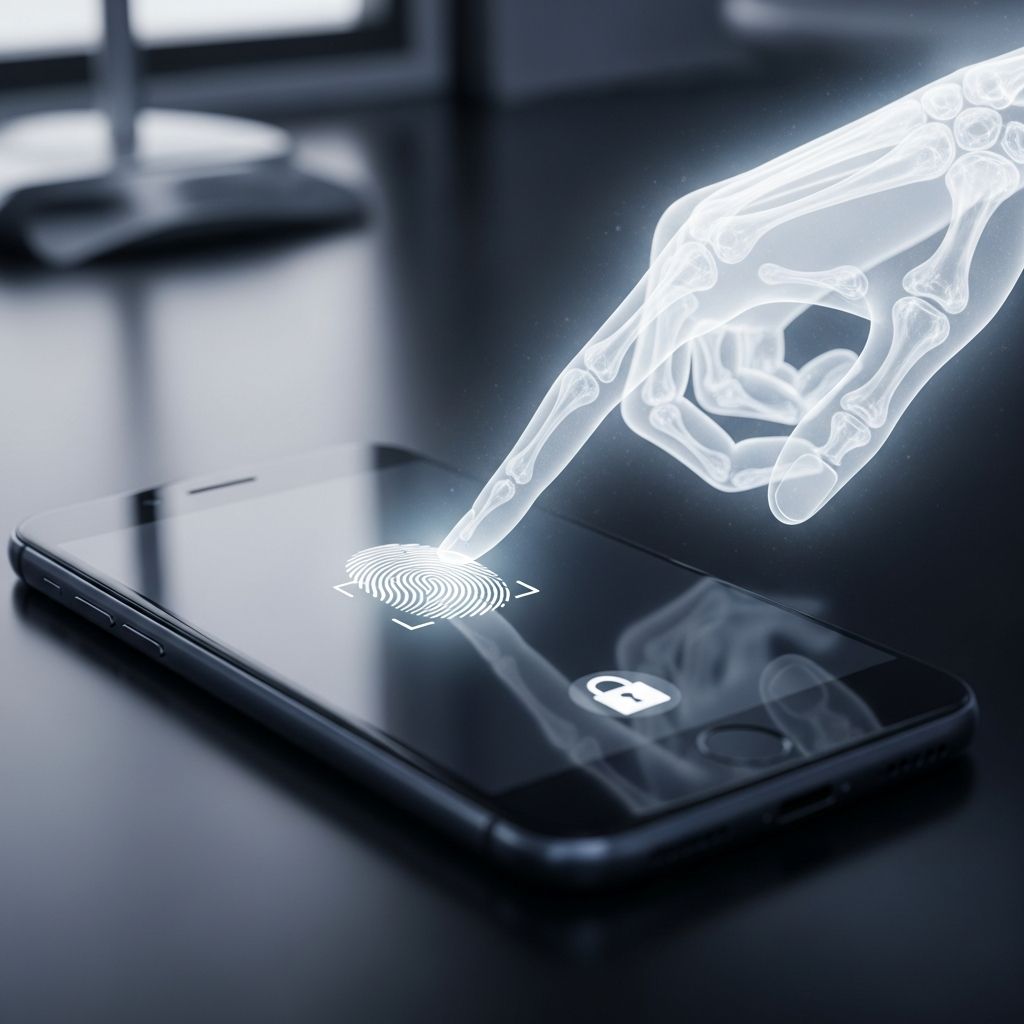
Modern smartphones rely heavily on biometric authentication like fingerprints to secure personal data, but what happens when law enforcement needs access after the owner’s death? This question bridges cutting-edge technology, forensic science, and legal precedents, raising profound privacy concerns in criminal investigations.
The Science Behind Biometric Phone Locks
Fingerprint scanners on smartphones use capacitive sensors that detect electrical conductivity from living tissue. When a live finger touches the sensor, ridges make direct contact, charging tiny capacitors differently than valleys, creating a unique pattern map.
After death, this natural electrical flow stops almost immediately, rendering fingerprints ineffective for most devices. Forensic expert Anil Jain from Michigan State University notes that the process becomes increasingly difficult over time post-mortem, as tissues dry and lose capacitance.
Even if attempted soon after death, success is rare without sophisticated intervention. Labs might apply conductive gels or molds, but standard police procedures rarely succeed due to time delays and scanner designs evolving to resist such exploits.
- Key Technical Factors:
- Loss of skin conductivity within minutes to hours.
- Sensors calibrated for living tissue pressure and heat.
- Modern phones use advanced algorithms rejecting degraded prints.
Real-World Attempts: Funeral Home and Morgue Scenarios
In high-profile cases, police have sought court orders to access bodies at funeral homes for fingerprint scans. One notable incident involved detectives requesting a deceased man’s hand to unlock his phone, but failure ensued due to postmortem changes.
These efforts highlight desperation in investigations where digital evidence is crucial. Phones store texts, locations, and photos pivotal to solving crimes, yet biological decay thwarts quick access.
| Time After Death | Unlock Success Likelihood | Reason |
|---|---|---|
| 0-1 Hour | Low to Moderate | Residual conductivity possible but fading fast. |
| 1-24 Hours | Very Low | Tissue stiffening and drying. |
| >24 Hours | Near Zero | Decomposition alters ridge patterns. |
Legal Framework for Postmortem Device Access
Courts generally permit searches of deceased persons’ effects under warrants, treating phones as property. However, biometric hurdles shift focus to warrants for passcodes or cloud data. The Fourth Amendment requires probable cause, but once granted, agencies explore all avenues.
Ethical issues arise: desecrating remains for evidence. Families may object, leading to disputes over dignity versus public safety. No uniform federal law exists; states vary in handling such requests.
Biometrics and Living Suspects: Constitutional Battles
While postmortem cases intrigue, living suspect biometrics dominate courtrooms. Federal appeals have ruled on compelled unlocks, distinguishing physical acts from testimonial ones under the Fifth Amendment.
In a 2024 Ninth Circuit decision, officers forcibly used a parolee’s thumb to unlock his phone during a stop, upheld as non-testimonial like a blood draw—no mental revelation required. The court emphasized no cognitive input from the suspect, as police handled the action.
- Non-Testimonial Acts (Allowed):
- Forced thumb press by officer.
- Standard booking fingerprints.
- Blood or DNA samples.
Circuit Splits and Evolving Precedents
Not all courts agree. A 2025 D.C. Circuit case reversed a conviction where police verbally compelled a suspect to select and use his own finger, deeming it testimonial as it revealed knowledge of the unlocking method.
This split underscores fact-specific analyses: officer-initiated force versus suspect participation changes outcomes. The Supreme Court has yet to unify, leaving patchwork protections.
| Case | Circuit | Ruling | Key Distinction |
|---|---|---|---|
| United States v. Payne (2024) | 9th | Forced unlock OK | Police pressed thumb; no suspect choice. |
| United States v. Brown (2025) | D.C. | Verbal compel violation | Suspect selected finger; mental act. |
Privacy Protections: Passcodes vs. Biometrics
Passwords remain shielded; courts often deem revealing them self-incriminating. Biometrics, being physical, receive less protection, prompting advice to disable them in risky situations.
Tech firms like Apple enhance security with ‘stolen device protection’ delaying changes, but posthumously, estates control devices. Probate laws govern access, balancing heir rights with investigations.
Forensic Alternatives to Direct Finger Use
When fingers fail, forensics turn to molds or 3D scans. Crime labs recreate prints using silicone impressions or high-res imaging, though success rates hover below 20% against latest sensors.
Cloud backups offer another path: warrants compel providers like Google to release data, bypassing device locks entirely. Encryption debates continue, with lawmakers pushing backdoors.
International Perspectives on Digital Afterlife
Europe’s GDPR treats deceased data strictly, requiring heir consent. Australia’s laws allow police overrides in serious crimes. U.S. lags in uniform policy, relying on case law.
Practical Advice for Digital Estate Planning
Proactive steps mitigate issues:
- Designate digital executors in wills.
- Use strong passcodes over biometrics.
- Enable auto-delete for sensitive apps.
- Store recovery keys with lawyers.
These ensure control passes smoothly without invasive postmortem searches.
Frequently Asked Questions
Can police legally use a dead person’s finger on their phone?
Technically challenging due to conductivity loss, but legally possible with warrants treating it as property search. Success is rare.
Does forcing a living person’s fingerprint violate rights?
Depends on circuit and method; Ninth Circuit allows officer-forced use, but verbal compulsion may not.
How long after death can fingerprints work?
Typically under an hour at best; experiments unethical, so data limited.
What if biometrics fail—next steps for police?
Warrants for cloud data, forensic molding, or brute-force tools within legal bounds.
Should I disable phone biometrics?
For high-risk individuals, yes—passcodes offer stronger Fifth Amendment shield.
Future Trends in Device Security and Law
Quantum computing threatens encryption, while AI improves fake prints. Laws may evolve to treat biometrics like passwords. Balancing security and access remains contentious.
Postmortem privacy pushes for ‘digital wills’ statutes, ensuring data respects the deceased.
References
- Why Dead Fingers (Usually) Can’t Unlock a Phone — Live Science. 2018-03-15. https://www.livescience.com/62393-dead-fingerprint-unlock-phone.html
- CHP using detainee’s fingerprint to unlock phone not a Fifth Amendment violation — Police1. 2024-05-01. https://www.police1.com/cell-phone-search/chp-using-detainees-fingerprint-to-unlock-phone-not-a-fifth-amendment-violation-appeals-court-rules
- Federal Appeals Court: Cops Can Physically Make You Unlock Your Phone — Reason. 2024-04-19. https://reason.com/2024/04/19/appeals-court-rules-that-cops-can-physically-make-you-unlock-your-phone/
- Law Enforcement Can Use Biometric Data to Unlock Smartphones — S. Goldsobel Law. 2025-01-01. https://www.sgoldsobel.com/important-to-know-law-enforcement-can-use-biometric-data-to-unlock-smartphones/
Similar Articles








Read full bio of Sneha Tete




