
Debunking Poor Man’s Copyright: Real IP Protection
Uncover why mailing your work to yourself offers no real copyright protection and learn proven strategies for safeguarding your creative and brand assets effectively.
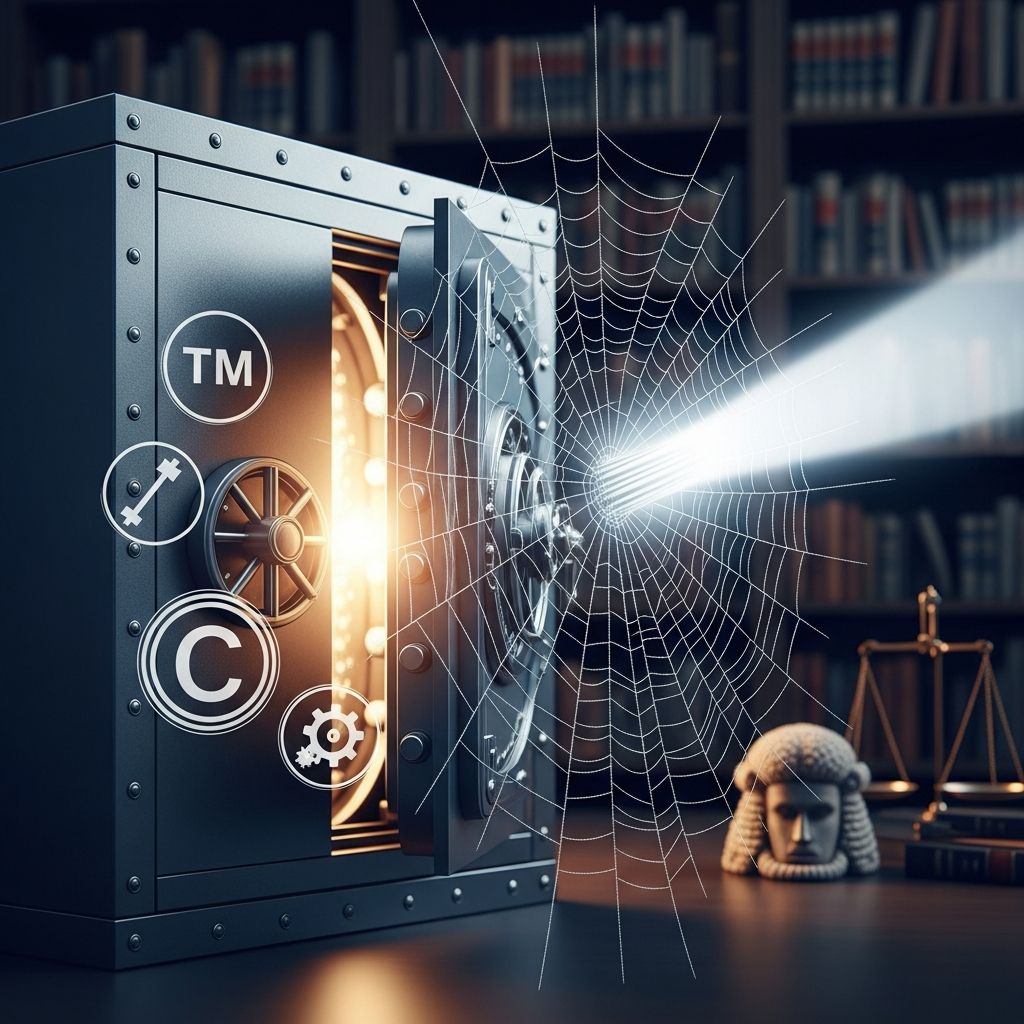
Creators often seek affordable ways to protect their intellectual property, but one persistent myth—the ‘poor man’s copyright’—promises protection it can’t deliver. This practice of mailing a copy of your work to yourself does not provide legal proof of ownership or enforcement rights under U.S. law. Instead, it leaves artists, writers, and inventors vulnerable to infringement without recourse for damages. Understanding why this DIY method fails and embracing official registration processes is essential for genuine security.
The Origins and Allure of the Poor Man’s Copyright Myth
The notion of sealing your manuscript, song lyrics, or artwork in an envelope and sending it via certified mail emerged decades ago as a low-cost alternative to formal registration. Proponents claimed the postmark served as irrefutable evidence of creation date, deterring thieves or aiding disputes. This idea gained traction in the pre-digital era when access to official systems seemed daunting for everyday creators.
However, its appeal stems from misunderstanding core copyright principles. While original works gain automatic protection upon fixation in a tangible form—like writing on paper or saving a digital file—this baseline right lacks teeth without registration. The myth endures despite repeated debunkings because it feels intuitive and accessible, yet courts consistently reject it as unreliable evidence.
Why Mailing Your Work Fails to Protect It Legally
At its core, the poor man’s copyright lacks evidentiary weight in legal proceedings. A postmarked envelope can be tampered with, backdated, or simply opened and resealed, undermining its authenticity. Unlike official records, it offers no presumption of validity, meaning you’d bear the full burden of proving prior creation in infringement cases.
- No Access to Statutory Damages: Registered copyrights allow claims up to $150,000 per willful infringement, plus attorney fees—benefits unavailable to unregistered works.
- Inadmissible in Court: Judges view self-mailed envelopes skeptically, preferring verifiable public records from government offices.
- Pre-Infringement Requirement: To maximize remedies, registration must precede any copying; a mailed envelope doesn’t meet this timeline proof standard.
Real-world cases highlight these flaws. Creators relying on this method have lost disputes because opponents presented stronger evidence, such as timestamps from digital platforms or formal filings. The U.S. Copyright Office explicitly warns against it, emphasizing registration as the gold standard.
Understanding Automatic Copyright vs. Registration Benefits
Under the U.S. Copyright Act of 1976, protection arises instantly when you fix an original expression in a medium. This covers books, music, software, photos, and more—no formalities required. Yet, this ‘automatic’ shield is defensive only: you can stop minor infringements via cease-and-desist letters, but suing demands registration.
| Aspect | Automatic Copyright | Registered Copyright |
|---|---|---|
| Ownership Proof | Weak; self-claimed | Presumption of validity |
| Damages | Actual losses only | Statutory up to $150,000 + fees |
| Lawsuit Eligibility | No federal court standing | Full access pre/post-infringement |
| Duration | Life + 70 years | Same, with public record |
Registration costs as little as $45 online via copyright.gov and takes minutes. For works published in the U.S., it must occur within three months of release for optimal benefits. This step transforms passive rights into actionable tools against copycats.
Trademark Myths: The Pitfalls of Unregistered Brand Use
Parallel to copyright misconceptions, many entrepreneurs believe simply launching a business name, logo, or slogan grants nationwide trademark rights. This stems from ‘common law’ trademarks, which arise from actual use in commerce but confine protection to your local market.
Common law rights evaporate beyond your operating area. A distant competitor can federally register the same mark, claiming priority everywhere—even if you used it first locally. Without registration, proving nationwide ‘secondary meaning’ becomes a costly, uphill battle in court.
- Geographic Limits: Protection ends where your sales or reputation don’t reach.
- No Public Notice: Others won’t know to avoid your mark without a USPTO database entry.
- Enforcement Challenges: Federal registrants get nationwide injunctions; you get regional scraps.
Steps to Secure Ironclad Trademark Protection
Federal registration via the U.S. Patent and Trademark Office (USPTO) establishes exclusive rights across the U.S. Start with a comprehensive search using TESS (Trademark Electronic Search System) to avoid conflicts. File an application specifying your goods/services class—fees begin at $250 per class.
- Conduct Clearance Search: Check USPTO, state registries, and common law uses via Google/domain tools.
- File Intent-to-Use or In-Use Application: Lock in priority date early.
- Monitor and Enforce: Use the ® symbol post-registration; watch for infringers.
Registered marks gain ‘incontestable’ status after five years, making challenges nearly impossible. This proactive approach prevents rebranding nightmares and builds brand equity.
Digital Age Alternatives to Outdated Myths
In today’s online world, timestamping services like blockchain-based platforms (e.g., OriginalMy or Po.et) offer verifiable proofs without mailing. These create immutable records linked to your work’s hash. However, they supplement—not replace—official registration for U.S. enforcement.
Platforms like Creative Commons provide free licensing tools for controlled sharing, while deposit services from writers’ guilds add layers of documentation. For musicians, PROs like ASCAP/BMI track performances, bolstering claims.
Real Creator Stories: Lessons from IP Battles
Consider indie authors hit by AI scraping: unregistered works fetched pennies in settlements, while registered ones secured six-figure judgments. Musicians suing platforms like TikTok prevailed only post-registration, highlighting timing’s role. Business owners rebranded after common law oversights, losing years of goodwill.
These tales underscore a truth: cheap shortcuts cost fortunes. Investing in registration—under $100 total for many—pays dividends in deterrence and recovery.
Navigating International IP Protection
U.S. registration doesn’t extend abroad; leverage the Berne Convention for automatic baseline rights in 180+ countries. For robust global coverage, file via the Madrid Protocol through USPTO for multi-nation trademarks or WIPO for copyrights. Costs scale with territories, but unify applications efficiently.
Frequently Asked Questions (FAQs)
What exactly is poor man’s copyright?
It refers to mailing a sealed copy of your creation to yourself for a dated postmark, falsely believed to prove ownership.
Does poor man’s copyright hold up in court?
No, courts dismiss it due to tampering risks and lack of statutory benefits; only U.S. Copyright Office registration counts.
How much does official copyright registration cost?
Online filings start at $45 for a single author work; group options reduce per-item fees.
Can I claim common law trademarks without registering?
Yes, but only locally; federal USPTO registration is needed for nationwide priority and enforcement.
What’s the first step for trademark protection?
Perform a thorough search to ensure availability, then file with USPTO.
Do digital timestamps replace registration?
They provide supplementary evidence but don’t enable lawsuits or statutory damages like official filings.
Empowering Creators with Knowledge and Action
Shattering IP myths equips you to protect innovations confidently. Skip unreliable hacks; prioritize U.S. Copyright Office and USPTO filings for peace of mind. Consult attorneys for complex portfolios, but start today—your future self will thank you when defending against infringers.
References
- Copyright Basics — U.S. Copyright Office. 2023-01-01. https://www.copyright.gov/help/faq/faq-general.html
- Trademark Manual of Examining Procedure — United States Patent and Trademark Office. 2024-05-15. https://tmep.uspto.gov
- Copyright in General (FAQ) — U.S. Copyright Office. 2023-03-20. https://www.copyright.gov/help/faq/faq-general.html#faqc
- Where Did the Poor Man’s Copyright Myth Start? — Plagiarism Today. 2024-05-22. https://www.plagiarismtoday.com/2024/05/22/where-did-the-poor-mans-copyright-myth-start/
- The Myth of ‘Poor Man’s’ Copyright and Trademark Protections — Landry PLLC. 2023-11-10. https://landrypllc.com/the-myth-of-poor-mans-copyright-and-trademark-protections-what-you-need-to-know/
Similar Articles








Read full bio of Sneha Tete




