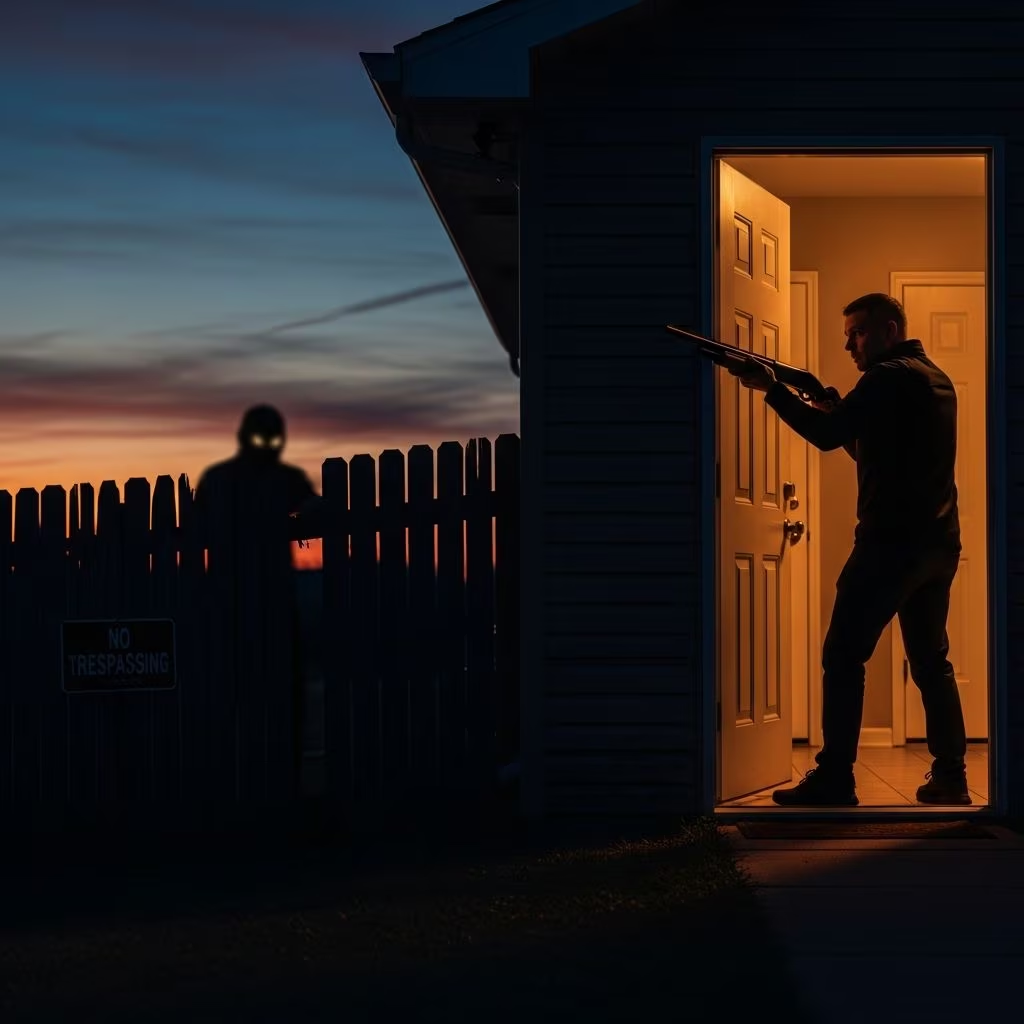
Property owners often wonder about their rights when uninvited individuals enter their land or home. While the instinct to protect one’s domain is natural, U.S. law draws strict lines between mere trespassing and situations warranting deadly force. Simply being on private property without permission does not justify shooting someone. Deadly force is reserved for scenarios involving imminent threats to life or serious bodily harm, governed by self-defense doctrines that vary by state.
Defining Trespass: Civil vs. Criminal
Trespass occurs when someone enters or remains on property without authorization. Laws distinguish between civil trespass, a non-criminal violation like a delivery person mistakenly stepping onto a lawn, and criminal trespass, which involves intent, such as breaking a fence at night. In most jurisdictions, civil trespassers—like a child chasing a ball or a solicitor knocking on your door—are protected from violence. The U.S. Supreme Court in Florida v. Jardines established the ‘Girl Scout rule,’ permitting brief, non-disruptive approaches to a home’s entrance without it constituting trespass.
Criminal trespass escalates concerns but still does not automatically permit lethal response. For instance, wandering in a yard during daylight rarely poses a deadly threat. Homeowners must assess the intruder’s actions: Are they armed? Attempting entry? Displaying aggression? Without these factors, using a firearm could lead to charges like assault or manslaughter.
Self-Defense Fundamentals: Reasonable Fear Required
At the core of any justification for deadly force is reasonable fear of imminent death, great bodily injury, or certain felonies like rape or kidnapping. Every state recognizes self-defense, but the threshold is high. You cannot shoot preemptively or out of anger. Courts evaluate whether a ‘reasonable person’ in your position would perceive the same threat.
- No duty to retreat in home: Many states presume fear when someone unlawfully enters your residence.
- Proportional response: Force must match the threat; deadly force against a non-violent trespasser is disproportionate.
- Aftermath accountability: Even justified shootings trigger investigations; you bear the burden of proving defense.
Attorneys emphasize that shooting is a ‘last resort.’ In open areas like yards, retreat if safe, unless state law says otherwise.
Castle Doctrine: Protecting Your Home
The Castle Doctrine treats your home as a sanctuary where intruders forfeit retreat expectations. Originating from English common law (‘a man’s home is his castle’), it applies primarily inside dwellings. If someone forcibly enters—or in some states, attempts entry—you may use deadly force without retreating.
Key elements include:
- Unlawful and forcible entry.
- No provocation by the homeowner.
- Presumption of reasonable fear inside the home.
For example, waking to find someone in your bedroom likely justifies response. But shooting through a door at a knock might not, depending on audible threats. Louisiana and Mississippi extend protections to certain perimeter actions, but caution prevails.
Stand Your Ground Laws: Beyond the Home
Stand Your Ground (SYG) laws eliminate retreat duties in public or property where you’re lawfully present. At least 38 states have some SYG provision, per the National Conference of State Legislatures. These build on Castle Doctrine, extending to curtilage (yard, driveway) in some places.
| State Type | Duty to Retreat? | Applies To | Example |
|---|---|---|---|
| Stand Your Ground (e.g., Florida, Texas) | No | Anywhere lawful | No retreat from armed trespasser in driveway. |
| Duty to Retreat (e.g., New York, Nebraska) | Yes, if safe | Public spaces | Retreat before shooting in yard. |
| Castle Only (e.g., California) | Yes outside home | Home interior | Force ok inside, retreat outside. |
SYG does not greenlight shooting all trespassers. It requires perceived deadly threat. Research from RAND Corporation indicates SYG correlates with higher firearm homicides, underscoring judicial scrutiny.
State Variations: A Comparative Overview
Laws differ significantly:
- Texas: Broad SYG; deadly force ok against theft at night or home entry.
- California: No SYG; retreat if possible outside home; strict proportionality.
- Ohio: SYG statewide; no retreat if lawfully present.
- Florida: Strong Castle/SYG; controversial cases highlight limits.
Always check local statutes. What flies in Alabama may land you in prison in Massachusetts.
Real-World Scenarios: What Holds Up in Court?
Consider these hypotheticals:
- Daytime yard wanderer: No shooting; call police. Deadly force unjustified.
- Nighttime home break-in: Presumed justified under Castle Doctrine.
- Armed figure approaching door: If refusing commands and advancing, SYG may apply.
- Wrong driveway delivery: Mistake; any force escalates to your liability.
High-profile cases, like a DoorDash driver shot at the wrong address, illustrate overlaps: trespass alone insufficient. Videos from legal experts stress context over presence.
Property Protection: Non-Deadly Alternatives
You can defend property with non-lethal means: alarms, fences, lights, dogs. Some states allow force against theft if felony-level (e.g., Texas night theft). Warning shots? Risky—often illegal, treated as assault.
- Post ‘No Trespassing’ signs.
- Install cameras for evidence.
- Use verbal commands first.
Civil immunity in 23+ states shields justified defenders from lawsuits.
Frequently Asked Questions
What if a trespasser is just in my yard?
No, you cannot shoot. Demand they leave; call authorities if needed. No imminent threat exists.
Does Castle Doctrine cover my garage?
In many states, yes, as curtilage. Check local law for ‘attached structures.’
Can I shoot to protect my car?
Rarely. Most states limit to life threats, not mere theft.
What about kids or mistaken entry?
Absolutely not. Reasonableness rules; tragic errors lead to convictions.
Do SYG laws protect against lawsuits?
Over 20 states offer civil immunity for good-faith self-defense.
Legal and Practical Advice for Homeowners
Train with firearms responsibly. Know your state’s penal code—e.g., Ohio Revised Code § 2901.05 for self-defense. Consult attorneys preemptively. In heat-of-moment decisions, de-escalate if possible. Post-incident: Call 911, say nothing beyond basics, request lawyer.
Understanding these nuances prevents ‘split-second’ regrets. Laws evolve; Florida’s SYG faced repeal pushes after incidents. Stay informed via official sources.
References
- Summary Self-Defense and ‘Stand Your Ground’ — National Conference of State Legislatures. 2023-01-01. https://www.ncsl.org/civil-and-criminal-justice/self-defense-and-stand-your-ground
- Stand-your-ground law — Wikipedia (referencing RAND Corporation review). 2024-01-15. https://en.wikipedia.org/wiki/Stand-your-ground_law
- Can You Shoot Someone Who Breaks Into Your House? — Perlman Cohen. 2023-05-10. https://perlmancohen.com/blog/can-you-shoot-someone-who-breaks-into-your-house/
- Is it legal to shoot someone who trespass on private property — Avvo Legal Answers. 2018-06-12. https://www.avvo.com/legal-answers/is-it-legal-to-shoot-someone-who-trespass-on-priva-2347060.html
- Ohio Revised Code § 2901.05 (Self-Defense) — Ohio Legislature (.gov). 2025-01-01. https://codes.ohio.gov/ohio-revised-code/section-2901.05