
DACA Supreme Court Ruling: Future for Dreamers
Unpacking the Supreme Court's DACA decision: temporary relief for Dreamers amid ongoing legal battles and calls for permanent reform.
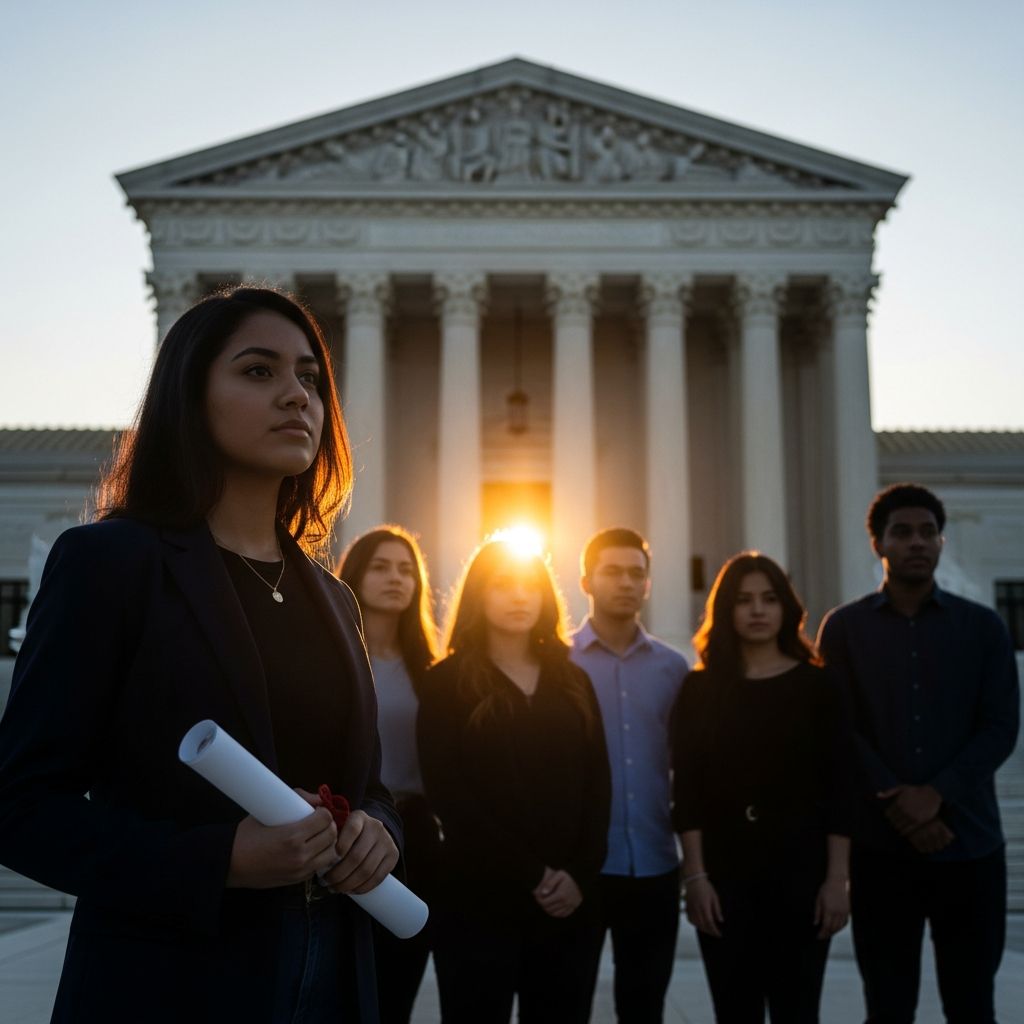
The U.S. Supreme Court’s decision on the Deferred Action for Childhood Arrivals (DACA) program marked a pivotal moment for approximately 700,000 young immigrants known as Dreamers. In a 5-4 ruling, the Court determined that the Trump administration’s attempt to terminate DACA was arbitrary and capricious under the Administrative Procedure Act (APA), allowing the program to continue for current recipients. This outcome provides immediate relief but underscores the precarious status of these individuals who arrived in the U.S. as children.
Understanding DACA and Its Origins
DACA, established in 2012 by the Obama administration, offers temporary protection from deportation and eligibility for work authorization to undocumented immigrants brought to the U.S. before age 16. Recipients, often called Dreamers, must meet criteria such as continuous U.S. residence since 2007, no serious criminal convictions, and enrollment in school or the workforce. The program does not provide a path to citizenship but shields participants from removal proceedings and grants renewable two-year work permits.
By 2017, over 800,000 individuals had received DACA protections, contributing significantly to sectors like education, healthcare, and technology. Dreamers pay taxes, serve in the military, and pursue higher education, embodying the American dream despite their uncertain legal status. The program’s creation via executive memorandum highlighted its temporary nature, fueling debates over executive authority in immigration enforcement.
The Legal Battle Leading to the Supreme Court
The Trump administration sought to rescind DACA in 2017, citing concerns over legal authority and resource strain. A Department of Homeland Security (DHS) memo announced the wind-down, prompting lawsuits from states, universities, and advocacy groups. Lower courts, including the Fifth Circuit, issued injunctions blocking the termination, arguing procedural flaws.
The case, Department of Homeland Security v. Regents of the University of California, reached the Supreme Court in 2020. Challengers contended that DHS failed to adequately justify ending forbearance from deportation while ignoring alternatives like severing benefits from protections. The Court agreed, noting DHS overlooked Dreamers’ reliance interests—economic, educational, and personal investments built over years. Chief Justice John Roberts authored the majority opinion, joined by the four liberal justices.
Key Elements of the Court’s Decision
The ruling focused on APA compliance rather than DACA’s underlying legality. The Court faulted the rescission for not considering:
- Preserving deportation forbearance while eliminating work permits and benefits.
- The severe disruptions to recipients’ lives, including job losses and family separations.
- Policy consistency with prior administrations’ prosecutorial discretion.
This procedural victory remanded the case for further agency consideration, signaling the executive branch could retry termination with better reasoning. The decision did not endorse DACA as permanent policy, leaving room for future challenges.
Immediate Impacts on Current DACA Recipients
For existing Dreamers, the ruling restores stability. U.S. Citizenship and Immigration Services (USCIS) must continue processing renewals, maintaining deportation protections and work authorization. As of the decision, around 650,000-700,000 individuals retained status, avoiding immediate limbo.
However, new applications remain blocked due to ongoing litigation in Texas federal court, where a judge ruled DACA unlawful in 2021 and 2023. Current recipients can reapply, but processing backlogs persist amid USCIS resource constraints. This creates a frozen cohort system, protecting the approved while excluding newcomers.
DACA Recipient Statistics Pre- and Post-Ruling Metric Pre-2020 Ruling Post-2020 Ruling Active Recipients ~800,000 ~700,000 Renewal Eligibility Paused Resumed New Applications Accepted Halted (2021 onward) Contributions (Taxes Paid) $32B+ since 2012 Ongoing Data synthesized from USCIS reports and advocacy analyses.
Long-Term Vulnerabilities and Future Risks
Experts caution that the ruling offers no ironclad guarantee. Administrations can revisit termination if they provide reasoned analysis under APA standards. Subsequent developments, like the 2023 Texas ruling declaring DACA illegal, have halted new grants and signal potential Supreme Court escalation.
Political shifts exacerbate uncertainty. Election cycles influence enforcement priorities, with opponents eyeing procedural do-overs. Dreamers face ‘limbo’—renewable but revocable status without citizenship pathways. Economically, they contribute billions in taxes without full benefits, highlighting policy inefficiencies.
The Push for Legislative Solutions
Congress holds the key to permanence. Bills like the Dream and Promise Act propose citizenship paths for Dreamers and TPS holders, garnering bipartisan support in polls (over 70% public favor). Yet, gridlock persists, with lawmakers citing the Court ruling as past excuses for inaction.
Advocates urge comprehensive reform, arguing DACA’s temporary framework burdens families and economies. Professors like Manuel Pastor emphasize that without legislation, Dreamers’ ties to the U.S.—homes, careers, communities—remain at risk.
Economic and Social Contributions of Dreamers
Dreamers are integral to America’s fabric. Many pursue STEM degrees, start businesses, and fill essential roles. Studies show DACA boosted wages by 8-10%, spurring $460 billion in economic activity over a decade. Socially, they enrich communities, with high college enrollment rates (comparable to U.S. citizens).
Without permanent status, deportation threats disrupt this progress. A phase-out could cost states $200 billion in GDP and unseat 1.3 million jobs indirectly. Policymakers must weigh these benefits against enforcement costs.
State-Level Responses and Ongoing Litigation
Several states, led by Texas, challenge DACA’s legality, claiming it oversteps executive power. The 2023 district court injunction against new grants persists on appeal, potentially heading to the Supreme Court again. Supportive states like California offer driver’s licenses and in-state tuition, mitigating federal gaps.
This patchwork exposes inequities: Dreamers in red states face heightened scrutiny, while blue states provide buffers.
Frequently Asked Questions (FAQs)
Can current DACA recipients renew their status after the ruling?
Yes, USCIS continues processing renewals for eligible recipients, providing ongoing deportation protection and work authorization.
Will new DACA applications be accepted soon?
No, new applications remain blocked due to the Texas federal court ruling, though appeals may change this.
Does the Supreme Court decision make DACA permanent?
No, it only addressed procedural flaws in termination; the program can be ended with proper justification.
What legislative options exist for Dreamers?
Bills like the Dream and Promise Act offer citizenship paths, but require congressional approval.
How many Dreamers are affected?
Approximately 700,000 current recipients, with hundreds of thousands more potentially eligible.
Broader Implications for U.S. Immigration Policy
The DACA saga illuminates tensions in immigration enforcement: executive discretion versus judicial oversight, temporary relief versus permanent reform. It reinforces APA’s role in checking agency actions, influencing policies beyond immigration. For Dreamers, it underscores resilience amid advocacy, yet demands systemic change.
Looking ahead, 2026 developments could reshape outcomes. Appeals from recent rulings may prompt Supreme Court clarification, while midterm elections influence reform prospects. Dreamers’ stories—nurses, teachers, entrepreneurs—fuel public support, pressuring lawmakers.
In summary, the ruling buys time but not security. Comprehensive legislation remains essential to honor Dreamers’ contributions and resolve this humanitarian issue.
References
- Supreme Court ruling on DACA is a win for ‘Dreamers’ that may not last — University of Southern California. 2020-06-18. https://today.usc.edu/supreme-court-ruling-daca-dreamers-usc-experts/
- U.S. Supreme Court Allows DACA to Survive — Forum Together. 2020-06-18. https://forumtogether.org/article/u-s-supreme-court-allows-daca-to-survive/
- What Happens to Dreamers Now That the Supreme Court Is Hearing DACA Case? — American Immigration Council. 2019-11-XX. https://www.americanimmigrationcouncil.org/blog/what-happens-to-dreamers-now-that-the-supreme-court-is-hearing-daca-case/
- Supreme Court Blocks Trump Administration From Ending DACA — American Council on Education. 2020-06-18. https://www.acenet.edu/News-Room/Pages/Supreme-Court-Blocks-Trump-Administration-From-Ending-DACA.aspx
- What the latest DACA ruling means for the program and its Dreamers — University of Colorado Boulder. 2023-09-20. https://www.colorado.edu/today/2023/09/20/what-latest-daca-ruling-means-program-and-its-dreamers
- Supreme Court Overturns Trump Administration’s Termination of DACA — National Immigration Law Center. 2020-06-18. https://www.nilc.org/articles/supreme-court-overturns-trump-administrations-termination-of-daca/
- U.S. Supreme Court Ruling on DACA — National Conference of State Legislatures. 2020-06-18. https://www.ncsl.org/immigration/us-supreme-court-ruling-on-daca
Similar Articles








Read full bio of Sneha Tete




