
Crowdfunding or Business Loans: Smart Funding Choices
Discover key differences between crowdfunding and business loans to select the optimal funding strategy for your entrepreneurial journey.
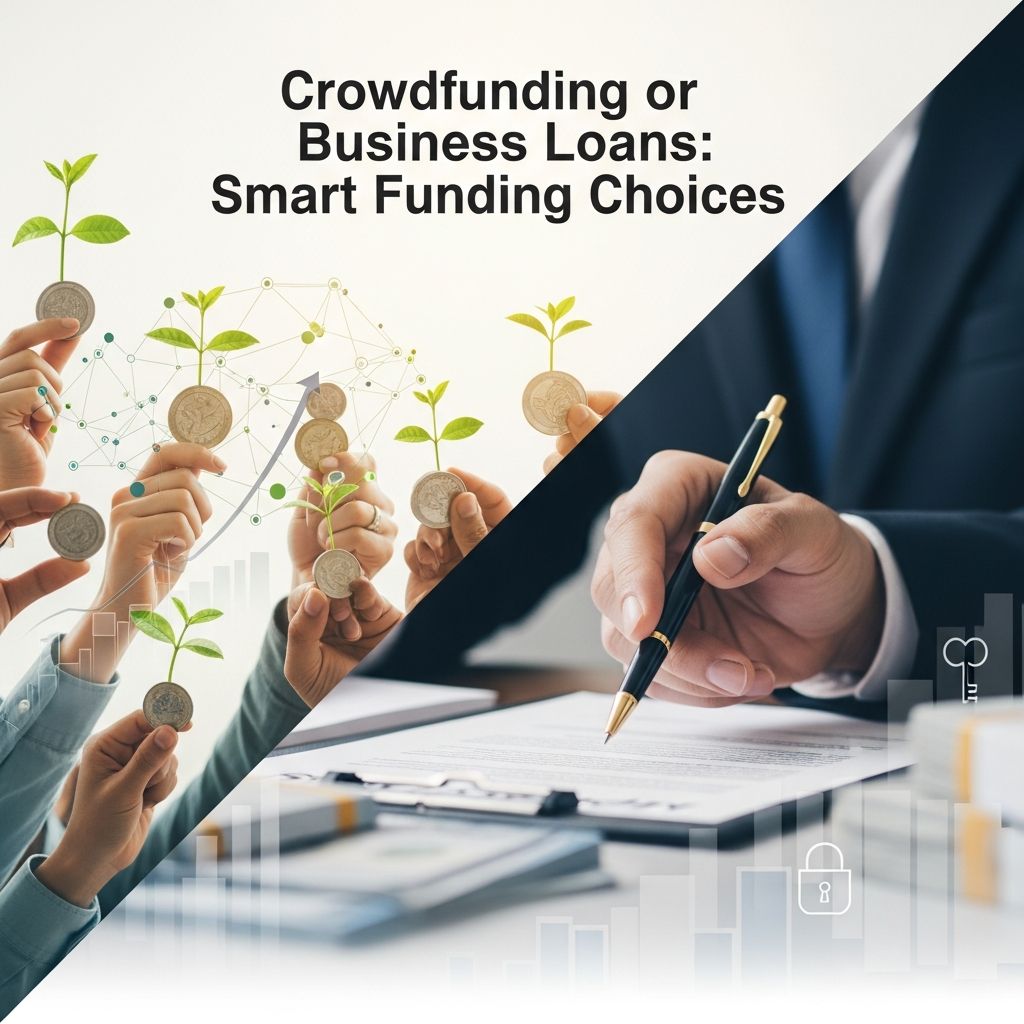
Entrepreneurs face critical decisions when seeking capital to launch or expand ventures. Two prominent options—crowdfunding and traditional business loans—offer distinct pathways, each with unique advantages and challenges. Crowdfunding harnesses collective public support via online platforms, while business loans provide structured debt financing from banks or government-backed programs. This article explores these methods in depth, helping business owners align funding choices with their goals, risk tolerance, and operational stage.
Defining Core Funding Mechanisms
Crowdfunding involves soliciting small contributions from a large number of individuals, typically through digital platforms like Kickstarter or Indiegogo. Funds raised often come without repayment obligations in rewards-based models, where backers receive products or perks. Equity crowdfunding, regulated under frameworks like the U.S. JOBS Act, allows investors to gain ownership stakes. In contrast, business loans, such as SBA 7(a) loans, deliver a lump sum that must be repaid with interest over fixed terms.
Business loans emphasize borrower creditworthiness, revenue history, and collateral. Lenders assess financial statements and business plans rigorously. Crowdfunding prioritizes compelling narratives, market appeal, and marketing prowess, bypassing traditional credit checks.
Eligibility and Accessibility Compared
Accessing business loans demands strong financial credentials. Lenders require minimum credit scores (often 680+ FICO), positive cash flow, and sometimes personal guarantees or assets as collateral. SBA 7(a) loans, for instance, target for-profit U.S. businesses unable to secure reasonable terms elsewhere, with maximum amounts up to $5 million.
Crowdfunding lowers entry barriers, ideal for startups or those with poor credit. Success hinges on public enthusiasm rather than balance sheets. However, campaigns demand robust promotion via social media and networks. About 36% of Kickstarter projects succeed, underscoring the need for viral appeal.
| Criteria | Crowdfunding | Business Loans |
|---|---|---|
| Credit Check | Not required | Strict (e.g., 680+ FICO) |
| Collateral | None | Often required |
| Financial History | Irrelevant | 2+ years preferred |
| Approval Odds | Market-driven (~30-40%) | Credit-driven (varies by lender) |
This table highlights how loans favor established firms, while crowdfunding empowers innovators.
Financial Costs and Repayment Structures
Business loans incur interest rates from 7-13% for SBA options, plus fees, creating predictable but burdensome monthly payments impacting cash flow. Early repayment penalties may apply.
Crowdfunding costs vary: platforms charge 5-10% fees on funds raised, plus payment processing (3-5%). Rewards models avoid debt but risk fulfillment expenses; equity models dilute ownership without interest. Loan-based crowdfunding mirrors bank rates but with peer-to-peer flexibility.
- Loan Pros: Builds business credit; retains full ownership.
- Loan Cons: Fixed repayments strain liquidity; default risks assets.
- Crowdfunding Pros: No repayment (rewards/equity); validates demand.
- Crowdfunding Cons: Platform fees; potential equity loss or perk delivery costs.
Timeline: From Application to Funds
Loan processing spans weeks to months, involving documentation, underwriting, and approvals. Streamlined online lenders or SBA Express options can fund in days for smaller amounts.
Crowdfunding campaigns last 30-60 days. Successful ones disburse funds swiftly post-goal; failures yield nothing, but generate buzz. Speed favors campaigns with pre-launch hype.
For urgent needs like inventory, loans provide reliability; for product testing, crowdfunding’s pace suits iterative development.
Risks and Mitigation Strategies
Loans pose default risks, potentially leading to asset seizure or personal liability. Mitigation includes solid projections and reserves.
Crowdfunding risks campaign failure (60%+ rate), reputational harm from unmet goals, or overpromising perks. Equity variants invite investor oversight. Success demands transparency and engagement.
Hybrid approaches—crowdfunding prototypes then securing loans—minimize risks by proving viability first.
Ideal Scenarios for Each Option
When Crowdfunding Excels
- Consumer products needing market validation (e.g., gadgets, apparel).
- Creative ventures in tech, arts, or social impact.
- Startups lacking credit or collateral.
Examples include sustainable sneakers raising €150k via community buzz.
When Business Loans Shine
- Established businesses expanding operations or purchasing equipment.
- Firms with steady revenue preferring debt over dilution.
- Large funding needs ($50k+).
SBA loans support diverse sectors, from manufacturing to services.
Regulatory Landscape and Compliance
U.S. crowdfunding operates under SEC Regulation Crowdfunding (Reg CF), capping non-accredited investor raises at $5 million annually. Platforms handle compliance.
SBA loans follow federal guidelines ensuring fair access, with intermediaries like banks administering funds. International variants, like UAE’s DFSA-regulated platforms, offer Sharia-compliant options.
Real-World Case Studies
A tech startup used rewards crowdfunding to fund prototypes, gauging demand before scaling with an SBA loan. Conversely, a retail chain opted for loans to finance store expansions, leveraging predictable repayments.
These hybrids optimize capital structure, blending validation with scale.
Strategic Decision Framework
Evaluate: funding amount (loans for large sums), stage (crowdfunding for early), control (loans preserve equity), and risk appetite. Tools like financial calculators aid projections.
| Factor | Favoring Crowdfunding | Favoring Loans |
|---|---|---|
| Business Stage | Idea/Prototype | Growth/Mature |
| Risk Tolerance | High (all-or-nothing) | Low (predictable) |
| Ownership | Willing to share | Retain full |
| Marketing Strength | Strong online presence | Financial track record |
Frequently Asked Questions
Can I use both crowdfunding and loans together?
Yes, many businesses crowdfund initially for validation, then secure loans for expansion, diversifying risks.
Does crowdfunding hurt my credit?
No, unlike loans, it doesn’t involve credit checks or debt reporting.
What are typical loan amounts for small businesses?
SBA 7(a) ranges from $50k to $5M; online lenders offer $5k-$500k quickly.
How much time should I allocate for a crowdfunding campaign?
1-3 months including prepromotion for best results.
Are there tax implications for crowdfunding funds?
Rewards-based may be taxable income; equity is investment. Consult a tax advisor.
Navigating Toward Optimal Funding
Selecting between crowdfunding and business loans hinges on aligning financial needs with business realities. Early-stage ventures thrive on crowdfunding’s flexibility and feedback, while mature operations benefit from loans’ structure. Assessing personal strengths—marketing savvy versus financial stability—guides the path. Consulting advisors ensures compliance and maximizes outcomes. As markets evolve, blending options often yields the most resilient growth strategy.
References
- Crowdfunding or Small Business Loans: What’s Best for You? — FundingGuru. 2023. https://fundingguru.com/blog/crowdfunding-or-small-business-loans-whats-best-for-you
- SBA 7(a) Loans vs. Crowdfunding Platforms — SBA7a.loans. 2024-01-15. https://www.sba7a.loans/sba-7a-loans-small-business-blog/sba-7a-loans-vs-crowdfunding-platforms/
- Business Loan vs. Crowdfunding: Which Is Best for You? — Business.com. 2023-11-20. https://www.business.com/articles/business-loan-vs-crowdfunding-which-is-best-for-you/
- Crowdfunding vs Bank Loans for SMEs — FundingSouq. 2024-02-10. https://fundingsouq.com/ae/en/blog/crowdfunding-vs-bank-loans-for-smes/
- Business Loans vs. Crowdfunding – What’s the Difference? — BankFive. 2021-11-01. https://www.bankfive.com/blogs/november-2021/business-loans-vs-crowdfunding-%E2%80%93-what%E2%80%99s-the-difference
Similar Articles








Read full bio of Sneha Tete




