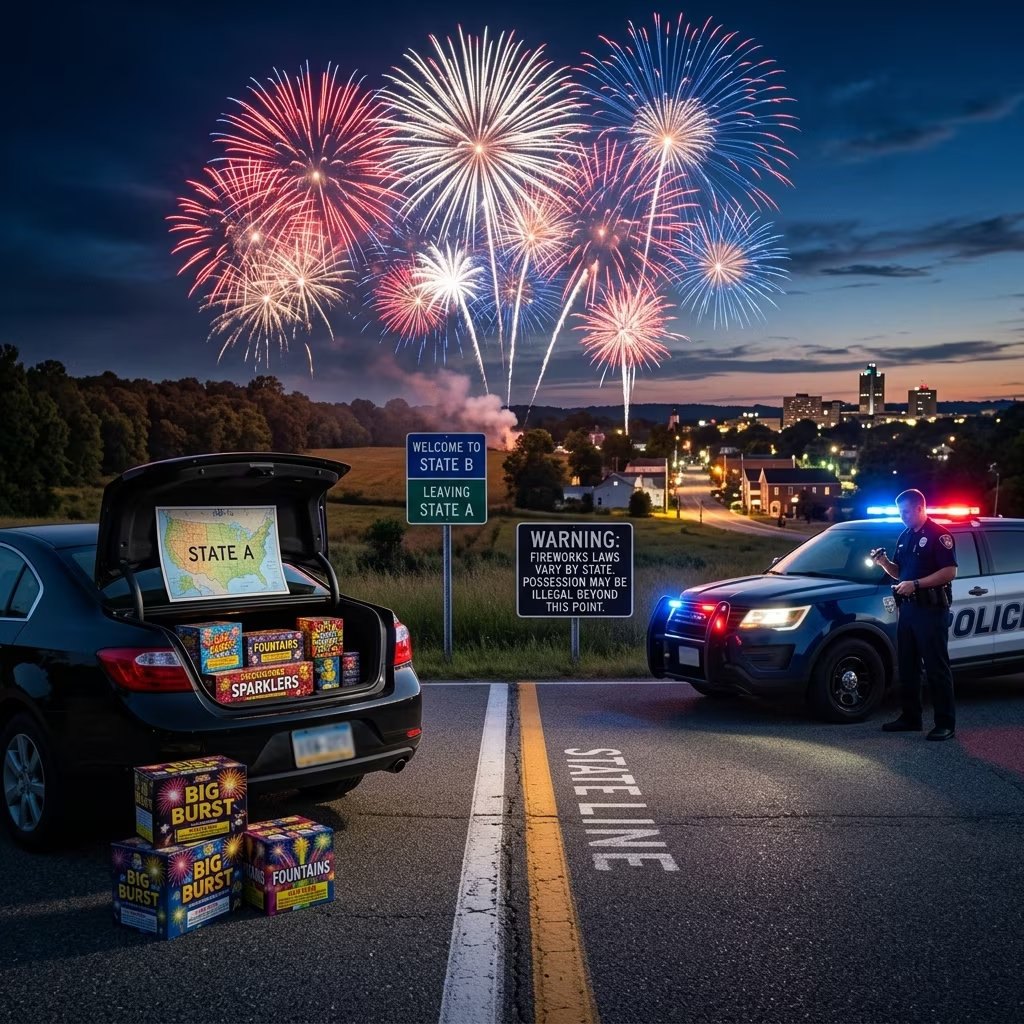
Every year, Americans drive across state lines to stock up on fireworks for Fourth of July celebrations, often assuming that if an item is legal where they bought it, it must be acceptable to bring home and light. That assumption is frequently wrong. Fireworks laws in the United States are a patchwork of federal rules, state statutes, and local ordinances, and crossing a border with the wrong products can turn a holiday road trip into an expensive criminal case.
This article explains why transporting fireworks across state lines is risky, how different states regulate consumer fireworks, and what practical steps you can take to celebrate safely and legally.
Why Fireworks Turn Complicated When You Cross State Borders
Fireworks are regulated at multiple levels of government. At the federal level, agencies such as the Consumer Product Safety Commission (CPSC) and the Department of Transportation (DOT) set safety and transport standards for consumer fireworks, while the Bureau of Alcohol, Tobacco, Firearms and Explosives (ATF) oversees more powerful display devices.
States then add their own rules about what can be sold and used, where, and when. Many cities and counties impose additional restrictions, including complete bans within city limits, time-of-day restrictions, and special permit requirements.
When you move fireworks across state lines, you may be:
- Bringing items that are legal in the purchasing state into a state where those same items are restricted or banned.
- Violating local bans that are stricter than the statewide rules in either the origin or destination.
- Creating potential evidence of intent to use or distribute illegal fireworks in the destination jurisdiction.
Because enforcement agencies often increase patrols around major holidays, the chances of being stopped with fireworks in your vehicle also tend to rise during the July 4th period.
How States Categorize Fireworks: From Full Bans to Broad Permission
Across the United States, states fall roughly into three main categories when it comes to consumer fireworks:
| Category | Typical Policy | Examples of States |
|---|---|---|
| Broadly Permissive | Most consumer fireworks allowed subject to safety and time/place restrictions. | Texas, Florida, Georgia, Pennsylvania, South Carolina, Tennessee. |
| “Safe and Sane” Only | Non-aerial, non-explosive devices permitted; aerial or explosive items largely prohibited. | California, Colorado, New York, New Jersey, Virginia, Oregon. |
| Near-Total Ban | Consumer fireworks largely banned; displays restricted to licensed professionals. | Massachusetts (full consumer ban). |
Even within these categories, details vary. Some states allow sales only around specific holidays. Others restrict use to unincorporated county areas while major cities enforce their own bans.
What “Safe and Sane” Means
Many states use the phrase safe and sane to describe consumer fireworks they consider low-risk. These generally include ground-based and hand-held items that do not explode or shoot into the air.
Typical “safe and sane” fireworks include:
- Sparklers and fountains
- Smoke devices
- Ground spinners and wheels
- Non-explosive novelty items
Aerial shells, rockets, and powerful firecrackers often fall into prohibited categories, especially in urban or fire-prone areas.
Local Ordinances: Why City Limits Matter as Much as State Lines
Even in states that broadly permit consumer fireworks, cities and counties may enact significantly stricter rules. For example, in Texas, consumer fireworks are generally legal under state law, but major cities such as Austin, Dallas, and San Antonio prohibit their use inside city limits.
Local restrictions can include:
- Complete bans on use or possession within city limits.
- Distance requirements from sensitive locations like hospitals, schools, churches, and childcare centers.
- Limits on specific types of fireworks, such as small sky rockets or bottle rockets.
- Emergency restrictions related to drought, burn bans, or wildfire risk.
When you cross state lines with fireworks, you may pass through several jurisdictions with different rules. Even if your home county permits fireworks, transporting them through a neighboring city that bans possession could expose you to enforcement action.
Typical Legal Consequences of Transporting Illegal Fireworks
Consequences depend on the state and local laws you violate, the quantity and type of fireworks involved, and whether authorities believe you intended to sell or distribute them. Common outcomes include:
- Confiscation of fireworks: Law enforcement may seize prohibited items and issue a warning or citation.
- Civil fines: Many jurisdictions impose monetary penalties for possession or use of illegal fireworks, which can increase with repeat violations.
- Misdemeanor charges: In some states, possession or transport of prohibited fireworks can result in criminal charges, potentially leading to probation or jail time.
- Enhanced penalties if fireworks are sold or distributed, or if their use causes property damage, injuries, or wildfires.
If you cross into a state with a near-total ban, such as Massachusetts, simply having consumer fireworks in your vehicle can be enough to trigger enforcement.
Federal Oversight: Safety Standards and Hazardous Materials Rules
While most day-to-day fireworks enforcement occurs at the state and local level, federal rules still matter. The CPSC sets safety standards for consumer fireworks, including limits on explosive content. For example, legal consumer firecrackers generally may not exceed a specified amount of pyrotechnic composition per device; anything above that threshold can be treated as an illegal explosive rather than a consumer product.
The DOT classifies fireworks for transportation purposes and regulates how larger quantities of fireworks must be packaged, labeled, and shipped, especially when they are considered hazardous materials. These rules typically apply to commercial transporters, but they illustrate how fireworks are treated as regulated explosives rather than ordinary retail goods.
For the average driver, the key implication is that very large quantities of fireworks or professional-grade display devices may attract additional scrutiny. Transporting such items without proper licensing or adherence to federal transport regulations can lead to more serious consequences than simply carrying a small box of consumer fireworks.
High-Risk Scenarios When Crossing State Lines for Fireworks
Some common situations dramatically increase legal risk when you cross borders:
- Buying aerial fireworks in a permissive state and bringing them into a “safe and sane” state, where aerial and explosive devices are prohibited.
- Purchasing consumer fireworks and driving into a total-ban state such as Massachusetts, where possession of any consumer fireworks is illegal.
- Transporting fireworks through cities with strict local bans, even if both the origin and destination counties allow them.
- Carrying fireworks during declared burn bans or high fire danger periods, when local authorities may impose additional restrictions and engage in targeted enforcement.
In all of these situations, simply having fireworks in your vehicle can create potential liability, regardless of whether you have ignited them.
Practical Steps to Reduce Legal Risk
If you plan to travel for July 4th fireworks, taking a few precautions can substantially reduce the chance of legal trouble:
1. Check Laws in Both Origin and Destination States
Before buying fireworks in another state, review:
- State-level consumer fireworks statutes and regulations.
- Any list of prohibited devices in your home state.
- Rules on when fireworks can be purchased and used (holiday windows, time-of-day limits).
Official state fire marshal websites or state law directories maintained by national industry associations generally provide up-to-date, high-level summaries of legal requirements.
2. Research Local Ordinances Along Your Route
Laws can change at county and city borders. Before traveling:
- Check the websites of major cities you plan to pass through.
- Review county emergency management or sheriff notices about burn bans and fireworks restrictions.
- Look for special July 4th rules, such as limited days or hours when fireworks can be used.
Local governments often publish holiday-specific guidance explaining what is allowed, where, and when.
3. Limit Quantity and Type of Fireworks
From a risk perspective, fewer and less powerful fireworks are safer. Avoid:
- Professional-grade display fireworks if you lack proper licensing.
- Large aerial shells and rockets when traveling into states known for strict regulation.
- Devices that exceed typical consumer limits on explosive content.
When in doubt, opt for ground-based, non-explosive items that resemble the “safe and sane” category used in many states.
4. Follow Basic Safety Practices
Legal compliance and physical safety often overlap. Using fireworks responsibly helps reduce the risk of property damage or injury, which can trigger civil liability and, in some cases, criminal charges. Good practices include:
- Keeping water or fire extinguishers nearby.
- Maintaining distance from buildings, trees, and combustible materials.
- Never allowing children to ignite fireworks without adult supervision.
- Avoiding use under high winds or very dry conditions.
Some states and localities may impose additional safety requirements or recommendations in official guidance documents.
When to Seek Legal Advice
If you have been cited, had fireworks confiscated, or face criminal charges related to transporting or using fireworks, consider speaking with a criminal defense attorney familiar with local fireworks laws. Because statutes vary widely by jurisdiction and are frequently updated, a lawyer can:
- Explain the specific violations alleged in your case.
- Assess whether evidence supports the charges.
- Evaluate possibilities for dismissals, reductions, or alternative resolutions.
- Advise you on how prior incidents may affect future enforcement.
Legal advice is especially important if you are accused of possessing professional-grade or large quantities of fireworks, or if authorities allege intent to sell or distribute them.
Frequently Asked Questions (FAQs) About Crossing State Lines for Fireworks
Can I legally buy fireworks in one state and bring them home to another?
Maybe. It depends entirely on the laws of the destination state and any local ordinances there. If your home state prohibits the type of fireworks you purchased, possession alone can be illegal, even if you bought them lawfully elsewhere.
If fireworks are legal in my state, can I drive through cities that ban them?
Driving through a city with a local ban can still be risky. Some ordinances prohibit not only use but possession within city limits. Enforcement practices vary, but being stopped with fireworks in a banned area may lead to confiscation or citations.
Are there any states where all consumer fireworks are illegal?
Yes. Massachusetts is widely cited as the only state that completely bans consumer fireworks, allowing only licensed professional displays. Bringing consumer fireworks into Massachusetts can therefore create legal exposure.
What is the difference between consumer fireworks and display fireworks?
Consumer fireworks (often classified as 1.4G) are designed for sale to the general public and subject to CPSC safety standards. Display fireworks (often 1.3G) are more powerful, require professional licensing, and are overseen by federal agencies such as the ATF for explosive regulation.
How can I quickly check fireworks laws before a July 4th road trip?
Review your destination state’s fire marshal or public safety website, consult reputable state law directories for consumer fireworks, and check city and county websites for local ordinances and holiday-specific rules.
References
- Fireworks Laws by State 2026 — World Population Review. 2026-01-01. https://worldpopulationreview.com/state-rankings/fireworks-laws-by-state
- Are fireworks legal in Texas? What to know before July 4th — Austin American-Statesman. 2024-07-02. https://www.statesman.com/news/article/texas-fireworks-laws-july-4-22321979.php
- Fireworks policy of the United States — Wikipedia (summarizing ATF and CPSC roles). 2023-06-15. https://en.wikipedia.org/wiki/Fireworks_policy_of_the_United_States
- These Are the States Where Fireworks Are Legal — Reader’s Digest. 2023-06-27. https://www.rd.com/article/states-where-fireworks-are-legal/
- 4 Fireworks Laws to Know for July Fourth — FindLaw. 2020-06-30. https://www.findlaw.com/legalblogs/law-and-life/4-fireworks-laws-to-know-for-july-fourth/
- Directory of State Laws for Consumer Fireworks — American Pyrotechnics Association. 2025-01-01. https://www.americanpyro.com/state-law-directory
- Burn Ban / Fireworks — Texas Association of Counties. 2023-05-01. https://www.county.org/resources/resource-library/legal-services/burn-ban-fireworks