
The Constitutional Quagmire of Banning Foreign-Owned Apps
Banning foreign applications threatens free speech, fuels internet fragmentation, and ignores better privacy solutions.
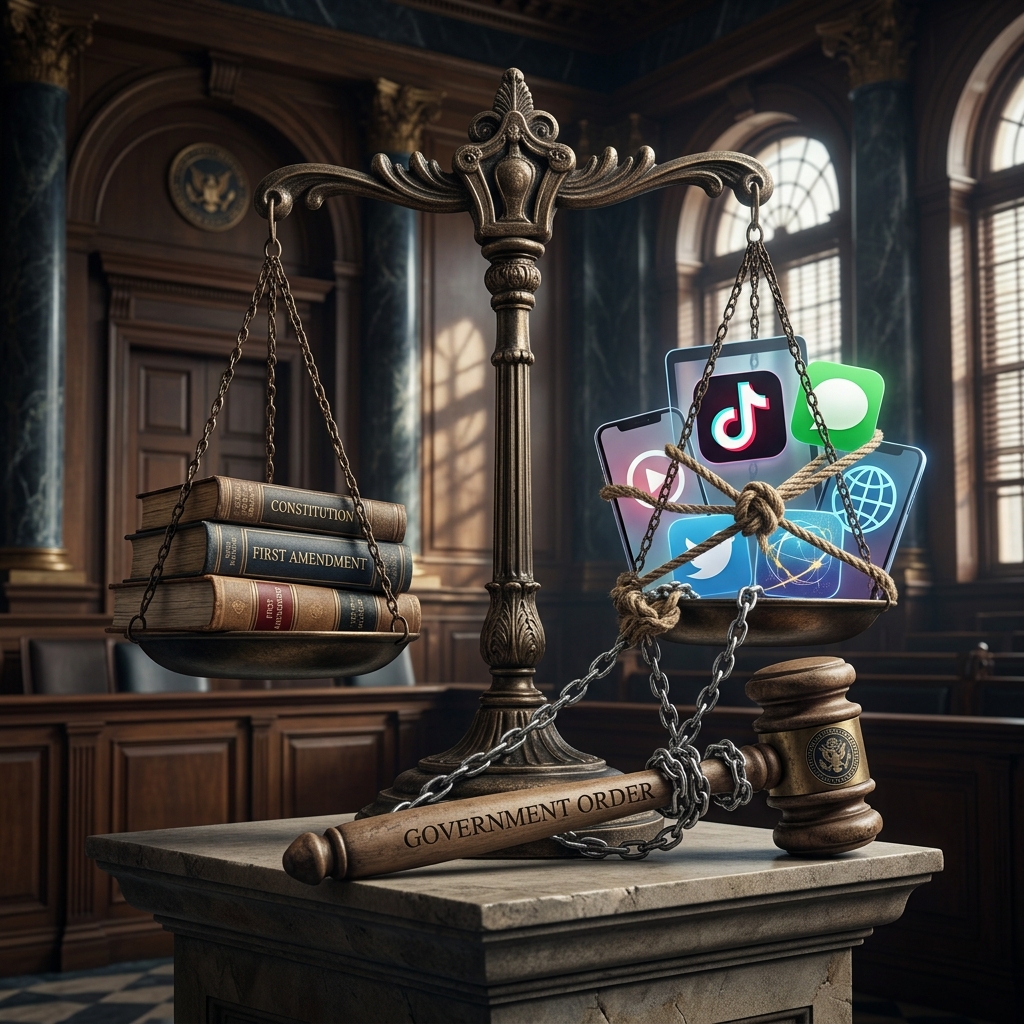
The Intersection of Digital Borders and Free Expression
In an era where geopolitical boundaries are rendered increasingly porous by digital connectivity, the intersection of national security and free expression has become a heavily contested battleground. Recent legislative and executive initiatives aimed at prohibiting the operations of foreign-owned digital applications present a profound constitutional quagmire. Platforms that facilitate short-form videos, instant messaging, and community building have become inextricably woven into the fabric of daily life for hundreds of millions of citizens. While governments often cite legitimate concerns regarding foreign espionage, data harvesting, and algorithmic manipulation, the proposed remedy—an outright ban—strikes at the very heart of democratic values.
Prohibiting access to major communication networks inherently triggers significant scrutiny under free speech protections. By exploring established legal precedents, analyzing the collateral damage of internet fragmentation, and evaluating the existence of less restrictive policy alternatives, it becomes evident that broad bans are a blunt instrument ill-suited for the nuanced challenges of the twenty-first century.
The Anatomy of a Digital Public Square
To fully grasp the gravity of prohibiting an application, one must first recognize what these digital platforms represent in modern society. They are no longer mere entertainment novelties; they serve as the contemporary equivalent of the town square. Historically, citizens gathered in physical spaces—parks, sidewalks, and plazas—to debate, protest, and share ideas. Today, the epicenter of public discourse has unequivocally migrated to the online realm.
The United States Supreme Court has explicitly recognized this monumental shift in human communication. In the landmark 2017 decision Packingham v. North Carolina, the Court struck down a law restricting registered sex offenders from accessing social media. The Court emphasized that cyberspace, and specifically social media, represents the modern public square and offers a relatively unlimited, low-cost capacity for communication of all kinds. Cutting off access to these platforms is tantamount to banishing an individual from the primary arenas of public engagement.
When the government proposes a nationwide ban on a communication application utilized by millions, it threatens to silence a vast, interconnected community. Users rely on these networks to run small businesses, advocate for political causes, share cultural expressions, and build communities that transcend geographical limitations. Eradicating a platform completely does not merely remove a piece of software from a digital storefront; it dismantles a vibrant, organic ecosystem of human interaction. Such an action necessitates the highest level of judicial scrutiny to ensure that fundamental rights are not sacrificed on the altar of generalized security threats.
National Security Concerns vs. Constitutional Guardrails
The primary justification for seeking bans on foreign-owned technology consistently centers around national security. Policymakers argue that applications controlled by companies based in nations with authoritarian regimes could be compelled to hand over sensitive data on citizens. There are also persistent fears that foreign actors could manipulate content recommendation algorithms to spread disinformation, sow societal discord, or suppress political narratives that are unfavorable to the host government’s geopolitical interests.
These concerns are not inherently baseless; the weaponization of data and information is a recognized tactic in modern asymmetric warfare. However, the American legal framework requires that any restriction on fundamental rights, particularly free speech, must be carefully calibrated and balanced. Under First Amendment jurisprudence, when the government seeks to restrict speech based on its content, the medium, or the identity of the speaker, it must satisfy a demanding legal standard. Often, this requires the state to prove that its regulation serves a compelling governmental interest and is narrowly tailored to achieve that interest using the least restrictive means available.
An outright ban on a communication platform rarely, if ever, survives the strict narrow tailoring requirement. Banning an entire app because a fraction of its content might be manipulated, or because of the potential for future data misuse, is the regulatory equivalent of using a sledgehammer to swat a fly. The collateral damage to protected, lawful speech is immense and unjustifiable. While the government undoubtedly possesses a compelling interest in securing its digital infrastructure and protecting its citizens from foreign espionage, it cannot do so by completely obliterating a massive channel of domestic and international communication. The Constitution demands precision, requiring lawmakers to seek solutions that address the specific security vulnerabilities without simultaneously silencing millions of voices.
The Right to Receive Information and Ideas
A frequent and pervasive misconception in debates surrounding platform bans is that the First Amendment only protects the person or entity actively speaking. In reality, constitutional protections extend bidirectionally. The First Amendment unequivocally protects the audience’s right to access, hear, and read information.
This doctrine, often referred to as the right to receive information, has deep roots in American legal history. The Supreme Court has repeatedly affirmed that freedom of speech necessarily protects the right to receive it. For instance, in various cases involving library censorship, the distribution of religious literature, and the private possession of reading materials in the home, the courts have emphasized that the First Amendment includes the absolute right of the recipient to access ideas.
In the context of foreign-owned applications, this doctrine is particularly salient and often overlooked by proponents of a ban. Citizens have a constitutionally protected interest in receiving media, alternative viewpoints, and cultural outputs from around the world. Even if a digital platform is owned by a foreign entity, the domestic users consuming that content are exercising their First Amendment rights. Banning a platform severs this vital flow of information, effectively isolating populations from global conversations. The government cannot dictate which ideas citizens are allowed to access based simply on the geographic origin of the platform facilitating the exchange. Protecting the right to receive information is essential for maintaining an informed citizenry capable of self-governance and critical thinking.
The Specter of Internet Fragmentation: Welcome to the Splinternet
Beyond domestic constitutional concerns, banning digital applications carries severe geopolitical ramifications, most notably the acceleration of internet fragmentation. The original vision of the internet was a globally interconnected, borderless network that fostered the free exchange of knowledge across continents. However, in recent years, this vision is threatened by the rise of the splinternet—a fractured digital landscape where governments erect virtual borders, balkanizing the web based on nationalistic, political, and commercial interests.
When democratic nations deploy outright bans on specific foreign applications, they inadvertently validate the censorship models used by authoritarian regimes. Countries with strict state-controlled media frequently justify blocking international news sites and Western social media by citing digital sovereignty and national security. If democracies adopt the exact same tactics—blocking platforms because they originate from rival nations—they surrender the moral high ground and legitimize a world where every country walls off its digital ecosystem.
This fragmentation has devastating consequences for global human rights. Activists, journalists, and dissidents rely on global, interoperable communication networks to bypass local censorship and share their realities with the outside world. A balkanized internet traps these vulnerable populations behind digital iron curtains, making it significantly easier for oppressive regimes to control narratives and suppress opposition. Furthermore, the splinternet stifles global economic innovation, as technology companies are forced to navigate a labyrinth of contradictory national regulations and fragmented digital infrastructures. Preserving a free and open internet requires democratic nations to resist the temptation of reactionary app bans and instead advocate for universal standards of digital openness.
Better Alternatives: Comprehensive Data Privacy Legislation
If the core anxieties driving the push for application bans are data harvesting and digital surveillance, then the most logical and effective solution is not censorship, but robust data protection. Singling out one or two foreign apps while ignoring the broader ecosystem of data commodification is a fundamentally flawed and hypocritical approach.
The modern digital economy runs on the aggressive extraction, aggregation, and monetization of user data. Domestic technology companies, data brokers, and marketing firms routinely harvest vast amounts of personal information—from location history and browsing habits to consumer preferences and financial statuses. This data is frequently sold on open, largely unregulated markets, where foreign adversaries, malicious actors, and intelligence agencies can purchase it legally, completely bypassing the need to own a specific social media app.
Therefore, banning a single application does virtually nothing to secure citizens’ data on a macro level. The necessary alternative is the enactment of comprehensive, federal data privacy legislation. As policy experts and consumer protection advocates have long argued, a baseline federal privacy law would establish clear, enforceable limits on what data can be collected, how long it can be retained, and with whom it can be shared, regardless of where a technology company is headquartered. By shifting the regulatory focus from the origin of the technology to the behavior of the data processors, lawmakers can achieve their national security goals without trampling on civil liberties. A structural, ecosystem-wide approach to data privacy represents the least restrictive means required by the Constitution, protecting citizens from exploitation while preserving their fundamental right to free expression.
Frequently Asked Questions (FAQs)
- How does the First Amendment protect foreign-owned entities?
The First Amendment primarily protects the individuals residing within the United States. While the foreign corporation itself may have complex or limited constitutional standing, the millions of domestic users who rely on the platform have full First Amendment rights to both speak and receive information. Thus, a ban primarily infringes on the rights of the domestic audience. - What is the principle of narrow tailoring in constitutional law?
Narrow tailoring is a strict legal standard used to determine if a law violates fundamental rights. It requires that government restrictions on speech must target only the specific problem at hand without needlessly infringing on other, protected speech. Blanket bans on entire platforms generally fail this test because they are excessively broad, suppressing vast amounts of lawful communication to address isolated security risks. - How does the splinternet affect everyday users?
For everyday users, the splinternet means a less global and more restricted digital experience. You might lose the ability to communicate with friends internationally, access diverse cultural content, or use global e-commerce tools. It transforms the world wide web into a series of isolated, nation-specific intranets where content is heavily filtered by local governments. - Why haven’t comprehensive data privacy laws been passed yet?
Passing comprehensive data privacy legislation is politically complex. It requires balancing consumer protection with the interests of a highly lucrative tech and data-broker industry. Furthermore, debates over whether a federal law should preempt existing state privacy laws have historically stalled progress in national legislatures.
Conclusion
Navigating the complexities of the digital age requires a delicate, thoughtful balance between safeguarding genuine national security interests and aggressively upholding foundational democratic principles. While the threats posed by unrestrained data exploitation, foreign interference, and algorithmic manipulation are undeniably real, resorting to outright application bans constitutes a severe governmental overreach that directly threatens the modern digital public square. Such broad prohibitions violate the fundamental First Amendment rights of users to freely speak, assemble, and receive diverse information. Furthermore, these bans fuel the dangerous, global trend of internet fragmentation and ultimately fail to address the underlying systemic vulnerabilities of the global data broker economy. True digital security cannot, and should not, be achieved through the blunt instrument of censorship. Instead, it demands a rigorous commitment to comprehensive privacy legislation that comprehensively protects both the sensitive data and the vital voices of the public, ensuring that the internet remains an open, interconnected engine for global progress and free expression.
References
- 15-1194 Packingham v. North Carolina (06/19/2017) — Supreme Court of the United States. 2017-06-19. https://www.supremecourt.gov/
- Right to Receive Information and Ideas — The First Amendment Encyclopedia (MTSU). 2017-01-01. https://firstamendment.mtsu.edu/
- Internet Fragmentation (Splinternet) — Juncture Policy. 2026-01-01. https://www.juncturepolicy.com/
- Testimony of VPIRG Consumer Protection Advocate Zachary Tomanelli on S.71 — Vermont Legislature. 2026-05-01. https://legislature.vermont.gov/
Similar Articles








Read full bio of Sneha Tete


