
Consequences of Ignoring Flight Crew Instructions
Discover the severe legal penalties for disobeying flight attendants, from hefty fines to potential prison time under federal law.
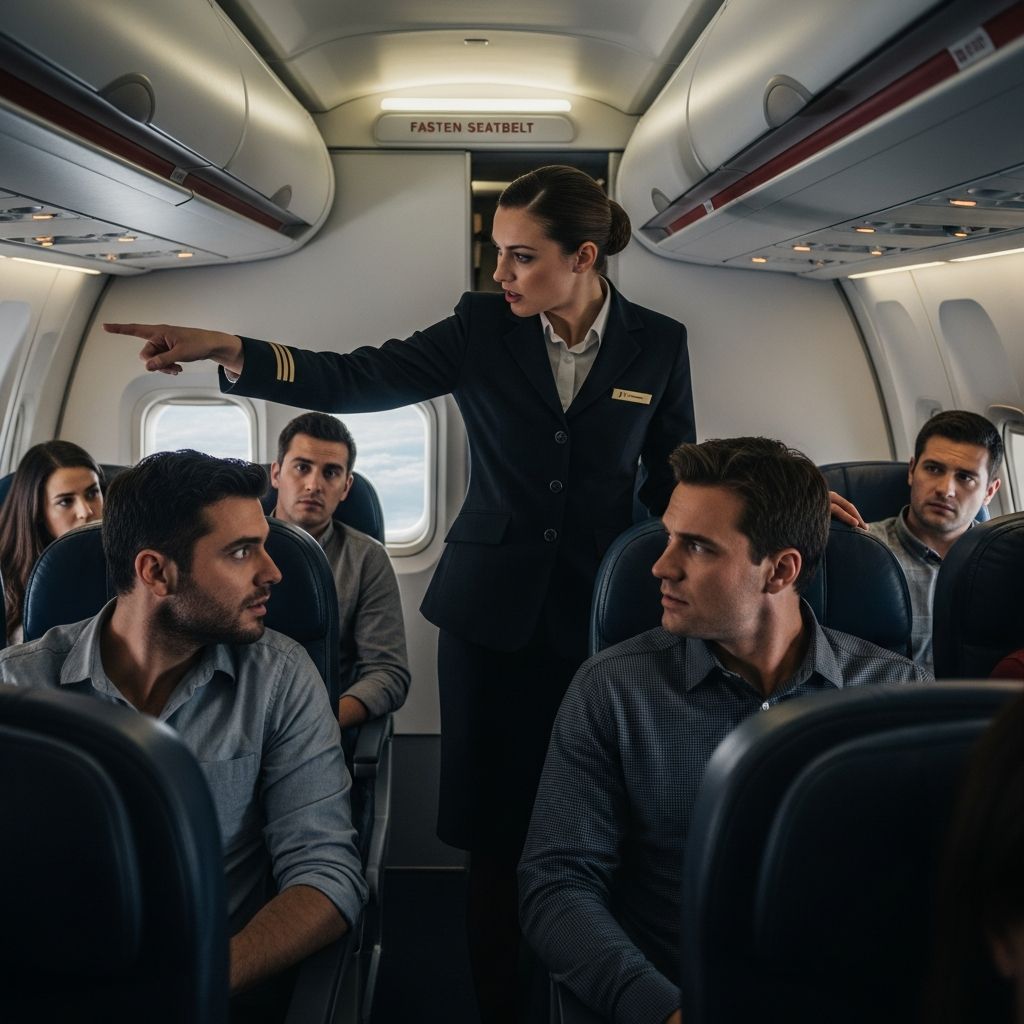
Federal regulations strictly prohibit any behavior that disrupts flight crew duties, with penalties escalating from substantial civil fines to felony convictions carrying decades in prison. Disobeying a flight attendant’s instructions can quickly turn a routine flight into a legal nightmare for passengers.
Understanding Federal Authority Over Aircraft Safety
Aircraft operate under the special aircraft jurisdiction of the United States, granting federal oversight to ensure passenger and crew safety. The Federal Aviation Administration (FAA) enforces a zero-tolerance policy against unruly behavior, particularly since incidents surged post-COVID. This policy empowers crew members to issue directives on seating, electronics, and conduct, backed by law.
Flight attendants are not mere service providers; they are federally authorized safety officers trained to handle emergencies. Ignoring their commands—such as refusing to fasten seatbelts or blocking aisles—interferes with these critical duties, violating 49 U.S.C. § 46504 and 14 CFR § 125.328.
Defining Interference: What Counts as Disobedience?
Interference encompasses a broad range of actions that distract or hinder crew performance. Simple non-compliance, like repeatedly ignoring requests to stow devices or return to seats, qualifies as interference. More aggressive acts, such as verbal abuse, physical shoving, or throwing items, amplify the violation.
- Refusing to comply with safety directives, e.g., upright seats or tray tables.
- Using unauthorized alcohol or becoming disruptive.
- Physically obstructing crew movement in aisles or galleys.
- Yelling threats or obscenities directed at staff or passengers.
- Any conduct creating reasonable fear of harm, including gestures implying violence.
Even passive resistance, if repeated, triggers penalties. Courts interpret these broadly to prioritize aviation security.
Civil Penalties: FAA’s Financial Hammer
The FAA imposes civil fines without criminal prosecution, targeting disruptions that compromise safety. Penalties vary by severity:
| Violation Type | Penalty Range per Incident | Examples |
|---|---|---|
| Minor Interference (e.g., cursing, repeated non-compliance) | $1,000 – $16,000 | Disobeying requests to sit or power off devices |
| Assault or Threats | Over $40,000 | Grabbing arms, striking motions |
| Maximum (post-2018 increase) | Up to $35,000-$40,000 | Using weapons or severe disruption |
In 2021, the FAA proposed $31,750 against a passenger who grabbed attendants’ arms on a jetBlue flight, $16,750 for another yelling obscenities while drinking personal alcohol, and $14,500 for seat-disrupting behavior requiring off-duty officers’ intervention. Passengers receive 30 days to respond before fines are finalized, often via administrative hearings.
Criminal Charges: From Misdemeanor to Felony
Beyond fines, serious interference invites FBI involvement and federal prosecution. Assaulting, threatening, or intimidating crew is a felony under 49 U.S.C. § 46504, requiring no specific intent—just knowing actions that lessen crew duties.
- Conviction penalties: Up to 20 years imprisonment and $250,000 fine.
- With dangerous weapons: Life imprisonment possible.
Recent cases include passengers yelling, throwing objects, or secretly recording attendants, leading to referrals. In United States v. Olvera (2025), a passenger’s covert filming intimidated a flight attendant, forcing her to halt duties mid-flight. Crew can summon law enforcement at gates for immediate removal.
Real-World Incidents and Outcomes
Unruly behavior has spiked, prompting FAA referrals to the FBI. Examples include:
- A passenger on a jetBlue flight from Haiti grabbed two attendants’ arms, necessitating reseating and police escort.
- Another drank prohibited alcohol, shouted profanities, and lunged at crew, facing $16,750 fine.
- A disruptive individual repeatedly left his seat, requiring physical restraint by off-duty officers.
These incidents highlight how quickly minor arguments escalate, resulting in arrests upon landing.
Legal Defenses and Court Interpretations
Defendants argue lack of intent, but courts rule it a general intent crime—no proof of deliberate interference needed. In United States v. Olvera, the appeals court upheld conviction based on the attendant’s reasonable fear from recording, despite no confrontation. Juries assess if actions knowingly impacted duties.
Passengers can challenge FAA fines via hearings before Administrative Law Judges, presenting evidence against allegations. Success is rare without strong proof of compliance.
Passenger Rights and Best Practices
While crew hold authority, passengers retain rights against excessive force. Document incidents via video (without targeting crew) and report to airlines post-flight. To avoid issues:
- Comply promptly with all instructions.
- Stay calm during delays or discomfort.
- Avoid alcohol, especially personal bottles.
- Seek supervisor if dissatisfied, without escalation.
Airlines may ban repeat offenders, compounding legal woes.
Frequently Asked Questions (FAQs)
Is disobeying a single flight attendant request a crime?
Not always criminal, but repeated refusal interferes with duties, risking FAA fines from $1,000.
What if I argue but don’t touch anyone?
Verbal threats or intimidation qualify as felonies, up to 20 years prison.
Can airlines refuse me future flights?
Yes, plus no-fly lists for severe cases.
How has the penalty maximum changed?
Increased to $35,000 in 2018 for interference.
What should I do if I receive an FAA penalty notice?
Respond within 30 days, consider legal counsel for hearing.
Broader Implications for Air Travel Safety
Rising incidents strain resources, diverting crew from safety to conflict management. FAA data shows thousands of probes yearly, underscoring enforcement. Passengers must recognize aircraft as high-stakes environments where compliance saves lives.
In summary, what starts as frustration can end in ruinous penalties. Prioritize respect for crew to ensure safe journeys.
References
- Federal Laws on Interfering With a Flight Crew Member — CriminalDefenseLawyer.com. 2024. https://www.criminaldefenselawyer.com/resources/interfering-with-a-flight-attendant-or-crewmember.htm
- FAA Proposes Civil Penalties Against Three Passengers — Federal Aviation Administration (FAA). 2021. https://www.faa.gov/newsroom/faa-proposes-civil-penalties-against-three-passengers-allegedly-interfering-flight
- Interfering with a Flight Crew — VersusTexas.com. N/A. https://versustexas.com/interfering-with-a-flight-crew/
- Justice Manual 1411: Interference With Flight Crew Members — U.S. Department of Justice. N/A. https://www.justice.gov/archives/jm/criminal-resource-manual-1411-interference-flight-crew-members-or-flight-attendants-49-usc
- U.S. Court of Appeals Rules on Federal Law Against Interference — Tressler LLP. 2025-10-07. https://www.tresslerllp.com/thought-leadership/u-s-court-of-appeals-rules-on-meaning-of-federal-law-against-interference-with-airline-personnel/
- 14 CFR § 125.328 – Prohibition on crew interference — Cornell Law School Legal Information Institute. N/A. https://www.law.cornell.edu/cfr/text/14/125.328
Similar Articles








Read full bio of Sneha Tete




