
Concert Injuries and Legal Remedies for Event Attendees
Understand your legal rights when injured at concerts, festivals, and live events.
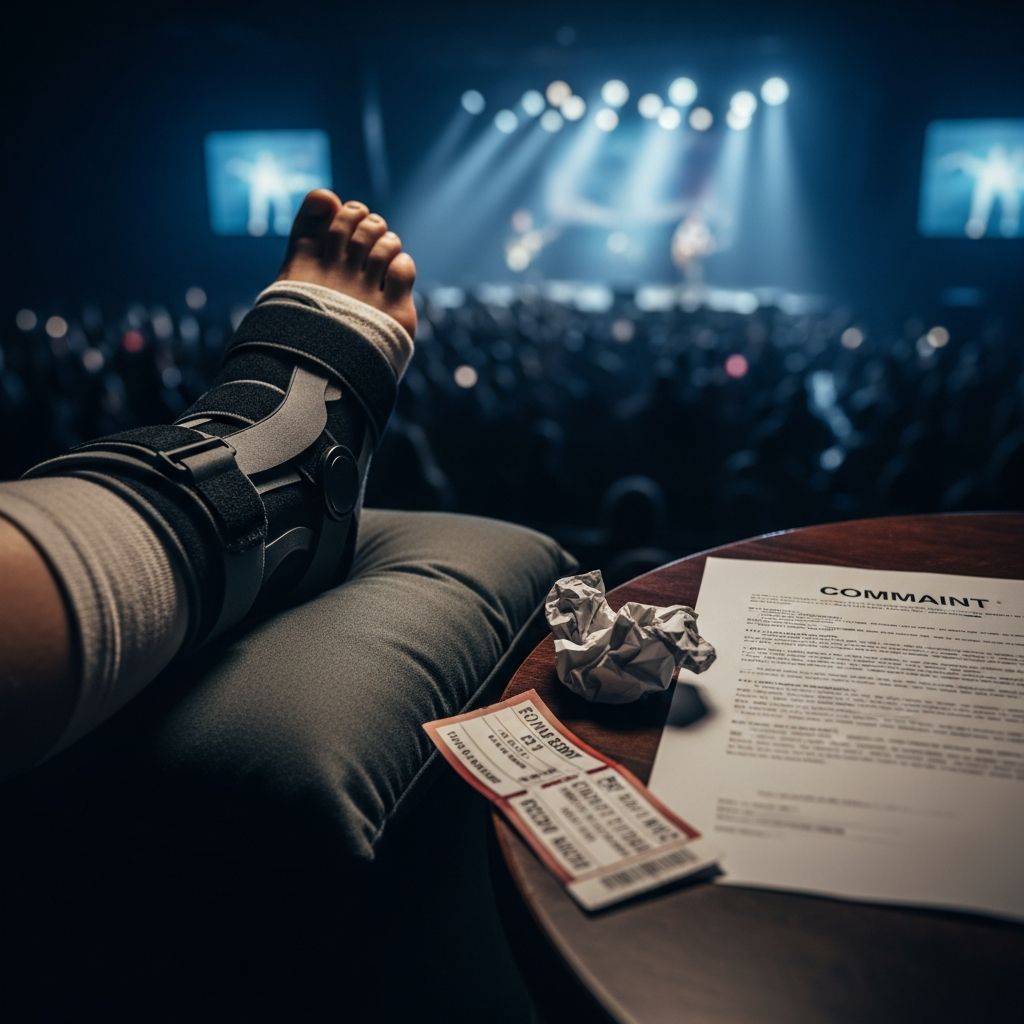
Understanding Your Rights After a Concert or Festival Injury
Attending a live concert or music festival should be an enjoyable experience, but accidents and injuries do happen in crowded environments. When you sustain an injury at a concert venue or festival, you may have legal recourse against the performers, venue operators, security companies, or event organizers responsible for your safety. Understanding when you have grounds for a lawsuit and what factors courts consider can help you determine whether to pursue legal action and what compensation you might seek.
Establishing Negligence in Concert Venue Cases
To successfully sue for injuries sustained at a concert or festival, you must typically establish that the defendant owed you a duty of care and breached that duty through negligent conduct. Venue operators, security companies, and event organizers have a legal responsibility to maintain reasonably safe conditions for attendees. This duty extends to protecting concertgoers from foreseeable risks, even when those risks involve activities that venues attempt to prohibit.
Courts examine whether defendants took reasonable precautions appropriate to the specific event. For instance, if a venue fails to provide adequate security personnel, medical staff, or crowd control measures despite knowing that dangerous activities like crowd surfing are likely to occur, this failure can constitute negligence. Similarly, venues that implement festival seating or general admission ticketing without corresponding safety infrastructure may be liable for injuries resulting from inadequate crowd management.
Common Negligence Claims at Music Events
Several recurring patterns appear in successful concert injury lawsuits:
- Inadequate Security Staffing: Venues may be liable when they fail to maintain sufficient security personnel to manage foreseeable crowd behaviors. This is particularly relevant in cases where venue operators know that certain risky activities will likely occur despite posted warnings.
- Poor Crowd Control Infrastructure: The absence of proper barriers, railings, or designated areas to separate performers from audiences can create dangerous conditions. General admission seating without structural safeguards increases injury risk significantly.
- Insufficient Medical Response Capacity: Venues must provide adequate on-site medical personnel and ensure rapid transfer of injured parties to nearby hospitals. Failure to maintain sufficient emergency medical resources constitutes negligence.
- Performer Conduct: When performers intentionally engage in dangerous activities such as stage diving or jumping into crowds, particularly using props or equipment, venues and performers may be jointly liable for resulting injuries.
- Overcrowding and Capacity Violations: Event organizers who exceed venue capacity limits create crush conditions that increase injury risk substantially. If overcrowding directly causes injuries, organizers may face significant liability.
The Assumption of Risk Defense
Defendants in concert injury cases frequently argue that plaintiffs voluntarily assumed the risk of injury by attending the event or participating in risky activities. However, courts have placed significant limitations on this defense. While venues typically post warnings that crowd surfing is prohibited and that attendees engage in such activities at their own risk, courts are often reluctant to find these warnings legally sufficient to eliminate the venue’s duty of care.
A critical distinction exists between express and implied consent. Under Indiana law and similar jurisdictions, the assumption of risk defense only negates a defendant’s duty when the plaintiff has expressly consented to assume specific risks. Simply attending a concert or implicitly understanding that risks exist does not constitute express consent. Additionally, courts often reject arguments that attendees have waived their right to pursue legal action merely by purchasing a ticket, viewing such waivers as contrary to public policy.
Furthermore, if a venue or performer assumes responsibility for managing specific risks through its conduct—such as providing security personnel to assist crowd surfers on previous occasions—the venue cannot later claim the plaintiff assumed all associated risks. This principle emerged clearly in cases where security companies established procedures for handling crowd surfers, then failed to maintain those procedures at critical moments.
Venue and Performer Liability Distinctions
Different defendants bear different levels of liability depending on their roles and responsibilities:
| Defendant Type | Primary Liability Basis | Key Considerations |
|---|---|---|
| Venue Operators | Failure to maintain safe premises and adequate security | Duty extends to managing foreseeable dangerous activities; capacity management; medical resources |
| Security Companies | Breach of contracted security services | If procedures exist for managing risks, failure to implement those procedures creates liability; inadequate staffing at critical moments |
| Performers | Direct harmful conduct through intentional stage diving or dangerous prop use | May be liable for injuries caused by jumping into crowds or using equipment that strikes attendees |
| Event Organizers | Negligent planning and overcrowding | Failure to enforce capacity limits; inadequate emergency planning; insufficient coordination with medical personnel |
High-Impact Cases Demonstrating Viable Claims
Several notable cases illustrate circumstances where courts have found liability despite assumption of risk arguments. In one landmark case, a stage diver landed directly on a concertgoer’s head, causing severe spinal cord injury and temporary paralysis. Although the defendant argued the injured party had assumed the risk by attending previous shows where similar conduct occurred, the court awarded substantial damages, ultimately assessing $3.4 million in liability against the performer and touring company, with an additional $450,000 assessed to the venue.
Another significant case involved a concertgoer who sustained a broken neck and ankle after becoming trapped beneath an inflatable raft that a performer threw into the crowd. The performer, venue, and event organizers were all named as defendants. Such cases demonstrate that even when injuries result from relatively rare or unexpected performer actions, injured parties may recover damages if the venue and performer failed to implement reasonable safety measures.
In the Indiana Court of Appeals case of Wiley v. ESG Security, Inc., the court reversed summary judgment in favor of a security company despite warnings posted throughout the venue prohibiting crowd surfing. The court determined that genuine issues of material fact existed regarding whether the security company assumed a duty of care by implementing procedures for assisting crowd surfers on previous occasions. This decision underscores that venues cannot simultaneously benefit from managing certain risks while claiming complete immunity from liability.
Factors That Strengthen Your Legal Claim
To maximize the strength of your potential lawsuit, you should focus on documenting the following factors:
- Notice and Foreseeability: Evidence that venue operators, security companies, or performers knew or should have known that dangerous activities like crowd surfing or stage diving would occur at the specific event.
- Prior Similar Incidents: Documentation of previous injuries at the same venue or involving the same performer indicates that dangers were foreseeable and preventable.
- Breach of Established Procedures: If the defendant established safety protocols but failed to implement them during your injury, this significantly strengthens your case.
- Inadequate Resource Allocation: Evidence that the venue or organizer failed to provide sufficient security personnel, medical staff, or safety infrastructure despite knowing the event would create crowd-crush or injury risks.
- Capacity Violations: Documentation showing that the venue exceeded its licensed capacity or failed to enforce occupancy limits.
- Medical Documentation: Immediate medical evaluation and treatment create an official record of your injuries, which is essential for establishing damages.
Immediate Actions Following Concert Injuries
If you sustain an injury at a concert or festival, taking specific steps immediately will strengthen any future legal claim. First, seek medical attention promptly, even if injuries appear minor. Medical professionals will create official documentation of your injuries, which attorneys need to establish damages. Delayed medical treatment can undermine your credibility and reduce the value of your claim.
Second, document the scene and your injuries through photographs or video, if possible. Ask friends or family members present to capture images of your injuries immediately after the incident, the venue layout, crowd conditions, and any relevant signage or infrastructure. Request contact information from potential witnesses who observed your injury or the circumstances surrounding it.
Third, report the injury to venue management and obtain a copy of any incident report they file. Write down the names and titles of personnel you speak with, along with the dates and times of your interactions. Preserve all tickets, emails, text messages, and other documentation related to the event.
Calculating Potential Compensation
The value of concert injury cases varies significantly based on multiple factors. Cases have ranged from thousands of dollars to tens of millions of dollars depending on injury severity. Courts consider the nature and extent of physical injuries, including whether they result in permanent disability or disfigurement. They also evaluate pain and suffering, lost wages from time away from work, and mental anguish associated with the incident.
Long-term medical expenses, rehabilitation costs, and ongoing treatment for chronic conditions substantially increase claim value. If injuries prevent you from returning to your previous occupation, courts will consider loss of earning capacity over your remaining work life. Settlements often include compensation for medical expenses incurred to date, anticipated future medical needs, and non-economic damages related to quality of life impacts.
Working With Personal Injury Attorneys
Personal injury attorneys specializing in premises liability and concert injury cases can evaluate whether you have viable legal claims and assess the potential value of your case. They will investigate the specific circumstances of your injury, identify all potentially liable parties, and determine the insurance coverage available to fund any settlement or judgment. Many personal injury attorneys work on contingency, meaning you pay no upfront fees and they receive a percentage of any recovery only if your case succeeds.
Your attorney will gather evidence, interview witnesses, obtain venue records and security documentation, and work with medical experts to establish the extent of your injuries and their impact on your life. They will communicate with insurance companies and opposing counsel to negotiate settlements or prepare your case for trial if necessary.
Frequently Asked Questions
Q: Can I sue a venue if I was crowd surfing despite posted warnings?
A: Yes, you may have legal claims even when the venue posted warnings. Courts recognize that posted warnings alone do not eliminate a venue’s duty of care, particularly when venue staff has assisted crowd surfers on previous occasions or established procedures for managing such activities. The venue’s conduct in knowingly accommodating crowd surfing while posting warnings can constitute an assumption of duty.
Q: What if the performer intentionally jumped into the crowd and injured me?
A: Performers may be directly liable for injuries caused by intentional stage diving or jumping into crowds, particularly when using props or equipment. You may pursue claims against the performer, the touring company, and the venue. Even if the performer acted unexpectedly, the venue may be liable for failing to implement safeguards against foreseeable performer actions.
Q: How long do I have to file a lawsuit after a concert injury?
A: The time limit varies by jurisdiction but is typically between one and three years from the date of injury. This period, known as the statute of limitations, begins running when the injury occurs. Consulting an attorney promptly ensures you preserve your right to sue and allows adequate time for investigation and evidence gathering.
Q: What if my injuries were partially my fault due to my own risky behavior?
A: Many jurisdictions apply comparative fault principles, which may reduce but not eliminate your recovery based on your percentage of fault. Even if you were partially responsible for your injuries through risky conduct, the venue’s failure to maintain adequate safety measures may still support a successful claim for reduced damages.
Q: How much can I potentially recover from a concert injury lawsuit?
A: Recovery depends on injury severity, medical expenses, lost income, and long-term impacts. Cases have ranged from thousands to tens of millions of dollars. Severe spinal cord injuries resulting in permanent disability typically command substantially higher settlements than minor injuries. Your attorney can provide a more specific estimate after evaluating your particular circumstances.
Q: Should I accept a settlement offer from the venue or insurance company?
A: Before accepting any settlement offer, consult with a personal injury attorney. Insurance companies often offer lower amounts than cases ultimately recover through litigation. Your attorney can assess whether an offer adequately compensates you for current and future medical expenses, lost income, and pain and suffering.
References
- Indiana Court of Appeals Reverses Trial Court in Crowd Surfer’s Personal Injury Lawsuit Against Music Venue Security Company — Barsumian Law. Accessed 2026. https://www.barsumianlaw.com/blog/indiana-court-of-appeals-reverses-trial-court-in-crowd-surfers-personal-injury-lawsuit-against-music-venue-security-company/
- Crowd Surfing Injuries — AutoAccident.com. Accessed 2026. https://autoaccident.com/crowd-surfing/
- Steve Aoki Sued Over Fan’s Crowd-Surfing Injury — Los Angeles Times. 2015-05-19. https://www.latimes.com/entertainment/music/local/la-et-ms-steve-aoki-sued-over-fans-crowdsurfing-injury-20150519-story.html
- Crowd Crush & Crowd Surge Lawsuit — Morrow & Sheppard LLP. Accessed 2026. https://www.morrowsheppard.com/crowd-crush-and-crowd-surge-lawsuit/
- Can You Sue a Venue for a Stage Diving Injury? — HLM Law Firm. Accessed 2026. https://www.hlmlawfirm.com/blog/can-you-sue-a-venue-for-a-stage-diving-injury/
- Rapper and Coachella Sued for Crowd Surfing Injury — Plattner & Verderame. Accessed 2026. https://plattner-verderame.com/blog/rapper-and-coachella-sued-for-crowd-surfing-injury/
Similar Articles








Read full bio of medha deb




