
Can Companies Refuse Unvaccinated Patrons?
Exploring the legal authority of private enterprises to implement vaccination verification policies for customer access and service.
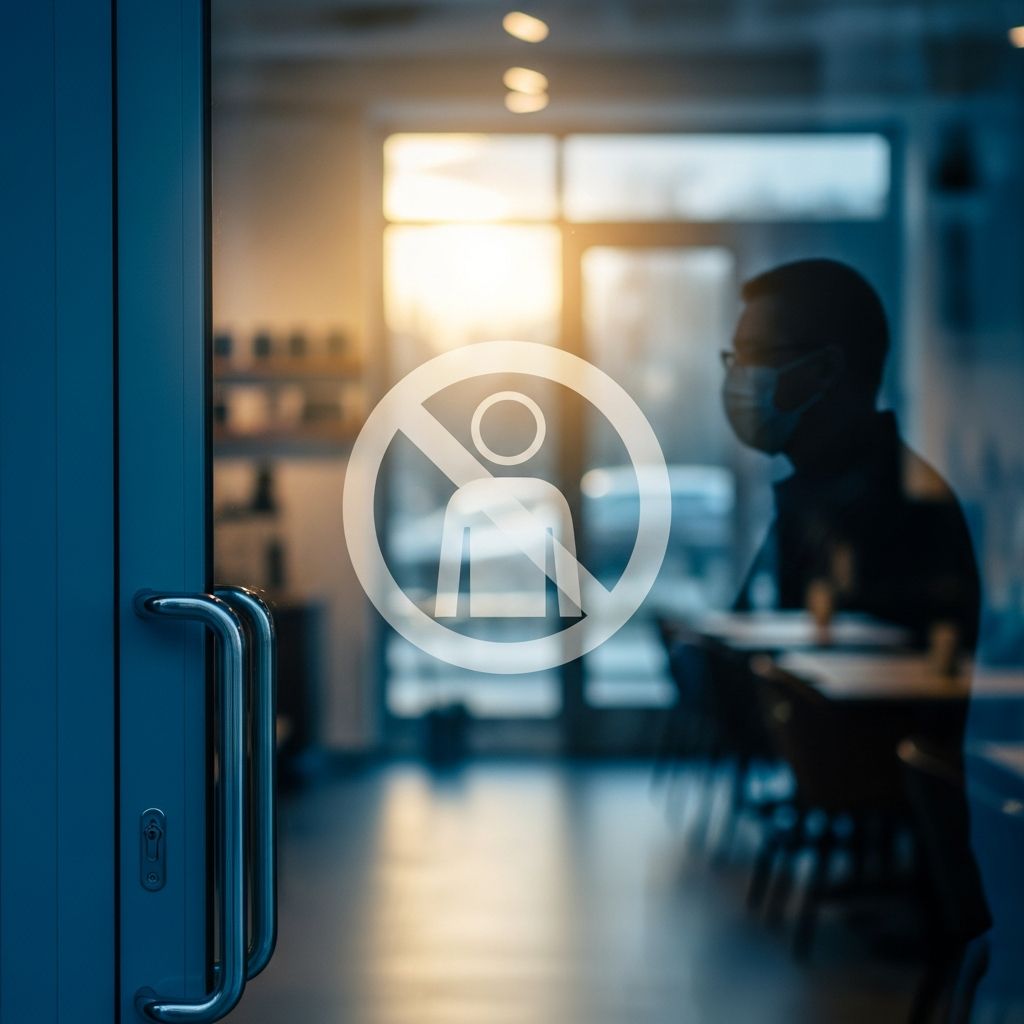
Private businesses in the United States generally possess the autonomy to set entry requirements for customers, including mandates for proof of vaccination against infectious diseases like COVID-19. This authority stems from their status as private entities not bound by the same constitutional constraints as government actors. Such policies aim to safeguard public health, mirroring longstanding practices like “no shirt, no shoes, no service” rules.
Foundational Legal Principles for Business Autonomy
At the core of this issue is the distinction between public and private spheres. The U.S. Constitution’s protections, such as the Fourth Amendment against unreasonable searches, apply exclusively to government actions and do not extend to private enterprises requesting vaccination documentation. Legal precedents, including the 1905 Supreme Court decision in Jacobson v. Massachusetts, affirm that measures to combat epidemics fall within permissible public health strategies, even for governmental bodies—a principle that bolsters private sector initiatives.
Business owners operate on private property and can dictate terms of service, provided they adhere to anti-discrimination statutes. Federal law under Title III of the Civil Rights Act of 1964 prohibits discrimination in public accommodations based on race, color, religion, sex, or national origin, but vaccination status does not qualify as a protected category. Unvaccinated individuals are not considered a ‘protected class’ under these provisions, allowing businesses broad latitude.
Navigating Federal Anti-Discrimination Frameworks
The Americans with Disabilities Act (ADA) and similar laws require businesses to offer reasonable accommodations for individuals with disabilities that prevent vaccination. For instance, if a medical condition like an allergy to vaccine components disqualifies someone, the business might permit masked entry or curbside pickup instead of outright denial. The U.S. Equal Employment Opportunity Commission (EEOC) has clarified that inquiring about vaccination proof does not constitute a disability-related inquiry for customers in public-facing settings.
Religious objections also demand consideration. Businesses must evaluate claims of sincerely held beliefs on an individual basis, potentially allowing exceptions like alternative safety protocols. Failure to do so could invite lawsuits alleging disparate impact on protected groups. However, courts have consistently ruled that neutral policies applied uniformly—regardless of protected status—do not violate civil rights laws.
State-Level Variations and Regulatory Landscape
While federal law provides a permissive baseline, state regulations introduce nuances. Some states enacted temporary bans on vaccine-based exclusions during peak pandemic periods, but many have since repealed these, reverting to business discretion. Others, like New York, explicitly authorized private mandates. Entrepreneurs must consult local health department guidelines, as certain industries (e.g., food service, gyms) face sector-specific rules.
A comparative overview of select states:
| State | Vaccine Requirement Stance | Key Accommodation Rule |
|---|---|---|
| California | Permits private mandates | ADA-compliant exceptions required |
| Florida | Prohibits mandates in some contexts | Limited local bans apply |
| New York | Strongly supports business policies | Individual assessments mandatory |
| Texas | Business choice with restrictions | No government enforcement |
This table highlights the patchwork nature of regulations, underscoring the need for location-specific legal advice.
Debunking Common Legal Misconceptions
- Fourth Amendment Myth: Social media claims invoking this amendment fail because it targets government ‘searches,’ not private inquiries.
- Civil Rights Act Misapplication: Title III omits medical status or vaccination from protected traits.
- Section 242 Criminal Penalties: This statute applies only to officials acting ‘under color of law,’ exempting private businesses.
- HIPAA Privacy Concerns: The Health Insurance Portability and Accountability Act does not govern customer interactions in non-healthcare businesses.
These falsehoods have circulated widely, prompting unnecessary litigation fears among owners.
Implementing Vaccination Policies Effectively
To minimize risks, businesses should develop clear, documented protocols. Steps include:
- Posting conspicuous signage outlining requirements.
- Training staff on verification methods (e.g., app scans, card checks) without storing personal data.
- Establishing an accommodation request process with forms for medical/religious claims.
- Offering alternatives like online ordering or delivery for exempted patrons.
- Consulting attorneys to tailor policies to state laws.
Verification tools range from digital certificates to visual inspections, prioritizing speed and privacy. High-traffic venues like restaurants and retail stores report reduced transmission rates post-implementation.
Potential Liabilities and Risk Mitigation
While empowered to enforce rules, businesses face challenges from denied patrons alleging discrimination. Successful claims typically require proof of protected class membership and unequal treatment. Neutral policies withstand scrutiny, as seen in cases upholding mask mandates. Class actions remain rare for customer policies, unlike employment contexts.
Insurance considerations are vital; general liability policies may cover defense costs, but endorsements for pandemic-related claims provide extra protection. Regular policy reviews ensure compliance with evolving public health orders.
Industry-Specific Considerations
Sector variations abound. Healthcare facilities often mandate vaccinations under stricter standards, while hospitality businesses balance customer choice with safety. Gyms and theaters, prone to close contact, frequently adopt rigorous checks. E-commerce hybrids can pivot to contactless options seamlessly.
For small enterprises, cost-effective digital solutions like QR code scanners democratize access to these tools, fostering safer environments without prohibitive expenses.
Broader Public Health and Economic Impacts
Pro-vaccine policies correlate with faster reopening and economic recovery, per health authority analyses. Businesses adopting them signal responsibility, potentially boosting patronage from vaccinated demographics. Conversely, lax approaches risk outbreaks, closures, and reputational harm.
Long-term, as vaccination becomes normalized like other health prerequisites (e.g., flu shots for travel), these policies may standardize across industries.
Frequently Asked Questions (FAQs)
What if a customer claims a religious exemption?
Evaluate sincerity individually; provide alternatives like masking or virtual service if feasible, per Title VII and state analogs.
Can I be sued for checking vaccine cards?
Lawsuits are possible but unlikely to succeed if policies are neutral and accommodations offered; document everything.
Does this apply to employees too?
Similar principles hold, with EEOC guidance allowing mandates plus exemptions.
What about minors or vaccines for other diseases?
Precedents extend to childhood immunizations in family-oriented businesses.
Are there federal penalties for non-compliance?
No direct penalties; enforcement occurs via private lawsuits or local health violations.
Strategic Outlook for Business Owners
In an era of recurring health threats, proactive policy-making equips enterprises for resilience. Balancing rights with safety requires vigilance, but legal precedents favor informed autonomy. Owners prioritizing health measures not only comply with law but also cultivate trust, ensuring sustained operations amid uncertainties.
References
- No, It Is Not Illegal For Businesses To Require Proof Of Vaccination — Illinois Public Radio (IJPR). 2021-05-27. https://www.ijpr.org/law-and-justice/2021-05-27/no-it-is-not-illegal-for-businesses-to-require-proof-of-vaccination
- Can a Business Legally Refuse a Customer? — AmTrust Financial. 2021. https://amtrustfinancial.com/blog/small-business/can-a-business-legally-refuse-a-customer
- May Businesses Lawfully Exclude Consumers Not Vaccinated Against COVID-19? — Carr Maloney P.C. 2021-05. https://www.carrmaloney.com/wp-content/uploads/2021/05/May-Businesses-Lawfully-Exclude-Consumers-Not-Vaccinated-Against-COVID-19-1.pdf
- A New Weapon in the Anti-Vaccine Arsenal — Baker Institute. N/A. https://www.bakerinstitute.org/research/new-weapon-anti-vaccine-arsenal-claiming-unvaccinated-protected-class
- Vaccine Rights: What Businesses, Employers Can And Cannot Do — Scripps News. N/A. https://www.scrippsnews.com/health/coronavirus/vaccine-rights-what-businesses-employers-can-and-cannot-do
- Can Public Facing Businesses Deny Entry Based on Vaccination Status — Offit Kurman. N/A. https://www.offitkurman.com/offit-kurman-blogs/can-public-facing-businesses-deny-entry-based-on-vaccination-status
- Businesses Have The Right To Deny Unvaccinated Patrons — Law360. N/A. https://www.law360.com/articles/1412619/businesses-have-the-right-to-deny-unvaccinated-patrons
Similar Articles








Read full bio of medha deb




