
Top Reasons Drivers Get Pulled Over by Police
Discover the leading causes of traffic stops and essential tips to stay safe and avoid police encounters on the road.
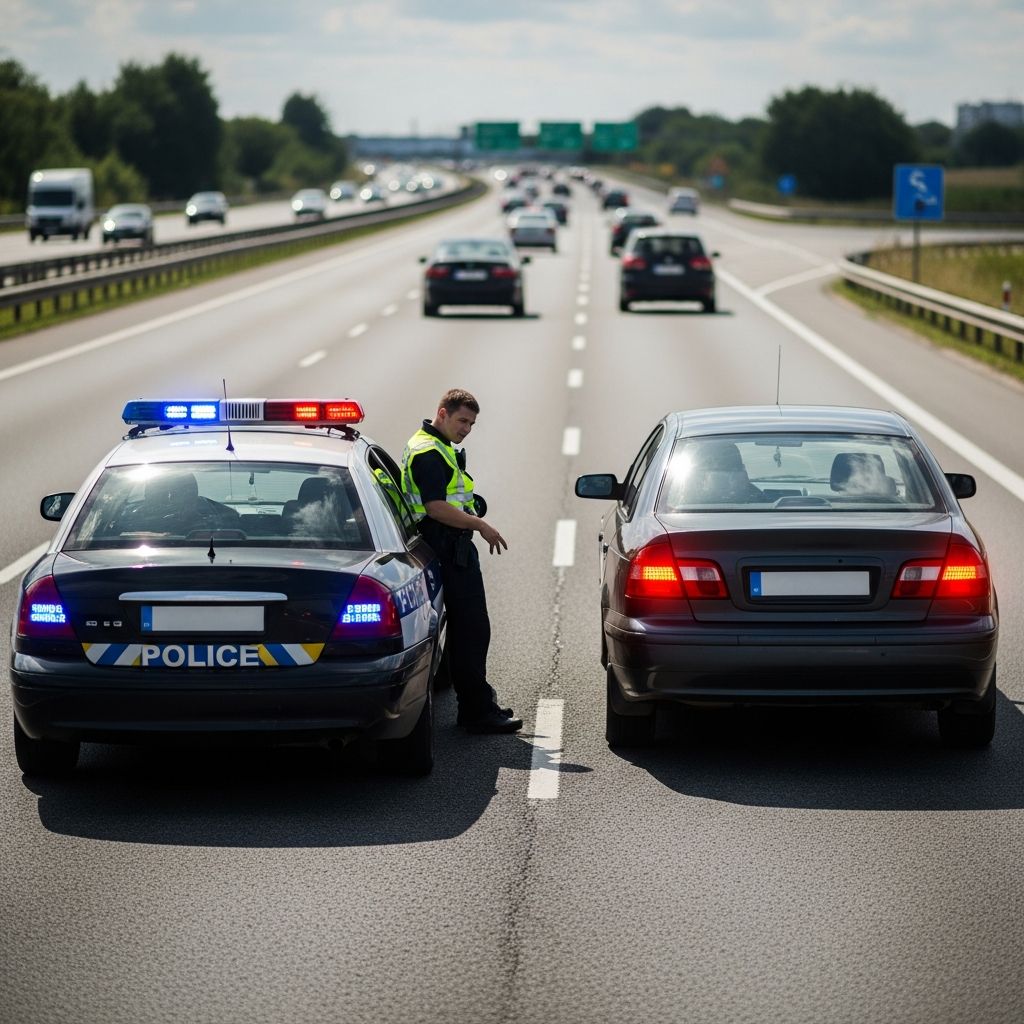
Every year, millions of drivers encounter flashing lights in their rearview mirror, turning routine trips into stressful interactions with law enforcement. Understanding the primary triggers for these stops empowers motorists to drive more responsibly and minimize risks. This article delves into the most prevalent causes, backed by legal insights and safety data, offering actionable strategies to keep you moving without interruption.
Understanding Traffic Stops and Legal Basis
Police cannot pull over a vehicle without reasonable suspicion of a violation, a principle rooted in the Fourth Amendment protections against unreasonable searches and seizures. Officers patrol roads to enforce traffic laws, which serve dual purposes: promoting safety and detecting potential crimes. Data from the National Highway Traffic Safety Administration indicates that traffic stops account for a significant portion of law enforcement interactions, often escalating if additional issues like impairment are suspected.
Common stops begin with observable infractions, allowing officers to approach and assess further. Knowing these patterns helps drivers self-audit their habits and vehicle condition, reducing unnecessary encounters.
Exceeding Speed Limits: The Leading Culprit
**Speeding** tops the list as the most frequent reason for traffic stops across the United States. Officers use radar guns, speed cameras, and visual estimation to detect vehicles surpassing posted limits. Even minor exceedances, like 1 mph over, provide legal grounds for a stop, though enforcement often targets more egregious cases.
Highways may offer slight leeway in lighter traffic, but residential areas and school zones draw stricter scrutiny. Speeding not only invites tickets but heightens crash risks; the Insurance Institute for Highway Safety reports that speed contributes to about 29% of fatal accidents.
- Monitor your speedometer constantly, especially where limits change frequently.
- Avoid sudden accelerations near patrol hotspots like intersections.
- Use cruise control on long drives to maintain steady speeds.
Failing to Obey Traffic Signals and Signs
Disregarding stop signs, red lights, or yield directives ranks high among stop triggers. A “rolling stop”—slowing without fully halting—qualifies as a violation, giving officers probable cause. These infractions endanger pedestrians and intersecting traffic, prompting immediate intervention.
Right-of-way errors, such as entering intersections improperly or driving the wrong way on one-way streets, also prompt swift action. In urban settings, police prioritize these due to their high collision potential.
| Violation Type | Common Locations | Potential Penalties |
|---|---|---|
| Running Red Light | Busy intersections | Fine up to $500, points on license |
| Rolling Stop | Stop signs in suburbs | Warning or citation |
| Wrong-Way Driving | One-way streets | Reckless driving charge |
To prevent these, scan ahead for signals and practice complete stops.
Distracted Driving Through Mobile Devices
Cell phone use while driving has surged as a stop reason, with laws prohibiting handheld operation in most states. Holding a phone, even at a light, violates statutes like California’s Vehicle Code Section 23123, allowing hands-free exceptions for calls or emergencies.
Officers spot distracted drivers via swerving, delayed reactions, or visible phone handling. This behavior signals impairment risks, often leading to sobriety checks.
- Enable voice commands or mounts for navigation.
- Pull over for texts or calls.
- Consider apps that lock phones while driving.
Faulty Vehicle Lights and Equipment Problems
Malfunctioning headlights, taillights, brake lights, or turn signals provide clear pretext for stops, as vehicles must display proper illumination per state vehicle codes. Non-functional high beams or failure to dim them when approaching others also attract attention, aimed at preventing glare-related accidents.
Other issues include cracked windshields, excessively tinted windows, expired tags, or missing plates. These preventive stops ensure roadworthiness, as faulty gear contributes to collisions.
Regular maintenance checklists:
- Check all exterior lights monthly.
- Ensure window tint complies with state limits (typically 35% visible light transmission).
- Renew registration and display stickers prominently.
Suspicion of Impairment and Erratic Maneuvers
Swerving, straddling lanes, or weaving prompts stops for suspected DUI, even without visible alcohol. Officers look for signs like inconsistent speeds or improper turns, which indicate drugs, fatigue, or intoxication.
Following too closely, especially at high speeds, violates safe distance rules and raises red flags. Nighttime erratic driving amplifies scrutiny.
Less Obvious Triggers: Appearance and Behavior
Beyond mechanics, subtle factors influence stops. Loud music from open windows, especially in quiet or high-crime areas, draws suspicion. Bumper stickers promoting drugs or alcohol, filthy vehicles with visible damage, or driving at odd hours like 2 a.m. in low-traffic zones can prompt closer observation.
Clean your car, moderate volume, and avoid provocative decals to blend in.
Consequences of Traffic Stops and How to Respond
A simple stop can escalate to tickets, arrests, or searches if contraband appears. Fines range from $100-$500 for infractions, with points accumulating toward license suspension. DUI suspicions lead to breath tests or field sobriety exams.
During a stop:
- Pull over safely and promptly.
- Keep hands visible on the wheel.
- Provide license, registration, and insurance calmly.
- Politely decline searches without a warrant.
Consult an attorney if charged, as illegal stops may suppress evidence.
Strategies for Safer, Stop-Free Driving
Proactive habits slash stop risks:
- Conduct weekly vehicle inspections.
- Stay vigilant in high-enforcement zones.
- Avoid driving impaired; use rideshares.
- Join defensive driving courses for skill refreshers.
State-specific laws vary, so check your DMV site.
Frequently Asked Questions (FAQs)
Can police pull me over for going 5 mph over the limit?
Yes, any exceedance provides reasonable suspicion, though minor ones may warrant warnings.
Is tinted window tint always illegal?
No, but exceeding state limits (e.g., 35% VLT) justifies a stop for inspection.
What if my tail light is out at night?
It’s a valid stop reason; fix it immediately to avoid repeats.
Do I have to answer questions during a stop?
You must provide ID but can politely invoke your right to remain silent.
How common are pretextual stops?
Frequent, but courts uphold them if any violation exists.
References
- 3 Reasons Drivers Might Get Pulled Over for a Traffic Stop — Palmer Legal Defense. 2025-01-03. https://www.palmerlegaldefense.com/blog/2025/01/3-reasons-drivers-might-get-pulled-over-for-a-traffic-stop/
- Reasons You May Be Lawfully Pulled Over by Law Enforcement — David P. Shapiro Law. N/A. https://www.davidpshapirolaw.com/reasons-you-may-be-lawfully-pulled-over-by-law-enforcement/
- Common Reasons Drivers Get Pulled Over — Doug Murphy Law. N/A. https://www.dougmurphylaw.com/criminal-defense/criminal-defense-faq/common-reasons-drivers-get-pulled-over
- 5 Unexpected Things That Will Get You Pulled Over by the Police — The Texas Trial Attorney. 2017-10. https://www.thetexastrialattorney.com/blog/2017/october/5-unexpected-things-that-will-get-you-pulled-ove/
- Our Seven Most Common Reasons for Traffic Stops That Have Led to DUI — Hendry & Parker P.A. N/A. https://hendryparker.com/our-seven-most-common-reasons-for-traffic-stops-that-have-led-to-dui/
Similar Articles








Read full bio of medha deb




