
Columbus Day: From Explorer to National Holiday
Tracing Columbus Day's evolution from local celebration to American patriotic observance.
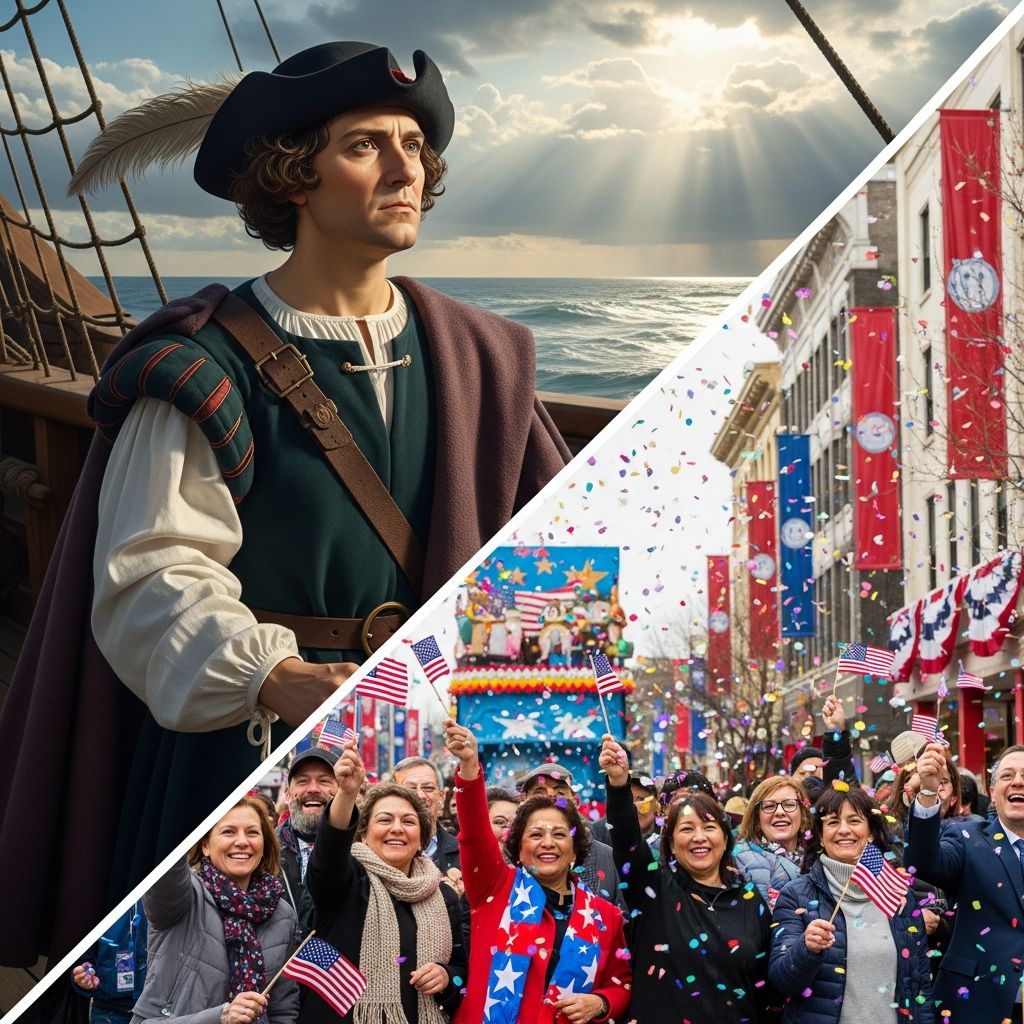
Columbus Day stands as one of the most historically significant yet increasingly debated holidays in the American calendar. Celebrated on the second Monday of October, this federal holiday commemorates Christopher Columbus’s landing in the Americas on October 12, 1492. However, the path from that pivotal Atlantic crossing to its establishment as a national holiday reflects a complex interplay of immigration, cultural pride, political response to tragedy, and evolving historical perspectives.
The Voyager and His Expedition: Foundation of the Holiday
To understand Columbus Day, one must first examine the man and the voyage it celebrates. Christopher Columbus, born in Genoa, Italy, embarked on what would become a transformative journey across the Atlantic Ocean in August 1492. Columbus commanded three vessels—the Santa Maria, the Nina, and the Pinta—carrying approximately 90 crew members. After five weeks at sea, the expedition reached land on October 12, 1492, on an island Columbus named San Salvador, now recognized as part of the Bahamas.
Columbus believed he had discovered a new maritime route to India, a misconception reflected in his naming of the indigenous populations he encountered as “Indians.” While scholars have documented evidence of earlier European contact with the Americas, particularly Viking settlements in Newfoundland during the 11th century, Columbus’s voyage initiated the sustained European exploration and colonization of the Western Hemisphere. This distinction—initiating lasting contact rather than making the first arrival—forms the historical basis for commemorating his achievement.
Early Recognition: When Americans First Embraced Columbus
Columbus Day’s emergence as an American observance began long before its federal designation. In the late 18th century, American cultural perspectives shifted toward viewing Columbus as a mythic founding figure whose bold vision aligned with emerging American ideals of adventure, innovation, and frontier exploration. By the 1830s, Columbus had become an archetype representing distinctly American values, embodying the spirit of exploration and determination that resonated with the nation’s self-image.
However, the first organized annual celebrations of Columbus Day originated not as a national phenomenon but as community observances in American cities with substantial Italian immigrant populations. Italian Americans, recognizing Columbus as a fellow countryman from Genoa, embraced the explorer as a symbol of their heritage and contributions to America. Two cities claim distinction as the site of the first formal Columbus Day celebration:
- New York celebrated Columbus Day in 1866 with organized community recognition
- San Francisco marked the occasion in 1868 with similar civic observance
These early celebrations served dual purposes: they honored Columbus’s historical achievement while simultaneously affirming Italian immigrant identity and cultural presence in American society during a period of significant migration from Southern and Eastern Europe.
The Catalyst: A Tragic Event That Changed Everything
The transformation of Columbus Day from a regional ethnic celebration into a national holiday resulted not from gradual cultural evolution but from a sudden and tragic event. On March 14, 1891, a mass lynching occurred in New Orleans that would fundamentally alter Columbus Day’s trajectory. Eleven Italian Americans were murdered by an angry mob, shocking Italian American communities across the nation and prompting widespread concern about Italian immigrant safety and social integration.
Recognizing the need to promote Italian American inclusion and patriotic identification with the nation, President Benjamin Harrison responded decisively. In 1892, marking the 400th anniversary of Columbus’s voyage, Harrison declared Columbus Day a national holiday. Harrison’s declaration served a strategic purpose: it demonstrated federal support for Italian American citizens, affirmed their contributions to American society, and positioned Columbus as a figure worthy of national rather than merely ethnic recognition.
Notably, President Harrison initially conceived of this observance as a one-time commemoration of the centennial milestone, not as a permanent addition to the federal calendar. The intention was ceremonial and relatively limited in scope.
The Path to Permanent Federal Status
Despite Harrison’s initial proclamation, Columbus Day did not immediately become an annual federal holiday. The day existed in a peculiar status—recognized at certain moments but not consistently observed nationwide. This changed under President Franklin D. Roosevelt, whose administration sought to strengthen the nation during the challenging era of the Great Depression and the approach of World War II.
In 1937, President Roosevelt issued a proclamation establishing Columbus Day as a permanent, annual federal holiday. This action transformed Columbus Day from an occasional commemoration into a standing fixture in the American national calendar, officially recognized and observed across all states and federal agencies. Roosevelt’s decision reflected evolving attitudes about American national identity, immigration history, and the importance of commemorating figures central to the American historical narrative.
Shifting the Observance Date: The Uniform Monday Holiday Act
The history of Columbus Day includes another significant modification to its observance. Initially celebrated on its historical date of October 12, the holiday’s timing changed with the passage of the Uniform Monday Holiday Act in 1971. This federal legislation restructured several holidays to fall on specific Mondays, creating predictable long weekends and standardizing federal holiday schedules. Under this reform, Columbus Day moved from October 12 to the second Monday of October, a modification that persists in federal observance today.
Cultural Significance and Evolving Interpretations
Throughout the 20th century, Columbus Day acquired multiple layers of meaning within American culture. For Italian Americans, the holiday remained a celebration of ethnic heritage and a recognition of Italian contributions to American society. For Americans more broadly, Columbus Day represented a commemorative moment reflecting on exploration, discovery, and the founding encounters that shaped the nation.
The Pledge of Allegiance itself became connected to Columbus Day’s commemoration. Written in 1892 in honor of the 400th anniversary of Columbus’s voyage, the Pledge was introduced during the same period when Columbus Day was gaining national recognition. This connection linked Columbus Day to fundamental American patriotic symbols and expressions.
The United States built more monuments to Columbus than any other nation, including statues, Columbus Circles in major cities, and educational institutions bearing his name. This architectural and institutional landscape reflected the widespread adoption of Columbus as a significant figure in American historical consciousness.
Reconsidering Columbus Day: Modern Perspectives
In recent decades, Columbus Day has become increasingly subject to historical reexamination and cultural debate. Scholars and activists have emphasized that while Columbus initiated the lasting European presence in the Americas, this encounter fundamentally disrupted indigenous peoples’ sovereignty, autonomy, and survival. The arrival of Columbus and subsequent European colonization resulted in displacement, disease, cultural destruction, and systematic violence against Native American populations.
This historical reassessment has prompted some American communities and institutions to recognize Indigenous Peoples’ Day on the second Monday of October instead of or alongside Columbus Day. Indigenous Peoples’ Day honors Native Americans and acknowledges their presence, history, and ongoing resilience in the face of colonial consequences. Various states, cities, and institutions now observe Indigenous Peoples’ Day, reflecting evolving attitudes toward historical commemoration and American identity.
Columbus Day Across the Americas
Columbus Day observance extends beyond the United States. Throughout Central and South America, October 12 is celebrated as Día de la Raza (Day of the Race) or Día de la Hispanidad (Hispanic Day), emphasizing the cultural and historical encounter between European and indigenous peoples. These regional variations reflect different national perspectives on Columbus’s significance and the meanings assigned to the encounter he initiated.
Contemporary Observance and National Significance
Today, Columbus Day remains a federal holiday in the United States, with federal offices, many schools, and businesses closing in observance. However, the holiday’s meaning continues to evolve as Americans grapple with complex historical narratives and competing interpretations of what should be commemorated and how.
The holiday demonstrates how historical commemoration reflects not just past events but contemporary values and priorities. Columbus Day’s evolution from Italian American community celebration to Harrison’s political response to Roosevelt’s federal permanence to modern reconsiderations illustrates how American society continuously reinterprets its relationship with history, immigration, national identity, and indigenous peoples.
Frequently Asked Questions
Q: Why is Columbus Day celebrated on the second Monday of October rather than October 12?
A: The Uniform Monday Holiday Act of 1971 moved Columbus Day from its historical date of October 12 to the second Monday in October, creating a standardized federal holiday schedule with predictable long weekends.
Q: Was Columbus the first European to reach the Americas?
A: No, Vikings established settlements in Newfoundland during the 11th century, and scholars have documented evidence of other possible pre-Columbian contacts. However, Columbus initiated the lasting European encounter and colonization of the Americas.
Q: Why did President Benjamin Harrison make Columbus Day a national holiday?
A: Following the lynching of 11 Italian Americans in New Orleans in 1891, President Harrison declared Columbus Day a national holiday in 1892 to promote Italian American inclusion, patriotic identification, and social cohesion.
Q: What is Indigenous Peoples’ Day?
A: Indigenous Peoples’ Day is an observance on the second Monday of October that honors Native American populations and acknowledges the indigenous history and resilience of America’s original inhabitants.
Q: Which president made Columbus Day a permanent annual federal holiday?
A: President Franklin D. Roosevelt established Columbus Day as a permanent annual federal holiday in 1937, transforming it from a one-time commemoration into a standing fixture in the American national calendar.
References
- Columbus Day — U.S. Embassy in Argentina. Accessed 2026. https://ar.usembassy.gov/columbus-day/
- Columbus Day — Britannica. Updated 2025. https://www.britannica.com/topic/Columbus-Day
- Columbus Day — Order Sons and Daughters of Italy in America. Accessed 2026. https://www.osdia.org/commission-for-social-justice/columbus-day/
- Not So Simple: Understanding the History Behind Columbus Day — Field Museum. Accessed 2026. https://www.fieldmuseum.org/blog/not-so-simple-understanding-history-behind-columbus-day
- The Origins and Traditions of Columbus Day — What’s So Proudly We Hail. Accessed 2026. https://www.whatsoproudlywehail.org/curriculum/the-american-calendar/the-origins-and-traditions-of-columbus-day/
- What Columbus Day Really Means — The American Scholar. Accessed 2026. https://theamericanscholar.org/what-columbus-day-really-means/
Similar Articles








Read full bio of Sneha Tete




