
Limits on Copying Code: Legal Boundaries for Developers
Navigate the legal risks of copying software code: Understand copyright thresholds, fair use, and protection strategies for developers.
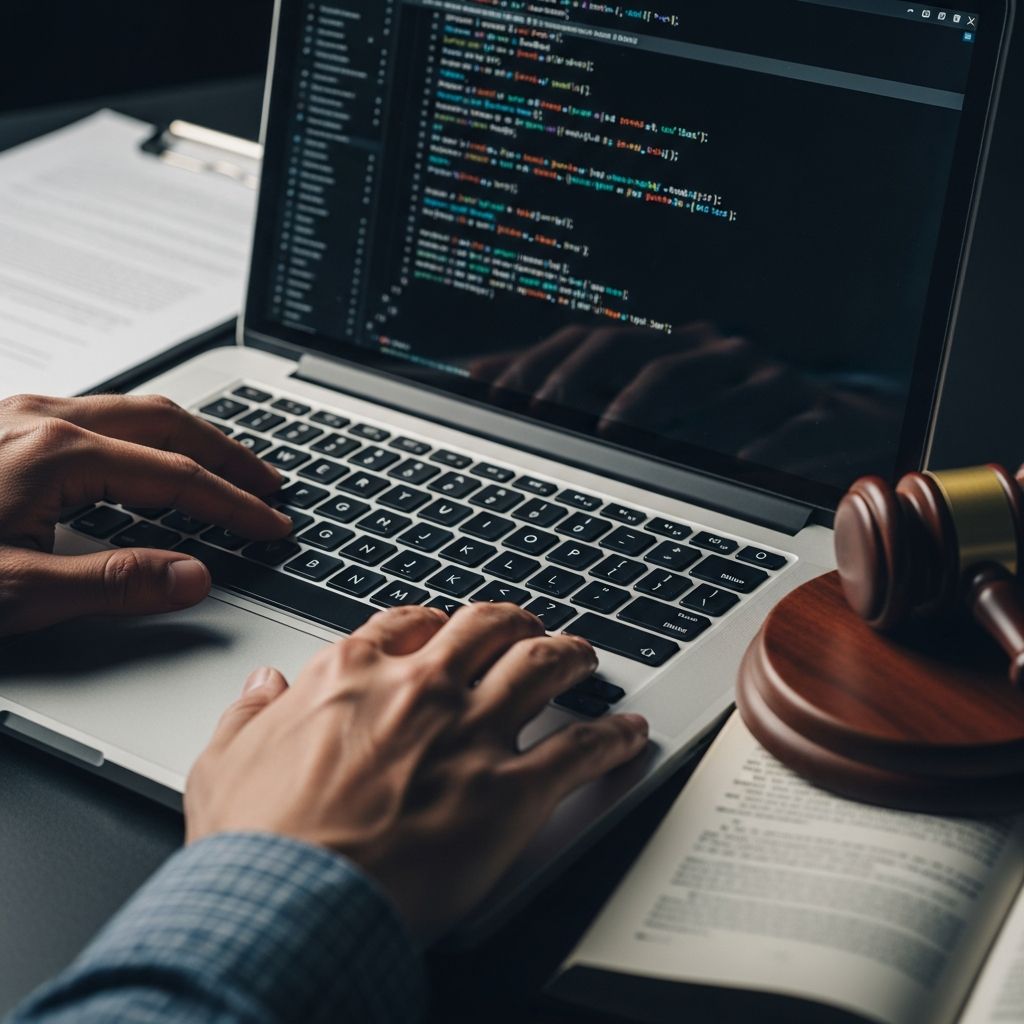
Software development thrives on innovation, but borrowing from existing codebases raises critical legal questions. Copyright law governs source code as a literary work, automatically protecting it upon creation, yet determining how much code can be copied without infringement remains complex. This article delves into the principles, exceptions, and practical strategies to help developers stay compliant.
Understanding Copyright Protection for Software
Copyright law treats software source code—the human-readable instructions written by programmers—and object code—the compiled machine-readable version—as protectable literary works. Protection arises automatically when code is fixed in a tangible medium, such as a file, without needing formal registration. However, registration with authorities like the U.S. Copyright Office strengthens enforcement options, including eligibility for statutory damages.
In the European Union, the Computer Programs Directive explicitly safeguards computer programs as original intellectual creations. This means even modest expressions of creativity in code qualify for protection, provided they reflect the author’s free choices.
The Originality Threshold: What Makes Code Protectable?
Not all code merits copyright. It must surpass the ‘threshold of originality,’ a low but essential bar. For EU law, code qualifies if it represents the author’s own intellectual creation, involving free and creative choices in structure, algorithms, or expression. Routine elements like standard config files or generic boilerplate may fall short if lacking personal flair.
- Author’s Own Creation: Code written independently, even if not novel, counts if derived from the developer’s choices.
- Creative Choices: Selections in naming variables, organizing functions, or sequencing logic demonstrate originality.
- Exclusions: Purely functional elements, such as mathematical formulas or standard interfaces, receive no protection.
U.S. guidelines align, requiring deposited code samples to reveal copyrightable expression, excluding public domain or third-party snippets.
Navigating Permissions: When Can Developers Reuse Code?
Developers often face temptations to reuse code snippets from open-source repositories, Stack Overflow, or internal libraries. Legally, outright copying substantial portions without permission constitutes infringement. However, licenses provide structured reuse paths.
| License Type | Copying Allowed? | Key Conditions |
|---|---|---|
| MIT/Apache 2.0 | Yes, freely | Include license notice; attribute original author |
| GPL | Yes, with copyleft | Derivatives must be open-source under GPL |
| Proprietary | No | Requires explicit license or contract |
| Public Domain | Unlimited | No restrictions |
Beyond licenses, ‘fair use’ in the U.S. permits limited copying for criticism, education, or research, but commercial software rarely qualifies due to market harm factors. Courts assess quantity copied, purpose, and effect on the original’s value.
Registration Essentials for Software Copyright
To bolster protection, register your software. The U.S. Copyright Office mandates depositing representative code portions, balancing disclosure with trade secret concerns.
- Full Programs <50 Pages: Submit entire source code, redacting <50% for secrets.
- Larger Programs: First 25 + last 25 pages of source, or object code alternative.
- Non-Linear Code: 50 pages from start/end representing copyrightable elements.
- Exceptions: Unregistered prior code only if unpublished; exclude public domain.
Redactions must leave appreciable unblocked expression; over-redaction risks rejection.
Risks of Unauthorized Code Copying
Infringement occurs via direct copying, modified ‘clones,’ or even similar structures evoking the original. Common pitfalls include:
- Exceeding license terms, like unlicensed multi-user deployment.
- Distributing modified code without compliance.
- Ignoring embedded third-party libraries.
Consequences range from cease-and-desist demands to lawsuits seeking damages, injunctions, and attorney fees. High-profile cases, like Oracle v. Google, highlight how APIs and structures can trigger disputes despite transformative use arguments.
Best Practices to Protect and Reuse Code Legally
Minimize risks through proactive measures.
- Document Provenance: Track all code origins with tools like Git attributions.
- Use Scanners: Employ FOSSology or Black Duck to detect unlicensed copies.
- License Strategically: Choose permissive licenses for libraries; restrictive for core products.
- Implement Tech Safeguards: Obfuscation, DRM, and watermarks deter casual theft.
- Monitor Markets: Set Google Alerts or hire watch services for infringements.
For protection, combine copyright with patents for algorithms (where novel) and trade secrets via NDAs.
Global Perspectives on Code Copyright
Laws vary: U.S. emphasizes fair use; EU prioritizes originality without novelty. In free software ecosystems, licenses like those from the Free Software Foundation ensure collaborative reuse while preserving rights.
Developers working internationally must audit licenses for compatibility, avoiding ‘license contamination’ in mixed projects.
Case Studies in Code Copying Disputes
Real-world examples illustrate boundaries. In one UK ruling, even unoriginal-looking code cleared originality by reflecting author choices. U.S. precedents stress that merging licensed code requires derivative work analysis.
These underscore: Small snippets may be safe under fair use, but substantial copies demand permission.
Frequently Asked Questions (FAQs)
Can I copy a single function from GitHub?
Yes, if under a permissive license like MIT, with attribution. Verify terms to avoid GPL obligations.
Does commenting out code avoid infringement?
No—courts examine substantial similarity, not just verbatim matches.
Is boilerplate code copyrightable?
Rarely, if purely functional and standard; originality requires creative expression.
How do I register object code only?
Permitted as an alternative deposit, paired with source excerpts.
What if I rewrite code in another language?
Translation may still infringe if structure copies the original’s expression.
Future Trends in Software IP Protection
AI-generated code challenges traditional authorship—does machine output qualify as ‘intellectual creation’? Emerging rulings may redefine thresholds. Blockchain-based licensing promises tamper-proof attribution.
Developers must adapt: Prioritize clean-room development and AI disclosure for compliance.
References
- Copyright Registration of Computer Programs (Circular 61) — U.S. Copyright Office. 2023. https://www.copyright.gov/circs/circ61.pdf
- How Copyright Protects Your Software Code (And What It Doesn’t) — Stevens Law Group. 2024-05-15. https://stevenslawgroup.com/how-copyright-protects-your-software-code-and-what-it-doesnt/
- Legal Corner: The threshold of originality for copyrightable source code — Free Software Foundation Europe (FSFE). 2025-05-15. https://fsfe.org/news/2025/news-20250515-01.en.html
Similar Articles








Read full bio of Sneha Tete




