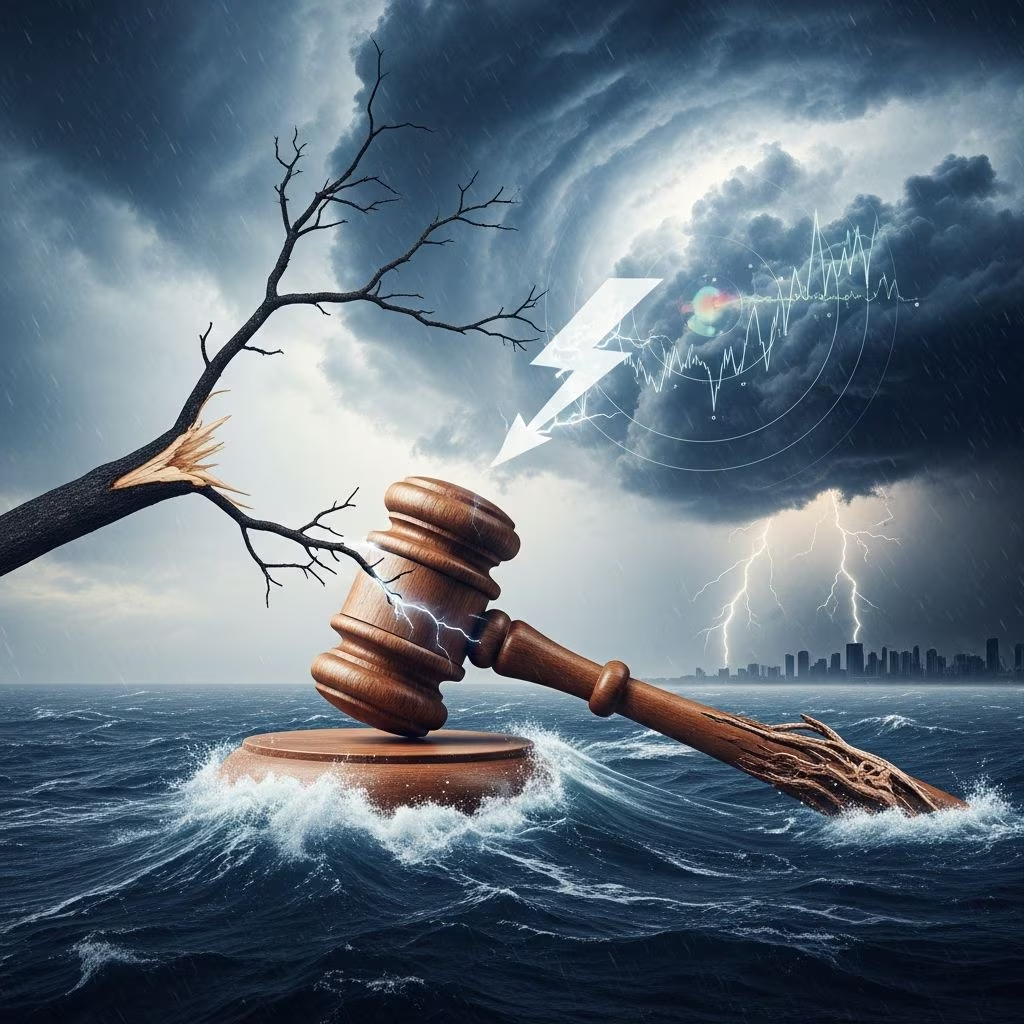
Advancements in climate science are opening new avenues for legal action in the aftermath of destructive hurricanes. Researchers now quantify how human-induced warming amplifies storm intensity, potentially enabling plaintiffs to pursue claims against entities accused of contributing to these risks.
Understanding Climate Attribution Science
Climate attribution science evaluates the influence of human activities on specific weather extremes. By comparing real-world events to simulated scenarios without greenhouse gas emissions, scientists estimate the heightened probability or severity of disasters like hurricanes.
This methodology, pioneered by groups like World Weather Attribution, relies on sophisticated climate models. For instance, analyses of Hurricane Harvey revealed that fossil fuel emissions made extreme rainfall several times more likely, shifting the odds dramatically.
- Key Components: Models simulate ‘factual’ worlds with current emissions versus ‘counterfactual’ pre-industrial conditions.
- Applications: Focuses on rainfall, heat, or wind speeds rather than entire storms for precision.
- Strengths: Rapid post-event studies, often completed within weeks, provide timely evidence.
Impact attribution extends this to broader effects, such as sea level rise exacerbating storm surges or warmer oceans fueling heavier precipitation. The Intergovernmental Panel on Climate Change (IPCC) confirms human warming has increased hurricane rainfall rates by 10% on average.
Legal Foundations for Hurricane-Related Claims
Tort law provides the primary framework for storm damage suits, emphasizing negligence, nuisance, and foreseeability. Plaintiffs must prove duty, breach, causation, and harm—where climate science bolsters the causation link.
Traditionally, hurricanes were deemed ‘acts of God,’ absolving liability. However, attribution science challenges this by demonstrating foreseeability. Companies or governments failing to account for amplified risks may face negligence claims for inadequate infrastructure or waste management.
| Tort Type | Climate Science Role | Example Application |
|---|---|---|
| Negligence | Proves increased risk was foreseeable | Building in flood-prone areas ignoring rainfall projections |
| Public Nuisance | Links emissions to widespread harm | Fossil fuel firms contributing to intensified storms |
| Trespass | Attributes pollutant spread to storm power | Chemical spills worsened by climate-amplified flooding |
In negligence cases, foreseeability is pivotal. Post-Harvey suits against chemical plants argued facilities should have anticipated heavier rains due to warming, leading to toxic releases.
Notable Cases Linking Storms to Climate Change
Several lawsuits illustrate this trend. After Hurricane Harvey, first responders sued a chemical company for exposures from a facility that failed during unprecedented flooding, implicitly tying risks to climate trends.
In Massachusetts, Conservation Law Foundation sued Exxon for neglecting climate impacts in stormwater plans at a petroleum terminal, despite the company’s internal recognition of risks elsewhere. This highlights how omission of attribution data violates engineering standards.
Broader climate suits, like youth-led actions against Montana, affirm human causation in court, rejecting skeptic testimony and upholding IPCC findings. A federal ruling there mandated consideration of emissions in permitting, setting precedents for storm-related claims.
Event-specific attributions, such as those deeming Pacific Northwest heat domes ‘virtually impossible’ without warming, align perfectly with tort’s ‘more likely than not’ standard.
Challenges in Courtroom Application
Despite promise, hurdles persist. Judges scrutinize attribution science for reliability under standards like Daubert, questioning model uncertainties in complex hurricanes.
Defendants argue single-event attribution remains probabilistic, not deterministic—science shows increased likelihood, not direct causation. Causation chains are intricate: emissions to warming to storm intensity to specific damages.
- Scientific Limits: Hurricanes involve natural variability; attribution excels for rain but struggles with overall frequency.
- Legal Barriers: Standing requires tracing harm to defendant actions amid global emissions.
- Evidentiary Issues: Need peer-reviewed, recent studies; older data may be dismissed.
Yet, courts increasingly accept warming’s reality. The Montana case vetted IPCC evidence rigorously, diminishing denial arguments.
Future Prospects for Storm Litigation
As attribution refines— with faster models and higher resolution—expect more suits. Projections indicate hurricanes with greater wind speeds and precipitation, heightening liabilities.
Governments face claims for inadequate preparedness, as in Florida condo collapse probes linking subsidence to sea rise. Insurers may deny coverage citing unaccounted climate risks.
Internationally, similar trends emerge, with courts mandating emissions disclosures. U.S. tort evolution could compel industries to integrate projections, reducing future harms.
Experts predict a ‘new kind’ of lawsuit, holding polluters accountable via science-backed chains. Success hinges on interdisciplinary expertise: climatologists testifying alongside lawyers.
Implications for Businesses and Policymakers
Companies must update risk assessments with attribution data to mitigate suits. Fossil fuel giants, aware of impacts internally, risk exposure if public plans ignore them.
Policymakers should incorporate science in regulations, avoiding constitutional challenges like Montana’s. Proactive adaptation—elevated infrastructure, resilient designs—lowers litigation exposure.
For victims, these suits offer redress and deterrence, pressuring systemic change. However, they complement, not replace, policy solutions like emissions cuts.
Frequently Asked Questions
Can a specific hurricane be directly blamed on climate change?
No single storm is ’caused’ solely by humans, but science quantifies how warming makes them more intense or likely, supporting legal claims.
Has climate science been upheld in U.S. courts?
Yes, cases like the Montana youth lawsuit affirm human-caused warming via IPCC evidence, rejecting skeptics.
What tort claims are most viable post-hurricane?
Negligence for failing to foresee amplified risks, as in chemical spill suits after Harvey.
How reliable is event attribution for litigation?
Increasingly so, with rapid, peer-reviewed studies meeting preponderance standards for many events.
Will these suits change corporate behavior?
Likely, by expanding foreseeable risks and mandating climate considerations in planning.
References
- Will Hurricane Harvey Launch a New Kind of Climate Lawsuit? — American Institute of Physics (Inside Science). 2017-09-01. https://www.aip.org/inside-science/will-hurricane-harvey-launch-a-new-kind-of-climate-lawsuit
- Impacts of Climate Attribution Science on Tort Litigation — Environmental Law Institute (ELI). 2023-01-01. https://cjp.eli.org/curriculum/applying-attribution-impacts-climate-attribution-science-tort-litigation
- Yale Experts Explain Climate Lawsuits — Yale Program on Climate Change Communication. 2023-08-16. https://sustainability.yale.edu/explainers/yale-experts-explain-climate-lawsuits
- Hurricanes in a Changing Climate and Related Litigation — American Bar Association Judicial Division. 2022-01-01. https://judges.org/courses/hurricanes-in-a-changing-climate-and-related-litigation/
- Hurricanes and Climate Change — Union of Concerned Scientists. 2023-01-01. https://www.ucs.org/resources/hurricanes-and-climate-change