
Civil Liberties in the Shadow of National Security
Balancing federal counterterrorism with constitutional freedoms in America.
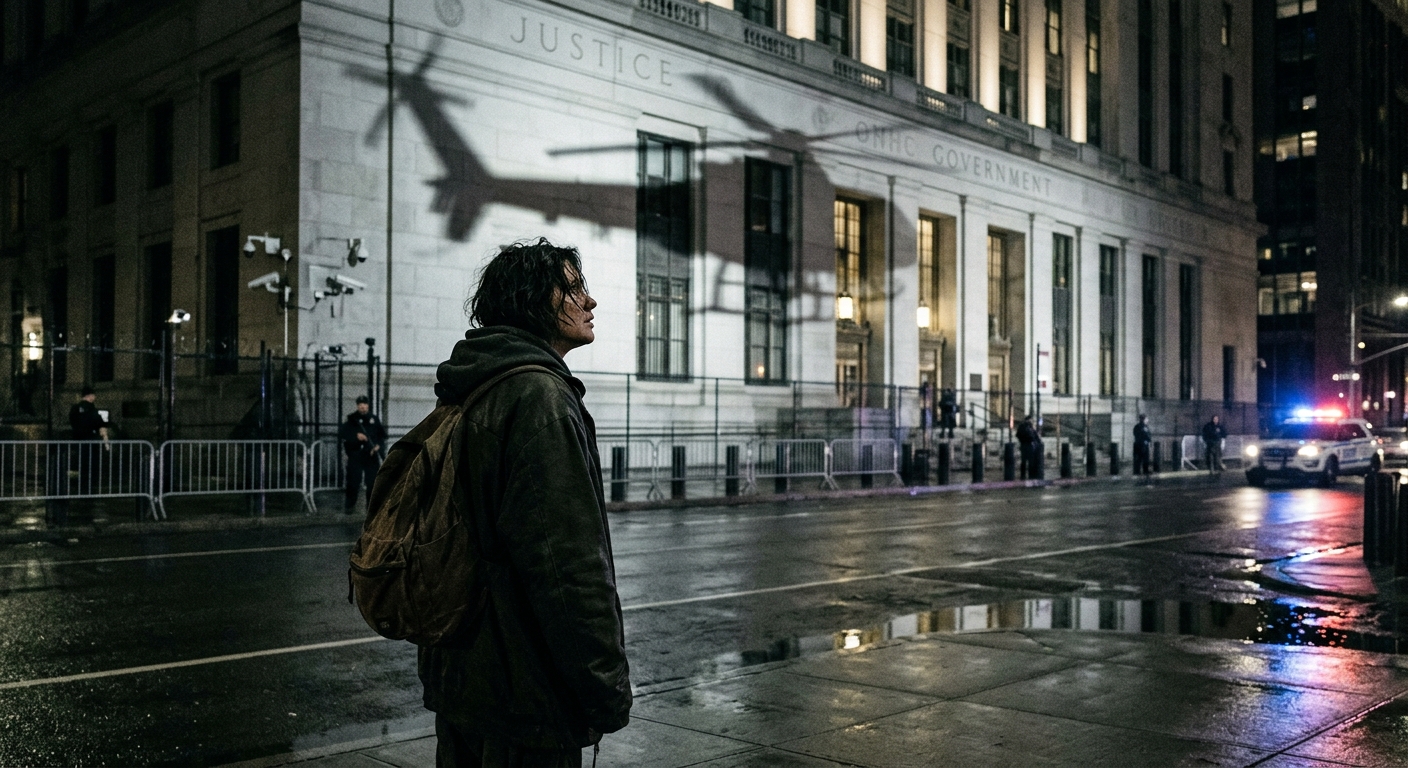
The landscape of American civil liberties experienced a profound paradigm shift at the dawn of the twenty-first century. In the immediate aftermath of the September 11 attacks, the United States government rapidly recalibrated its law enforcement and intelligence frameworks, prioritizing preemptive national security over traditional interpretations of due process. This era ushered in sweeping legislative changes, most notably the USA PATRIOT Act, which drastically expanded the surveillance and prosecutorial powers of federal agencies. While these measures were championed by policymakers as necessary shields against future acts of terror, they simultaneously sparked fierce and enduring debates regarding the erosion of fundamental constitutional rights. The inherent tension between ensuring public safety and safeguarding individual liberties quickly became the defining legal battlefield of the decade.
A quintessential illustration of this turbulent legal climate can be found by examining high-profile federal terrorism prosecutions from that era. One such landmark proceeding involved Sami Al-Arian, a former tenured professor of computer science at the University of South Florida. His protracted legal saga serves as a vital historical touchstone for understanding the complexities of the post-9/11 justice system. Analyzing the trajectory of this case provides critical insights into the labyrinthine complexities of federal terrorism trials and the immense weight of state power. Legal scholars, civil rights advocates, and the public can better understand the precarious balance required to protect a nation without dismantling the democratic freedoms that define it.
The Catalyst of the Post-9/11 Judicial Strategy
Understanding these legal battles requires analyzing the strategic pivot by the Department of Justice (DOJ). Prior to 2001, criminal prosecutions generally relied on demonstrating a clear, direct, and immediate link between an individual and a specific, localized criminal act. However, the newly minted legal framework required a proactive stance aimed at dismantling the global financial and ideological networks that allegedly supported militant organizations. This strategy relied heavily on the rigorous enforcement of “material support” statutes. These specific federal laws made it a severe crime to knowingly provide money, resources, training, or services to any group officially designated by the government as a Foreign Terrorist Organization, regardless of whether the individual personally intended to further the group’s violent activities.
In February 2003, this aggressive prosecutorial framework was brought to bear when the DOJ announced a sweeping indictment . The accusations centered on allegations that an academic and charitable network was being utilized as a sophisticated front for financing terror overseas. This extensive indictment set the stage for what would become one of the most scrutinized, resource-intensive, and legally complex trials of the era. It effectively tested the outer boundaries of federal investigative authority, the controversial use of classified intelligence within civilian courtrooms, and the fundamental presumption of innocence in an atmosphere heavily charged with national anxiety and political pressure.
A Grueling Trial and the Burden of Proof
The subsequent federal trial commenced in the summer of 2005, evolving into a grueling six-month legal marathon. Federal prosecutors presented a staggering volume of evidence, much of it meticulously gathered over a decade of continuous surveillance. This evidentiary presentation included hundreds of hours of translated wiretapped phone conversations, intercepted faxes, and thousands of pages of documents seized during coordinated raids.
However, translating voluminous intelligence gathering into a cohesive, convincing criminal case before a civilian jury proved to be an arduous task. The defense team, forced to navigate the restrictive boundaries of the Classified Information Procedures Act (CIPA), mounted a vigorous counter-narrative. They systematically argued that the government was dangerously conflating unpopular political speech, passionate advocacy for self-determination, and routine charitable giving with criminal conspiracy. The defense successfully highlighted the absence of direct, tangible evidence tying the accused to any specific violent act or the direct procurement of weaponry.
In December 2005, after weeks of intense deliberation, the jury returned a verdict that sent shockwaves through the federal legal establishment. The jury handed down acquittals on the most serious charges, including conspiracy to murder, while remaining hopelessly deadlocked on the remaining counts . This outcome was a profound statement on the American judicial system’s unwavering demand for rigorous, beyond-a-reasonable-doubt proof, even when national security is invoked as the primary justification for prosecution.
Timeline of Key Legal Proceedings
| Date | Event | Significance |
|---|---|---|
| February 2003 | Federal Indictment Announced | Marked the beginning of a massive federal material support prosecution. |
| June – Dec 2005 | Federal Trial | Concluded with acquittals on major charges and a deadlocked jury on others. |
| April 2006 | Plea Agreement Reached | Guilty plea to a lesser charge of conspiracy to provide services, bypassing a retrial. |
| 2008 – 2014 | Contempt Charges & Limbo | Refusal to testify in a separate grand jury led to years of house arrest and delayed deportation. |
| February 2015 | Deportation | The case formally concluded with deportation to Turkey. |
The Chilling Effect on the First Amendment and Academic Freedom
Beyond the immediate courtroom drama, such high-stakes prosecutions ignited a firestorm of controversy regarding the First Amendment and the foundational concept of academic freedom. For civil liberties organizations and higher education institutions, these legal maneuvers represented a dangerous blurring of the lines between constitutionally protected speech and criminal association.
Critics of the government’s aggressive approach argued that the indictments were largely built on guilt by association and the retroactive criminalization of speech. Much of the evidence presented during these trials often centered on activities, public statements, and associations that occurred years before the specific groups in question were officially designated as terrorist organizations by the U.S. State Department. This dynamic raised profound constitutional questions: Can an individual be prosecuted for supporting a group’s political, educational, or charitable wings if that group later engages in illicit activities? Does the broad application of the material support statute inherently punish political dissent and suppress free expression?
The chilling effect on minority communities, particularly Arab-American and Muslim-American populations, as well as the broader academic sphere, was immediate and palpable. Professors, independent researchers, and community activists found themselves second-guessing their public statements, their charitable donations, and their academic affiliations. The legal landscape highlighted the fragility of the First Amendment during times of national crisis, demonstrating how the immense weight of the federal apparatus can inadvertently silence dissenting voices.
The Plea, Legal Limbo, and Final Resolution
Following the dramatic and inconclusive end to the initial trial, the legal saga did not immediately conclude; rather, it entered a protracted and highly contentious administrative phase. In early 2006, a plea agreement was formally established. The defendant pleaded guilty to a single, lesser charge of conspiracy to provide services to a designated organization . In exchange, the government agreed to drop all remaining charges and recommended a sentence that, accounting for time already served, was intended to lead to an expedited release and subsequent deportation.
However, the execution of this carefully negotiated agreement was fraught with further legal maneuvering and unforeseen complications. Despite the plea deal, secondary legal actions were initiated. Subpoenas were issued demanding testimony before separate grand juries in different jurisdictions regarding related, yet distinct, investigations . Viewing these subpoenas as a violation of the spirit of the original plea agreement and a threat to Fifth Amendment rights, compliance was refused, resulting in subsequent charges of criminal contempt.
This secondary prosecution placed the individual in legal limbo for several more years, characterized by extended periods of house arrest while the contempt case languished unresolved in the federal appellate courts. It wasn’t until 2014 that the government finally moved to dismiss the lingering contempt charges, paving the way for eventual deportation in 2015 . This resolution marked the quiet end to a decade-long legal battle that continuously tested the limits of prosecutorial discretion.
The Vital Role of Independent Media in Legal Transparency
The sheer complexity, bureaucratic density, and extreme longevity of federal terrorism prosecutions often make them practically inaccessible to the general public. This structural opacity is precisely where independent media and investigative documentary filmmaking become indispensable tools for a functioning civil society. Visual media that captures these monumental legal battles provides an essential alternative lens.
They invite viewers into the strategic meetings of defense attorneys, the daily struggles of affected families, and the stark realities of the pretrial detention system. Documentaries effectively challenge the monolithic narratives often presented by prosecuting agencies. By making abstract legal concepts—such as due process, the intricacies of the First Amendment, and the expansive reach of the Patriot Act—tangible and relatable, these films foster a more informed and highly critical public discourse. They serve as vital historical records that hold the justice system transparent and accountable.
Looking Forward: The Enduring Legacy of Post-9/11 Jurisprudence
The legacy of these foundational post-9/11 legal battles extends far beyond the specific individuals involved; they have fundamentally and permanently reshaped the landscape of American jurisprudence. The aggressive, broad interpretation of material support statutes, the normalization of extensive electronic surveillance, and the deep integration of foreign intelligence gathering with domestic criminal prosecution remain permanent fixtures in the federal legal arsenal today.
For civil rights advocates, the enduring, critical lesson is the absolute necessity of an independent, robust judiciary willing to boldly check the potential excesses of the executive branch. The acquittals secured in high-profile terrorism trials affirmatively demonstrate that the fundamental principles of the Constitution—specifically the presumption of innocence and the strict demand for proof beyond a reasonable doubt—can withstand immense political and public pressure. Nevertheless, balancing national security with fundamental civil liberties remains a perpetual, evolving tension. It is not a mathematical problem to be solved, but a societal equilibrium to be actively managed with constant vigilance, institutional transparency, and an unwavering commitment to human rights.
Frequently Asked Questions (FAQ)
What does “material support” mean in federal law?
Under 18 U.S.C. § 2339B, the material support statute makes it a federal crime to knowingly provide material support or resources—such as money, training, expert advice, or services—to any foreign organization officially designated by the U.S. government as a terrorist group.
How did the USA PATRIOT Act impact civil liberties?
Passed shortly after the 9/11 attacks, the Patriot Act expanded the surveillance, intelligence gathering, and investigative powers of federal law enforcement agencies. Civil rights groups argue that it eroded liberties by lowering the legal standards required for wiretaps, searches, and the collection of private records without traditional judicial oversight.
What is the Classified Information Procedures Act (CIPA)?
CIPA is a federal law that dictates how classified intelligence is handled during a criminal trial. It is designed to prevent the unnecessary disclosure of sensitive national security information, though defense attorneys often argue it heavily restricts their ability to review evidence and mount a fair defense.
References
- STATEMENT OF THE ATTORNEY GENERAL, INDICTMENTS (#02-20-03) — Department of Justice. 2003-02-20. https://www.justice.gov/archive/ag/speeches/2003/02202003pressconference.htm
- Sami Al-Arian Sentenced To 57 Months In Prison For Assisting Terrorist Group — Department of Justice. 2006-05-01. https://www.justice.gov/archive/opa/pr/2006/May/06_crm_260.html
- Palestinian activist sent to Turkey years after plea — AP News. 2015-02-06. https://apnews.com/article/b822da33d0784eb98539b71e1c3132e0
Similar Articles








Read full bio of Sneha Tete


