
China’s AI Ascendancy in the Global Tech Arena
Unpacking China's strategic AI advancements, open-source dominance, and geopolitical maneuvers in the intensifying global technology competition.
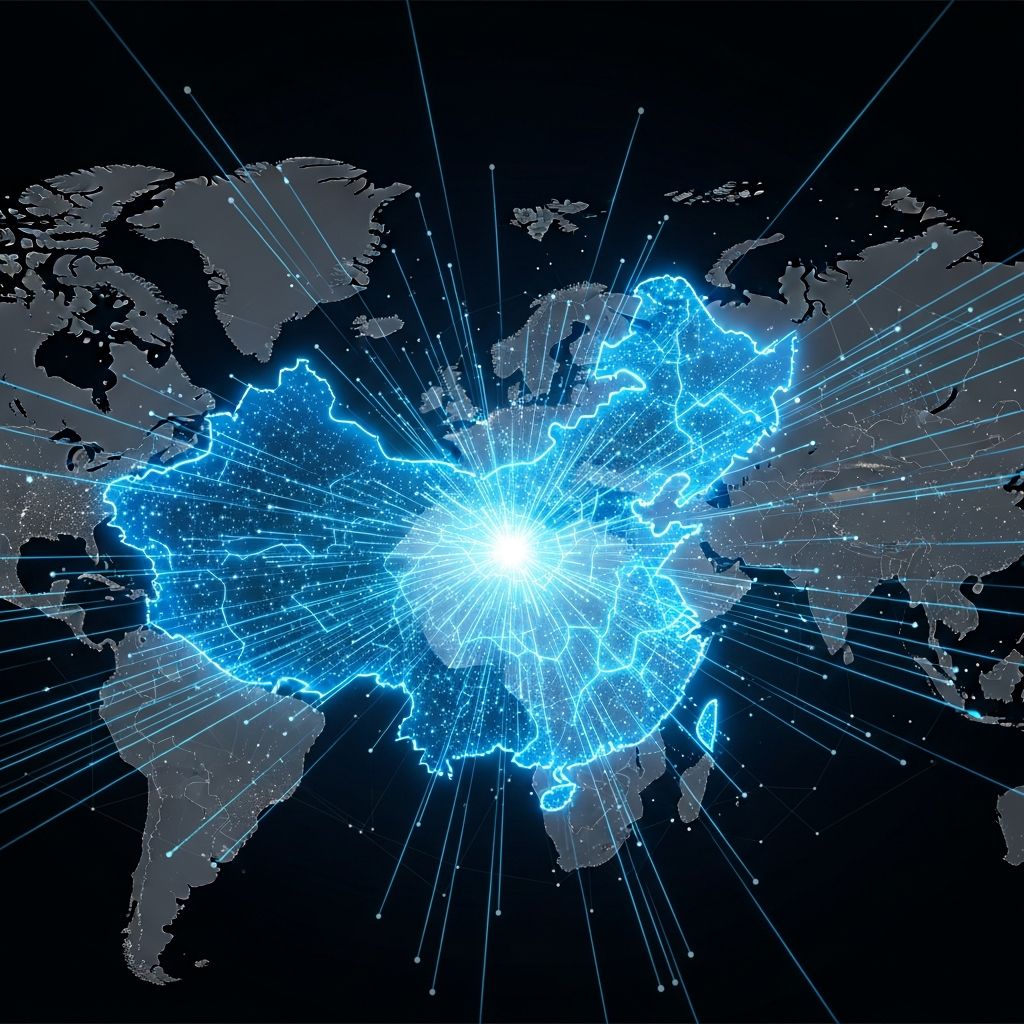
China has emerged as a formidable contender in the artificial intelligence landscape, challenging the United States’ long-held lead through innovative strategies tailored to its unique constraints and ambitions. While American firms prioritize massive computational power and proprietary systems, Chinese developers emphasize efficiency, widespread adoption via open-source releases, and integration into physical applications like robotics. This divergent path positions China not just as a chaser, but as a pacesetter in critical AI domains.
Strategic Shifts Defining China’s AI Trajectory
China’s AI evolution reflects a pragmatic response to external pressures, including U.S. export restrictions on advanced semiconductors. Rather than matching America’s compute-intensive approach, Beijing fosters breakthroughs in model efficiency and practical deployment. For instance, companies like DeepSeek have pioneered training methods that scale foundational models cost-effectively, enabling high performance with fewer resources.
Government policies amplify these efforts. Initiatives such as ‘AI Plus’ integrate AI into sectors like manufacturing, healthcare, and education, while the latest five-year plan earmarks embodied AI—systems that interact with the physical world—as a priority. This state-backed ecosystem accelerates commercialization, turning research into deployable technologies at scale.
- Efficiency Innovations: Chinese labs develop algorithms that distill knowledge from larger models, achieving near-frontier results with limited hardware.
- Policy Alignment: Directives urge firms to prioritize domestic tech over Western imports, bolstering self-reliance.
- Market Focus: Emphasis on applications drives real-world value over abstract milestones like artificial general intelligence (AGI).
Open-Source Dominance: China’s Global Adoption Edge
One of China’s most potent weapons is its aggressive open-source strategy. Unlike U.S. counterparts offering closed, subscription-based models, leading Chinese AI firms release foundational models freely. This has propelled Alibaba’s Qwen series past Meta’s Llama in popularity on platforms like Hugging Face, with derivatives from Chinese bases surpassing American ones in uploads and downloads.
This approach yields tangible gains. Developers from Japan to Africa build on models from Alibaba and DeepSeek due to their cost-effectiveness and comparability to proprietary options. Even U.S. innovators adopt them; Airbnb’s CEO praised Qwen for powering customer service, calling it ‘fast and cheap.’ Cloud providers like Huawei and Tencent expand these models into emerging markets, embedding Chinese tech in global infrastructure.
| Metric | U.S. Approach | China Approach | Outcome |
|---|---|---|---|
| Model Access | Proprietary, paid | Open-source, free | China leads in downloads |
| Global Adoption | Enterprise-focused | Developer ecosystems | Hugging Face dominance |
| Customization | Limited | High flexibility | Wider derivatives |
Such momentum influences even American tech stacks, with major firms incorporating Chinese large language models. China’s open-source push extends to 2026 strategies, aiming to shape international AI standards and infrastructure.
Embodied AI: Bridging Digital and Physical Realms
China excels in embodied AI, where intelligence manifests in hardware like robots and autonomous vehicles. Robotaxi fleets from Baidu’s Apollo Go, WeRide, and Pony.ai proliferate in cities worldwide, while delivery drones and vehicles transform urban logistics in Shenzhen and Shanghai.
Humanoid robotics sees similar advances. Firms like Unitree, UBTech, and AgiBot target mass production, leveraging China’s manufacturing prowess for affordable scaling. This hardware-software synergy, unhindered by compute shortages, gives China an edge in real-world applications over pure software races.
These developments align with national goals to upgrade manufacturing via ‘AI + Manufacturing,’ enhancing productivity across factories. Projections for 2026 indicate continued expansion, potentially exporting embodied systems to global markets.
Geopolitical Ramifications of the AI Duel
The U.S.-China AI rivalry intensifies in a multipolar arena. The U.S. exports its tech stack via partnerships in Saudi Arabia and the UAE, countering China’s influence in emerging economies. However, Trump’s 2025 approval of Nvidia H200 exports to China underscores interdependence, even as Beijing limits imports to nurture domestic chips.
Supply chain frictions escalate. Access to rare earths from Venezuela and Colombia sparks Latin American tensions, with U.S. claims positioning the region as a new front. China counters with open-source diplomacy, urging reliance on Alibaba and Huawei alternatives.
Europe ramps up AI defense spending, while India benefits from U.S. investments. Yet, U.S.-China dynamics dominate, with Beijing’s disinformation campaigns—using AI-generated media—targeting Taiwan and beyond, blending influence ops with cyber and diplomacy.
U.S. Challenges and Potential Realignments
America’s compute-heavy path faces scrutiny amid China’s gains. Distillation—where Chinese models train on U.S. outputs—narrows gaps, though genuine innovations persist. U.S. policymakers balance innovation, safety, and labor shifts, as Nvidia’s valuation soars past $5 trillion amid hype debates.
China’s model questions U.S. priorities: Is raw power the sole metric? Adoption and embodiment may prove decisive for economic impact. As middle powers rise, the race demands adaptive strategies.
Future Horizons: 2026 and Beyond
By 2026, DeepSeek’s anticipated model launches will reinforce China’s open-source leadership. Infrastructure battles over data centers and energy will intensify, with digital public infrastructure—hardware and software stacks—becoming sovereignty flashpoints.
Global firms must navigate rival ecosystems. China’s efficiency and adoption focus could capture market share, pressuring the West to diversify beyond compute races.
Frequently Asked Questions
What drives China’s success in open-source AI?
China’s free model releases foster global developer ecosystems, outpacing U.S. proprietary systems in downloads and adaptations on platforms like Hugging Face.
How does embodied AI give China an advantage?
Integration with cheap manufacturing enables scalable robotics and autonomous systems, from robotaxis to humanoids, surpassing software-only progress.
Will U.S. export policies shift the balance?
Relaxed controls like H200 sales aid China short-term, but Beijing prioritizes domestic chips, sustaining its efficiency-driven path.
What role do middle powers play in 2026?
Europe boosts defense AI, India gains U.S. investments, but U.S.-China rivalry remains central in a multipolar order.
Are Chinese AI models truly innovative?
Yes, beyond distillation; technical papers detail recognized advances in efficiency and scaling.
References
- Eight ways AI will shape geopolitics in 2026 — Atlantic Council. 2026-01-01. https://www.atlanticcouncil.org/dispatches/eight-ways-ai-will-shape-geopolitics-in-2026/
- China is running multiple AI races — Brookings Institution. 2025-10-15. https://www.brookings.edu/articles/china-is-running-multiple-ai-races/
- China’s Next AI Move: A New Phase in the Global Tech Race — EdChart. 2026-03-20. https://www.edchart.com/blog/china-ai-race-global-tech-competition-2026/
Similar Articles








Read full bio of Sneha Tete




