
Navigating Child Custody for Adopted Kids in Divorce
Essential strategies for securing custody of adopted children during divorce while prioritizing their emotional well-being and legal rights.
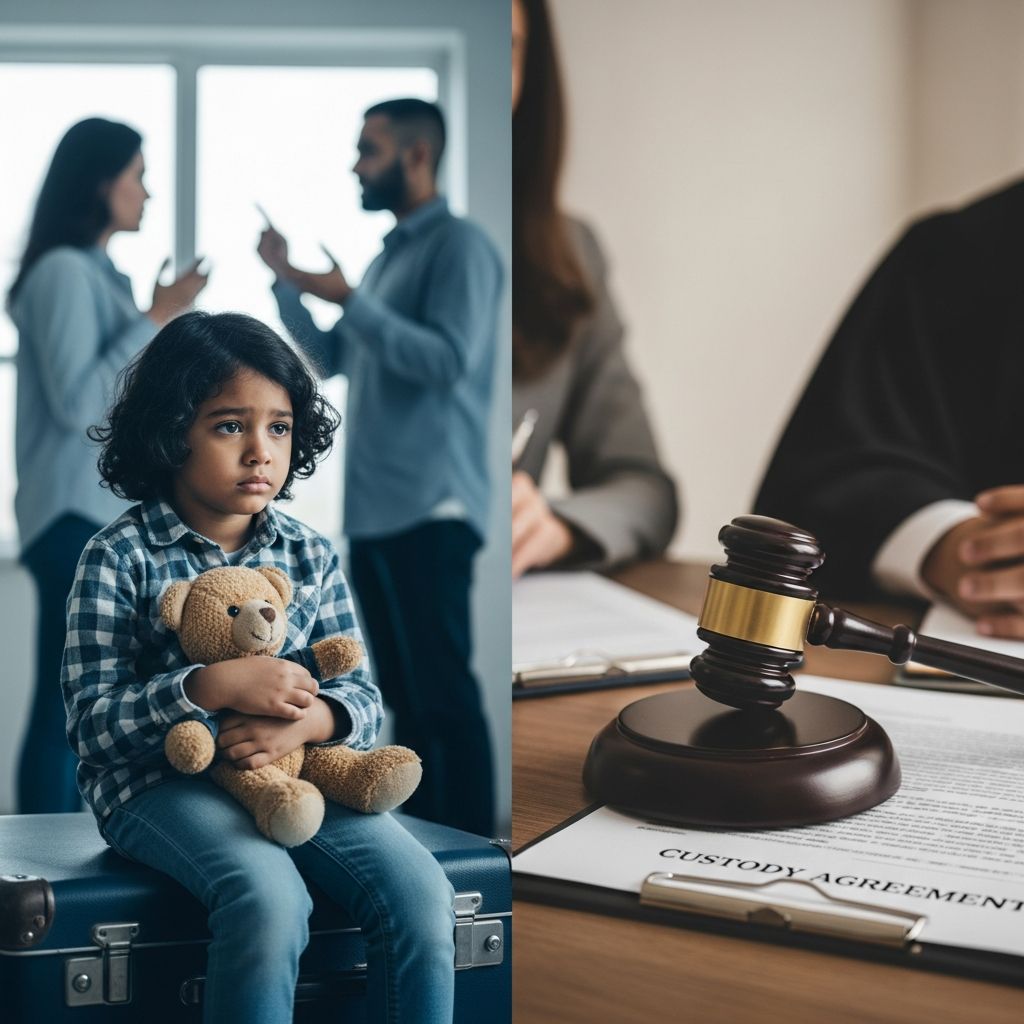
Adopted children hold identical legal standing to biological children in divorce proceedings across the United States. Courts apply the same principles to determine custody, visitation, and support, focusing primarily on the child’s best interests. This equality stems from the finalization of adoption, which legally severs prior parental ties and establishes adoptive parents as full legal guardians with all associated rights and duties.
Understanding Legal Equivalence in Adoption and Divorce
Once an adoption decree is issued, adoptive parents assume complete parental responsibilities, mirroring those of natural parents. This includes obligations for financial support, medical decisions, and educational choices. In divorce scenarios, these rights persist without distinction, ensuring adopted children receive equitable protection under family law.
State laws uniformly affirm this parity. For instance, in Texas, statutes explicitly state that adopted children are treated identically in custody matters, extending to same-sex couples who complete joint or second-parent adoptions. Failure to formalize both parents’ legal status can jeopardize non-legal parents’ claims during separation.
Key Factors Courts Consider for Custody Decisions
Judges evaluate a range of elements to craft custody arrangements that serve the child’s welfare. These factors prioritize stability, safety, and the child’s developmental needs. Common considerations include:
- Child’s Age and Preferences: Older children may voice opinions on living arrangements, weighted by maturity level.
- Parental Fitness: Each parent’s ability to provide a nurturing environment, including housing quality and emotional support.
- Co-Parenting Dynamics: Willingness to facilitate the child’s relationship with the other parent.
- History of Caregiving: Which parent served as the primary caregiver pre-divorce.
- Geographic Proximity: Distance between parental homes affecting visitation feasibility.
- Allegations of Harm: Evidence of abuse, neglect, or substance issues triggering protective measures.
This ‘best interests’ standard guides decisions on physical custody (residence), legal custody (decision-making authority), and visitation schedules. Physical and legal custody can be joint or sole, depending on circumstances.
Types of Custody Arrangements Explained
Custody falls into distinct categories, often combined in hybrid models. Understanding these helps parents negotiate effectively.
| Custody Type | Description | Common Applications |
|---|---|---|
| Joint Legal Custody | Both parents share major decisions like education and healthcare. | Encouraged when parents communicate well. |
| Sole Legal Custody | One parent holds exclusive decision rights. | Used if conflict or unfitness exists. |
| Joint Physical Custody | Child splits time roughly equally between homes. | Ideal for nearby parents with cooperative schedules. |
| Sole Physical Custody | Child resides primarily with one parent; other has visitation. | Common when distance or work demands dictate. |
Courts favor arrangements minimizing disruption, especially for recently adopted children with potential trauma histories.
Financial Obligations: Child Support for Adopted Children
Adoptive parents bear equal child support duties, calculated via state guidelines factoring income, custody time, and child needs. Obligations continue post-divorce, enforceable through court orders. Non-compliance risks wage garnishment or license suspension.
Support covers essentials like housing, food, education, and extracurriculars. Modifications are possible upon significant life changes, such as income shifts or custody alterations.
Special Challenges for Adopted Children in Divorce
While legally equivalent, adopted children may face unique emotional hurdles. Many carry pre-adoption trauma, fostering fears of abandonment during parental splits. They might internalize the divorce as echoing past losses, amplifying anxiety or behavioral shifts.
Stepparent adoptions introduce complexities; divorce doesn’t revoke the adoptive bond, allowing continued custody claims akin to biological parents. Same-sex adoptions require vigilant documentation to affirm both parents’ standings.
Emotional Support Strategies for Adopted Kids
Parents play a pivotal role in buffering divorce’s impact. Key approaches include:
- Open Dialogue: Use age-appropriate language to explain changes, affirming the divorce targets the marriage, not family membership.
- Emotional Validation: Acknowledge feelings of sadness or confusion without judgment, normalizing responses.
- Stability Assurance: Reiterate unwavering love and commitment, countering abandonment fears.
- Healthy Modeling: Demonstrate conflict resolution, shielding kids from disputes.
- Monitor Indicators: Watch for withdrawal, aggression, or academic slips; seek therapy if persistent.
Professional counseling tailored to adopted children’s experiences proves invaluable, addressing attachment and identity concerns.
Practical Steps During the Divorce Process
Proactive measures streamline proceedings and safeguard rights:
- Document Everything: Retain adoption papers, custody orders, and communications for court use.
- Draft Early Agreements: Negotiate temporary custody plans promptly for immediate stability.
- Adhere Strictly: Follow all orders to avoid contempt charges or custody loss.
- Consult Specialists: Engage family law attorneys versed in adoption nuances.
- Prioritize Mediation: Collaborative processes reduce acrimony, benefiting child outcomes.
Temporary orders bridge to final decrees, adjustable as needed.
Co-Parenting Success After Divorce
Effective co-parenting sustains child security. Focus on consistent routines, unified discipline, and flexible scheduling. Apps for shared calendars and expense tracking enhance coordination. Regular check-ins without spouses present reinforce child-centered priorities.
Frequently Asked Questions (FAQs)
Do adopted children have the same custody rights as biological ones?
Yes, post-adoption, they possess identical rights; courts apply uniform standards nationwide.
Can both adoptive parents retain custody rights in same-sex divorces?
Absolutely, provided both completed legal adoption steps like joint or second-parent processes.
How does a child’s adoption history influence custody rulings?
Courts consider background for stability but legally equate them to biological siblings; trauma may prompt extra safeguards.
What if one adoptive parent wants sole custody?
Possible if best interests support it, evaluated via standard factors like parenting history and child needs.
Are child support rules different for adopted kids?
No, identical guidelines apply, based on income and time-sharing.
State-Specific Variations and Resources
While core principles align, states differ in details. Florida emphasizes time-sharing over traditional custody; Texas prioritizes conservatorships. Consult state bar associations or legal aid for localized guidance. National resources like the American Academy of Matrimonial Lawyers offer directories.
Adoptive parents should verify second-parent adoptions’ validity, especially interstate.
Long-Term Planning for Family Stability
Beyond immediate custody, plan for education, healthcare, and inheritance. Update wills, beneficiaries, and school records post-divorce. Therapy continuity ensures ongoing emotional health.
Divorce reshapes families, but with legal diligence and compassionate support, adopted children thrive amid change.
References
- What Happens to an Adopted Child During Divorce? — Attorney Lisa Howard. Accessed 2026. https://attorneylisahoward.com/what-happens-to-an-adopted-child-during-divorce/
- When Divorce Is Involved Into your Adoption Process — Clagett Law. Accessed 2026. https://clagett-law.com/blog/when-divorce-is-involved-into-your-adoption-process/
- Custody of Adoptive Children During Divorce — Grinke Stewart Law. Accessed 2026. https://www.grinkestewartlaw.com/blogs/custody-of-adoptive-children-during-divorce/
- What Happens When Adoptive Step Parents Divorce Biological Parents — ATC Law. Accessed 2026. https://www.atclaw.com/blog/what-happens-when-adoptive-step-parents-divorce-biological-parents
- Divorce After Adoption – A Parent’s Guide — Ayo and Iken. Accessed 2026. https://www.myfloridalaw.com/divorce/divorce-after-adoption-a-parents-guide/
Similar Articles








Read full bio of medha deb




