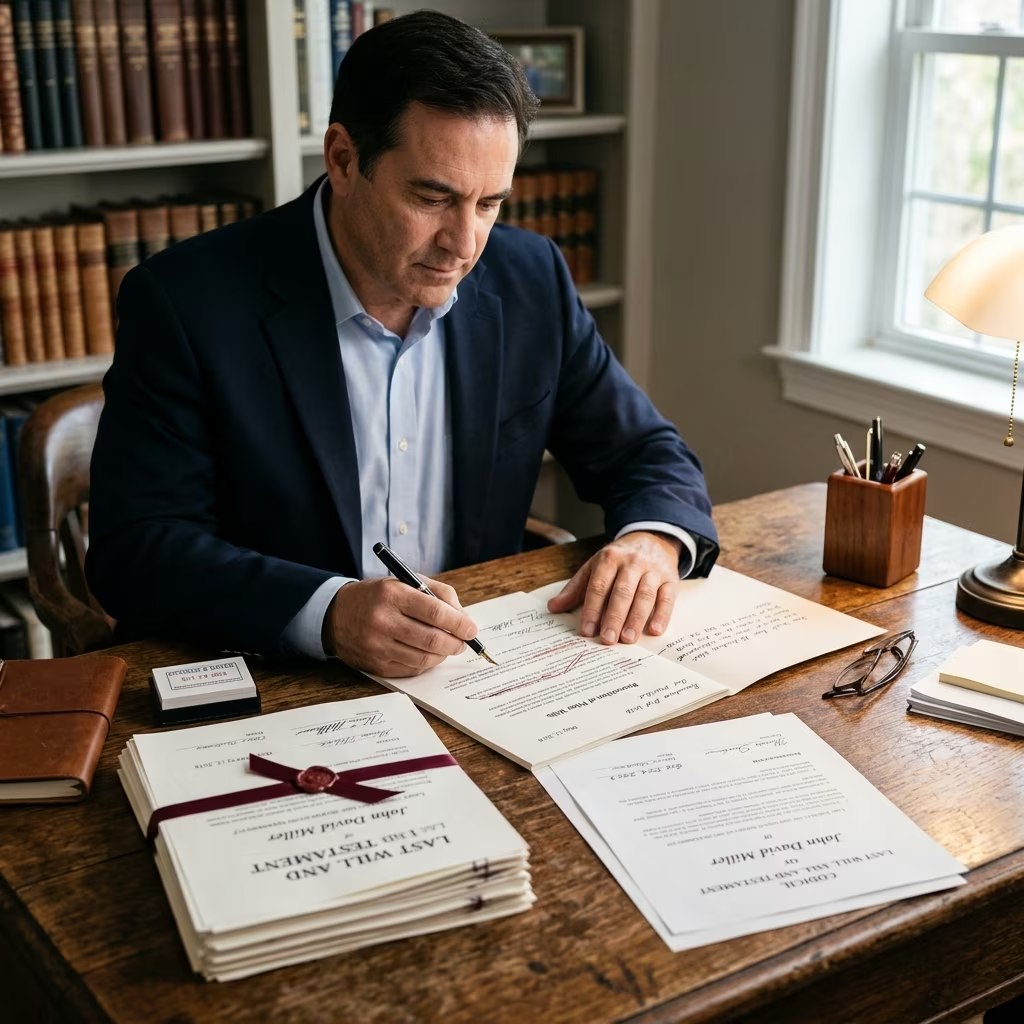
Once you sign a will, it becomes a formal legal document, but that does not mean your instructions are locked in forever. Most people need to update their wills several times over their lifetime as families grow, assets change, or relationships evolve. This guide explains how to legally change a will after signing, when to use a codicil, when to write a new will, and how to avoid common mistakes that can cause disputes in probate.
Why You Might Need to Update a Signed Will
Your will reflects your wishes at a specific point in time. As your circumstances change, those instructions may no longer match what you want. Estate law generally allows you to revise your will as long as you have the mental capacity required by your jurisdiction.
Common life events that trigger will changes
- Marriage or divorce – You may want to add or remove a spouse as a beneficiary or executor.
- Birth or adoption of children – You may need to name new beneficiaries or guardians.
- Death of a beneficiary or executor – Replacement beneficiaries or executors must be appointed.
- Major financial changes – Sale of a business, buying property, or receiving an inheritance may require updated instructions.
- Relocation to another state or country – Different legal rules might make your existing will less effective.
- Changes in relationships – Estrangement, reconciliation, or new partnerships often prompt revisions.
- Tax or law changes – Significant legal reforms sometimes make a previous estate plan outdated.
Reviewing your will periodically and after major life events helps ensure that your estate plan remains accurate and legally sound.
Two Main Ways to Legally Change a Will
In most jurisdictions, there are two primary methods of changing a signed will:
- Adding a codicil to the existing will
- Creating a completely new will that replaces the old one
Both approaches must follow the same formalities required for a valid will, such as proper signatures and witnesses.
Codicil vs. New Will: Side-by-side comparison
| Feature | Codicil | New Will |
|---|---|---|
| Purpose | Amends specific parts of the existing will without replacing the whole document. | Replaces the entire previous will and any codicils. |
| Best for | Minor changes, such as updating an executor or small bequest. | Major changes affecting many provisions or overall structure. |
| Formalities | Must be signed and witnessed like a will. | Must meet all signing and witnessing requirements for a will. |
| Risk of confusion | Higher if multiple codicils exist or they conflict. | Generally lower; a single integrated document controls. |
| Revocation effect | Changes only specified provisions; rest of the will remains in place. | Typically includes a clause revoking all prior wills and codicils. |
Understanding Codicils: Targeted Amendments to Your Will
A codicil is a separate legal document used to amend, add to, or remove specific provisions in an existing will without replacing it entirely. It is attached to and read together with the will, functioning as a formal update.
Key characteristics of a codicil
- References the original will – Identifies the will it is modifying, often by date and title.
- Specifies exact changes – States which clause is amended and how the wording is altered or replaced.
- Uses proper execution formalities – Signed and witnessed according to the same rules as a will.
- Stored with the will – Kept together so the documents are interpreted as a single integrated estate plan.
When a codicil may be appropriate
Codicils can be efficient for smaller updates, such as:
- Changing the person you appoint as executor or backup executor.
- Adjusting a specific gift amount or updating a beneficiary’s legal name.
- Removing a bequest to someone who has died or with whom you are no longer in contact.
- Adding a modest gift to a charity or organization.
However, multiple codicils over time can make your estate plan harder to interpret and more vulnerable to disputes. Many legal guides therefore suggest drafting a new will for significant or frequent changes.
Basic codicil process
While exact procedures differ by jurisdiction, a typical codicil process includes:
- Review the existing will to identify the provisions that need updating.
- Draft the codicil, clearly stating what is being changed, deleted, or added.
- Sign the codicil in the presence of the required number of witnesses.
- Have witnesses sign, confirming they observed your signature and that you appeared competent.
- Store the codicil with the original will in a secure location and inform your executor of where to find both documents.
Some jurisdictions also allow optional notarization or self-proving affidavits to simplify probate, but those requirements depend on local law.
Creating a New Will: A Clean Slate Approach
Drafting a new will is often the safest and clearest way to update your estate plan, especially if you are making more than a few minor changes. Legal resources commonly note that writing a new will does not usually require more effort than preparing several codicils and can greatly reduce confusion.
When a new will is recommended
- You are changing multiple beneficiaries or reallocating major assets.
- You want to revise your overall estate planning strategy.
- You have several older codicils and prefer to consolidate instructions.
- You are concerned about conflicting or ambiguous codicil language.
- You moved to a new jurisdiction and want a document tailored to local law.
Essential elements of a new will that replaces an old one
A new will should:
- Include a revocation clause that clearly states all previous wills and codicils are revoked.
- Set out updated instructions for asset distribution, guardian appointments, and executor roles.
- Comply with legal execution requirements, including signed by the testator and at least two witnesses where required.
- Be stored securely and apart from destroyed copies of prior wills where possible.
After signing a new will, prior documents should be clearly outdated and preferably destroyed to reduce the risk of conflicting versions being presented to the probate court.
Methods You Should Avoid: Handwritten Edits and Informal Changes
One of the most common and risky mistakes is trying to change a will by crossing out text or writing new instructions directly on the document after it has been signed and witnessed. Authoritative estate planning guidance warns against any handwritten or typed alterations made after execution that are not properly re-witnessed.
Why informal edits are problematic
- They may be legally invalid because they do not meet formal requirements for execution.
- They create uncertainty about which version of your instructions the court should follow.
- They invite disputes among beneficiaries who may question authenticity or timing.
- They can undermine the will entirely if a court finds the document has been tampered with.
If you need any change—even to fix a typo—the safest approach is to follow the same rules as making a new will or codicil, including proper signing and witnessing.
Step-by-Step: How to Go About Changing Your Will
The process of changing a will can be broken into practical steps. While local law varies, many legal practitioners recommend a sequence similar to the one below.
1. Review your current will carefully
- Identify clauses that are outdated, unclear, or incomplete.
- List all beneficiaries, executors, guardians, and specific gifts as they currently stand.
- Note any changes in property ownership that make existing provisions inaccurate.
2. Decide whether you need a codicil or a new will
- Use a codicil for limited, clearly defined updates.
- Opt for a new will when changing multiple sections or your overall plan.
- Consider long-term simplicity: fewer documents usually mean less confusion during probate.
3. Seek legal guidance where appropriate
Although you can often update a will without going to court, consulting an estate planning professional can help you:
- Confirm your changes comply with local law and formalities.
- Understand tax or creditor implications of new provisions.
- Avoid wording that could be interpreted in conflicting ways.
4. Draft the updated document
- For a codicil, clearly identify the specific clauses being changed and how.
- For a new will, ensure all prior instructions are either restated or intentionally omitted.
- Use clear, precise language to describe beneficiaries, property, and responsibilities.
5. Execute the document properly
- Sign the codicil or new will in the presence of required witnesses.
- Have witnesses sign, confirming they observed your signature.
- Consider any additional local options like self-proving affidavits or notarization to streamline court procedures.
6. Store and communicate
- Keep the updated document in a secure but accessible location.
- Inform your chosen executor, and possibly close family members, where the will and any codicils are stored.
- Destroy earlier versions if you have created a new will and your jurisdiction recognizes revocation by subsequent instrument.
Revoking a Will: When You Want to Start Over Completely
Sometimes your goal is not only to change a will but to revoke it. The most reliable way to revoke a will is to execute a new document that expressly revokes all prior wills and codicils. Relying solely on physically destroying the old document may be legally uncertain in some situations.
Legal revocation methods generally include
- Revocation by subsequent will that contains a clear revocation clause.
- Revocation by physical act, such as tearing or burning, carried out with intent to revoke, where recognized by local law.
Guides note that even when physical destruction is allowed, making a new will is preferable because it replaces the old instructions and clarifies what should be followed.
Frequently Asked Questions About Changing a Will
Can I just write changes on my existing will and sign next to them?
Informal handwritten changes on a signed will are generally discouraged and often not legally effective because they do not meet the formal requirements for execution. Courts may ignore these edits or treat them as evidence of confusion rather than valid amendments. It is safer to use a codicil or create a new will.
Do I always need witnesses when I change my will?
Most jurisdictions require that codicils and new wills be signed in the presence of witnesses, just as the original will was. The number and qualifications of witnesses depend on local law. Some regions also allow optional notarization or self-proving affidavits to make probate easier, but notarization alone is usually not a substitute for witnesses.
Which is better: a codicil or a new will?
Neither method is inherently better in every situation. A codicil can be convenient for minor updates, while a new will is often preferred for more extensive changes or when multiple codicils already exist. Legal guides increasingly recommend new wills as they tend to be clearer and less prone to misinterpretation.
How often should I review or update my will?
There is no fixed schedule, but many estate planning professionals recommend reviewing your will every few years and whenever a major life event occurs, such as marriage, divorce, birth of a child, significant asset changes, or relocation. Regular review reduces the likelihood that your estate plan will be outdated at the time of your death.
Does moving to another state or country affect my existing will?
Moving can affect how your will is interpreted, particularly regarding property rules, tax treatment, and witness requirements. Although many jurisdictions recognize wills from other regions, it is wise to have your document reviewed in your new location and consider drafting a new will that complies with local law.
What happens in probate if there are multiple wills or codicils?
If several documents exist, the court will try to determine which is legally valid and represents your final intent. A later will that expressly revokes prior wills normally controls. Multiple codicils can be read together with the original will, but they may also lead to disputes if they conflict or are unclear. Keeping your estate plan streamlined reduces complexity for your executor and beneficiaries.
References
- What is the Best Way to Update My Will? — Nolo. 2023-04-01. https://www.nolo.com/legal-encyclopedia/what-the-best-update-will.html
- How to Legally Change or Revoke a Will — Justia. 2022-08-15. https://www.justia.com/estate-planning/wills/changing-or-revoking-a-will/
- How to Sign and Update a Will — Willmaker (Nolo). 2023-02-10. https://www.willmaker.com/learn/about-wills/how-to-sign-and-update-a-will.html
- Will Changes – How to Amend Your Will — Trust & Will. 2023-05-20. https://trustandwill.com/learn/will-changes
- How Can I Change My Will? — Thooft Law LLC. 2022-11-30. https://www.thooftlawllc.com/blog/how-can-i-change-my-will/